
Side-by-Side Cognitive Profiles
At The Cosmic Pet Pet IQ Lab, we assess canine intelligence across five key dimensions, providing a nuanced view of how different breeds process information and interact with their world. Interestingly, both the Dogo Argentino, a robust Working dog, and the Petit Basset Griffon Vendéen (PBGV), a spirited Hound, share identical scores across our cognitive metrics.
The Dogo Argentino, originating from Argentina, presents a cognitive profile indicating moderate capabilities across the board. Their Problem Solving is rated 3/5, suggesting a steady capacity for independent thought, often applied to practical challenges within their environment, particularly those concerning security or task completion. Training Speed is also 3/5, meaning they absorb new commands at a consistent pace, benefiting from clear, repetitive instruction. Social Intelligence, at 3/5, highlights their ability to forge deep bonds with their family and understand human cues, though they can be discerning with strangers. Their Instinctive Drive, a 3/5, is potent and historically tied to hunting and guarding, requiring careful channeling. Finally, Memory, also 3/5, ensures they retain learned behaviors and experiences, contributing to their reliability once skills are solidified.
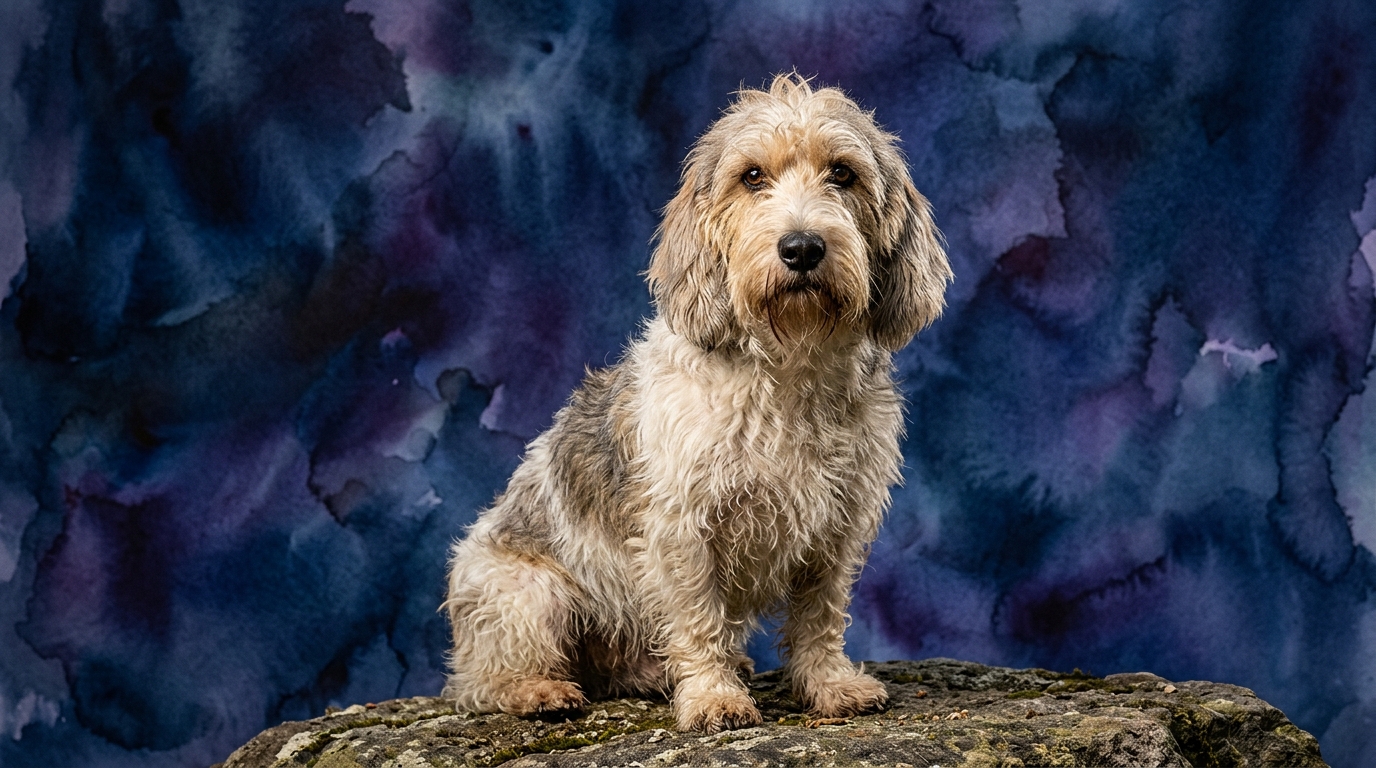
The Petit Basset Griffon Vendéen, hailing from France, shares these 3/5 ratings but expresses them through a distinct hound lens. Their Problem Solving (3/5) often manifests as ingenious methods for following a scent or navigating obstacles through sensory exploration, sometimes appearing mischievous. Training Speed (3/5) is steady, yet their independent spirit and keen nose can sometimes make them seem less focused than other breeds; consistency and engagement are crucial. Social Intelligence (3/5) indicates they are highly attuned to their human companions and enjoy interaction, communicating clearly through their expressive nature. Their Instinctive Drive (3/5) is overwhelmingly focused on scent work, a powerful, persistent force that can override other motivations. Their Memory (3/5) is particularly adept at recalling intricate scent patterns and memorable locations, aiding their adventurous spirit.
Where the Dogo Argentino Excels Cognitively
The Dogo Argentino's cognitive strengths are deeply rooted in their original purpose as big-game hunters and guardians. Their problem-solving, while rated 3/5, is particularly effective in situations demanding situational awareness and strategic action. For instance, a Dogo might more instinctively assess the quickest route to intercept a perceived threat or understand the subtle body language of an unfamiliar person, reacting with a measured response rather than impulsive action. This manifests as a practical intelligence focused on discerning safety and order within their environment. Their instinctive drive, also 3/5, is channeled into a persistent pursuit of a goal, whether it's tracking game or maintaining a watchful vigil. They apply their memory to recall complex sequences of commands for a task, demonstrating a methodical approach to achieving an objective. This breed exhibits a cognitive resilience when faced with a challenge, often relying on their physical prowess and determination guided by their internal compass.
Where the Petit Basset Griffon Vendéen Excels Cognitively
The Petit Basset Griffon Vendéen's cognitive prowess shines brightest in the realm of sensory exploration and independent navigation, hallmarks of their hound heritage. While also rated 3/5 for problem-solving, a PBGV's approach is often characterized by a tenacious, scent-driven inquiry. They excel at deciphering complex scent puzzles, such as following a faint trail through varied terrain or figuring out how to bypass an obstacle to reach an interesting smell. This requires a unique blend of spatial reasoning and sensory processing. Their instinctive drive, rated 3/5, is an unyielding force, compelling them to pursue a captivating scent with unwavering focus, often demonstrating remarkable persistence that can outlast many other breeds. Their memory is particularly acute for recalling specific scent patterns, locations where exciting smells were encountered, and the intricate routes taken during previous explorations, allowing them to revisit prime sniffing spots with uncanny accuracy. This sensory intelligence is a profound cognitive advantage in their world.
Training Ease: Dogo Argentino vs. PBGV
With a training speed of 3/5, the Dogo Argentino is a capable learner, especially when their handler establishes clear, consistent leadership and employs positive reinforcement. Their working breed background means they often seek a purpose and respond well to structured training that channels their protective and physical drives into acceptable outlets. They are generally eager to please their trusted owner, leading to more consistent compliance once a command is understood and ingrained. For example, a Dogo will typically commit to a 'stay' command with unwavering focus once they grasp its meaning and the expectation. However, their formidable physical power and potential for independent decision-making in protective scenarios mean early and consistent socialization, coupled with advanced obedience training, are absolutely paramount. This ensures their cognitive capabilities are directed constructively, preventing self-appointed guardianship from becoming problematic.
Also with a training speed of 3/5, the PBGV presents a unique set of training challenges, primarily due to their strong instinctive drive for scent. While capable of learning a wide array of commands, a captivating smell can instantly override any instruction, leading to what many owners perceive as 'selective hearing' or stubbornness. For instance, a PBGV might execute a perfect 'recall' indoors, but completely ignore it when a rabbit's scent trail is detected outdoors. Training a PBGV requires immense patience, creativity, and a deep understanding of their motivations. Incorporating scent games into training, making sessions fun and frequently changing locations, can help maintain their interest and focus. They are not intentionally disobedient but are profoundly driven by their noses, which demands a specific, engaging approach to harness their cognitive potential for obedience.
Matching Breeds to Lifestyles: Active vs. Relaxed Owners
The Dogo Argentino is an ideal match for active owners who can meet their considerable physical and mental demands. Their robust physique and working heritage necessitate substantial daily exercise beyond simple walks, such as jogging, long hikes, or participation in structured dog sports like weight pulling, tracking, or protection work (with proper guidance). These activities not only burn off physical energy but also provide crucial mental engagement, allowing them to use their problem-solving and instinctive drives constructively. Owners who can provide consistent training, a clear routine, and plenty of outlets for their powerful physical and cognitive prowess will find a deeply loyal, well-adjusted, and engaged companion. They thrive when given a 'job,' which aligns perfectly with their natural inclination to contribute and protect.
While no dog truly thrives with 'relaxed' owners in the sense of minimal exercise, the PBGV can adapt to a slightly less intensely structured exercise routine than the Dogo, provided their significant mental needs are met. They still require regular, exploratory walks where they can engage their powerful sense of smell, and secure, fenced areas for safe off-leash romping. Their energy is often expressed in bursts of playful activity and enthusiastic scent-following, interspersed with periods of contented lounging. They are not suited for owners who cannot provide secure containment or consistent leash walking, as their unwavering scent drive can lead them on extended, independent adventures. Their ideal owner is someone who enjoys interactive play, is patient with their independent nature, and can appreciate a dog with a spirited, often comical, personality who finds immense joy in the world of smells.
The Verdict
Choose the Dogo Argentino if you are an experienced, active owner seeking a powerful, loyal companion who thrives on purpose-driven training and can manage their protective instincts with consistent leadership.
Choose the Petit Basset Griffon Vendéen if you appreciate a spirited, independent hound with a keen sense of smell, are prepared for consistent, patient training, and enjoy a companion who brings playful curiosity to everyday life.
🧠 Find Your Pet's IQ Score
Our Pet IQ Lab assessment covers 25+ tests across 5 cognitive dimensions — personalized to your breed.
Take the Full IQ Test →Frequently Asked Questions
Do Dogo Argentinos make good family pets?
Yes, with proper socialization from a young age and consistent training, Dogo Argentinos can be incredibly loyal and affectionate family members, especially with children they've grown up with. Their protective instincts mean they are excellent guardians, but this requires careful management.
Are PBGVs difficult to house train?
PBGVs can be a bit challenging to house train due to their independent nature and focus on scent, which can distract them from signaling their needs. Consistency, frequent potty breaks, and positive reinforcement are crucial for success, often taking more time than with some other breeds.
What kind of mental stimulation do these breeds need?
Dogo Argentinos benefit from structured obedience, puzzle toys, and activities that engage their problem-solving and protective drives, like advanced obedience or tracking. PBGVs thrive on scent work, interactive toys, and opportunities to explore new environments safely, satisfying their innate curiosity and drive to follow a trail.