
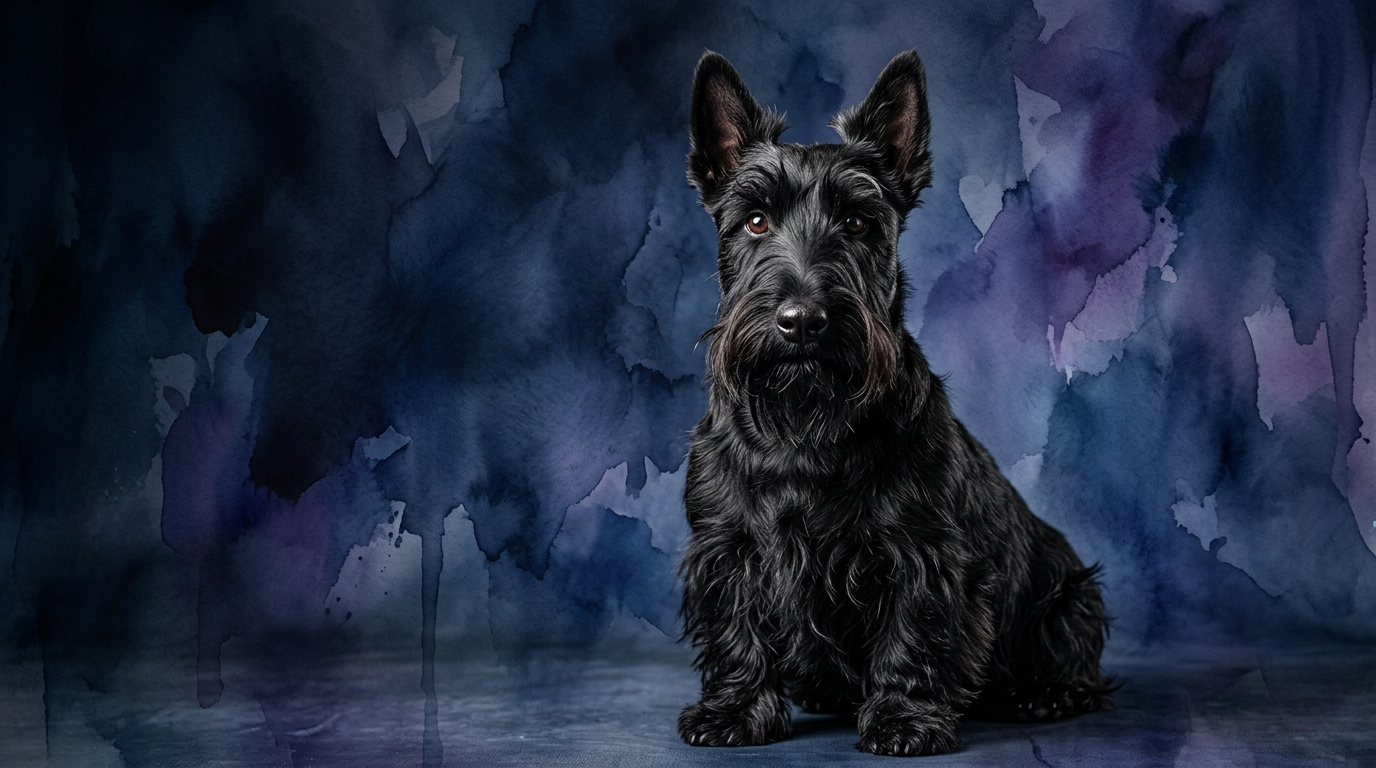
Side-by-Side IQ Profile: Dogo Argentino vs. Scottish Terrier
At first glance, the Dogo Argentino and Scottish Terrier appear to share identical cognitive scores across The Cosmic Pet Pet IQ Lab's five dimensions: Problem Solving, Training Speed, Social Intelligence, Instinctive Drive, and Memory, all rated at 3/5. However, these identical scores manifest through distinct behavioral lenses shaped by their breed purposes and physical attributes. Understanding these nuances is key to appreciating their individual cognitive strengths.
The Dogo Argentino, a powerful working dog bred for hunting large game, interprets a 'Problem Solving' score of 3/5 through the lens of strategic pursuit and engagement. This means they can effectively navigate complex environments, plan approaches during a hunt, or assess situations requiring protective action. Their 'Training Speed' at 3/5 suggests a capacity to learn commands and routines efficiently when motivated by a clear purpose and strong partnership, though their independence means they are not simply 'biddable'. 'Social Intelligence' at 3/5 for a Dogo often involves astute awareness of family dynamics and potential threats, exhibiting a nuanced understanding of their human pack. Their 'Instinctive Drive' at 3/5 is primarily focused on prey drive, guarding instincts, and a desire for physical engagement. Lastly, 'Memory' at 3/5 enables them to recall complex sequences, scent trails, and the behaviors of those within their social circle.
Conversely, the Scottish Terrier, a compact terrier bred for hunting vermin, applies its identical 3/5 scores quite differently. Their 'Problem Solving' at 3/5 is typically directed towards persistent, independent tasks like locating and extracting prey from confined spaces, often requiring clever maneuvering and tenacity. 'Training Speed' at 3/5 for a Scottie indicates they can learn quickly, but their strong will and independent nature mean consistency and finding the right motivators are paramount; they learn what they deem important. Their 'Social Intelligence' at 3/5 is expressed through their observant nature and ability to assert their personality within their immediate family, often having a surprisingly strong sense of self within the household hierarchy. 'Instinctive Drive' at 3/5 is dominated by a robust prey drive for small animals, a strong desire to dig, and an assertive independence. Their 'Memory' at 3/5 allows them to remember routines, favored spots, and past successes in their independent endeavors, often holding a grudge or remembering unfair treatment.
Where the Dogo Argentino Excels Cognitively
The Dogo Argentino's cognitive strengths, even with a uniform 3/5 rating, particularly shine in scenarios demanding physical prowess combined with strategic thinking. Their problem-solving capabilities at this level are often integrated with their formidable physique, allowing them to assess and manage large-scale environmental challenges or complex protective tasks. For example, a Dogo might excel at navigating an obstacle course that requires both strength and foresight, or at discerning between genuine threats and harmless strangers with a calm, deliberate assessment.
Their social intelligence, while rated 3/5, is geared towards understanding and maintaining order within a family unit, making them adept at sensing shifts in human emotion or potential vulnerabilities. This manifests not as a desire to please, but as a deep-seated commitment to the well-being of their pack, often making proactive decisions based on their assessment of a situation. When it comes to instinctive drive, the Dogo's 3/5 is exceptionally effective in tasks requiring sustained focus and courage, such as tracking or guarding, where their physical and mental attributes converge to address a specific objective with unwavering determination.
Where the Scottish Terrier Demonstrates Cognitive Edge
The Scottish Terrier, despite identical scores, demonstrates a distinct cognitive edge in areas demanding independent thought, tenacity, and resourcefulness within confined or focused contexts. Their 3/5 problem-solving ability often involves ingenious methods for pursuing and 'solving' the problem of a hidden critter, requiring spatial awareness and persistent effort in tight spaces. A Scottie might ingeniously work out how to reach a toy under a low piece of furniture or how to bypass a minor barrier to explore a forbidden area, showcasing their focused determination.
Their social intelligence at 3/5, while not about large-group management like the Dogo, is acutely tuned to individual human interactions, often displaying a remarkable ability to 'read' their favored person and subtly influence outcomes through their charming, yet stubborn, personality. This involves a keen memory for what works to get their way and what doesn't. The Scottie's instinctive drive, also 3/5, is a powerful engine for independent action, particularly in scent-driven exploration and excavation. This drive fuels their unyielding focus on tasks they deem important, making them formidable in their chosen pursuits, often to the amusement or exasperation of their owners.
Which is Easier to Train and Why?
When comparing training ease, the Dogo Argentino, despite both breeds having a 3/5 training speed, often presents as more straightforward for an experienced handler. Their working breed heritage means they generally respond well to clear, consistent leadership and purpose-driven training. A Dogo’s desire for a strong partnership and their physical capabilities allow them to grasp and execute complex commands with precision, provided the training is engaging and fair. They are less likely to question a command once they understand its purpose and trust their handler's judgment, making them capable students for advanced obedience or specialized tasks.
The Scottish Terrier, while equally capable of learning at a 3/5 speed, can be more challenging due to their quintessential terrier independence and strong will. Their training often requires more patience, creativity, and a deep understanding of what motivates them. A Scottie might learn a command quickly but then choose not to perform it if they don't see the immediate benefit or are distracted by a more 'interesting' scent or sound. Their ingrained instinct to make their own decisions means that while they learn, they also retain a degree of autonomy, requiring owners to turn training into a game or a rewarding negotiation rather than a simple command-and-response exercise. This requires a different approach to engagement, focusing on making the 'right' choice irresistible rather than simply commanded.
Active Owners vs. Relaxed Owners: Matching Cognitive Needs
For owners with an active lifestyle seeking a canine partner for robust physical and mental engagement, the Dogo Argentino is often the more suitable choice. Their 3/5 instinctive drive and problem-solving capabilities thrive on structured activities that tap into their strength, endurance, and strategic thinking. This includes long, vigorous hikes, canine sports like protection work or advanced obedience, and tasks that provide a 'job.' A Dogo requires consistent mental stimulation beyond just physical exercise; they need to use their minds to solve problems and make decisions alongside their owner, preventing boredom and channeling their substantial energy constructively.
Conversely, for owners who appreciate an active but less physically demanding companion, and who enjoy a dog with a strong, independent personality, the Scottish Terrier could be a better match. While Scotties are not couch potatoes – their 3/5 instinctive drive demands regular walks, playtime, and opportunities for scent exploration – their activity needs are generally less intense and sustained than a Dogo's. They thrive on mental challenges that cater to their independent problem-solving, such as puzzle toys, short training sessions, or supervised digging opportunities. Relaxed owners willing to engage with a dog's spirited independence and provide consistent, engaging mental stimulation will find a rewarding partnership with a Scottie, even if their physical demands are more moderate.
The Verdict
Choose the Dogo Argentino if you are an experienced, active owner seeking a powerful, protective partner for structured work, advanced training, and robust outdoor adventures, valuing a strong, purposeful bond.
Opt for the Scottish Terrier if you appreciate a spirited, independent companion with a charmingly stubborn streak, suitable for moderate activity and owners who enjoy engaging a clever mind with consistent, creative training.
🧠 Find Your Pet's IQ Score
Our Pet IQ Lab assessment covers 25+ tests across 5 cognitive dimensions — personalized to your breed.
Take the Full IQ Test →Frequently Asked Questions
Do Dogo Argentinos make good family dogs?
Dogo Argentinos can be exceptional family dogs when properly socialized from a young age and raised with consistent training. Their social intelligence at 3/5 means they are highly attuned to their family, often forming deep bonds and exhibiting strong protective instincts, making them loyal guardians for those they consider their pack.
Are Scottish Terriers prone to digging?
Yes, Scottish Terriers have a strong instinctive drive (3/5) for digging, deeply rooted in their history as vermin hunters. This behavior is natural for the breed, and owners should provide designated digging areas or supervise outdoor time to manage this instinct constructively.
Which breed is better for apartment living?
The Scottish Terrier is generally more adaptable to apartment living due to their smaller size and more moderate exercise requirements compared to the Dogo Argentino. However, both breeds require consistent mental stimulation and daily exercise to prevent boredom and destructive behaviors, regardless of their living space.