Side-by-Side IQ Profile: Dogue de Bordeaux
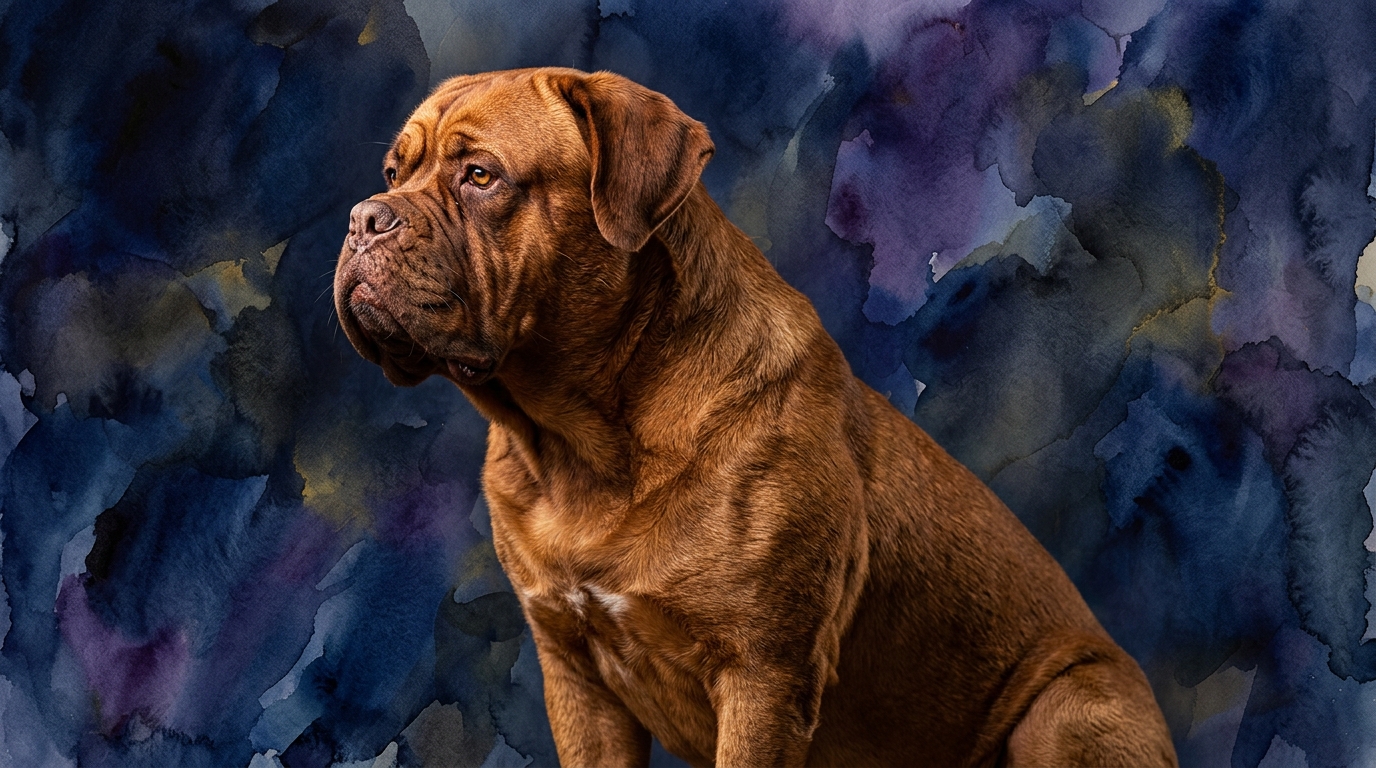
The Dogue de Bordeaux, a breed with a formidable presence, registers a consistent 3/5 across all five measured cognitive dimensions, reflecting a moderate but capable intellectual capacity. Their Problem Solving (3/5) often manifests as a determined, practical approach to challenges; they may use persistence and physical presence to overcome obstacles rather than complex strategy, for instance, pushing open a door they perceive as a barrier to their desired location.
Training Speed (3/5) indicates they are capable learners, though their independent streak can necessitate consistent, firm, and fair instruction to solidify new behaviors. In terms of Social Intelligence (3/5), they are acutely attuned to the emotional states of their immediate family, often being reserved or discerning with strangers as they carefully interpret social cues within their protective framework. Their Instinctive Drive (3/5) is strongly rooted in guardianship and territoriality, showing a moderate but consistent inclination to protect their home and people. Finally, Memory (3/5) ensures they reliably recall routines, learned commands, and significant experiences, influencing their future interactions and responses.
Side-by-Side IQ Profile: Greater Swiss Mountain Dog
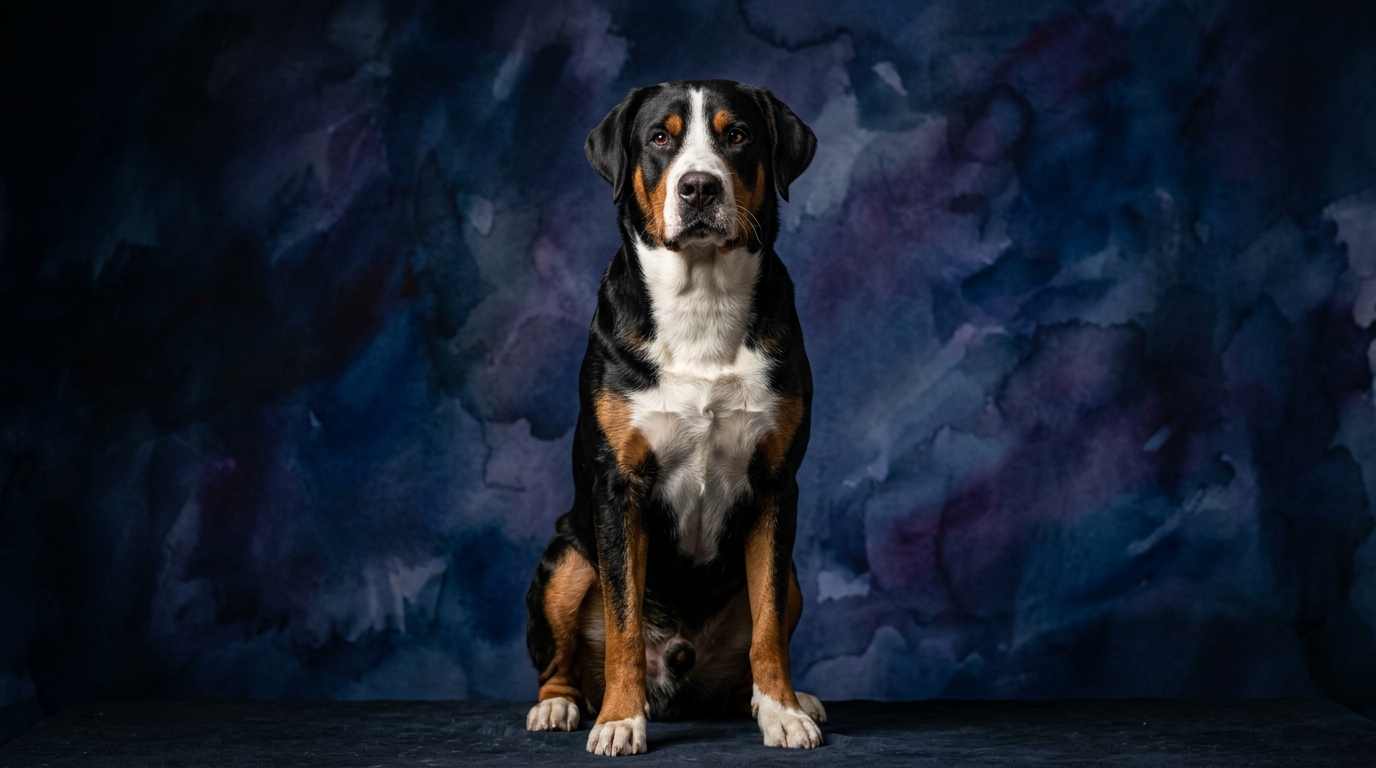
The Greater Swiss Mountain Dog, a versatile and robust working breed, also scores 3/5 across all cognitive dimensions, signifying a balanced and functional intellect. Their Problem Solving (3/5) typically appears as practical ingenuity, particularly in navigating environments or task-oriented scenarios. They might competently figure out how to maneuver objects, open gates, or find specific items, applying their physical strength and spatial awareness to everyday tasks.
Their Training Speed (3/5) suggests they learn at a steady pace, absorbing new information with reasonable consistency, though their enthusiastic nature or occasional stubbornness can require engaging, varied methods to maintain focus. Social Intelligence (3/5) shines in their ability to integrate into diverse family dynamics and interact amicably with various individuals when well-socialized; they tend to read human emotions and intentions with a balanced perspective. The Instinctive Drive (3/5) of the Swissy is historically tied to farm work – drafting, droving, and general utility – indicating a moderate but inherent desire for purposeful activities involving physical exertion or collaboration. Their Memory (3/5) is reliable, aiding in remembering multi-step routines, established boundaries, and the individuals they encounter, contributing to their dependable nature.
Where Dogue de Bordeaux Wins Cognitively
While both breeds share a 3/5 rating across all cognitive dimensions, the Dogue de Bordeaux often demonstrates a particular strength in the *application* of its problem-solving and social intelligence within a deeply protective context. Their 3/5 problem-solving isn't about intricate puzzles, but rather a determined, often direct approach to achieving what they perceive as necessary, especially when it involves securing their perceived territory or family. This manifests as a steadfastness in overcoming physical barriers or a persistent effort to get their way, relying on their impressive physical presence and unwavering focus rather than nuanced strategy.
Furthermore, their social intelligence, also rated 3/5, is acutely tuned to the emotional states of their immediate family. This means they are highly perceptive to shifts in mood or perceived threats within their inner circle. While not necessarily gregarious with strangers, their ability to 'read' their family's needs for comfort or reassurance, and to respond with a calm, anchoring presence, can be profoundly impactful. This focused social acumen, combined with their instinctive drive for guardianship, creates a dog that is exceptionally attuned to the dynamics of its core human group, often anticipating needs or reacting to subtle cues of distress.
Where Greater Swiss Mountain Dog Wins Cognitively
The Greater Swiss Mountain Dog, with its identical 3/5 scores, excels in a different cognitive domain, particularly in the practical application of its problem-solving and instinctive drive for utility. Their 3/5 problem-solving is often expressed through a more methodical and spatially aware approach to tasks. They are adept at navigating complex environments, figuring out how to maneuver around obstacles with a large body, or understanding the mechanics of simple contraptions like gates or latches. This practical intelligence stems from centuries of working alongside humans in varied farm settings, requiring them to assess and interact with their physical surroundings effectively.
Moreover, their 3/5 instinctive drive is geared towards partnership and purposeful activity, which subtly enhances their training speed and social intelligence in a working context. They thrive on having a 'job' and often display a cheerful willingness to participate in activities that involve physical engagement or collaboration. This drive, combined with their social intelligence, allows them to integrate smoothly into active family lives, adapting to new routines and people with a confident, generally amenable disposition. They are less about intense guardianship and more about cooperative effort, making them adept at understanding and fulfilling varied roles within a bustling household.
Which Is Easier to Train and Why
Determining which breed is 'easier' to train when both have a 3/5 training speed score requires looking beyond the number to their inherent temperaments and motivations. The Greater Swiss Mountain Dog often presents as more amenable to training for a wider range of activities due to its historical role as a versatile farm worker. They tend to be eager to please and enjoy having a purpose, which can translate into a more enthusiastic and cooperative training partner. While they can have a stubborn streak, it's often rooted in their independent thinking or a strong desire to do things *their* way, which can be channeled with positive reinforcement and engaging methods. Their social intelligence and general good nature mean they often respond well to varied social interactions during training.
Conversely, the Dogue de Bordeaux, despite also having a 3/5 training speed, can be more challenging for a novice handler. Their strong-willed nature and guardian instincts mean they require a trainer who is consistently firm, fair, and patient. They are not necessarily slow learners, but they may question commands or require a stronger incentive to comply if they don't immediately perceive the value or necessity. Their social intelligence, being more inwardly focused, means they might be less inclined to perform for strangers or in overly stimulating environments. Training a Dogue de Bordeaux often involves establishing clear leadership and building trust, focusing on basic obedience and impulse control to manage their powerful physical presence and protective tendencies.
Which Suits Active Owners vs. Relaxed Owners
For active owners seeking a canine companion for outdoor adventures, the Greater Swiss Mountain Dog often aligns better with their lifestyle. Their historical role as a draft and droving dog means they possess robust stamina and a natural inclination for purposeful activity. While they are not hyperactive, they benefit significantly from regular, moderate-to-vigorous exercise, such as hiking, carting, or long walks. Their agreeable social intelligence and practical problem-solving make them adaptable to new environments and social situations encountered during active pursuits, thriving on the engagement and physical challenge.
Relaxed owners who appreciate a calm, steadfast presence in the home might find the Dogue de Bordeaux a more suitable match. While they require daily exercise to maintain health, their needs are generally less demanding than a Swissy's. They are content with moderate walks and prefer to spend much of their time lounging near their family, fulfilling their role as a watchful guardian. Their inwardly focused social intelligence means they are most comfortable in predictable environments with their trusted human companions, making them excellent companions for those who enjoy a quieter, more settled home life, provided their protective instincts are well-managed through early socialization and training.
The Verdict
If you seek a steadfast, protective companion whose devotion is deeply rooted in guarding your home and family, the Dogue de Bordeaux is a compelling choice.
For those desiring a versatile, amiable working partner who thrives on purposeful activity and outdoor engagement, the Greater Swiss Mountain Dog will likely be a more fitting companion.
🧠 Find Your Pet's IQ Score
Our Pet IQ Lab assessment covers 25+ tests across 5 cognitive dimensions — personalized to your breed.
Take the Full IQ Test →Frequently Asked Questions
Are Dogue de Bordeaux dogs difficult to train?
With a 3/5 training speed, Dogue de Bordeaux dogs are capable learners but require consistent, firm, and patient methods. Their strong will and protective nature mean establishing clear leadership and building trust are crucial for successful training.
Do Greater Swiss Mountain Dogs need a lot of exercise?
Yes, Greater Swiss Mountain Dogs benefit from regular, moderate-to-vigorous exercise. Their 3/5 instinctive drive for utility means they thrive on activities like hiking, carting, or long walks that engage both their physical strength and their desire for purpose.
How do these breeds handle strangers?
The Dogue de Bordeaux, with its 3/5 social intelligence, is often reserved and discerning with strangers, prioritizing its family unit. The Greater Swiss Mountain Dog, also 3/5 in social intelligence, tends to be more generally amicable and confident with new people after proper socialization, reflecting its versatile working history.