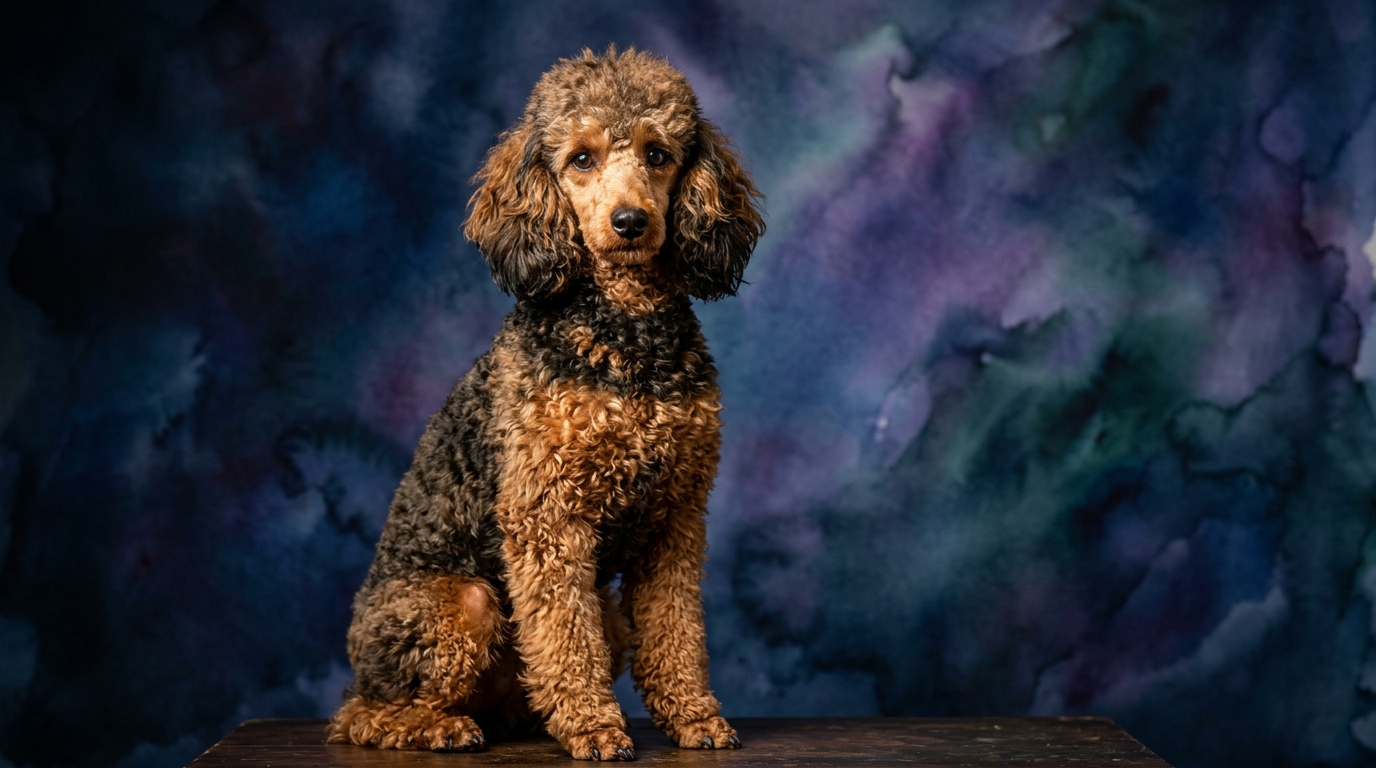
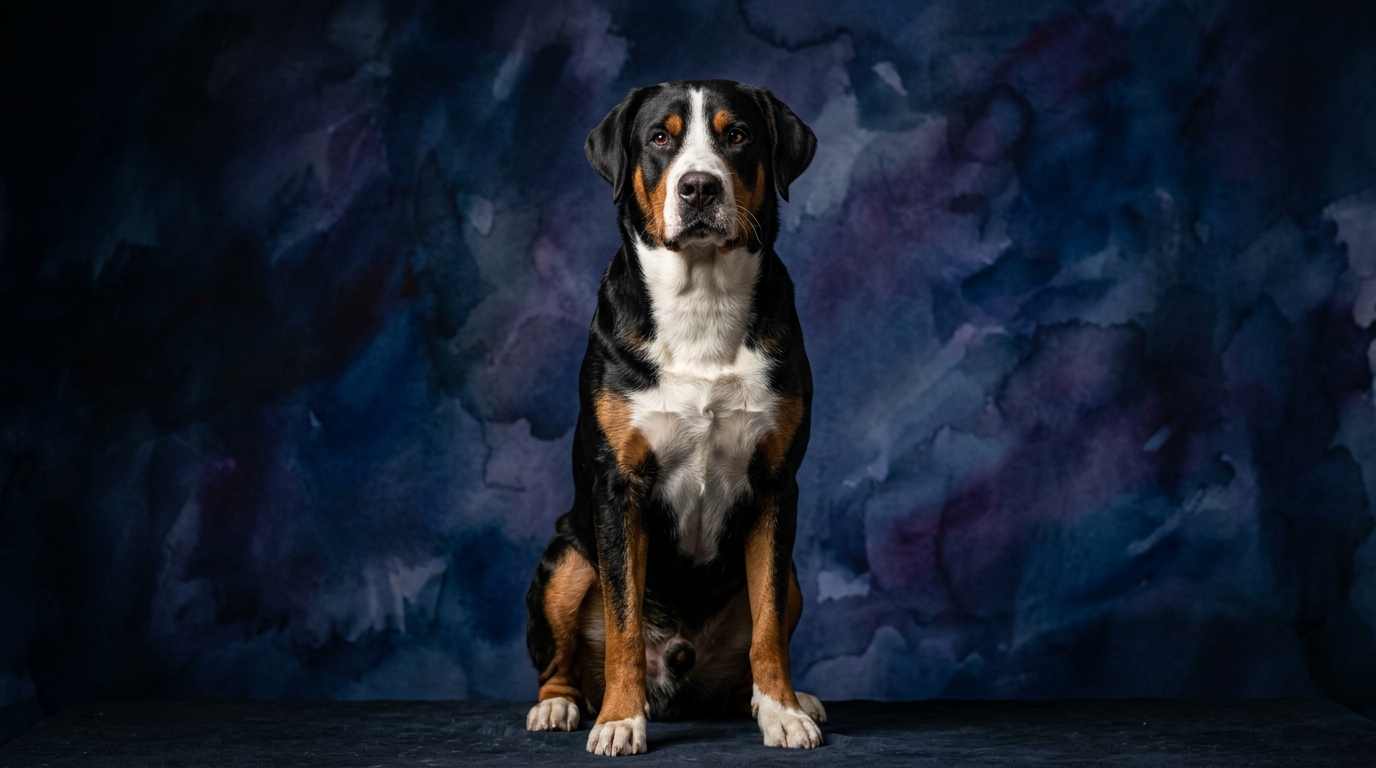
Side-by-Side IQ Profile: Poodle (Standard) vs. Greater Swiss Mountain Dog
The Poodle (Standard) presents a remarkable cognitive blueprint, consistently scoring at the highest tiers across multiple dimensions. Their Problem Solving is rated 5/5, indicating an exceptional capacity for navigating novel situations and devising solutions. Training Speed also stands at 5/5, reflecting their rapid acquisition of new commands and behaviors. Social Intelligence, at a perfect 5/5, points to a profound understanding of human cues and complex social dynamics. Their Instinctive Drive is a robust 4/5, suggesting a strong but manageable innate impulse for tasks like retrieving or agility, while Memory, at 5/5, ensures long-term retention of learned information and experiences.
In contrast, the Greater Swiss Mountain Dog exhibits a more uniformly moderate cognitive profile. Their Problem Solving ability is rated 3/5, demonstrating a solid capacity for routine tasks but potentially requiring more guidance with abstract or new challenges. Training Speed is also 3/5, meaning they learn effectively but benefit from consistent repetition and clear instruction. Social Intelligence, at 3/5, suggests they understand basic human interactions and emotional states, though perhaps not with the nuanced perceptiveness of the Poodle. Their Instinctive Drive is a balanced 3/5, reflecting a steady, purposeful motivation without overwhelming intensity, and Memory, at 3/5, indicates a reliable but not extraordinary retention of information.
Where the Poodle (Standard) Cognitively Excels
The Poodle (Standard)'s cognitive strengths are particularly evident in their analytical capabilities and speed of processing. With a 5/5 in Problem Solving, they are adept at deciphering complex puzzles, understanding multi-step tasks, and adapting to changing environments with minimal frustration. This makes them exceptional candidates for advanced obedience, intricate dog sports like agility, or even service work where independent decision-making is valuable.
Their perfect 5/5 in Training Speed means they absorb and integrate new information almost instantaneously, often requiring fewer repetitions than other breeds to master a command. This rapid learning curve allows for the teaching of a vast repertoire of tricks and behaviors, fostering a dynamic and engaging partnership with an owner who enjoys constant mental engagement. Coupled with a 5/5 in Memory, once a Poodle learns something, it is typically retained for the long haul, building a robust foundation of knowledge.
Furthermore, the Poodle’s 5/5 Social Intelligence makes them profoundly attuned to human emotions and intentions. They can often anticipate owner moods or desires, making them highly responsive companions and therapy prospects. This deep social understanding allows for subtle communication and a unique bond, where the Poodle can adapt their behavior based on nuanced social cues.
Unique Strengths of the Greater Swiss Mountain Dog's Cognitive Profile
While the Poodle excels in rapid, complex cognitive tasks, the Greater Swiss Mountain Dog's balanced 3/5 scores across all categories present a different kind of cognitive advantage: steadfastness and straightforwardness. Their 3/5 Problem Solving means they are less prone to overthinking or developing complex, unwanted "solutions" to boredom, such as elaborate escape plans or destructive behaviors born from excessive mental under-stimulation. They are content with a clear routine and predictable challenges.
The Greater Swiss Mountain Dog's 3/5 Social Intelligence can be a strength for owners who prefer a less emotionally intense companion. They understand basic cues and form strong bonds, but they may be less prone to absorbing and reflecting owner stress or anxiety. This can lead to a more consistently calm and emotionally stable presence in the home, offering a grounding influence without demanding constant, nuanced emotional interaction.
Their moderate 3/5 Instinctive Drive allows them to be versatile working dogs without a singular, overwhelming focus. Unlike breeds with extremely high drives for herding or hunting, the Swissy's drive is more generalized, making them capable of various tasks like drafting or guarding without becoming single-minded. This balanced drive, combined with their moderate memory, contributes to a reliable and predictable temperament, making them robust family members who are less likely to be driven by intense, hard-to-redirect urges.
Which Is Easier to Train and Why?
Based on their respective IQ profiles, the Poodle (Standard) is unequivocally easier to train for a wide array of tasks. Their 5/5 Training Speed means they grasp concepts almost immediately, requiring minimal repetitions to solidify new behaviors. Real behavioral differences stem from their exceptional Problem Solving and Memory scores; Poodles can generalize learned commands to new situations and retain them with remarkable longevity. This cognitive agility allows them to quickly chain multiple commands, learn complex sequences, and adapt to varying training methodologies with ease, often appearing to anticipate the next instruction.
The Greater Swiss Mountain Dog, with a 3/5 Training Speed, requires a more patient, consistent, and clear approach to training. They are capable learners, but their cognitive processing speed means they benefit significantly from repetition and well-defined commands. Behavioral differences include a tendency to learn best through positive reinforcement and a structured environment, where expectations are clear and consistent. While they may not pick up on subtle cues as quickly as a Poodle, their moderate memory ensures that once a behavior is learned through consistent practice, it will be retained, albeit potentially needing more refreshers over time.
Which Suits Active Owners vs. Relaxed Owners?
The Poodle (Standard) is an ideal match for active owners who thrive on mental engagement and dynamic interaction. Their high scores in Problem Solving, Training Speed, and Social Intelligence mean they flourish with consistent mental stimulation, such as advanced obedience, agility, rally, or even complex puzzle toys. Owners who enjoy teaching new tricks, participating in dog sports, or engaging in extensive interactive play will find the Poodle a profoundly rewarding and responsive partner, requiring significant intellectual exercise alongside physical activity.
The Greater Swiss Mountain Dog, while physically robust and requiring regular exercise, is better suited for owners who might be considered 'relaxed' in terms of *mental* demands, but still active in terms of physical activity. Their moderate cognitive scores suggest they are less prone to boredom-induced destructive behaviors from a lack of constant mental novelty. They appreciate routine walks, hikes, and structured play, but may not demand the same level of intellectual challenge as a Poodle. Owners who enjoy a steady, dependable companion for outdoor activities and a calm presence indoors, without the need for intricate training sessions daily, will find the Swissy a good fit.
The Verdict
Choose the Poodle (Standard) if you desire a highly responsive, mentally agile partner for complex training, dog sports, or a deep, nuanced social bond.
Opt for the Greater Swiss Mountain Dog if you seek a steadfast, predictable companion who is robust for outdoor activities and less demanding of constant, intricate mental stimulation.
🧠 Find Your Pet's IQ Score
Our Pet IQ Lab assessment covers 25+ tests across 5 cognitive dimensions — personalized to your breed.
Take the Full IQ Test →Frequently Asked Questions
Are Poodles prone to separation anxiety due to their high social intelligence?
Poodles' 5/5 social intelligence means they form very strong bonds and are highly attuned to their owners. While not inherently prone to anxiety, their deep connection can make them sensitive to prolonged absence, benefiting from early training to foster independence and a consistent routine.
Can a Greater Swiss Mountain Dog learn complex tricks despite moderate problem-solving scores?
Yes, a Greater Swiss Mountain Dog can learn complex tricks, but it will likely require more patience, repetition, and clear, consistent instruction than with a Poodle. Their 3/5 problem-solving and training speed mean they are capable learners, but they benefit from breaking down complex tasks into smaller, manageable steps.
Do Greater Swiss Mountain Dogs make good guard dogs with their moderate instinctive drive?
The Greater Swiss Mountain Dog's 3/5 instinctive drive, combined with their imposing size and watchful nature, makes them effective deterrents and good guardians for their family. Their drive is sufficient for alert barking and territorial awareness without being overly aggressive, preferring to deter rather than engage.