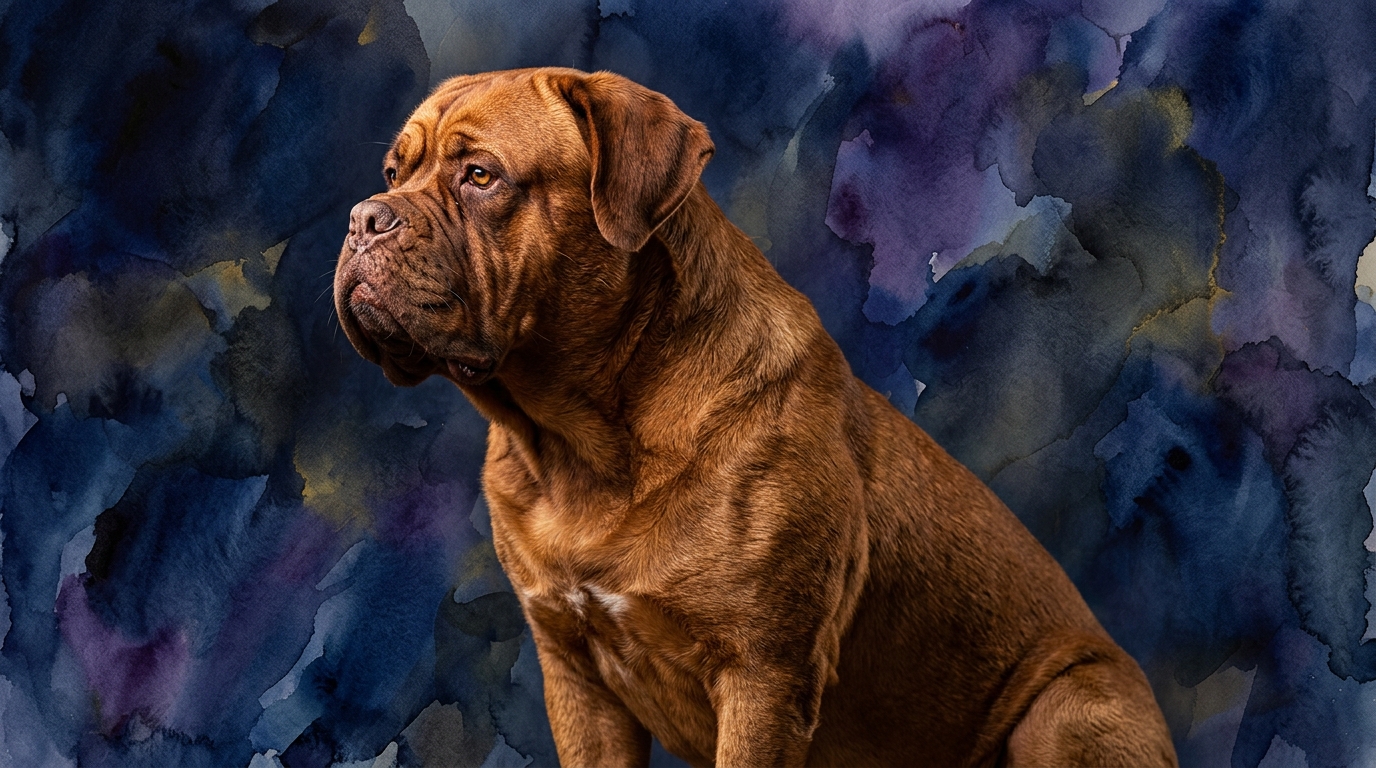
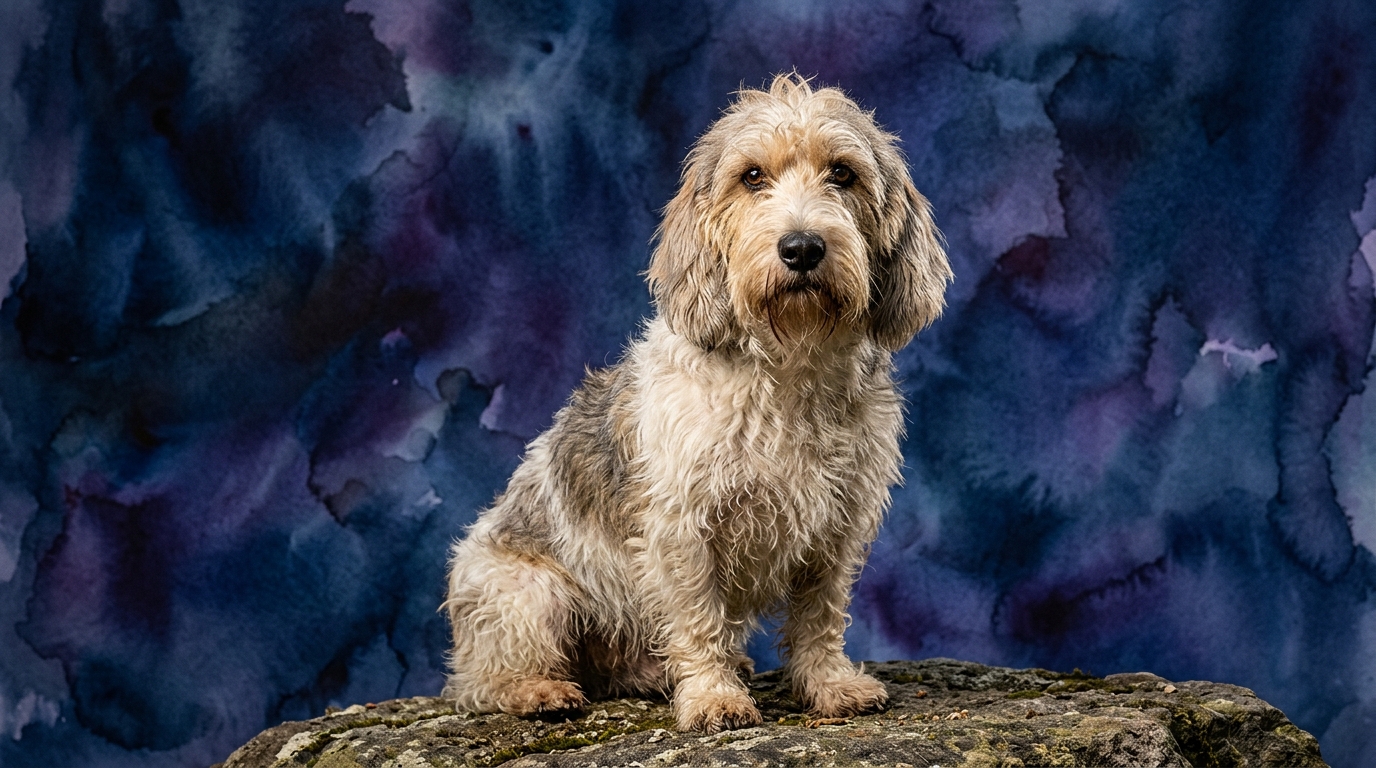
Side-by-Side Cognitive Profile: Dogue de Bordeaux vs. PBGV
The Cosmic Pet Pet IQ Lab assesses five crucial cognitive dimensions to understand a breed's mental aptitudes. For the Dogue de Bordeaux, all scores are rated at 3/5. Their Problem Solving (3/5) leans towards practical solutions concerning safety and routine, rather than complex abstract puzzles. Training Speed (3/5) indicates they learn reliably with consistent, positive methods, retaining commands well once grasped. Social Intelligence (3/5) is marked by deep attunement to their human family's emotions and dynamics, often reserved with outsiders. Instinctive Drive (3/5) centers on protection and companionship, showing vigilance without intense prey drive. Memory (3/5) is dependable for people, places, and learned behaviors, especially those related to their protective role.
The Petit Basset Griffon Vendéen also scores 3/5 across all dimensions. Their Problem Solving (3/5) excels in sensory challenges, particularly deciphering complex scent trails and navigating varied outdoor environments. Training Speed (3/5) means they learn consistently, but their independent hound nature and strong environmental distractions require engaging, patient techniques. Social Intelligence (3/5) makes them highly adaptable and outgoing, thriving on interaction with a wider 'pack' of humans and dogs. Instinctive Drive (3/5) is powerfully geared towards scent work and exploration, manifesting as persistent curiosity. Memory (3/5) is robust for recalling rewarding trails and routines, though their independence can sometimes lead to selective obedience.
Where the Dogue de Bordeaux Wins Cognitively
While sharing a 3/5 problem-solving score, the Dogue de Bordeaux's cognitive strengths distinctly emerge in roles requiring strategic guardianship and discerning social judgment within its family unit. Their problem-solving manifests as a deliberate, watchful intelligence, particularly concerning the safety of their home; they might strategically block an entryway or position themselves protectively. This breed’s 3/5 social intelligence fosters a profound, empathetic understanding of their human family’s subtle cues and emotional states, allowing for a nuanced cognitive partnership. They excel at anticipating needs and reacting to unspoken signals from their inner circle, a focused social processing distinct from the PBGV's broader sociability. Their memory, also 3/5, is particularly sharp for recalling individuals who have posed a threat or locations associated with security, reinforcing their consistent protective instincts.
Where the Petit Basset Griffon Vendéen Wins Cognitively
The Petit Basset Griffon Vendéen's cognitive prowess shines in tasks that fully engage its inherent hound instincts, particularly in sensory navigation. Despite identical 3/5 problem-solving scores, the PBGV excels at meticulously deciphering complex scent trails through varied environments, using its memory for past odors and topographical cues to solve "invisible" puzzles. This sustained, focused pursuit of a sensory goal represents a highly specialized form of intelligence. Their 3/5 instinctive drive is almost entirely dedicated to olfactory exploration, granting them an unparalleled advantage in tasks demanding prolonged attention to scent and independent decision-making in the field. Furthermore, their 3/5 social intelligence manifests as a lively, adaptable sociability, making them adept at quickly integrating into diverse human and canine groups, displaying a cheerful curiosity towards new experiences and individuals. Their memory, also 3/5, is especially robust for recalling successful scent trails or rewarding exploration routes, fueling their drive for discovery.
Which is Easier to Train and Why
Both breeds score 3/5 in training speed, indicating reliable learning, but the *nature* of their training requires different approaches. The Dogue de Bordeaux, with its working dog heritage, tends to be more handler-focused, responding well to clear leadership and positive reinforcement. Their substantial size necessitates early, consistent training for manageability, and once a command is understood, their memory ensures good retention. The primary challenge with a Dogue often lies in motivating them for tasks not directly aligned with their guarding or companionship instincts; they can be discerning about an exercise's perceived value. In contrast, the Petit Basset Griffon Vendéen's hound nature makes them highly susceptible to environmental distractions, especially scents. A PBGV might grasp a command but prioritize an interesting smell over compliance, as their 3/5 instinctive drive for exploration overrides other stimuli. Training a PBGV demands creative methods, high-value rewards, and a strategy to maintain focus amidst distractions. Therefore, while both learn consistently, the Dogue might seem easier for basic obedience in controlled settings due to its human-centric focus, whereas the PBGV requires more nuanced techniques to channel its independent, scent-driven mind.
Which Suits Active Owners vs. Relaxed Owners
The ideal owner profile for each breed significantly diverges based on lifestyle. The Dogue de Bordeaux, despite its imposing stature, is often a relatively relaxed indoor companion. Their 3/5 instinctive drive, primarily focused on guarding and family bonds, means they are content with moderate daily exercise—such as walks and yard play—preferring to unwind with their humans. They are not built for endurance or high-intensity activities. Their social intelligence, being deeply family-centric, means they thrive on close proximity and are happy as a "velcro dog" on the couch. Thus, a Dogue de Bordeaux suits owners who enjoy moderate daily activity but primarily seek a calm, devoted companion for relaxed home life.
Conversely, the Petit Basset Griffon Vendéen is unequivocally suited for active owners. Their 3/5 instinctive drive for scent work and exploration demands significant daily mental and physical stimulation. Energetic and curious, PBGVs need more than short walks; they flourish with long, varied hikes, off-leash exploration in secure areas, or participation in scent work and tracking sports. Their 3/5 social intelligence makes them enthusiastic participants in active family adventures, constantly engaging their problem-solving skills in new environments. An owner unable to provide consistent outlets for this strong drive will likely encounter a bored or destructive companion. The PBGV is ideal for those embracing an active, outdoor lifestyle, prepared to daily engage their dog's keen senses and spirited energy.
The Verdict
If you seek a loyal, protective family guardian content with moderate activity, who offers a calm, deeply devoted presence within your home, the Dogue de Bordeaux is an excellent fit.
If you lead an active, outdoor-oriented life and desire an enthusiastic, curious companion eager for adventures, scent work, and constant exploration, the Petit Basset Griffon Vendéen will truly thrive.
🧠 Find Your Pet's IQ Score
Our Pet IQ Lab assessment covers 25+ tests across 5 cognitive dimensions — personalized to your breed.
Take the Full IQ Test →Frequently Asked Questions
Do Dogue de Bordeaux and PBGV require the same amount of mental stimulation?
While both have 3/5 problem-solving and memory scores, the *type* of mental stimulation they crave differs significantly. Dogues appreciate tasks related to home security and family interaction, whereas PBGVs thrive on scent games, exploration, and activities that engage their strong hunting drives.
Are these breeds good for first-time dog owners?
Both breeds can be managed by first-time owners committed to consistent training and understanding their breed-specific needs. The Dogue's size and protective nature require confidence and early socialization, while the PBGV's independent hound tendencies and high energy demand patience and creative engagement.
How do their social intelligence scores (3/5) manifest differently?
The Dogue de Bordeaux's 3/5 social intelligence typically translates to deep, discerning bonds with its immediate family, often being reserved or wary with strangers. The Petit Basset Griffon Vendéen's 3/5 social intelligence means they are generally more broadly sociable, adaptable, and outwardly friendly with a wider range of people and dogs, embodying a cheerful "pack" member.