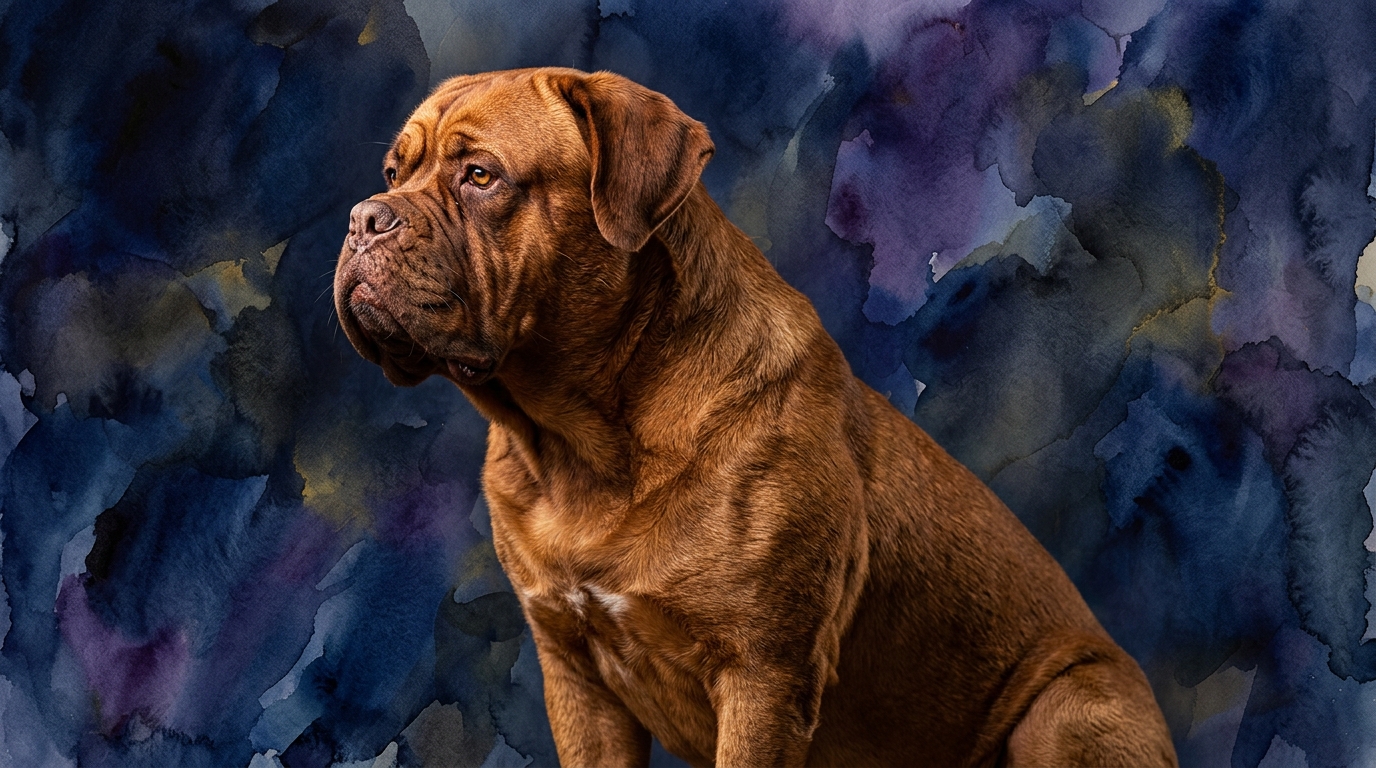
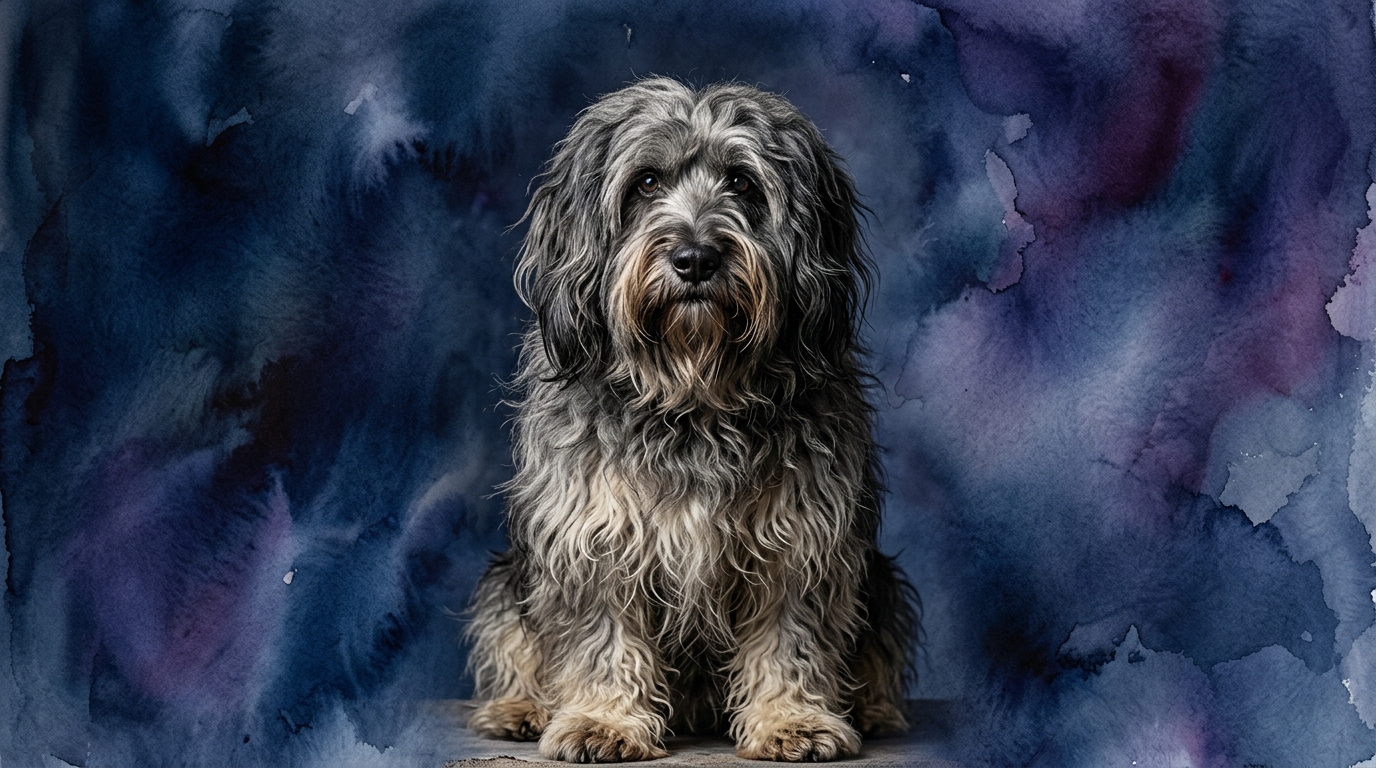
A Side-by-Side Look at Their IQ Profiles
The Cosmic Pet Pet IQ Lab evaluates canine intelligence across five critical dimensions: Problem Solving, Training Speed, Social Intelligence, Instinctive Drive, and Memory. Both the Dogue de Bordeaux and the Polish Lowland Sheepdog consistently score a 3/5 in each category, indicating a competent, steady, and capable level of cognitive function that, while not exceptional in any single area, suggests a balanced and functional intellect.
For Problem Solving (3/5), the Dogue de Bordeaux, a breed historically tasked with guarding and companionship, demonstrates a practical intelligence focused on its immediate environment. This might involve figuring out the most comfortable spot for napping, navigating household obstacles, or discerning which sounds warrant investigation. The Polish Lowland Sheepdog, on the other hand, with its herding heritage, applies its problem-solving abilities to more dynamic scenarios, such as anticipating the movement of livestock (or family members) or finding the most efficient path to achieve a goal in a complex outdoor setting.
Training Speed (3/5) for both breeds implies a steady learning curve rather than lightning-fast comprehension. The Dogue de Bordeaux learns at a deliberate pace, requiring consistent, calm reinforcement and motivation that aligns with its desire for comfort and connection. Its training success often hinges on a strong bond with its handler. The Polish Lowland Sheepdog, while also a 3/5, often exhibits a more eager-to-please attitude in training, but its herding instincts can sometimes introduce distractions or a tendency to 'herd' the trainer, requiring clear, firm guidance to maintain focus.
Social Intelligence (3/5) in the Dogue de Bordeaux manifests as a keen awareness of its human family's moods and routines, coupled with a discerning ability to assess strangers, often displaying a watchful but reserved demeanor. It understands social hierarchies within its family unit. The Polish Lowland Sheepdog's social intelligence, also a 3/5, is geared towards group dynamics. It excels at reading the subtle cues of both humans and other animals, using this understanding to influence movement and maintain order, a direct reflection of its ancestral role in managing flocks.
Instinctive Drive (3/5) in the Dogue de Bordeaux is rooted in its protective and companion animal history. This drive surfaces as a strong loyalty to its family and a natural inclination to monitor its territory, often expressed through calm vigilance rather than overt aggression. For the Polish Lowland Sheepdog, the 3/5 instinctive drive is distinctly herding-oriented. This includes a propensity to gather, manage, and even gently 'boss' other animals or people, along with a strong sense of territory and a watchful nature over its 'flock' (its family).
Memory (3/5) in both breeds indicates a solid capacity to retain learned commands, routines, and experiences over time. A Dogue de Bordeaux will reliably remember its training, the people it knows, and the boundaries of its home, forming strong associations with positive and negative interactions. A Polish Lowland Sheepdog will similarly recall training, but also demonstrates an impressive memory for routes, specific tasks, and the individual personalities and behaviors of its 'flock' members, aiding its ability to anticipate and react effectively.
Where the Dogue de Bordeaux Shows Unique Cognitive Strengths
While their scores align, the Dogue de Bordeaux demonstrates specific cognitive strengths particularly suited to its historical role as a guardian and companion. Its problem-solving at a 3/5 level often involves discerning subtle changes in its immediate environment, such as an unfamiliar car approaching or a new sound in the distance, and independently deciding if it warrants a quiet alert rather than an immediate, frantic reaction. This breed excels at a calm, deliberate assessment of potential threats, often utilizing its social intelligence to differentiate between a friend and an intruder based on nuanced human interactions. Their memory shines in retaining the 'safe' status of regular visitors and the established rhythms of the household, contributing to their reliable and steadfast presence. This makes them particularly adept at understanding and maintaining the emotional equilibrium of their home environment, providing a steady, reassuring presence.
Their 3/5 instinctive drive, focused on protection, combines with their social intelligence to make them astute observers of family dynamics, often intervening with a gentle nudge or a watchful stance if they perceive a family member is distressed or needs support. This isn't about complex planning, but rather a deep, intuitive understanding of their human companions' needs for security and comfort. They are masters of the 'gravitas' of their presence, using their physical stature and calm demeanor to convey authority and protection, a cognitive skill rooted in independent decision-making rather than constant direction from a handler.
Where the Polish Lowland Sheepdog Shows Unique Cognitive Strengths
The Polish Lowland Sheepdog, despite sharing a 3/5 across the board, showcases distinct cognitive strengths rooted in its herding lineage. Its problem-solving at this level is characterized by adaptability and quick thinking in dynamic, often unpredictable, situations. This breed can rapidly assess a changing environment, such as a child wandering too far or a gate left ajar, and instinctively take action to 'gather' or 'contain' the situation. Their social intelligence is particularly adept at reading the body language and intentions of others, not just for threats, but for influencing movement and cohesion within a group. This allows them to subtly guide people or other pets, often without direct commands.
The 3/5 instinctive drive towards herding, combined with their memory, makes them exceptional at recalling complex spatial layouts and routines. They can remember where everyone 'belongs' and quickly notice if something is out of place, acting to restore order. This breed's cognitive prowess lies in its ability to manage and organize, often demonstrating a proactive approach to maintaining boundaries and ensuring the safety of its 'flock.' Their intelligence is less about passive guardianship and more about active, engaging management of their environment and its inhabitants, making them highly responsive to subtle cues and capable of independent action to fulfill their perceived duties.
Which is Easier to Train, and Why?
Given their identical 3/5 training speed scores, neither breed is inherently 'easier' to train; rather, they present different types of training experiences that suit varying handler styles. The Dogue de Bordeaux learns at a steady pace but requires a patient, consistent handler who understands its desire for comfort and its potential for stubbornness if not properly motivated. They respond exceptionally well to positive reinforcement and training that builds a strong, trusting relationship, as they are less inclined towards repetitive, high-energy drills. Their training often feels more like a collaborative effort, where respect and understanding are paramount, and a calm approach yields the best results. They might take longer to master complex sequences, but once learned, their memory ensures strong retention.
The Polish Lowland Sheepdog, while also a 3/5 for training speed, often appears more eager and responsive in training sessions due to its inherent drive to work and please. However, their strong herding instincts mean they can be prone to distraction or attempting to 'manage' the training session themselves, which can be perceived as challenging without proper guidance. They thrive on mental stimulation and varied tasks, benefiting from engaging, positive reinforcement methods that channel their energy and intelligence. Their quick wits mean they can learn new commands readily, but consistency is key to override their instinctive tendencies. An owner seeking an active training partner might find the PLS more 'fun' and responsive, while an owner preferring a calm, deliberate approach might find the Dogue de Bordeaux's training journey more rewarding for its steadfast loyalty.
Which Suits Active Owners vs. Relaxed Owners?
The Dogue de Bordeaux, with its historically calm and watchful demeanor, generally suits more relaxed owners. While they are large dogs and do require regular, moderate exercise to maintain health and prevent boredom, they are not typically high-energy athletes. Their cognitive strengths lean towards quiet observation, companionship, and a steadfast presence. They are content with a comfortable home environment, daily walks, and quality time spent with their family. Owners who appreciate a dignified, loyal companion that doesn't demand constant strenuous activity will find the Dogue de Bordeaux a fitting choice. Their mental stimulation often comes from observing their surroundings and interacting with their human companions in a calm, settled manner, making them ideal for those who prefer a less frenetic pace of life.
Conversely, the Polish Lowland Sheepdog is better suited for active owners. Their herding background imbues them with significant energy and a strong need for both physical and mental engagement. These dogs thrive on activities that challenge their problem-solving and instinctive drives, such as agility, obedience, herding trials, or long, exploratory walks. Without sufficient outlets for their intelligence and energy, a PLS can become bored and potentially destructive or overly 'bossy' in an attempt to create their own 'work.' Owners who enjoy an active lifestyle, are committed to consistent training, and can provide ample opportunities for their dog to think and move will find the Polish Lowland Sheepdog an incredibly rewarding and engaging companion. They need a job to do, even if that job is navigating a complex hike or mastering a new trick.
The Verdict
Choose the Dogue de Bordeaux if you seek a calm, steadfast companion whose protective instincts manifest as quiet vigilance, ideal for a more relaxed household valuing deep loyalty and a deliberate pace.
Opt for the Polish Lowland Sheepdog if you're an active owner ready to engage a bright, energetic dog that thrives on mental and physical challenges, eager to participate in dynamic activities and 'manage' its world.
🧠 Find Your Pet's IQ Score
Our Pet IQ Lab assessment covers 25+ tests across 5 cognitive dimensions — personalized to your breed.
Take the Full IQ Test →Frequently Asked Questions
Do Dogue de Bordeaux and Polish Lowland Sheepdogs require similar amounts of mental stimulation?
While both breeds score 3/5 in problem-solving and memory, their needs for mental stimulation differ in nature. The Dogue de Bordeaux thrives on calm observation and consistent routines, engaging with its environment in a more deliberate, watchful manner. The Polish Lowland Sheepdog, however, requires more active, varied mental challenges that tap into its herding instincts, like puzzle toys, training games, or activities that allow it to 'manage' its surroundings.
Are the social intelligence scores of 3/5 for both breeds interpreted the same way?
No, their 3/5 social intelligence manifests differently due to their distinct histories. The Dogue de Bordeaux's social intelligence is often geared towards discerning family dynamics and assessing strangers for protection, valuing a stable, predictable social environment. The Polish Lowland Sheepdog's social intelligence is more about reading group dynamics and influencing movement, a reflection of its herding role, making it highly attuned to subtle cues for interaction and guidance.
Given identical instinctive drive scores, how do their drives impact daily life differently?
Despite both scoring 3/5, their instinctive drives are channeled differently. The Dogue de Bordeaux's drive is primarily protective and companion-oriented, leading to a calm, watchful presence and strong loyalty to its family. The Polish Lowland Sheepdog's drive is distinctly herding, manifesting as a propensity to gather, manage, and organize its environment and its inhabitants, which requires consistent outlets to prevent it from 'herding' family members or other pets excessively.