
Side-by-Side Cognitive Profiles: Decoding the 3/5 Score
The Cosmic Pet Pet IQ Lab assesses canine intelligence across five critical dimensions, each rated on a scale of 1 to 5. Intriguingly, both the Dogue de Bordeaux and the Scottish Terrier achieve a solid 3/5 in every category, suggesting a balanced, functional intelligence rather than extreme specialization. However, the *application* of this 'average' score varies dramatically between these two distinct breeds, rooted in their historical roles and inherent temperaments. A 3/5 score generally indicates a dog that can learn effectively, solve moderate problems, and adapt to its environment, but may require consistent effort and specific motivators.
For the Dogue de Bordeaux, a breed from the Working group, its 3/5 Problem Solving score reflects an ability to think through situations deliberately, often in a protective or familial context, rather than with impulsive speed. This might manifest as carefully navigating around obstacles to guard its family or patiently assessing a new situation before reacting. Its 3/5 Training Speed indicates that while it can grasp commands, it thrives on repetition and positive reinforcement, building strong, lasting habits over time. The Dogue's 3/5 Social Intelligence points to a nuanced understanding of human emotions and family dynamics, making it a sensitive companion that reads its immediate social circle well, though it can be reserved with strangers. Its 3/5 Instinctive Drive is typically expressed through a strong protective instinct and territorial awareness, rather than a high prey drive, focusing its natural impulses on guarding its home and people. Finally, its 3/5 Memory means it retains lessons and experiences effectively, remembering routines, positive interactions, and any perceived threats, contributing to its reliable and steadfast nature.
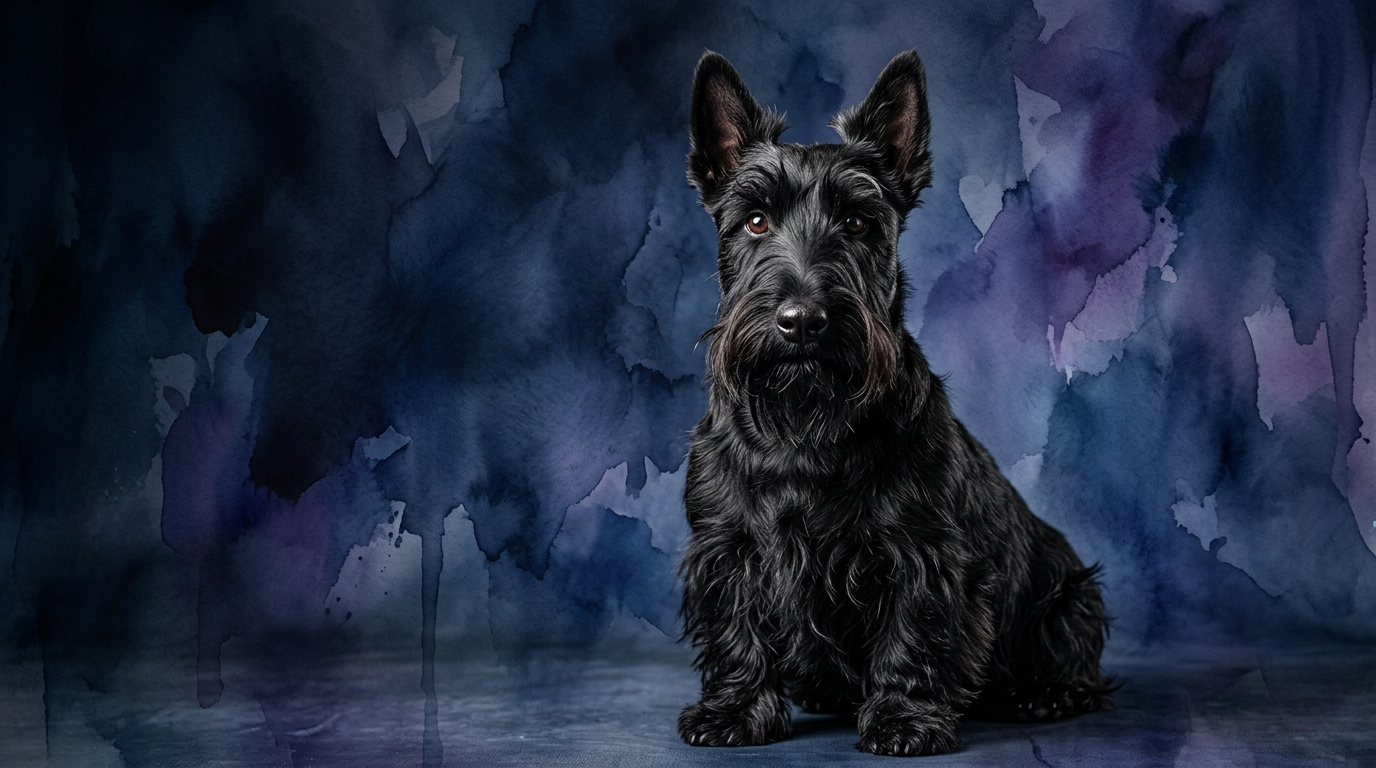
The Scottish Terrier, a member of the Terrier group and Coren-ranked at #65 for working and obedience intelligence, also scores 3/5 across the board, but its expression is distinctly different. Its 3/5 Problem Solving manifests as tenacious independence; a Scottie might methodically work to open a gate or dig under a fence to pursue an interesting scent, driven by its innate curiosity and determination. Its 3/5 Training Speed means it learns commands with reasonable pace, but its strong-willed nature often requires creative motivation and firm, consistent boundaries to ensure compliance. The Scottie's 3/5 Social Intelligence is characterized by a discerning nature; it forms deep, loyal bonds with its chosen family but can be quite aloof or reserved with outsiders, carefully evaluating new individuals. Its 3/5 Instinctive Drive is powerfully expressed through its terrier heritage: a strong prey drive, an urge to dig, and a keen territorial instinct for vermin control. This drive is a fundamental part of its problem-solving approach. Lastly, the Scottish Terrier's 3/5 Memory is robust, allowing it to remember specific routes, hunting strategies, and past interactions, both positive and negative, influencing its future responses and independent actions.
Where the Dogue de Bordeaux Excels Cognitively
Despite identical scores, the Dogue de Bordeaux demonstrates particular cognitive strengths rooted in its guardian role and imposing physique. Its problem-solving, while not rapid, often involves a thoughtful, deliberate assessment of social situations. For instance, a Dogue might instinctively position itself between a perceived threat and a family member, demonstrating a complex understanding of spatial relationships and protective intent without explicit command. This breed excels in tasks requiring calm, measured responses and an acute awareness of its environment for the safety of its pack. Its social intelligence allows it to pick up on subtle cues of distress or happiness within its family, responding with appropriate comfort or watchful vigilance. The Dogue's memory contributes to its reliability as a protector; it distinctly recalls who belongs and who is an unfamiliar presence, making it a consistent and discerning guardian. This deep-seated understanding of its social role is where its intelligence truly shines, enabling it to be a stable and comforting presence.
Where the Scottish Terrier Excels Cognitively
The Scottish Terrier's cognitive strengths lie in its independent thought, tenacity, and acute sensory perception, all hallmarks of its terrier heritage. Its problem-solving capabilities are often geared towards achieving its own goals, particularly those related to its instinctive drives. A Scottie might ingeniously figure out how to access a forbidden area or outsmart a small rodent, showcasing persistent and creative strategies. Their memory is particularly sharp for locations and effective methods of pursuit, making them formidable hunters in their historical context. This breed's social intelligence, while selective, allows it to form incredibly deep and intuitive bonds with its chosen few, often anticipating their needs and moods with surprising accuracy. The Scottie's cognitive edge is in its ability to operate independently, making quick, decisive judgments in the field and relentlessly pursuing objectives, even if it means employing a bit of charming stubbornness to get its way. Their intelligence is a tool for self-reliance and achieving specific, often instinct-driven, outcomes.
Training Dynamics: Dogue de Bordeaux vs. Scottish Terrier
When it comes to training, both breeds present unique challenges despite their 3/5 training speed, largely due to their differing motivations and temperaments. The Dogue de Bordeaux, with its immense size and strength, necessitates early and consistent training to ensure it is a well-mannered companion. Its training speed implies it learns reliably, but it's not a breed that picks up complex tricks in a single session. They require patient, positive reinforcement and a clear, gentle leader to build trust and establish strong habits. Their deliberation means they process commands thoroughly, and once a behavior is learned, it tends to be deeply ingrained. The challenge often lies in maintaining engagement and ensuring the dog understands *why* a command is important, especially given their protective instincts which may sometimes override obedience if they perceive a threat.
The Scottish Terrier, conversely, learns at a similar pace but brings a significant dose of terrier stubbornness and independence to the training ring. While they can quickly grasp concepts, their willingness to comply is often contingent on their own desires or perceived value of the reward. Their strong instinctive drives, particularly for chasing and digging, can make recall or 'leave it' commands particularly challenging in stimulating environments. Training a Scottie requires creativity, humor, and unwavering consistency. Owners must make training feel like a game and prove that listening to commands is more rewarding than following their own independent impulses. Their Coren rank of #65 reflects their capacity for obedience, but it also hints at the effort required to channel their strong will effectively. Therefore, while both learn at a similar rate, the Dogue's training focuses on managing power and building trust, while the Scottie's training centers on channeling independence and strong drives.
Lifestyle Fit: Active Owners vs. Relaxed Owners
The cognitive profiles and behavioral tendencies of these two breeds naturally align with different owner lifestyles. The Dogue de Bordeaux, despite its imposing stature, typically suits a more relaxed, yet consistent, owner. While they require moderate daily exercise to maintain health, they are not high-energy dogs that demand constant activity. Their intelligence manifests in their calm presence and their role as a steadfast family guardian, making them ideal for owners who appreciate a quiet, loving companion happy to spend time lounging with their people. They thrive in environments where they feel secure in their routine and can fulfill their protective duties from a comfortable vantage point. Their social intelligence and memory make them deeply attuned to their family's rhythm, preferring a predictable and harmonious home life.
The Scottish Terrier, on the other hand, despite its small size, often suits a more active and engaged owner, particularly one who appreciates a dog with a strong personality and independent streak. While their physical exercise needs are moderate, their cognitive needs are substantial. Owners must be prepared to provide mental stimulation through puzzle toys, training games, and opportunities to explore safely, allowing them to engage their problem-solving skills and instinctive drives. A Scottie thrives with an owner who understands and can manage its terrier tenacity, providing consistent boundaries and channeling its energy into appropriate outlets. They are not content to be mere lapdogs; their intelligence demands engagement and purpose, making them a better fit for owners who enjoy an active partnership and appreciate a dog with a robust, spirited character.
The Verdict
Choose the Dogue de Bordeaux if you seek a calm, steadfast companion whose intelligence is expressed through deliberate protection and deep familial bonds, fitting a more relaxed but consistent home environment.
Opt for the Scottish Terrier if you appreciate a spirited, independent dog whose intelligence shines in tenacious problem-solving and discerning loyalty, suiting an engaged owner prepared for consistent mental stimulation and managing strong terrier drives.
🧠 Find Your Pet's IQ Score
Our Pet IQ Lab assessment covers 25+ tests across 5 cognitive dimensions — personalized to your breed.
Take the Full IQ Test →Frequently Asked Questions
Does a 3/5 IQ score mean these breeds are not smart?
Absolutely not; a 3/5 score indicates a solid, functional intelligence, meaning these breeds are perfectly capable of learning, problem-solving, and adapting effectively. It suggests they are not at the extreme ends of cognitive speed or complexity, but possess a balanced mental capacity well-suited to companionship and their historical roles.
How does the Coren rank for Scottish Terriers relate to the Pet IQ Lab scores?
The Coren rank primarily measures 'working and obedience intelligence,' which aligns with aspects like training speed and understanding commands, placing the Scottie at #65. The Pet IQ Lab provides a more granular, multi-dimensional view, assessing problem-solving, social intelligence, instinctive drive, and memory separately, offering a broader understanding of a breed's cognitive make-up beyond just obedience.
Can the intelligence of these breeds be improved through training?
Yes, consistent and appropriate training, coupled with mental enrichment, can certainly enhance how either breed utilizes its inherent intelligence. While their baseline cognitive scores (3/5) are fixed, engaging them in new challenges, positive reinforcement, and clear communication can sharpen their problem-solving skills, improve training responsiveness, and deepen their social understanding.