
Side-by-Side Cognitive Profiles
The Cosmic Pet Pet IQ Lab evaluates canine cognition across five distinct dimensions: problem-solving, training speed, social intelligence, instinctive drive, and memory. Examining these metrics for the Dogue de Bordeaux and Toy Poodle offers a nuanced view of their mental landscapes.
The Dogue de Bordeaux, a breed from the Working group, presents a consistent cognitive profile with a score of 3/5 in every category. Its Problem Solving at 3/5 indicates a deliberate, rather than instantaneous, approach to new challenges; they can learn to navigate obstacles but may require patient guidance or more attempts to find a solution. Training Speed, also at 3/5, suggests new commands are absorbed at a moderate pace, necessitating consistent repetition to cement behaviors. Social Intelligence at 3/5 means they possess a solid understanding of familiar human cues and routines within their family unit, forming strong bonds without necessarily demonstrating exceptional insight into subtle external social dynamics. An Instinctive Drive of 3/5 reflects a balanced level of innate behaviors, such as guarding, which is present but typically well-controlled. Finally, their Memory at 3/5 implies they retain learned information and experiences steadily, remembering training and familiar faces but possibly benefiting from occasional refreshers for less frequently practiced tasks.
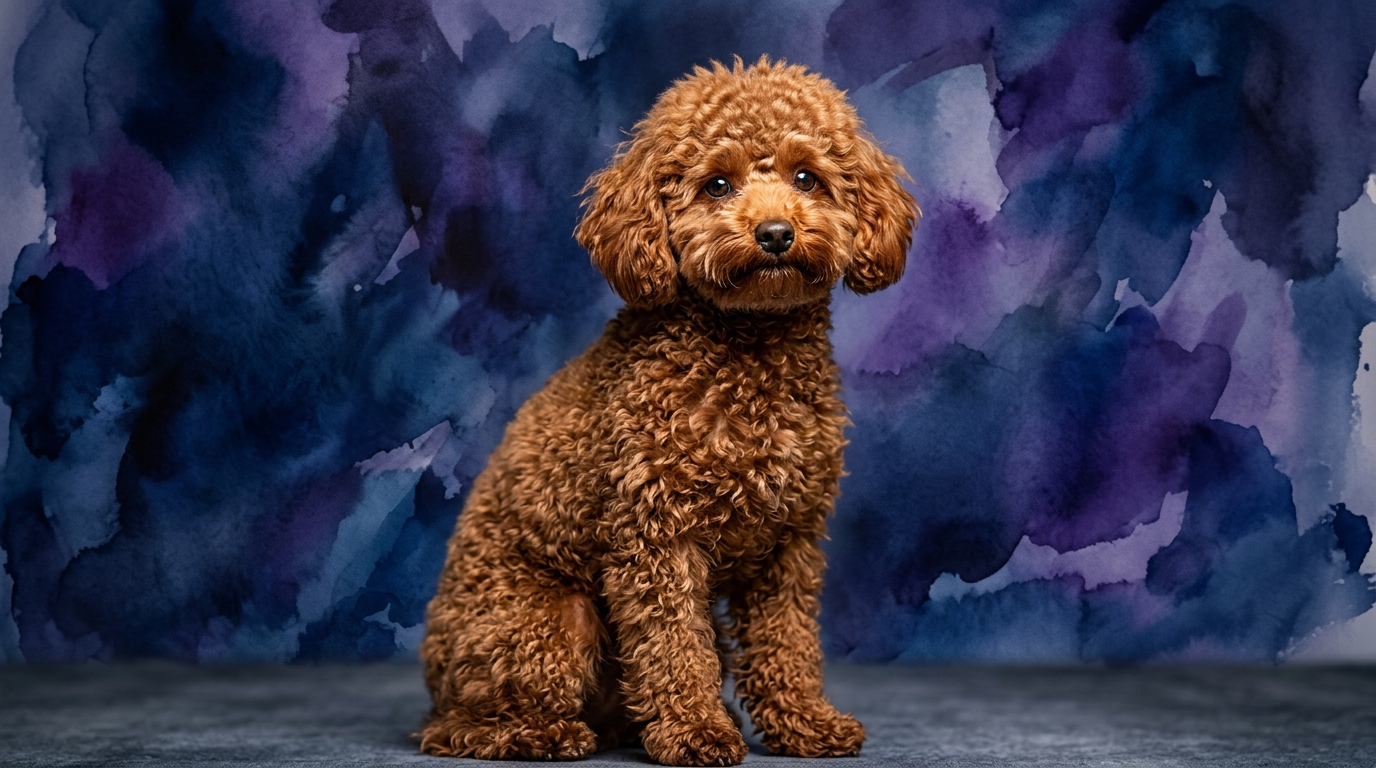
In contrast, the Toy Poodle, a member of the Toy group and a Coren rank #2 breed, showcases a profile marked by impressive cognitive peaks. Its Problem Solving reaches a formidable 5/5, indicating an exceptional capacity to analyze novel situations and often devise creative, efficient solutions, thriving on mental challenges. Training Speed also scores a perfect 5/5, signifying a rapid assimilation of new commands and concepts, often picking up cues after just a few repetitions. Like the Dogue de Bordeaux, its Social Intelligence stands at 3/5, demonstrating a sound understanding of social cues within its trusted circle and attunement to its owners' moods, though not necessarily superior insight into complex interactions beyond immediate family. Its Instinctive Drive is also 3/5, representing a moderate and manageable level of natural drives like retrieving or chasing, which they enjoy engaging in. Crucially, the Toy Poodle's Memory achieves a 5/5, pointing to an outstanding ability to recall training, past experiences, and routines, ensuring that once a behavior is learned, it tends to stick, significantly contributing to its training responsiveness.
Where the Dogue de Bordeaux's Cognition Excels
While the Dogue de Bordeaux doesn't boast the rapid processing scores of the Toy Poodle, its cognitive strength lies in its profound consistency and deliberate processing. A uniform score of 3/5 across all five IQ dimensions signifies a balanced, steadfast mental approach. This breed's cognition favors a measured calm, allowing it to maintain a composed presence and often react to its environment with considered responses rather than impulsive action. Their moderate instinctive drive (3/5) means they are generally less prone to being overly distracted by fleeting environmental stimuli, enabling them to remain focused on their primary role of companionship and watchful guardianship without excessive excitability. This steady mental foundation contributes to a predictable and stable temperament, highly valued in a large working-class companion.
Where the Toy Poodle's Cognition Shines
The Toy Poodle’s cognitive strengths are undeniably prominent, particularly in problem-solving, training speed, and memory, where it achieves a perfect 5/5 score. This breed exhibits an extraordinary capacity for analytical thought, quickly dissecting novel situations and devising effective solutions, whether it involves figuring out a complex puzzle toy or navigating a new environment. Its rapid training speed means it absorbs new commands with remarkable efficiency, often mastering tasks in significantly fewer repetitions than many other breeds. Coupled with its exceptional memory, the Toy Poodle not only learns quickly but retains that knowledge over extended periods, making it highly adept at complex sequences of commands and retrieving learned information reliably. These high scores underscore a sharp, adaptable intellect that thrives on mental engagement and complex challenges.
Training Aptitude: Dogue de Bordeaux vs. Toy Poodle
When considering ease of training, the differences between these two breeds are quite distinct, largely driven by their respective training speed and memory scores. The Toy Poodle, with its 5/5 in both Training Speed and Memory, is exceptionally receptive to instruction. They grasp new concepts quickly and retain them with minimal reinforcement, making them highly responsive to positive, engaging training methods. Their eagerness to please and mental agility mean they often find training sessions stimulating and enjoyable, readily forming connections between commands and actions. This breed is well-suited for owners who enjoy teaching complex tricks or participating in competitive obedience and agility, as their cognitive makeup allows for rapid progression.
The Dogue de Bordeaux, with a 3/5 in both Training Speed and Memory, requires a more patient and consistent approach. They absorb information at a moderate pace, meaning that repetition is crucial for commands to become ingrained. While not inherently stubborn, their more independent and self-assured nature means motivation must be carefully considered; they respond best to clear, consistent, and reward-based training that respects their deliberate processing style. Owners training a Dogue de Bordeaux should be prepared for longer training sessions, broken into smaller, manageable steps, and understand that mastery may take more time. However, once a Dogue learns a command, its consistency (3/5 across all traits) ensures reliability, provided the training foundation was solid.
Matching Owners: Active Engagement vs. Relaxed Companionship
The cognitive profiles of the Dogue de Bordeaux and Toy Poodle also provide insight into which type of owner they might best suit. The Toy Poodle, with its superior problem-solving and memory, possesses an active mind that demands regular mental stimulation. Owners who enjoy teaching new tricks, engaging in puzzle games, or participating in dog sports like agility or obedience will find the Toy Poodle a highly rewarding companion. This breed thrives on intellectual challenges and varied activities, preventing boredom and channeling their mental energy constructively. While physically capable of activity, their mental needs are often paramount, making them ideal for owners who are committed to providing consistent mental enrichment.
The Dogue de Bordeaux, on the other hand, with its consistent 3/5 scores, generally has lower demands for complex mental stimulation. This breed is often content with a predictable routine and a calm, stable environment. While they require appropriate physical exercise for their large size, such as daily walks, they aren't typically driven by a constant need for novel intellectual tasks or high-octane mental challenges. They excel as a calm, watchful presence and are well-suited for owners who appreciate a steadfast companion and are prepared for moderate physical activity but prefer a less mentally demanding dog day-to-day. Their stable temperament and consistent cognitive pace make them excellent companions for relaxed owners who value a loyal, composed presence.
The Verdict
Choose the Dogue de Bordeaux if you seek a calm, steadfast companion with a balanced temperament and appreciate a dog whose cognitive strengths lie in deliberate processing and unwavering presence.
Opt for the Toy Poodle if you desire a highly trainable, mentally agile companion who excels at problem-solving and thrives on consistent mental challenges and interactive learning experiences.
🧠 Find Your Pet's IQ Score
Our Pet IQ Lab assessment covers 25+ tests across 5 cognitive dimensions — personalized to your breed.
Take the Full IQ Test →Frequently Asked Questions
Does a dog's physical size correlate with its cognitive abilities?
The comparison between the Dogue de Bordeaux and Toy Poodle suggests that physical size does not directly dictate cognitive ability. While the Dogue de Bordeaux is a massive breed, its IQ scores are consistently moderate, whereas the much smaller Toy Poodle demonstrates superior problem-solving, training speed, and memory, illustrating that mental agility transcends physical stature.
How does 'Social Intelligence' manifest similarly or differently in these two breeds, given their identical 3/5 score?
Both breeds scoring 3/5 in Social Intelligence means they possess a sound capacity to understand and respond to the social cues of their immediate human family, forming deep, intuitive bonds. For the Dogue de Bordeaux, this often translates to a profound loyalty and attentiveness to their owner's needs within their protective sphere, while for the Toy Poodle, it's expressed through their attentiveness and desire to interact closely with their family, sensing moods and intentions to maintain harmony within their trusted circle.
Are Dogue de Bordeaux considered difficult dogs to train?
The Dogue de Bordeaux is not inherently difficult to train, but their 3/5 scores in Training Speed and Memory indicate that they require more patience, consistency, and repetition than breeds with higher scores. Success with a Dogue involves understanding their deliberate processing, using positive reinforcement, and ensuring training is engaging and consistent, recognizing that mastery may take more time but results in a reliable companion.