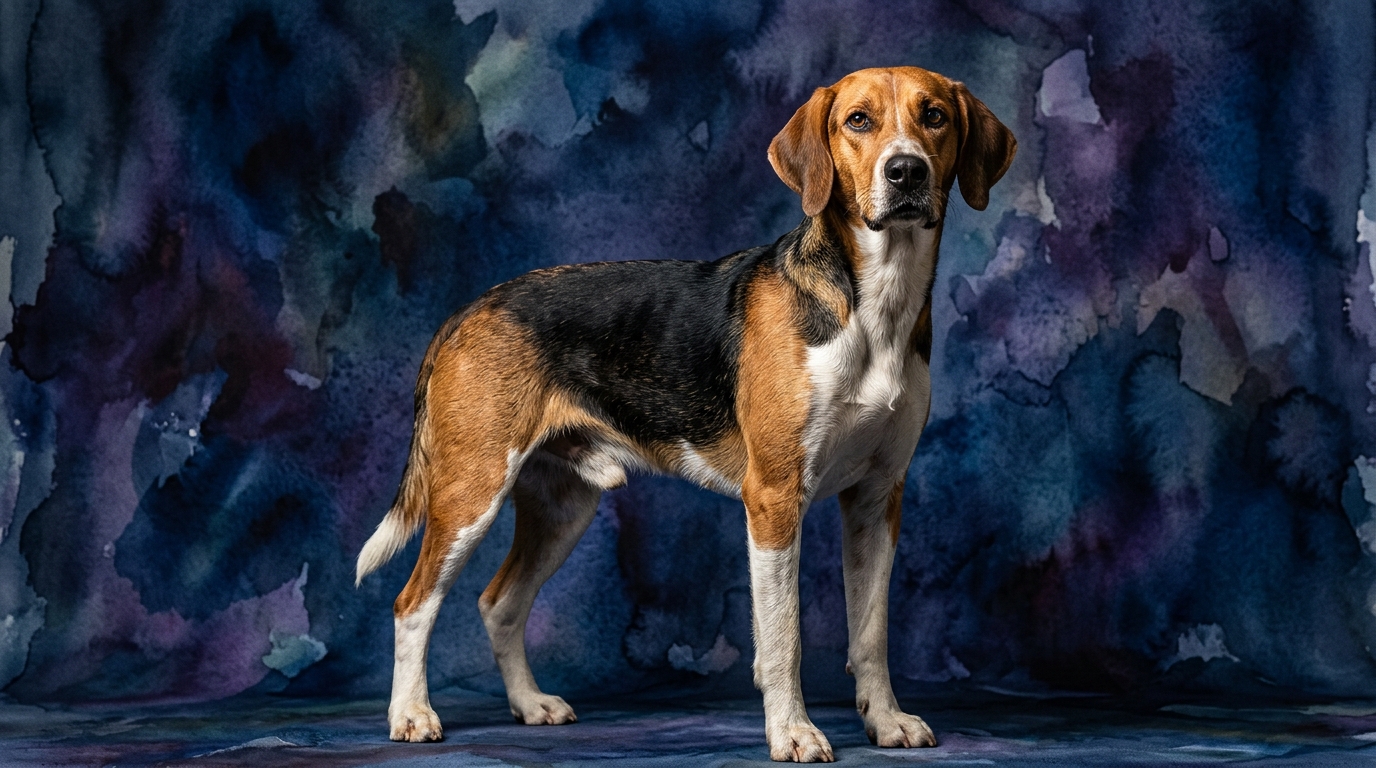

Side-by-Side IQ Profile: Understanding Average Scores
The Cosmic Pet Pet IQ Lab employs a five-dimensional framework to evaluate canine intelligence, providing a nuanced perspective beyond simple rankings. Interestingly, both the English Foxhound, a robust Hound, and the Chinese Crested, a delicate Toy breed, register identical scores of 3/5 across all five categories: Problem Solving, Training Speed, Social Intelligence, Instinctive Drive, and Memory. This parity in scores does not imply identical minds, but rather suggests that their cognitive abilities, while average on a general scale, manifest through vastly different lenses shaped by their breed's historical function and inherent temperament.
For the English Foxhound, Problem Solving (3/5) is rooted in their heritage, primarily focused on navigating complex terrains and tracking scents over long distances. Their cognitive efforts are geared towards sustained pursuit, requiring mental stamina to interpret environmental cues and deduce the path of quarry. They excel at sequential problem-solving related to their original function, such as following a broken trail or bypassing obstacles in their path, rather than abstract puzzles.
Their Training Speed (3/5) reflects a methodical learning process. While capable of absorbing commands, their strong independent streak and deep-seated scent drive mean that external distractions can sometimes overshadow a quick response to instruction. This isn't a lack of ability, but rather a prioritization of their primary sensory input—their nose—which can make consistent, focused training require more patience and high-value reinforcement to maintain their attention.
Social Intelligence (3/5) for the Foxhound points to their pack-oriented nature. They understand hierarchical structures within a group and communicate effectively with other hounds through body language and vocalizations. With humans, their social understanding often manifests as loyalty to their immediate 'pack' or family, recognizing routines and responding to clear, consistent leadership, though they may not display the same intense emotional attunement as some companion breeds.
Their Instinctive Drive (3/5) is overwhelmingly dominated by their powerful prey drive and an insatiable desire to follow a scent. This drive is not merely a preference but a profound physiological and psychological need, compelling them to explore, track, and vocalize. This intrinsic motivation shapes much of their behavior and cognitive focus, making them highly driven by their nose and the thrill of the chase, a consistent feature of their breed.
A 3/5 Memory rating for the Foxhound indicates their capacity to retain complex scent patterns and spatial information over time. They can remember intricate routes, the location of specific scents, and learned hunting strategies. This memory is highly specialized, allowing them to recall past experiences relevant to their tracking tasks, such as where a scent was lost or a particular shortcut through a field, demonstrating a practical recall for their working life.
Chinese Cresteds, also scoring 3/5 in Problem Solving, approach challenges with a different set of priorities. Their cognitive efforts are often directed towards understanding their human environment, figuring out how to gain attention, secure comfort, or access desired items. This might involve intricate maneuvers to open a cabinet for treats, or subtle cues to prompt a lap cuddle, demonstrating a nuanced understanding of their domestic surroundings and human companions.
Matching the Foxhound with a 3/5 Training Speed, the Chinese Crested learns at an average pace, yet their sensitivity plays a significant role. They respond best to gentle, positive reinforcement and can become withdrawn or resistant if training methods are harsh or inconsistent. Their learning curve is influenced by their desire to please and their emotional state, meaning patience and a nurturing approach are key to unlocking their full training potential.
The 3/5 Social Intelligence of the Chinese Crested is deeply rooted in their companion role. They are exceptionally perceptive of human emotions and social dynamics within a household, often acting as sensitive barometers of their owner's mood. They excel at forming strong, almost empathetic bonds, understanding subtle gestures and vocal tones, and adjusting their behavior to maintain harmony and closeness within their chosen human 'pack.'
Their Instinctive Drive (3/5) is primarily expressed as a profound need for companionship and comfort. This manifests as a strong desire to be physically close to their owners, burrowing under blankets, and seeking warmth. While they may exhibit a mild chase drive for toys, their core motivation revolves around social interaction and maintaining their position as a cherished family member, rather than independent pursuit, defining their daily motivations.
With a 3/5 Memory, Chinese Cresteds are adept at remembering daily routines, the location of their favorite sleeping spots, and specific human behaviors that lead to rewards or attention. Their memory is finely tuned to their domestic existence, allowing them to anticipate events, recall past interactions with family members, and remember where their comfort items or secret treat stashes are hidden, showcasing a memory tailored to their home life.
Where the English Foxhound Excels Cognitively
The English Foxhound's cognitive strengths truly shine in environments demanding sustained focus and independent decision-making related to sensory input. Their problem-solving, though rated equally at 3/5, is uniquely adapted for environmental navigation and unraveling complex scent puzzles. They possess a mental fortitude for enduring long periods of focused work, a trait directly linked to their historical role, allowing them to systematically process vast amounts of olfactory information without immediate human direction. This specific application of their problem-solving makes them exceptional in tasks requiring persistence and a deep engagement with the natural world's subtle cues, far beyond what a Chinese Crested would typically encounter or prioritize.
Their instinctive drive, also rated 3/5, represents a distinct cognitive advantage in tasks requiring intense motivation for pursuit and exploration. This isn't just about physical stamina but a mental commitment to a goal, driven by an inherent desire to track. This relentless cognitive drive enables them to overcome distractions and maintain focus on a distant objective, a form of mental tenacity that is less pronounced in breeds whose primary purpose is companionship. The Foxhound's memory, at 3/5, is also specialized for recalling intricate scent trails and geographical layouts, allowing them to retrace steps or remember successful hunting patterns with remarkable accuracy, a cognitive skill set invaluable for their historical function and independent work.
Where the Chinese Crested Excels Cognitively
The Chinese Crested's cognitive edge lies in their sophisticated social and emotional attunement, a specialized application of their 3/5 social intelligence. While both breeds score similarly, the Crested's social cognition is finely tuned to human interaction, allowing them to interpret subtle shifts in mood, vocal tone, and body language with remarkable precision. This translates into an ability to adapt their behavior to maintain harmony and elicit desired responses from their human companions, a complex form of social problem-solving that prioritizes emotional connection. Their capacity for empathy and understanding the nuances of human family dynamics gives them a distinct advantage in navigating the intricate social landscape of a domestic home, a cognitive domain where their insights often surpass those of more independently focused breeds.
Their problem-solving, also 3/5, is particularly adept at manipulating their environment and their humans to achieve comfort or attention. This manifests as creative strategies for getting under blankets, finding the warmest sunbeams, or using vocalizations and nudges to initiate interaction. This practical, comfort-oriented problem-solving demonstrates a different kind of cognitive agility, focused on optimizing their immediate well-being and social engagement within a home setting. Furthermore, their memory, rated 3/5, is acutely focused on routines and human-specific behaviors, allowing them to anticipate events like meal times, walks, or cuddle sessions with a predictive accuracy that enhances their domestic integration and comfort and keeps them closely connected to their human caregivers.
Which Is Easier to Train and Why?
Determining which breed is 'easier' to train, given their identical 3/5 training speed, depends heavily on the training goals and the owner's approach. The Chinese Crested often presents fewer challenges in a typical obedience setting due to their strong desire for human companionship and their sensitivity to handler feedback. They are typically eager to please and, when motivated by positive reinforcement and gentle methods, can quickly learn household manners and tricks. Their smaller size and lower instinctive drive (in terms of independent pursuit) mean they are generally less distracted by external environmental stimuli during training sessions, allowing for more consistent focus on the handler and quicker responses to cues.
The English Foxhound, while equally capable of learning at an average pace (3/5 training speed), often requires a more experienced and patient trainer. Their powerful instinctive drive for scenting can be a significant 'distraction' from human-directed tasks. A Foxhound's nose will frequently override a command if an interesting scent is present, requiring trainers to work harder to maintain their attention and make training more rewarding than the allure of a trail. Their independent nature, cultivated over centuries of working autonomously, means they may not always see the immediate benefit of a command if it doesn't align with their intrinsic motivations. Therefore, while both learn at a similar rate when focused, achieving that focus and consistent compliance can be more effortful with a Foxhound, especially without understanding their breed-specific drives.
Which Suits Active Owners vs. Relaxed Owners?
For active owners seeking a canine partner for outdoor adventures, the English Foxhound is generally the more suitable choice. Their robust build, remarkable stamina, and inherent love for exploration make them ideal companions for long hikes, trail running, or even participating in scent work and tracking sports. Their 3/5 instinctive drive translates into a genuine need for consistent, vigorous exercise that engages both their body and their incredible nose. Owners who can provide ample opportunities for off-leash exploration in secure areas, or structured activities that tap into their tracking abilities, will find the Foxhound a fulfilling, energetic partner, whose cognitive needs are met through challenging outdoor environments.
Conversely, the Chinese Crested is an excellent match for more relaxed owners who prefer indoor activities, shorter walks, and abundant cuddle time. Their smaller size and lower exercise requirements mean they thrive in apartment settings or homes with smaller yards. While they enjoy play, their 3/5 instinctive drive is primarily geared towards companionship and comfort, making them content with being close to their humans. Owners who appreciate a dog that is emotionally attuned, enjoys quiet evenings, and can fulfill their need for warmth and affection will find the Chinese Crested's social intelligence and memory for routines perfectly align with a more relaxed lifestyle. They are perfectly happy to solve the 'problem' of finding the warmest lap or the coziest blanket and thrive on consistent, gentle attention.
The Verdict
Choose the English Foxhound if you are an active, outdoors-oriented individual or family seeking a resilient, independent partner for sustained physical activity and engaging their powerful scenting instincts. They thrive with consistent exercise and mental challenges that leverage their tracking abilities and enduring focus in expansive environments.
Opt for the Chinese Crested if you desire a sensitive, devoted companion who excels in domestic settings, thrives on close human interaction, and whose cognitive strengths shine in understanding emotional nuances and securing comfort within a relaxed home environment. They are content with a moderate activity level and cherish time spent closely with their humans.
🧠 Find Your Pet's IQ Score
Our Pet IQ Lab assessment covers 25+ tests across 5 cognitive dimensions — personalized to your breed.
Take the Full IQ Test →Frequently Asked Questions
Do English Foxhounds make good family pets despite their hunting background?
Yes, English Foxhounds can be loyal and affectionate family members, especially when provided with sufficient exercise and mental stimulation. Their pack nature means they often get along well with children and other dogs, though their strong prey drive requires careful management around smaller pets and consistent training to ensure good manners.
Are Chinese Cresteds difficult to care for due to their unique appearance?
While their hairless variety requires specific skin care like sunscreen and moisturizing, and the Powderpuff variety needs regular grooming, their overall care is manageable. Their small size and moderate exercise needs make them relatively easy to integrate into many lifestyles, provided their strong need for companionship and protection from extreme weather is consistently met.
How do the cognitive scores of these breeds compare to more traditionally 'intelligent' dogs?
Both breeds scored 3/5 across the board, indicating average cognitive abilities within the Pet IQ Lab framework. This places them as capable learners and problem-solvers, though perhaps not as quick to grasp complex abstract concepts or execute a vast array of commands as breeds often ranked at the very top of traditional intelligence lists, which might score 4/5 or 5/5 in some dimensions, but they excel in their specific cognitive domains.