
Side-by-Side IQ Profile
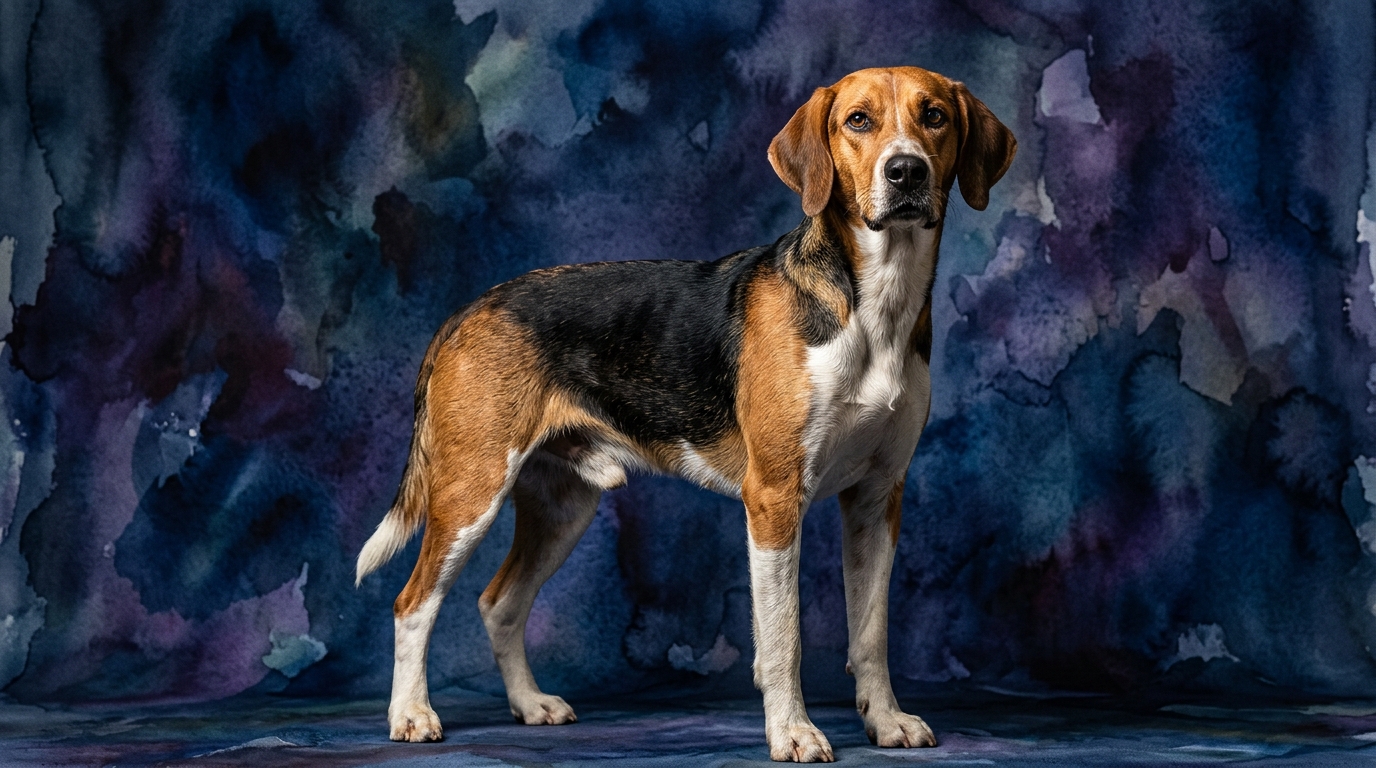
**English Foxhound (Hound, Not Coren-ranked):** This breed’s cognitive profile is a testament to its specialized history. Its **Problem Solving (3/5)** centers on scent-based challenges, meticulously following complex trails and overcoming environmental obstacles to reach a quarry. This isn't about abstract puzzles but practical, real-world tracking. **Training Speed (3/5)** reflects their independent nature; while capable of learning, their strong drive to follow scent can sometimes override handler cues, requiring consistent, patient reinforcement. Their **Social Intelligence (3/5)** is geared towards pack dynamics, understanding the subtle communications within a group of hounds and their human hunt leaders, rather than intricate human emotional nuances. **Instinctive Drive (3/5)** is powerfully focused on scenting and pursuit, a relentless engine for their primary function. Finally, **Memory (3/5)** serves their tracking needs, recalling specific scent paths and geographical layouts encountered during a chase.
**Miniature Poodle (Non-Sporting, Coren rank #2):** The Miniature Poodle presents a different cognitive blueprint, reflecting its heritage as a water retriever and later, a sophisticated companion. Their **Problem Solving (5/5)** is exceptional, demonstrating a remarkable capacity to analyze novel situations, figure out complex mechanisms, and adapt strategies for desired outcomes. This translates to quick understanding of new commands or puzzle toys. **Training Speed (5/5)** is a defining characteristic; they grasp new concepts and commands with astonishing rapidity, often requiring fewer repetitions than many other breeds. Their **Social Intelligence (3/5)** is solid, allowing them to form strong bonds and interpret human moods and intentions effectively, though perhaps not with the nuanced sensitivity of some specialized companion breeds. **Instinctive Drive (3/5)**, while present, is highly adaptable; it can be channeled into various activities from retrieving to agility, rather than being singularly focused. Their **Memory (5/5)** is outstanding, enabling them to retain a vast repertoire of commands, routines, and experiences over extended periods, contributing significantly to their trainability and versatility.
Where English Foxhound Wins Cognitively
The English Foxhound's cognitive strengths are profoundly rooted in its specialized function. This breed's advantage lies in its unparalleled ability to process and interpret olfactory information, a skill far surpassing most other breeds. Their problem-solving, rated 3/5, is specifically tailored to dissecting and pursuing complex scent trails across varied terrain, demonstrating exceptional focus and endurance in this domain. A Foxhound can mentally map an intricate scent journey, filtering out countless environmental distractions to lock onto a target odor, a feat that requires sustained cognitive effort and determination. Their instinctive drive, also 3/5, is a powerful and unwavering internal compass, propelling them forward with a singular purpose that is difficult for other breeds to replicate. While their memory is 3/5, it is specifically optimized for recalling scent patterns and geographical routes, allowing them to navigate and persist in a chase over long distances and durations, making them masters of the hunt.
Where Miniature Poodle Wins Cognitively
The Miniature Poodle's cognitive superiority shines in areas demanding adaptability, rapid learning, and abstract reasoning. With a Problem Solving score of 5/5, they demonstrate a remarkable capacity to understand and manipulate their environment, quickly figuring out how to open gates, solve complex puzzle toys, or devise strategies to get what they want. Their Training Speed, also 5/5, is unmatched by the Foxhound; they absorb new commands and routines with incredible efficiency, often requiring only a few repetitions before mastery. This rapid acquisition of knowledge is further bolstered by their Memory, rated 5/5, allowing them to retain a vast vocabulary of cues and complex sequences of behaviors over long periods. This combination makes them exceptionally versatile in performance sports like obedience, agility, and even specialized assistance work, where understanding intricate instructions and executing them flawlessly is paramount. Their ability to generalize learned behaviors to new contexts also sets them apart, indicating a flexible and advanced cognitive architecture.
Which Is Easier to Train and Why
When assessing ease of training, the Miniature Poodle holds a distinct advantage over the English Foxhound, primarily due to their superior Training Speed and Memory scores. The Poodle, with 5/5 in both dimensions, exhibits an inherent eagerness to engage with human instruction and a remarkable ability to process and retain new commands quickly. They often respond well to positive reinforcement methods, showing a strong desire to please their handler and generalize learned behaviors efficiently across different environments. Their focused attention on their human companion allows for more precise communication and faster skill acquisition, making them highly receptive to advanced obedience or trick training.
In contrast, the English Foxhound, scoring 3/5 in Training Speed and Memory, presents a different training dynamic. While capable of learning, their independent nature and powerful instinctive drive for scent work mean they require more patience and consistency. A Foxhound's attention can be easily diverted by an intriguing scent, making it challenging to maintain focus on handler-centric tasks, especially in stimulating outdoor environments. Training a Foxhound often involves leveraging their natural drives, such as using scent games as rewards, rather than relying solely on abstract commands. Their memory is excellent for tracking routes, but less so for arbitrary obedience cues that don't align with their core instincts, meaning more repetitions and creative methods are often necessary to achieve reliable responses.
Which Suits Active Owners vs Relaxed Owners
Both the English Foxhound and the Miniature Poodle are breeds that thrive with active engagement, making neither truly suited for genuinely relaxed owners who prefer minimal interaction or exercise. However, the *nature* of that activity differs significantly.
The English Foxhound is an ideal companion for owners who embrace a robust, outdoor-centric lifestyle. Their powerful instinctive drive and endurance demand extensive, consistent physical exercise, ideally involving opportunities to follow scents over long distances in secure, expansive areas. Owners must be prepared for daily, vigorous activity, such as long hikes, trail running, or participation in scent work or field trials. Their cognitive satisfaction comes from engaging their nose and covering ground, making them less suitable for owners whose idea of activity is a short walk around the block or indoor games.
The Miniature Poodle also requires regular activity, but their needs are more adaptable and versatile. While they enjoy long walks and runs, their cognitive and physical stimulation can also come from diverse activities like agility, obedience, rally, or even interactive puzzle toys and trick training. They thrive on mental engagement with their owner, making them suitable for active individuals who enjoy structured training, performance sports, or varied daily routines that incorporate both physical exercise and mental challenges. For an owner who might have less time for extensive outdoor excursions but can provide consistent indoor mental stimulation and moderate physical activity, the Poodle's adaptable nature might be a more fitting choice than the Foxhound's singular focus on scent and endurance.
The Verdict
Choose the English Foxhound if you seek a dedicated scenting partner for extensive outdoor adventures, valuing independence in the field and prepared for patient, consistent training focused on their natural drives.
Opt for the Miniature Poodle if you desire a highly adaptable and versatile companion who excels in rapid learning, structured training, and diverse performance activities, thriving on close engagement and mental challenges.
🧠 Find Your Pet's IQ Score
Our Pet IQ Lab assessment covers 25+ tests across 5 cognitive dimensions — personalized to your breed.
Take the Full IQ Test →Frequently Asked Questions
Do English Foxhounds make good family pets despite their independent nature?
Yes, English Foxhounds can be affectionate family members, especially when properly socialized from a young age. Their social intelligence, while pack-oriented, allows them to bond well with their human "pack," though their independent streak means they may not be as constantly attentive as some other companion breeds. They generally get along well with children and other dogs.
Can a Miniature Poodle excel in scent work like a Foxhound?
While Miniature Poodles have a good sense of smell and can certainly participate in scent detection sports, their instinctive drive is not as singularly focused or enduring for tracking as the English Foxhound. They can be trained to follow scents with great precision due to their problem-solving and training speed, but they won't possess the same deep-seated, relentless drive for the hunt.
How do the memory differences impact daily life with these breeds?
The Miniature Poodle's superior memory means they will quickly recall routines, commands, and boundaries, making household training and consistent behavior easier to establish and maintain. An English Foxhound's memory, while excellent for tracking, may require more consistent reinforcement for arbitrary commands, and they might be more inclined to "forget" a rule if a compelling scent distraction arises.