
Side-by-Side IQ Profile
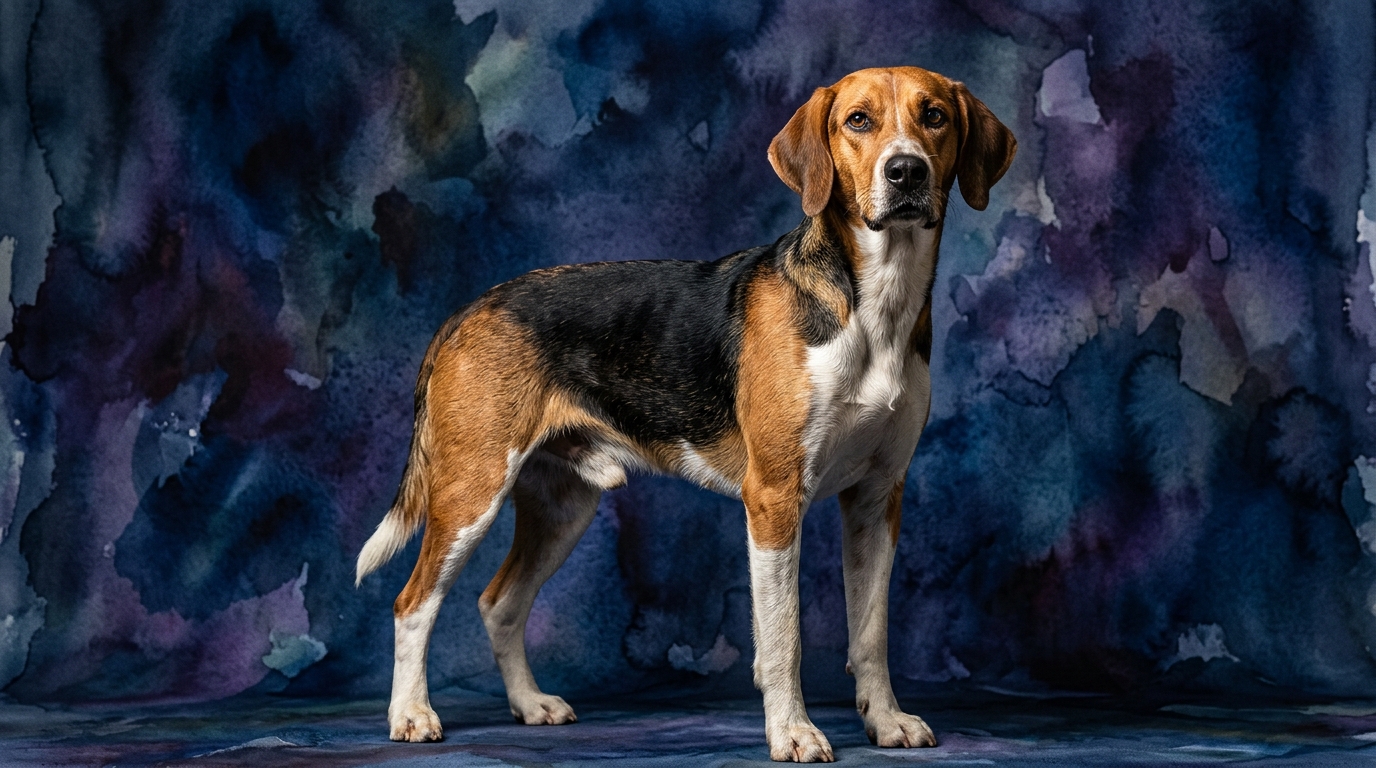
**English Foxhound:** For this breed, a **Problem Solving (3/5)** score reflects their capacity for independent thought when pursuing a scent, adeptly navigating challenging terrain, overcoming obstacles, and deducing the most probable path a quarry might have taken, often requiring sustained focus over long distances. Their **Training Speed (3/5)** indicates they can grasp commands efficiently, particularly those relevant to their work, though their strong, independent drive means learning often requires significant repetition and high-value motivation, as a compelling scent trail can easily overshadow human directives. **Social Intelligence (3/5)**, honed in a pack environment, allows them sophisticated social cognition among canines, understanding hierarchies and cooperative strategies, with human interaction often focused on understanding handler's roles within the hunt. Their **Instinctive Drive (3/5)** is a powerful, unwavering inclination for scent tracking and pursuit, demanding outlets for this profound natural inclination. Finally, their **Memory (3/5)** is particularly keen for scent trails and the geography of their hunting grounds, allowing them to recall complex routes and patterns of past pursuits.
**Russian Toy:** For the Russian Toy, a **Problem Solving (3/5)** score often appears in their ability to manipulate their environment to achieve comfort or attention, figuring out how to get a favorite toy from a tight spot or communicating a desire for a walk through specific actions. Their **Training Speed (3/5)** allows them to be surprisingly quick to pick up new commands and tricks, often motivated by praise and the desire to please their primary caregiver, though their sensitivity means training must be consistently positive and gentle. Their **Social Intelligence (3/5)** enables them to excel in reading human emotional states and adapting their behavior accordingly, forming incredibly strong bonds with their family and demonstrating a nuanced understanding of household routines and moods. The Russian Toy's **Instinctive Drive (3/5)** manifests as a strong companion drive, a desire to be near their people, and an instinct for alerting their household to perceived intrusions with their characteristic bark. Their **Memory (3/5)** allows them to exhibit clear recall for routines, specific people, and past interactions, remembering where treats are kept and which commands lead to rewards, anticipating future occurrences like meal times or walks.
Where English Foxhound Wins Cognitively
Despite identical numerical scores, the English Foxhound's cognitive strengths are uniquely honed by centuries of selective breeding for a specific, demanding task. Their win lies in the *endurance and focus* of their problem-solving and memory when applied to scent work. A Foxhound's 3/5 in problem-solving translates to an unparalleled ability to maintain concentration on a faint scent trail for hours, overcoming physical and environmental challenges with unwavering determination. Their memory isn't just about recall; it’s about piecing together a complex sensory puzzle over vast distances and time, remembering the nuances of a specific scent and its trajectory across varied terrains. This sustained, goal-oriented cognitive effort, often performed independently or in loose cooperation within a pack, is where their specific intelligence shines brightest, surpassing the typical demands placed on a companion breed. Their social intelligence, while less focused on human emotional nuance, is exceptionally developed for cooperative, non-verbal communication within a working pack, a sophisticated form of group cognition distinct from individual companion bonding.
Where Russian Toy Wins Cognitively
The Russian Toy's cognitive triumphs, while also scoring 3/5, manifest in a sphere entirely different from the Foxhound's. Their specific advantage lies in their *adaptability and nuanced social engagement* within a human-centric environment. A Russian Toy’s 3/5 in social intelligence enables them to be exceptionally attuned to human emotions and household dynamics. They excel at deciphering subtle human cues, often anticipating their owner's needs or moods before they are explicitly expressed. This level of intimate social cognition allows for deep, reciprocal bonds and makes them highly responsive to their family’s routine and emotional climate. Their problem-solving, though perhaps not involving vast landscapes, is acutely applied to navigating complex social situations or manipulating their immediate environment for comfort and interaction. Furthermore, their instinctive drive, while not for the hunt, is powerfully directed towards companionship and alert-barking, showcasing a keen awareness of their immediate surroundings and a strong desire to protect their perceived territory and family, which requires constant social processing.
Which Is Easier to Train and Why
While both breeds score 3/5 for training speed, the *ease* of training differs significantly due to their inherent motivations and distractions. The Russian Toy generally presents an easier training experience for the average pet owner. Their strong desire to please their human companion, coupled with a typically lower distraction threshold for external stimuli compared to a Foxhound, makes them highly receptive to positive reinforcement. They thrive on praise, treats, and interactive play, often eager to learn new commands and tricks to earn attention and affection. Their small size also means that any 'mistakes' during training are usually less impactful or physically challenging to manage.
The English Foxhound, conversely, can be a more challenging breed to train for those unfamiliar with hound behavior, despite their identical training speed score. Their formidable instinctive drive for scent work often overrides human commands when a compelling smell is present. A Foxhound might grasp a command quickly in a distraction-free environment, but applying that command when their nose is to the ground, following an irresistible trail, requires immense patience, consistency, and a deep understanding of their innate impulses. Training a Foxhound means constantly competing with the most powerful drive in their existence, requiring creative motivation and a willingness to manage their independent spirit, rather than expect unquestioning obedience.
Which Suits Active Owners vs Relaxed Owners
The choice between an English Foxhound and a Russian Toy hinges significantly on an owner's lifestyle and activity level. The English Foxhound is unequivocally suited for highly active owners who embrace an outdoor, adventurous lifestyle. These dogs possess boundless stamina and require extensive daily exercise, ideally involving scent work or long, vigorous runs in secure areas. They thrive in environments where they can engage their powerful hunting instincts, whether through organized dog sports like tracking or simply long hikes. Their robust nature and independent streak mean they are not content with short walks around the block; they need a dedicated owner who can channel their energy and intelligence into purposeful activity, often alongside other dogs in a pack environment.
The Russian Toy, in contrast, is an excellent match for more relaxed owners, though they are certainly not sedentary. While they enjoy daily walks and playful sessions, their exercise requirements are modest compared to a Foxhound. They are content with indoor play, short strolls, and thrive on close companionship and interaction with their family. Their adaptability makes them ideal for apartment living or homes with smaller yards, as long as they receive consistent attention and mental stimulation through interactive toys and gentle training. Owners who prioritize a strong emotional bond, enjoy lap cuddles, and appreciate a less physically demanding canine companion will find the Russian Toy to be a delightful fit.
The Verdict
Choose the English Foxhound if you are an experienced, highly active individual or family deeply committed to providing extensive exercise, mental stimulation rooted in scent work, and patient, consistent training for an independent, driven hound.
Choose the Russian Toy if you desire a devoted, intelligent companion dog that thrives on close human interaction, adapts well to diverse living situations, and requires moderate exercise and gentle, positive training methods.
🧠 Find Your Pet's IQ Score
Our Pet IQ Lab assessment covers 25+ tests across 5 cognitive dimensions — personalized to your breed.
Take the Full IQ Test →Frequently Asked Questions
Do identical IQ scores mean both breeds are equally "smart" in all situations?
No, identical scores from The Cosmic Pet Pet IQ Lab indicate similar *potential* across the measured dimensions, but their application and manifestation differ significantly based on breed purpose and physical attributes. A Foxhound's problem-solving in tracking is distinct from a Russian Toy's problem-solving in a home environment.
Can a Russian Toy participate in activities like scent work, despite being a Toy breed?
Absolutely! While not bred for large-scale hunting, Russian Toys can excel in scent detection games and nose work classes, leveraging their 3/5 problem-solving and instinctive drive in a smaller, more controlled setting, enjoying the mental stimulation.
How does a Foxhound's social intelligence (3/5) translate to family life without a pack?
In a family setting, a Foxhound's social intelligence allows them to integrate into the "human pack," understanding household dynamics and individual roles. While they may not seek constant cuddles, they appreciate companionship and can form strong bonds, especially if given outlets for their natural drives and opportunities for social interaction with other dogs.