Side-by-Side IQ Profile
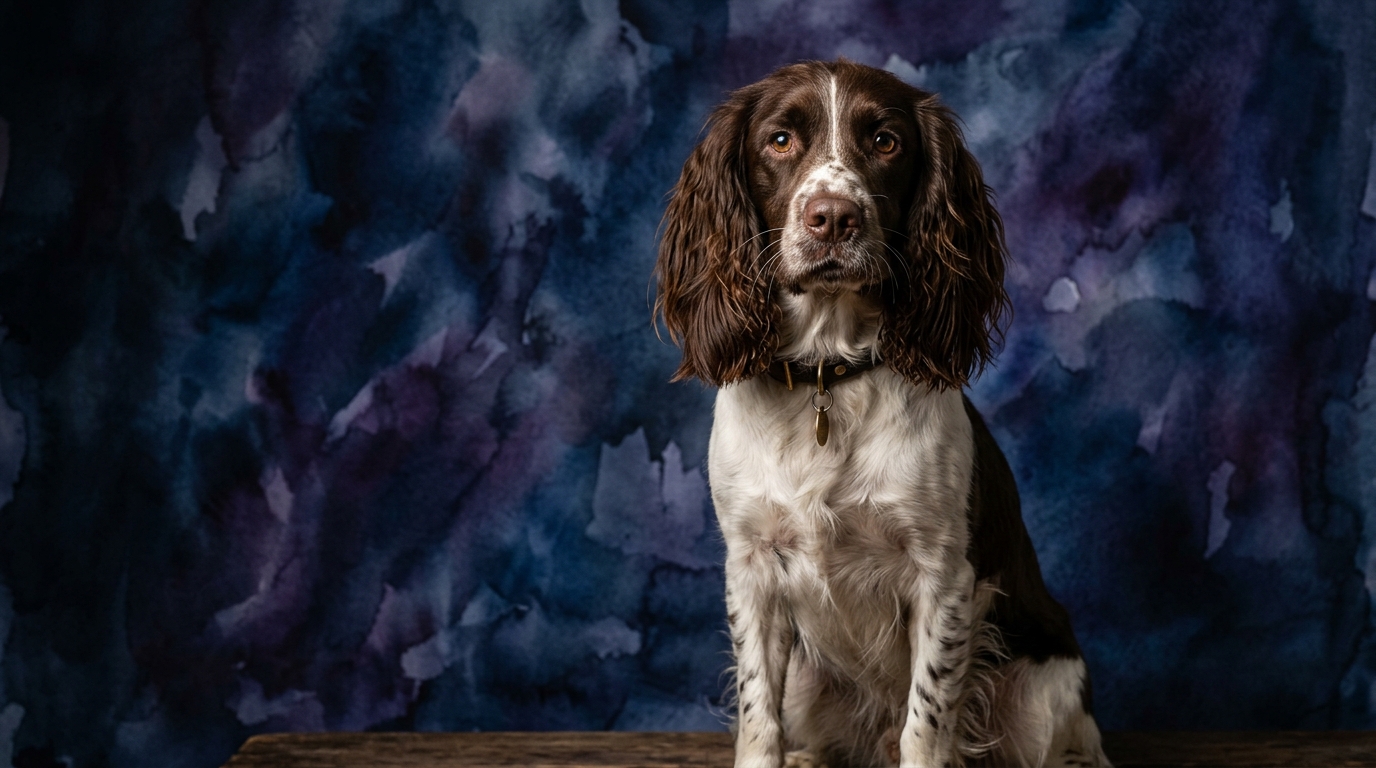
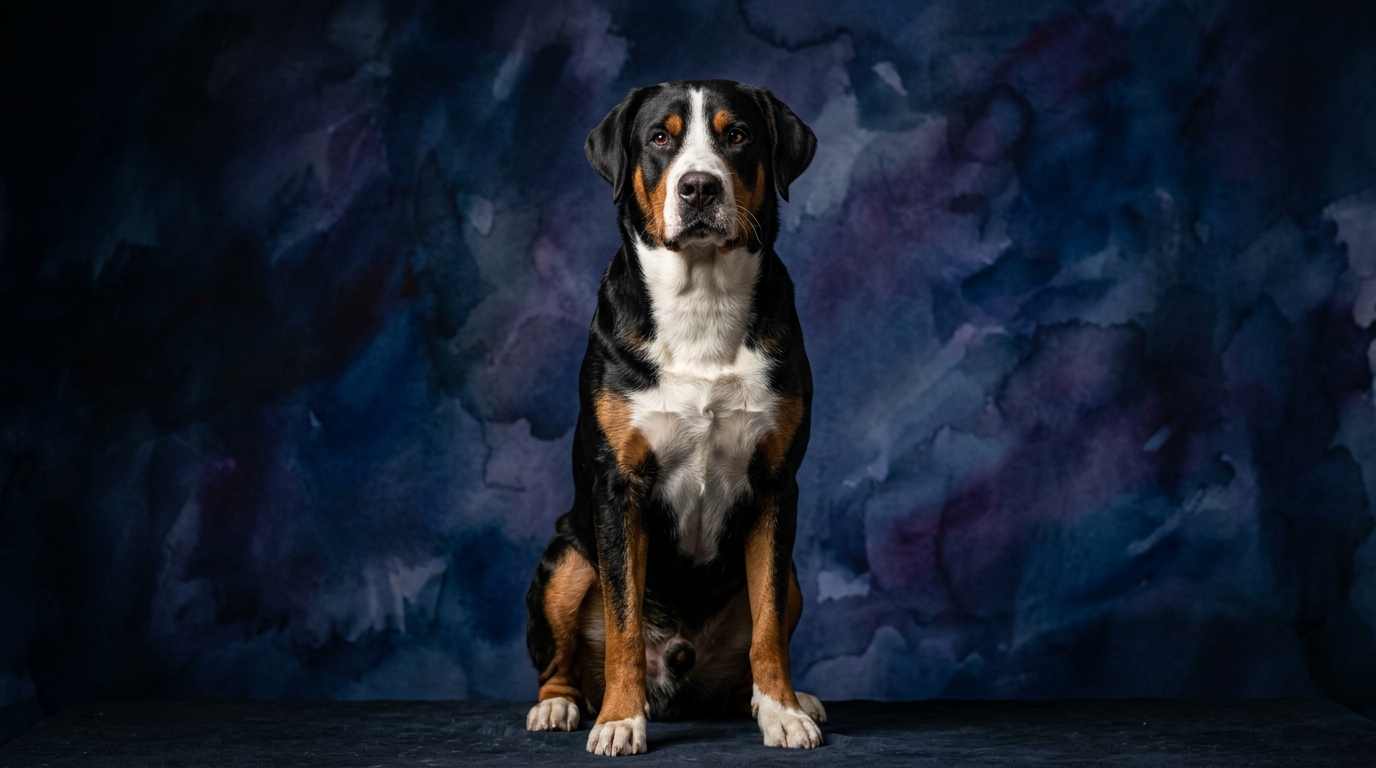
The Cosmic Pet Pet IQ Lab's framework allows us to dissect the cognitive strengths of these two distinct breeds. The English Springer Spaniel (ESS), a Sporting breed, and the Greater Swiss Mountain Dog (GSMD), a Working breed, demonstrate how intelligence manifests differently based on purpose and evolution.
For the **English Springer Spaniel (ESS)**, their #13 Coren ranking highlights an exceptional capacity for understanding and executing human commands, a hallmark of their 'Working & Obedience Intelligence.' Their Problem Solving is rated 4/5, indicating a strong aptitude for practical challenges like scent work or navigating complex terrain to achieve a goal, adapting strategies efficiently. Training Speed is a remarkable 5/5; their eagerness to please and sharp focus allows them to grasp new commands rapidly, often with minimal repetition. Social Intelligence, at 4/5, means they possess a keen ability to read human cues, fostering a highly cooperative relationship and making them attuned partners. An Instinctive Drive of 5/5 reflects their profound natural inclination for flushing and retrieving, demonstrating sophisticated behavioral patterns rooted in their hunting heritage. Finally, their Memory is 4/5, ensuring they retain commands, learned behaviors, and spatial information over significant periods, crucial for sequential tasks.
The **Greater Swiss Mountain Dog (GSMD)**, while not Coren-ranked, showcases a different cognitive focus, less on immediate, intricate human-directed obedience and more on independent judgment. Their Problem Solving, rated 3/5, is practical and often independent; they might excel at figuring out efficient carting routes or assessing perceived threats, though perhaps slower in abstract challenges. Training Speed is 3/5; they are capable learners but require consistency, patience, and clear methods, often processing information deliberately rather than reacting instantaneously. Social Intelligence, also 3/5, means they form deep family bonds and are observant, but their social acumen leans towards discerning loyalty and guarding rather than effusive, cooperative responsiveness. An Instinctive Drive of 3/5 aligns with their history as farm dogs: guarding, droving, and pulling carts, emphasizing responsibility and vigilance over game pursuit. Their Memory is 3/5, allowing them to retain routines, commands, and familiarities, though initial acquisition might demand more reinforcement.
Where English Springer Spaniel Wins Cognitively
The English Springer Spaniel's cognitive profile excels in cooperative tasks demanding rapid learning and responsiveness. Their Coren ranking of #13 reflects a breed engineered for intricate partnership. With a 5/5 training speed, an ESS can absorb complex sequences of commands with impressive alacrity, making them star pupils in obedience, agility, and field trials. This swift uptake is buoyed by their 4/5 social intelligence, allowing them to keenly interpret subtle human cues—a glance, a shift in posture—and adjust their actions accordingly. For instance, an ESS might transition seamlessly from a 'sit-stay' to a 'retrieve' based on a faint hand signal, demonstrating predictive understanding of handler intent.
Their 4/5 problem-solving ability is often applied in dynamic, real-time scenarios, such as navigating dense cover to locate a bird or figuring out the optimal path to retrieve a dropped item over varied terrain. Coupled with a 5/5 instinctive drive for finding and bringing, their memory (4/5) ensures they recall past successful strategies and commands, building a robust repertoire of learned behaviors. This synergistic blend of traits makes them exceptionally adaptable and eager collaborators, excelling in roles that demand consistent mental engagement and precision alongside a human partner.
Where Greater Swiss Mountain Dog Wins Cognitively
The Greater Swiss Mountain Dog's cognitive strengths, rooted in their heritage as powerful, independent farm dogs, excel in areas requiring composure, discernment, and practical judgment. While their problem-solving scores 3/5, this reflects a cognitive style focused on real-world utility over abstract puzzles. A Swissy might excel at figuring out the most efficient way to pull a cart over uneven ground, or how to position themselves to best observe and 'guard' their territory, demonstrating a practical spatial and environmental awareness. Their 3/5 social intelligence, though not as overtly cooperative as a spaniel's, grants them a discerning nature; they are excellent at assessing strangers and situations, making independent judgments about threats rather than merely following a command.
This self-assuredness is critical for a guardian breed. Their instinctive drive (3/5) for protection and draft work means they possess an innate understanding of responsibility and a strong work ethic when tasks align with their predispositions. For example, a Swissy might remember a specific route for carting or the boundaries of their property with unwavering consistency, relying on their 3/5 memory to maintain routine and security. They embody a robust, thoughtful intelligence, capable of independent decision-making and steadfast loyalty, thriving in roles where their physical presence and measured judgment are paramount.
Which Is Easier to Train and Why
The English Springer Spaniel holds a clear training advantage, thanks to its 5/5 training speed and 4/5 social intelligence. They are inherently driven to cooperate and please, making them highly receptive to instruction. They grasp new concepts and commands rapidly, often requiring just a few repetitions before demonstrating proficiency. Their strong instinctive drive (5/5) for retrieving and working also means that many training activities align naturally with their innate desires, turning lessons into engaging games rather than chores. Teaching an ESS 'fetch' is often a simple refinement of an instinct they already possess, amplified by their desire for interaction. They respond enthusiastically to positive reinforcement, eager for praise or a favorite toy, which fuels their motivation to learn more.
In contrast, the Greater Swiss Mountain Dog, with its 3/5 training speed and 3/5 social intelligence, presents a different training experience. While capable of learning, Swissys possess a more independent and sometimes deliberate nature. They may take longer to process commands and might require more consistent, patient repetition. Their motivation is not always centered on immediate human approval; instead, they often need to understand the 'why' behind a command or perceive its utility. This can manifest as a thoughtful pause or hesitation before compliance, unlike the eager, instantaneous response of a Springer. Training a Swissy demands a firm, fair, and consistent approach, establishing clear expectations and building trust. Owners must be prepared for a longer training journey, one that respects the breed's confident, self-reliant character and leverages their natural desires for companionship and purpose rather than relying solely on a strong 'eagerness to please' factor.
Which Suits Active Owners vs. Relaxed Owners
For active owners seeking an adventure companion, the English Springer Spaniel is an ideal match. Their 5/5 instinctive drive and high energy demand significant daily physical and mental exercise. An ESS thrives on long hikes, runs, swimming, and engaging in dog sports like agility, flyball, or advanced obedience. Their 4/5 problem-solving ability and 4/5 memory mean they enjoy learning new tricks and participating in complex tasks, making them perfect for owners who want to continuously challenge their dog. A relaxed owner who cannot meet these substantial exercise and mental stimulation needs would likely find an ESS becoming bored, restless, and potentially destructive. This breed truly flourishes when given a 'job' and ample opportunity to burn off its considerable zeal.
The Greater Swiss Mountain Dog, while robust and capable of sustained effort, generally suits owners who appreciate a more moderate, yet consistent, activity level. They are not as relentlessly energetic as a Springer Spaniel. While they enjoy regular walks, opportunities for carting, or supervised outdoor time, they are often content to relax indoors with their family after their exercise needs are met. Their 3/5 instinctive drive is geared towards tasks like pulling or guarding, which are physically demanding but don't necessarily require the same high-intensity, continuous motion as a retrieving spaniel. Owners desiring a confident, watchful companion for daily strolls and family activities, without continuous high-impact sports, would find a Swissy a better fit. They are adaptable to a somewhat more relaxed household rhythm, provided they receive sufficient physical activity and mental engagement appropriate for their size and temperament, focusing more on presence and purpose than perpetual motion.
The Verdict
Choose the English Springer Spaniel if you are an active individual or family seeking a highly biddable, energetic, and cooperative companion eager for complex training, dog sports, or field activities.
Choose the Greater Swiss Mountain Dog if you desire a loyal, self-assured, and robust guardian who thrives on consistent, patient training and a more deliberate pace, appreciating their independent judgment and steadfast presence.
🧠 Find Your Pet's IQ Score
Our Pet IQ Lab assessment covers 25+ tests across 5 cognitive dimensions — personalized to your breed.
Take the Full IQ Test →Frequently Asked Questions
Are Greater Swiss Mountain Dogs difficult to train?
While not 'difficult,' Greater Swiss Mountain Dogs require more patience and consistency than some other breeds. Their 3/5 training speed means they may take longer to grasp commands and often need to understand the purpose behind an action, making training a rewarding, albeit slower, process.
What kind of 'work' do English Springer Spaniels excel at?
English Springer Spaniels, with their 5/5 instinctive drive and high problem-solving, excel in roles requiring scent work, flushing game, and retrieving. They are also top performers in competitive obedience, agility, and other dog sports that demand quick learning and strong cooperation with a handler.
How do the social intelligence scores impact daily life with these breeds?
The English Springer Spaniel's 4/5 social intelligence means they are highly attuned to human emotions and cues, fostering a very interactive and cooperative daily life. The Greater Swiss Mountain Dog's 3/5 social intelligence indicates a more discerning and independent nature, leading to deep family bonds but a less overtly 'people-pleasing' demeanor in daily interactions.