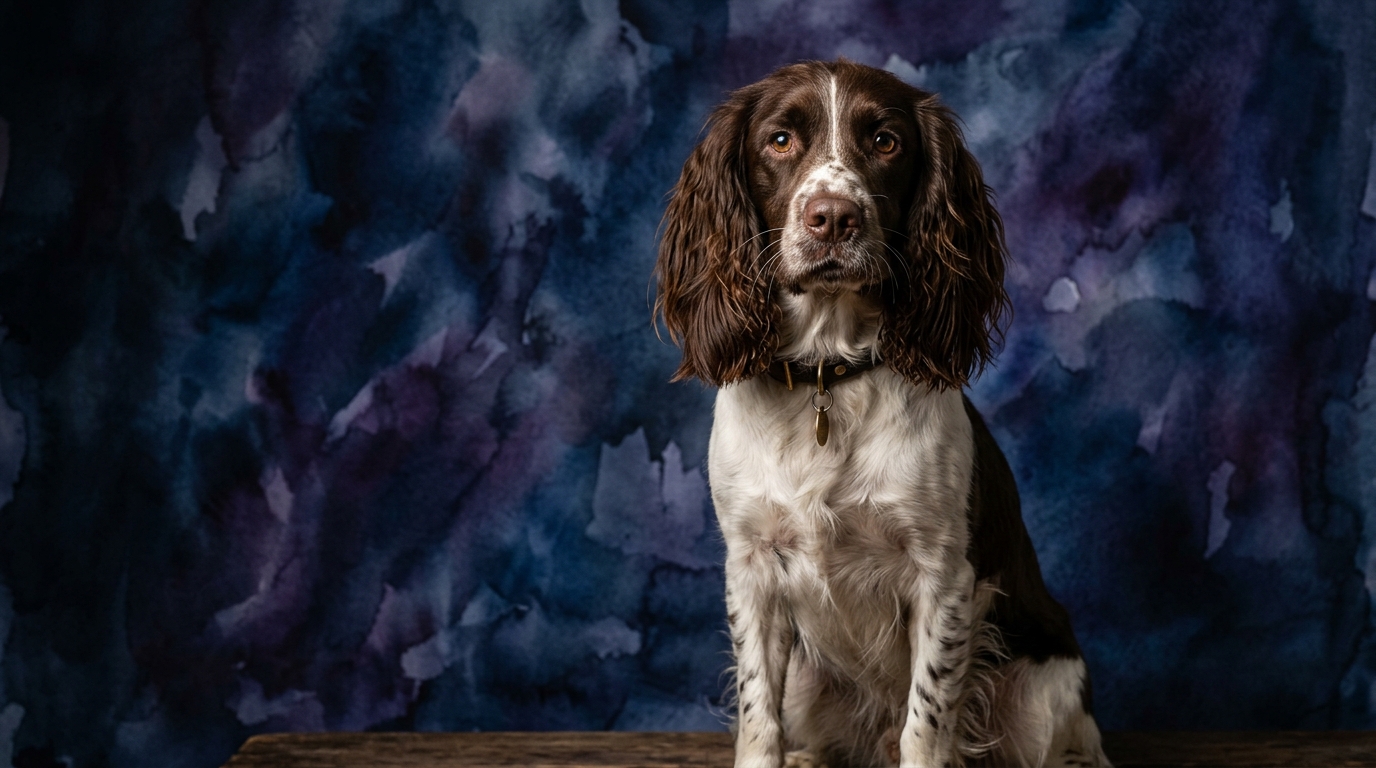
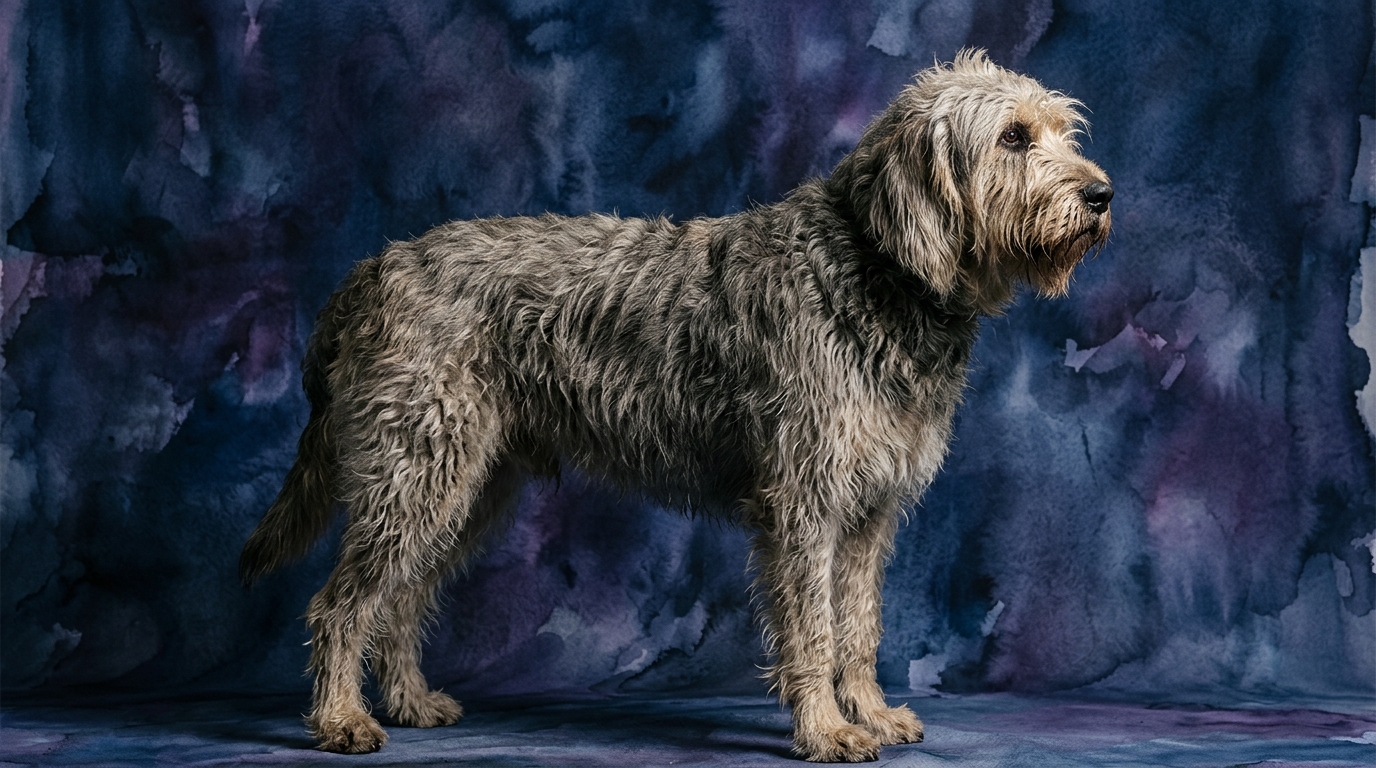
Side-by-side IQ profile
The English Springer Spaniel, ranked #13 by Coren, presents a cognitive profile optimized for collaborative work and adaptability. Their Problem Solving is rated 4/5, indicating a strong capacity to navigate novel situations and learn complex tasks. A remarkable Training Speed of 5/5 highlights their eagerness and rapid assimilation of commands, making them highly responsive partners. Social Intelligence at 4/5 suggests a keen understanding of human cues and intentions, fostering deep bonds. An Instinctive Drive of 5/5 speaks to their powerful, directed motivation for retrieving and flushing, while Memory at 4/5 ensures consistent recall of learned behaviors and experiences.
In contrast, the Otterhound, a breed not appearing on Coren's list, exhibits a consistent 3/5 across all five dimensions: Problem Solving, Training Speed, Social Intelligence, Instinctive Drive, and Memory. This uniform score reflects a different kind of cognitive specialization, rooted in their ancient role as independent scent hounds. Their Problem Solving leans towards navigating complex natural environments to follow a trail, rather than abstract puzzles. A Training Speed of 3/5 indicates they learn, but often on their own terms, prioritizing their primary instincts. Their Social Intelligence at 3/5 suggests amiability but a less intense focus on human-directed interaction compared to a spaniel. The Instinctive Drive of 3/5 is powerful for scenting but less for human-centric tasks, and Memory at 3/5 is robust for retaining scent information but perhaps less for complex sequential commands. This profile underscores a self-reliant intelligence, less about eager cooperation and more about focused, independent pursuit.
Where English Springer Spaniel wins cognitively
The English Springer Spaniel's cognitive strengths distinctly outshine the Otterhound's in areas demanding human-canine partnership and rapid learning. With a Training Speed of 5/5, Springers assimilate new commands and routines with exceptional swiftness, often requiring fewer repetitions than many other breeds. Their Problem Solving at 4/5 means they are adept at figuring out solutions to novel challenges presented by their handlers, whether it's navigating an agility course or understanding a complex retrieve. This breed also demonstrates superior Social Intelligence (4/5), showing a nuanced ability to read human emotions and intentions, making them highly attuned and responsive companions. Their powerful Instinctive Drive (5/5) is not just high, but also highly channelable towards collaborative tasks like retrieving and flushing, making them eager participants in structured activities. Finally, their Memory (4/5) ensures that once a behavior is learned or a cue understood, it is retained effectively, contributing to their consistent performance across various tasks and environments. These combined attributes make the English Springer Spaniel a highly adaptable and eager cognitive partner.
Where Otterhound wins cognitively
While the Otterhound's consistent 3/5 scores might suggest a general cognitive deficit compared to the Springer, it's crucial to understand these scores in the context of their specialized function. The Otterhound doesn't necessarily "win" in terms of human-directed cooperative intelligence, but their cognitive profile is perfectly suited for their unique, independent hunting heritage. Their Problem Solving (3/5) is acutely focused on environmental navigation and persistent scent following, demonstrating a tireless dedication to unravelling complex olfactory puzzles over vast distances and varied terrain. This isn't about solving an abstract puzzle for a treat; it's about independently deciphering the world through scent, a cognitive feat requiring immense focus and endurance. Their Instinctive Drive (3/5) is powerful and self-directed, compelling them to pursue a scent with unwavering determination, often to the exclusion of other stimuli. This drive, while sometimes challenging for human trainers, is a hallmark of their specialized intelligence. Their Memory (3/5) excels at retaining intricate scent trails and mapping their environment through smell, allowing them to track relentlessly. The Otterhound's cognitive strengths lie in their profound capacity for independent, scent-driven work, requiring sustained focus, resilience, and a deep, innate understanding of their olfactory world. They win in sustained, autonomous sensory processing and environmental interpretation.
Which is easier to train and why
The English Springer Spaniel is unequivocally the easier breed to train, a direct consequence of their superior Training Speed (5/5) and Social Intelligence (4/5). Springers possess an innate desire to collaborate and please their human partners, making them highly receptive to instruction. They quickly grasp new commands, respond enthusiastically to positive reinforcement, and actively seek guidance, often anticipating what their handler wants. Their strong memory (4/5) ensures that once a lesson is learned, it sticks, leading to consistent performance. This collaborative nature, coupled with their high instinctive drive for retrieving and working alongside humans, means they are often motivated by the shared activity itself.
In contrast, the Otterhound, with a Training Speed of 3/5 and Social Intelligence of 3/5, presents a more significant training challenge. Their powerful, independent scent drive (3/5) means they are easily distracted by intriguing smells, often prioritizing a scent trail over a handler's command. They are not inherently driven to please humans in the same way a Springer is; rather, their motivation is internal and often tied to their olfactory world. Training an Otterhound requires immense patience, consistency, and a deep understanding of their hound temperament. They learn, but at a slower pace and often require methods that tap into their natural inclinations rather than relying solely on eager cooperation. Behavioral differences are stark: a Springer will bring a thrown ball back repeatedly, delighted; an Otterhound might follow a squirrel's scent for a mile, oblivious to calls.
Which suits active owners vs relaxed owners
The English Springer Spaniel is an ideal match for active owners who relish engaging their dog in various activities. Their high Instinctive Drive (5/5) and need for mental stimulation mean they thrive with regular, structured exercise, training sessions, and opportunities for "work," whether it's retrieving, agility, or scent work. Owners who enjoy long hikes, running, dog sports, or even field trials will find a Springer an eager and tireless companion. Their collaborative nature also makes them excellent partners for owners who want to teach complex tricks or participate in competitive obedience. A relaxed owner who cannot commit to significant daily engagement might find a Springer's unmet needs manifesting as restlessness or undesirable behaviors.
The Otterhound, while requiring regular exercise due to their size and historical stamina, suits a different kind of owner. Their independent nature and strong scent drive (3/5) mean they need opportunities for exploratory walks and scent-based enrichment, perhaps less structured than a Springer's activities. They are not necessarily "relaxed" dogs in terms of needing minimal exercise, but their energy output can be more about sustained, slow-paced exploration rather than high-intensity bursts. Owners who appreciate a unique, amiable but sometimes stubborn companion, and are willing to manage a powerful hound's independent streak, will find joy in an Otterhound. They fit owners who enjoy leisurely, long walks where the dog can follow scents, and who are prepared for the challenges of managing a large dog with a strong will and a deep bark, rather than an owner seeking a constantly "on", highly responsive partner for competitive activities.
The Verdict
Choose the English Springer Spaniel if you seek a highly trainable, energetic, and collaborative partner eager for diverse activities and deep human interaction.
Opt for the Otterhound if you appreciate an independent, scent-driven companion with a unique character, and are prepared for a patient training approach aligned with their distinct hound temperament.
🧠 Find Your Pet's IQ Score
Our Pet IQ Lab assessment covers 25+ tests across 5 cognitive dimensions — personalized to your breed.
Take the Full IQ Test →Frequently Asked Questions
Is the Otterhound less capable of learning than the English Springer Spaniel?
Not necessarily less capable, but different. The Otterhound's cognitive strengths are geared towards independent scent work, while the Springer excels at human-directed cooperative tasks, making their learning styles and speeds distinct.
How does "Instinctive Drive" differ between these two breeds?
The English Springer Spaniel's 5/5 drive is for collaborative hunting and retrieving, directed by humans. The Otterhound's 3/5 drive is for independent scent tracking, often overriding human commands to follow a trail.
Can an Otterhound excel in dog sports like agility or obedience?
While an Otterhound can participate, their independent nature and focus on scent might make them less naturally inclined or consistently successful in fast-paced, human-directed sports compared to a highly biddable breed like the English Springer Spaniel.