
Side-by-Side Cognitive Profiles
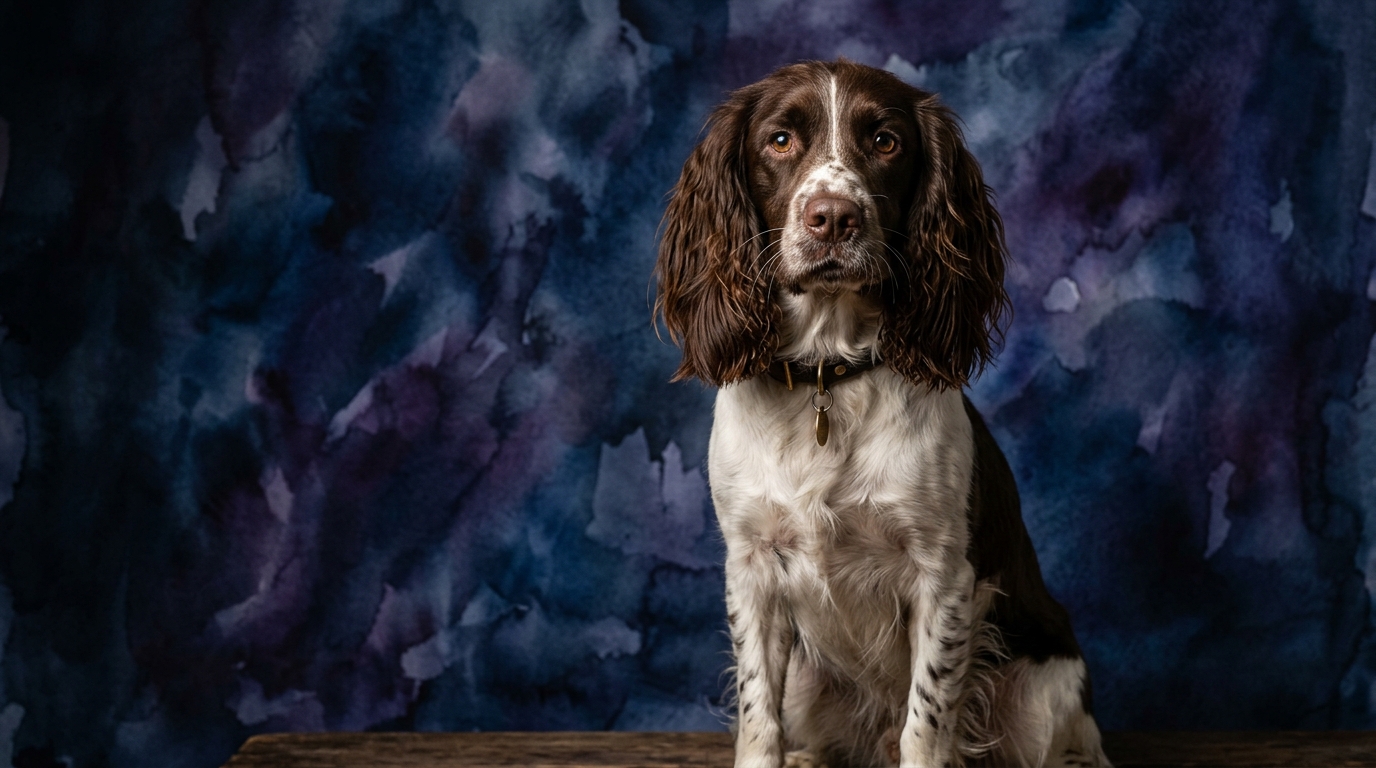
The English Springer Spaniel, a celebrated Sporting breed and ranked #13 by Coren, presents a profile optimized for collaborative fieldwork. Its Problem Solving is rated 4/5, indicating a strong capacity to figure out dynamic challenges like locating hidden game or navigating complex terrains efficiently. Training Speed is an exceptional 5/5, reflecting their rapid grasp of new commands and an eager responsiveness to handler cues. Social Intelligence stands at 4/5, showcasing a deep understanding of human intentions and fostering a highly interactive partnership. An Instinctive Drive of 5/5 underscores their relentless determination in flushing and retrieving, a powerful innate urge to work. Finally, Memory at 4/5 ensures they retain learned routes, commands, and scent trails with impressive accuracy.
In contrast, the Polish Lowland Sheepdog, a Herding breed not typically included in Coren's rankings, possesses a cognitive architecture built for independent flock management. Across all five dimensions – Problem Solving, Training Speed, Social Intelligence, Instinctive Drive, and Memory – it scores a consistent 3/5. This doesn't signify a lack of capability, but rather a different emphasis. Their Problem Solving is geared towards strategic thinking in managing livestock, adapting to flock movements. Training Speed, while not lightning-fast, reflects a steady, deliberate learning process. Social Intelligence is attuned to subtle flock dynamics and distant handler signals, rather than constant eager interaction. Instinctive Drive is purposeful and measured, focused on control rather than high-octane bursts. Memory is robust for retaining routines and territory boundaries essential for herding duties.
Where the English Springer Spaniel Excels Cognitively
The English Springer Spaniel's cognitive strengths are deeply rooted in its heritage as a close working partner. Its exceptional 5/5 Training Speed means it grasps new commands and concepts with remarkable swiftness, often requiring minimal repetition. This rapid acquisition makes them highly adaptable to complex tasks, from advanced obedience routines to intricate field scenarios. Their 5/5 Instinctive Drive isn't just about energy; it’s a focused determination to complete a task, demonstrating a persistent cognitive engagement in pursuits like finding a hidden object or tracking a scent. This drive, combined with a 4/5 in Problem Solving, allows them to creatively overcome obstacles in their path, whether it's navigating dense cover or figuring out how to retrieve an item from a challenging spot. Furthermore, their 4/5 Social Intelligence translates into a profound ability to anticipate human intentions and respond to subtle cues, fostering an almost telepathic partnership in the field or during training sessions, a clear advantage for collaborative work.
Where the Polish Lowland Sheepdog Shows Unique Strengths
While the Polish Lowland Sheepdog's scores are consistently 3/5, their cognitive profile represents a different kind of mastery, optimized for independent decision-making. Their 3/5 Problem Solving shines in situations requiring autonomous judgment, such as strategically positioning themselves to move a flock or anticipating livestock behavior without constant human direction. This is a strength in self-reliance, demanding spatial reasoning and predictive thinking rather than rapid human-directed puzzle-solving. The 3/5 Instinctive Drive is a measured, purposeful approach, allowing them to work for extended periods with focus and control, essential for managing unpredictable livestock without excessive excitement or burnout. Their 3/5 Social Intelligence is finely tuned to observe and interpret the complex dynamics within a flock and the nuanced signals of a distant handler, demonstrating a different form of perceptual acuity. They aren't constantly seeking approval, but rather demonstrate awareness and strategic response. This breed's 3/5 Training Speed, while slower, often suggests a deeper processing of information, leading to a robust and lasting understanding once a concept is truly integrated, reflecting their thoughtful nature rather than a simple lack of capacity.
Training Dynamics: Ease and Engagement
When considering ease of training, the English Springer Spaniel holds a distinct advantage with its 5/5 Training Speed. Their inherent eagerness to please, combined with a strong desire for interaction and a highly responsive nature, means they quickly form associations between commands, actions, and rewards. This makes them exceptionally pliable for a wide range of activities, including complex obedience, agility, and field work. They often demonstrate an anticipatory cognitive state, offering behaviors before being explicitly asked, which streamlines the learning process significantly and makes training a highly rewarding and often fast-paced experience for both dog and owner.
The Polish Lowland Sheepdog, with its 3/5 Training Speed, presents a different training dynamic. Their historical role demanded independent thought and problem-solving, which can translate into a more deliberate, sometimes questioning, approach to commands. They are capable of learning complex tasks and are certainly trainable, but they may require more patience, consistency, and a clear understanding of 'why' a command is being given. They might not exhibit the same lightning-fast acquisition or relentless enthusiasm as an ESS, instead offering a more thoughtful, considered response once they have processed and understood the instruction. This breed often thrives with positive reinforcement methods that build trust and allow them to engage their intellect rather than simply comply through repetition.
Matching Breeds to Lifestyles: Active vs. Engaged Owners
For owners with an active lifestyle, the English Springer Spaniel is an ideal match. Their 5/5 Instinctive Drive and high energy levels demand consistent physical exercise and substantial mental engagement. They thrive in environments where they can participate in daily long walks, runs, hiking, or competitive dog sports like agility, obedience, and field trials. Owners who enjoy spending significant time outdoors and can provide a 'job' for their dog, channeling their natural working drives, will find a truly fulfilled and happy companion. Without sufficient outlets for their cognitive and physical energy, an ESS can become restless or develop undesirable behaviors born of boredom.
The Polish Lowland Sheepdog, while not suitable for truly 'relaxed' owners offering minimal engagement, suits those who appreciate a dog with purpose but might not require constant high-octane activity. Their needs are more centered around structured mental work and moderate, consistent physical activity rather than frantic bursts of energy. They thrive on tasks that engage their problem-solving and herding instincts, such as advanced obedience, canine freestyle, or even puzzle toys that challenge their intellect. Their independent nature means they don't necessarily demand constant attention but do require consistent, thoughtful interaction and opportunities to use their brains, making them a good fit for owners who enjoy structured engagement and a dog with a more self-possessed demeanor.
The Verdict
Choose the English Springer Spaniel if you seek a highly interactive, eager-to-please companion for dynamic activities like field trials, agility, or extensive outdoor adventures, valuing rapid learning and a deep, collaborative partnership.
Opt for the Polish Lowland Sheepdog if you appreciate a more independent, thoughtful companion who excels in self-directed problem-solving, thriving on structured tasks that engage their herding intellect, and offers a steady, discerning loyalty.
🧠 Find Your Pet's IQ Score
Our Pet IQ Lab assessment covers 25+ tests across 5 cognitive dimensions — personalized to your breed.
Take the Full IQ Test →Frequently Asked Questions
Do Polish Lowland Sheepdogs require less exercise than English Springer Spaniels?
While a PLSS might not demand the same relentless high-intensity physical output as an ESS, they still require consistent, moderate exercise and significant mental stimulation. Their energy is often channeled into focused tasks and purposeful engagement rather than constant running, requiring a different kind of owner commitment.
How does the 'Instinctive Drive' difference impact daily life with these breeds?
An ESS (5/5) will relentlessly pursue tasks, often requiring an 'off switch' or constant engagement, channeling its drive into play or work, potentially leading to high demands on owner interaction. A PLSS (3/5) will exhibit a more controlled, purposeful drive, suitable for managing livestock without overexcitement, meaning they might be more measured and less demanding in their daily pursuits, but still need a purpose.
Is a lower Coren ranking or absence of one an indicator of lower overall intelligence?
Not necessarily. Coren's ranking primarily assesses 'working and obedience intelligence' or how quickly a dog learns human-directed commands. Breeds like the PLSS, bred for independent thinking in complex environments, possess different cognitive strengths that aren't fully captured by this specific measure, valuing autonomous problem-solving over rapid compliance.