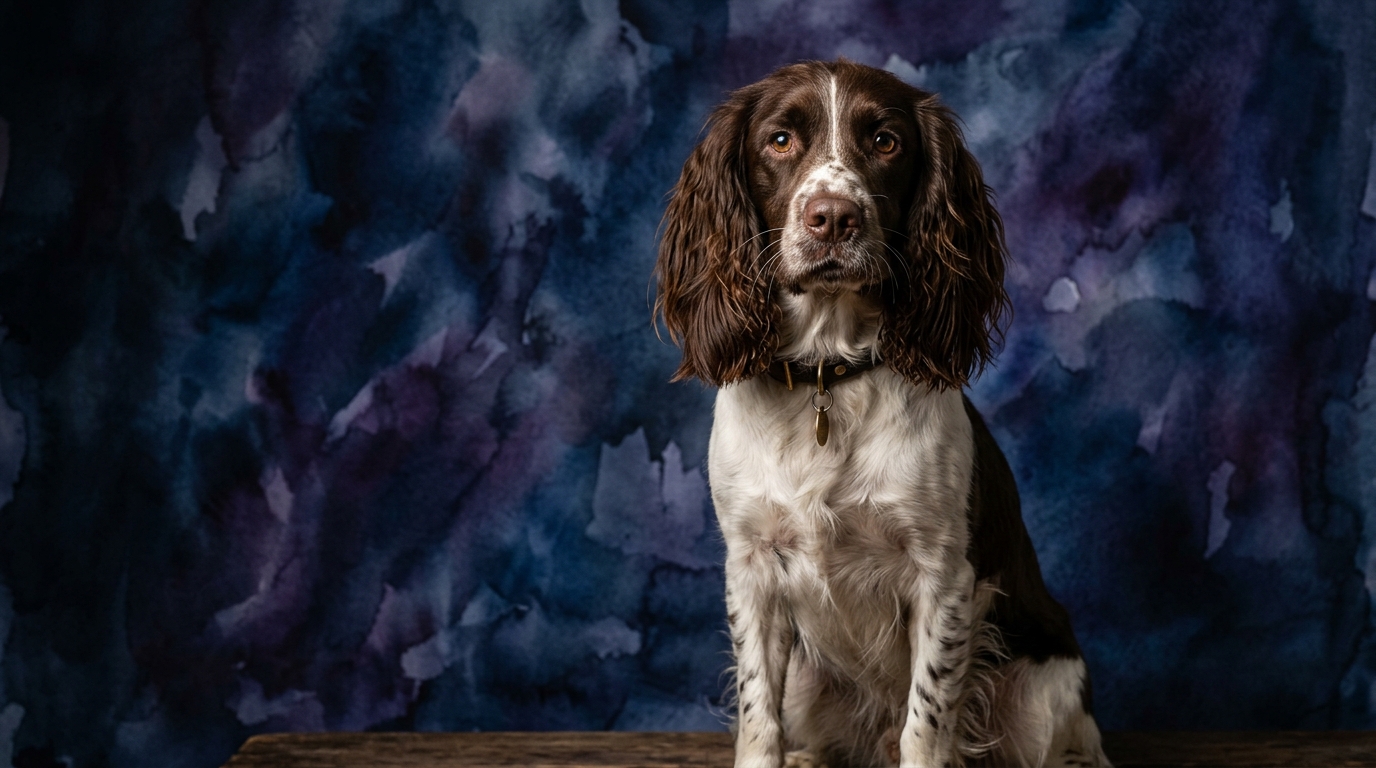
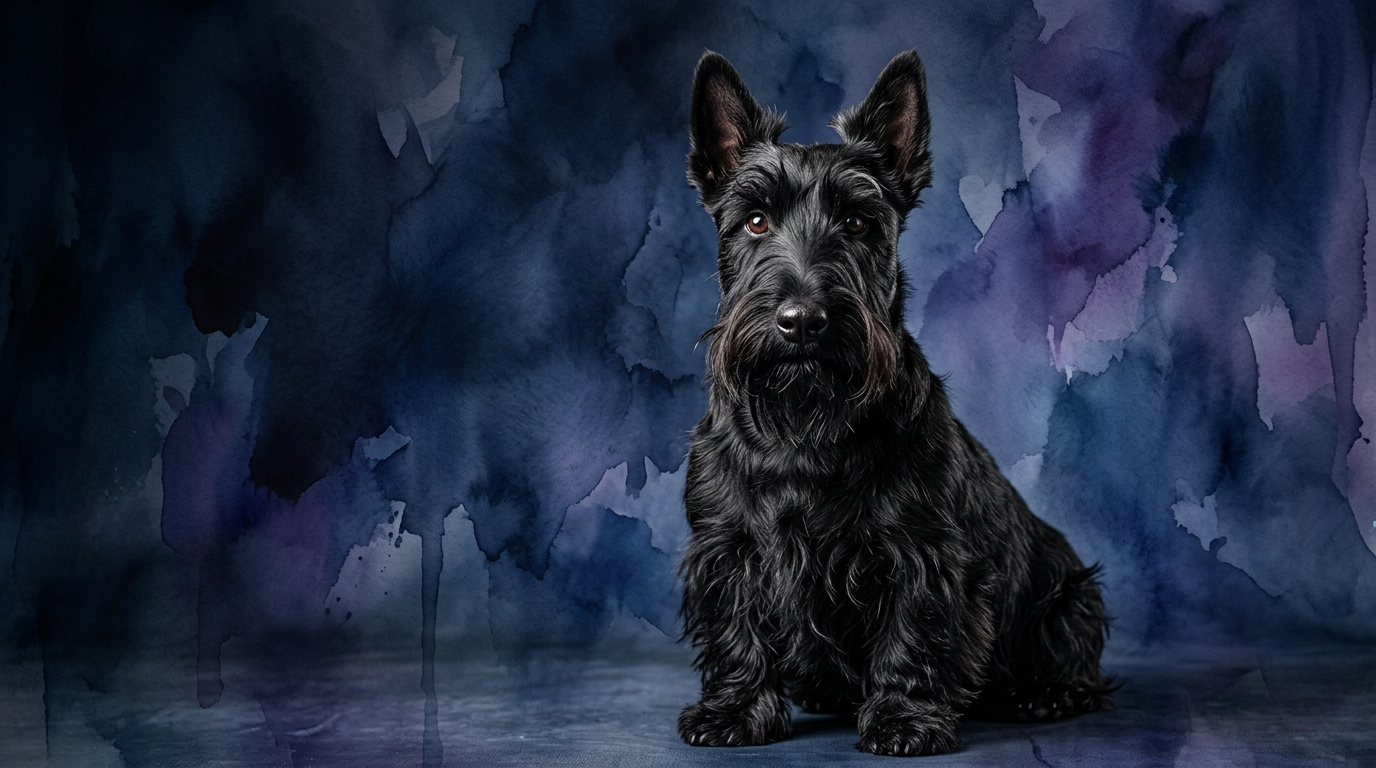
Side-by-Side IQ Profile: English Springer Spaniel vs. Scottish Terrier
The Cosmic Pet Pet IQ Lab provides a unique lens through which to examine the cognitive strengths of these two distinct breeds. The English Springer Spaniel, a Sporting dog, ranks #13 on the Coren scale, while the Scottish Terrier, a Terrier breed, holds rank #65. These rankings hint at their divergent cognitive architectures, which become clearer when we break down their individual IQ dimensions.
For the English Springer Spaniel, Problem Solving is rated 4/5, indicating a breed that quickly assesses situations and finds practical solutions, a trait honed by generations of adapting to varied hunting environments. Their Training Speed is an impressive 5/5, meaning they absorb new commands and routines with remarkable rapidity, often grasping new concepts in very few repetitions due to their eagerness to please. Social Intelligence stands at 4/5, reflecting a strong capacity for understanding human cues and social dynamics, forming deep bonds and often being attuned to their owner's moods. Instinctive Drive is a perfect 5/5, showcasing an exceptionally high innate desire for scent work, retrieving, and active engagement. Finally, their Memory is 4/5, demonstrating robust long-term recall for learned commands, routines, and specific locations.
In contrast, the Scottish Terrier's cognitive profile emphasizes tenacity and independence. Their Problem Solving is rated 3/5; they often approach challenges with determination, through trial and error or sheer persistence rather than swift insight, typically geared towards achieving their own objectives like digging or chasing. Training Speed is 3/5, meaning they require more repetitions and a highly engaging approach to learning, as their independent nature often means processing commands on their own terms. Social Intelligence is also 3/5; Scotties are observant but tend to be more reserved and selective in their social interactions, understanding their place but not always inclined to follow social cues if it conflicts with their agenda. Instinctive Drive is 3/5, primarily focused on hunting small prey, digging, and patrolling, manifesting as self-directed tenacity rather than cooperative drive. Their Memory, at 3/5, is functional for important routines and boundaries, but recall for less engaging commands might be less immediate compared to breeds with higher training speed.
Where the English Springer Spaniel Wins Cognitively
The English Springer Spaniel's cognitive strengths are evident across nearly all measured dimensions, particularly in areas that facilitate close human partnership and rapid learning. Their Problem Solving score of 4/5 indicates a breed that quickly assesses situations and finds practical solutions, a trait honed by generations of adapting to varied hunting environments. This translates into dogs that can learn complex multi-step tasks efficiently, such as navigating an intricate retrieve pattern or understanding sequential commands during fieldwork.
Their Training Speed, rated at a perfect 5/5, is a standout attribute. Springers process and retain new commands with remarkable alacrity, often mastering new behaviors in fewer than five repetitions. This capacity for rapid acquisition, combined with a high Social Intelligence (4/5), means they are exceptionally attuned to human instruction and eager to please, making them highly receptive to nuanced cues and changes in routine. This makes them adept at advanced obedience, agility, and specialized working roles where precise and swift responses are critical, demonstrating a superior capacity for cooperative learning.
Where the Scottish Terrier Wins Cognitively
While the Scottish Terrier's scores might appear lower in comparison, their cognitive profile reflects a different kind of strength, rooted in their tenacious and independent heritage. Their Problem Solving at 3/5, combined with a 3/5 Instinctive Drive, means they excel at persistent, self-directed tasks. A Scottie, faced with a problem like accessing a buried scent, will demonstrate unwavering focus and employ a range of strategies, often involving digging, manipulating objects, or persistent vocalization, until their goal is achieved, showcasing a formidable mental fortitude.
This breed's cognitive advantage lies in its self-reliance and determination. A Scottish Terrier's Social Intelligence (3/5) may mean they are less overtly people-pleasing, but it also fosters an independent thought process. They are not easily swayed from a task they deem important, showcasing a formidable mental tenacity that, while challenging for conventional training, is invaluable for tasks requiring single-minded focus and resilience, like vermin control. Their memory, while rated 3/5, is particularly strong for things that directly serve their interests, such as the location of a favorite digging spot or a perceived territorial boundary, demonstrating practical recall rather than broad obedience-focused memory.
Which Is Easier to Train and Why
The English Springer Spaniel is unequivocally easier to train, a direct reflection of its 5/5 Training Speed and 4/5 Social Intelligence. These dogs possess an innate desire to cooperate and respond to human direction, allowing them to grasp new commands and complex sequences with minimal repetition. Their high instinctive drive (5/5) is channelled into working *with* their handler, making them highly motivated by praise, play, and food rewards, and eager to perform tasks for human approval. Their focus tends to be on their handler, making distraction management less arduous during training sessions and fostering a more responsive learning environment.
Conversely, the Scottish Terrier, with its 3/5 Training Speed and 3/5 Social Intelligence, presents a more significant training challenge. Scotties are independent thinkers; their intelligence is geared towards self-sufficiency rather than eager compliance. They require consistent, patient, and highly engaging training methods, as they are less inclined to perform simply to please. Behavioral differences manifest in their tendency to follow their nose or their own agenda over a command, especially if the command isn't immediately rewarding or interesting to them. They can be prone to "selective hearing," requiring an owner to understand and work with their terrier tenacity rather than against it, often through positive reinforcement that appeals to their self-interest.
Which Suits Active Owners vs. Relaxed Owners
For active owners seeking a canine partner for adventures, the English Springer Spaniel is an ideal match. Their 5/5 Instinctive Drive ensures they thrive on vigorous exercise, engaging fieldwork, and demanding mental challenges like scent work or agility. These dogs require substantial daily physical activity and mental stimulation to prevent boredom and channel their abundant energy constructively. An owner who enjoys hiking, running, or dog sports will find a Springer an enthusiastic and capable companion, benefiting from their problem-solving and memory skills in complex outdoor environments, always ready for the next challenge.
The Scottish Terrier, while requiring regular exercise to maintain health, is better suited for owners who appreciate a more relaxed yet still engaged companion. Their 3/5 Instinctive Drive translates to a need for daily walks and playtime, but they are not typically candidates for endurance sports or long hours of intense fieldwork. They are content with shorter, purposeful outings and enjoy opportunities to "hunt" in the backyard or engage in brief, focused play sessions. A relaxed owner who values a dog's independent spirit and enjoys focused, shorter training sessions rather than continuous activity will find the Scottie's temperament more fitting for their lifestyle, understanding that their cognitive drive is often expressed in bursts of tenacious activity rather than sustained high energy.
The Verdict
Opt for an English Springer Spaniel if you desire a highly trainable, cooperative, and energetic companion eager to learn and participate in demanding activities. This breed thrives with owners who can provide consistent mental engagement and ample physical exercise, making them excellent partners for dog sports, fieldwork, or an active family life.
Select a Scottish Terrier if you appreciate a tenacious, independent, and characterful companion with a strong sense of self. This breed suits owners who value a loyal, reserved dog and are prepared to engage in patient, consistent training that respects their self-directed nature, offering a unique bond built on mutual understanding.
🧠 Find Your Pet's IQ Score
Our Pet IQ Lab assessment covers 25+ tests across 5 cognitive dimensions — personalized to your breed.
Take the Full IQ Test →Frequently Asked Questions
Can a Scottish Terrier be trained for complex tasks?
Yes, a Scottish Terrier can learn complex tasks, but it typically requires more patience, consistency, and highly motivating rewards than with a Springer Spaniel. Their independent nature means they need to be convinced that the task is worthwhile, often preferring to solve problems on their own terms rather than strictly following commands rather than eager compliance.
Are English Springer Spaniels good with children?
English Springer Spaniels, with their 4/5 Social Intelligence, are generally very good with children, displaying patience and a playful nature. Their high energy and desire for companionship make them excellent family dogs, though supervision is always recommended with any breed around young children to ensure harmonious interactions.
How do their problem-solving approaches differ in daily life?
An English Springer Spaniel (4/5 Problem Solving) might quickly figure out how to open a childproof gate by observing the latch mechanism, while a Scottish Terrier (3/5 Problem Solving) might persistently try to dig under it or chew through a perceived weak point, demonstrating tenacity over immediate insight, often until they achieve their self-appointed goal.