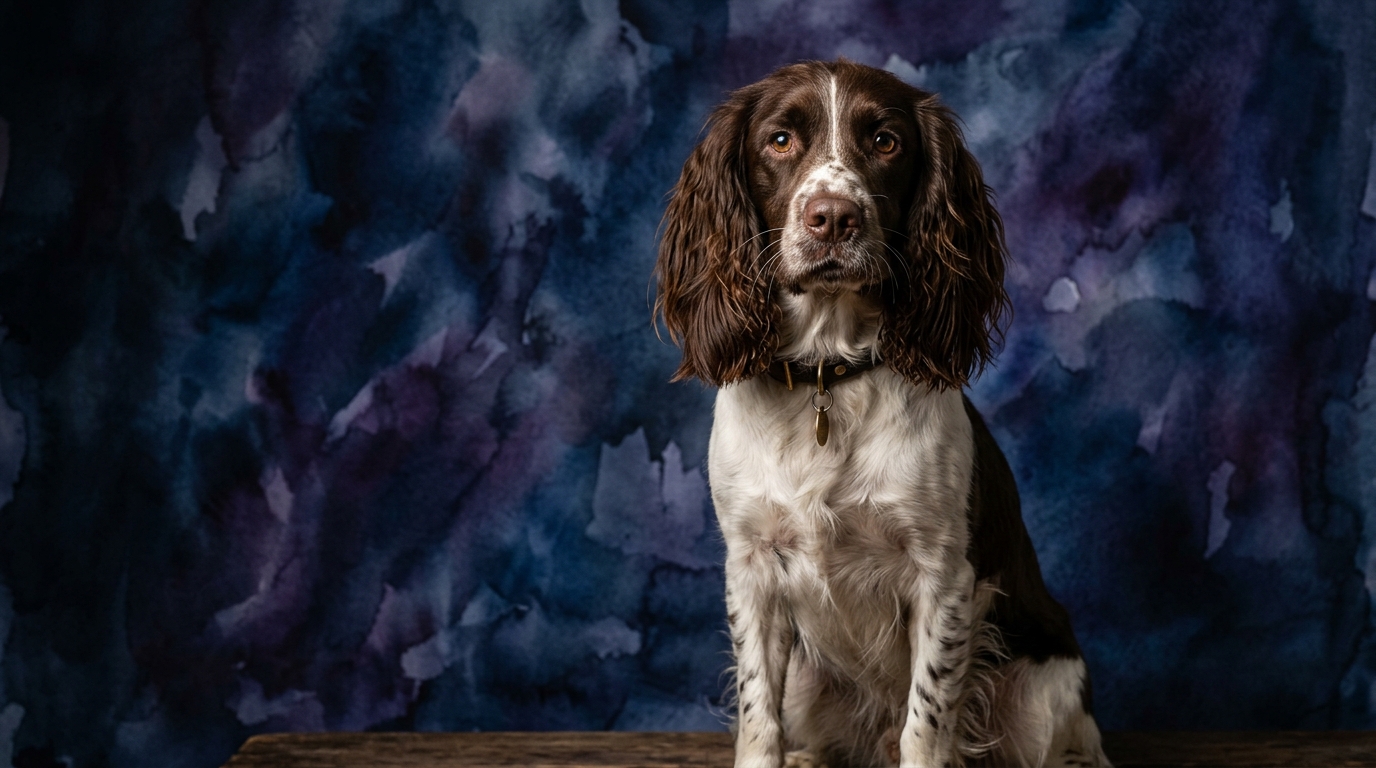
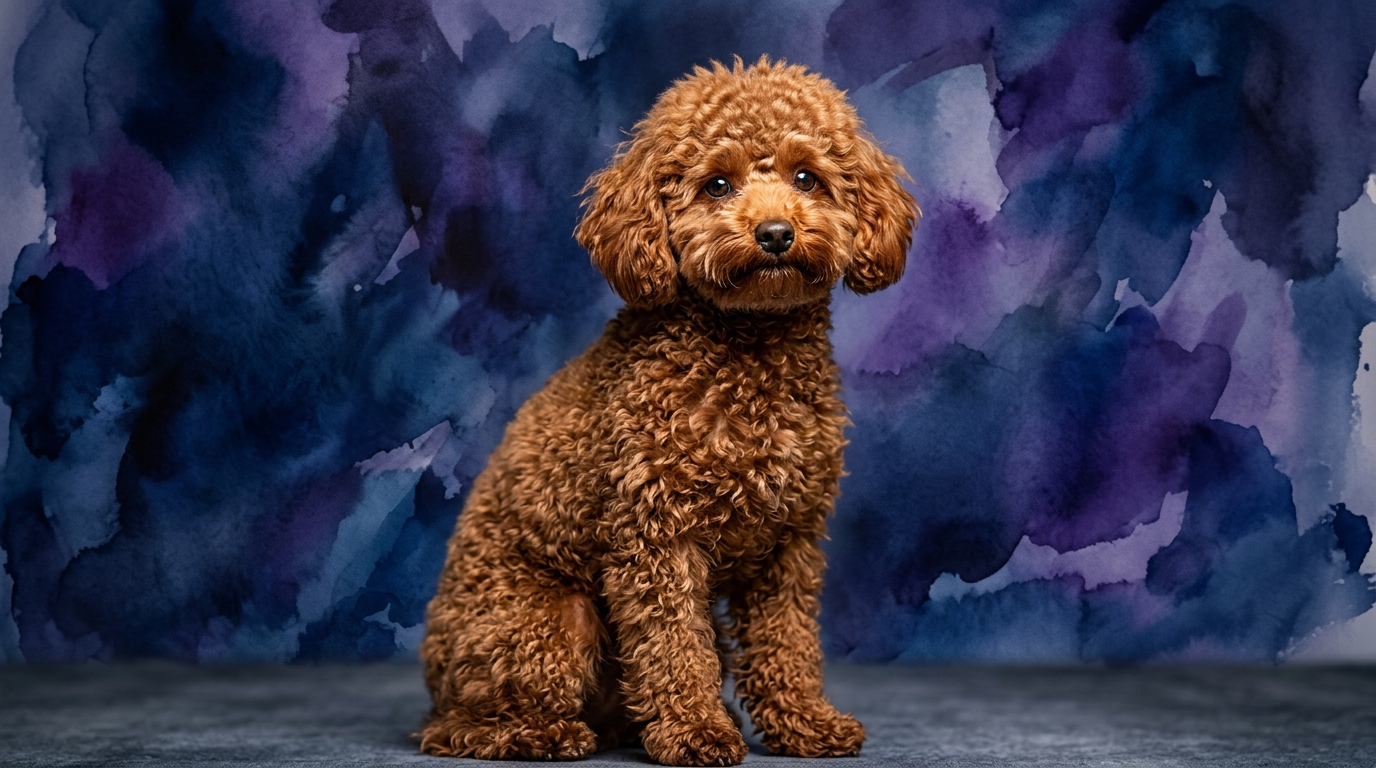
Side-by-Side IQ Profile: English Springer Spaniel vs. Toy Poodle
The Cosmic Pet Pet IQ Lab provides a nuanced framework to understand canine intelligence beyond simple rankings. While the Toy Poodle holds a Coren rank of #2 and the English Springer Spaniel a respectable #13, delving into their specific cognitive dimensions paints a more complete picture of their abilities and predispositions. These scores illuminate how each breed processes information, learns, and interacts with their environment.
For the English Springer Spaniel, their Problem Solving is rated 4/5, indicating a strong capacity to figure out novel situations and overcome obstacles, though perhaps not with the same abstract reasoning as some others. Training Speed is an impressive 5/5, reflecting their rapid assimilation of new commands and routines. Social Intelligence, at 4/5, highlights their cooperative nature and ability to read human cues effectively. Their Instinctive Drive is a robust 5/5, underscoring their powerful innate urges for tasks like tracking, flushing, and retrieving. Memory is solid at 4/5, meaning they retain learned information and experiences well over time.
The Toy Poodle presents a slightly different cognitive architecture. Their Problem Solving is exceptional at 5/5, suggesting a superior ability to analyze complex situations, understand cause-and-effect, and devise creative solutions. Training Speed also stands at 5/5, indicating they absorb new lessons with remarkable swiftness. Social Intelligence is rated 3/5, implying they might be less inherently focused on human cooperation or reading subtle social cues compared to breeds bred for partnership. Instinctive Drive is 3/5, meaning their inherent urges for traditional 'dog work' are moderate. However, their Memory is outstanding at 5/5, allowing them to recall vast amounts of information, intricate sequences, and past events with precision.
Where the English Springer Spaniel Excels Cognitively
The English Springer Spaniel's cognitive strengths are deeply rooted in their sporting heritage, making them exemplary partners in cooperative tasks. Their 5/5 Instinctive Drive is a clear advantage when it comes to activities requiring sustained focus, scent work, and retrieval. This isn't merely about physical energy; it's a profound internal motivation to engage with tasks that mimic their historical role in the field. They possess an unwavering determination to follow a scent trail, flush game, or retrieve an object, often working independently yet always with a clear purpose.
Coupled with their 4/5 Social Intelligence, this drive translates into a dog that is not only capable but also eager to work alongside a human handler. They demonstrate a keen awareness of their handler's intentions and body language, making them highly responsive and a joy to guide through complex sequences of commands. This blend of strong natural drives and a cooperative mindset makes them particularly adept at dog sports like agility, obedience, and especially field trials where teamwork and intrinsic motivation are paramount. They thrive on having a 'job' and derive immense satisfaction from fulfilling their innate predispositions under human direction.
Where the Toy Poodle Claims Cognitive Victories
The Toy Poodle's cognitive strengths lie in their exceptional abstract reasoning and retention capabilities, making them masters of intricate mental challenges. Their 5/5 Problem Solving score indicates a remarkable ability to understand complex concepts, analyze situations, and figure out solutions independently. This isn't just about learning through repetition; it's about genuine comprehension and the capacity to apply learned principles to novel scenarios. They can often 'think through' a puzzle or a training sequence, rather than just memorizing steps.
Complementing this is their perfect 5/5 Memory. This superior retention allows them to recall an extensive repertoire of commands, tricks, and routines, even after long periods. They can learn multi-step sequences with ease and reliably perform them, making them stars in competitive obedience, freestyle, and trick training. Their ability to remember specific cues and associate them with complex actions is a testament to their powerful cognitive processing. While their Instinctive Drive is lower (3/5), their intellectual curiosity and capacity for learning often serve as their primary motivators, driving them to engage with mentally stimulating activities that challenge their impressive problem-solving and memory skills.
Training Dynamics: Which Breed is Easier and Why?
Both the English Springer Spaniel and the Toy Poodle share a 5/5 Training Speed, indicating that both breeds grasp new commands and behaviors quickly. However, the *nature* of their trainability and the overall training experience differ significantly due to their other cognitive dimensions. For the English Springer Spaniel, their high Social Intelligence (4/5) combined with a powerful Instinctive Drive (5/5) means they are generally eager to please and intrinsically motivated to work collaboratively. They often view training as a partnership and a fulfilling outlet for their natural drives. This makes them highly responsive to positive reinforcement and clear direction, readily integrating into structured training environments. Their desire to be active and engaged with their handler ensures consistent participation.
The Toy Poodle's 5/5 Training Speed is powered by their exceptional Problem Solving (5/5) and Memory (5/5). They excel at understanding the 'why' behind a command and can retain complex sequences with ease. This allows for very advanced and nuanced training, such as learning specific names for dozens of objects or performing intricate freestyle routines. However, their lower Social Intelligence (3/5) and Instinctive Drive (3/5) mean that while they learn quickly, their motivation might be more internal or task-oriented rather than solely focused on pleasing the handler. Owners might find that Toy Poodles thrive on mental challenges and variety in training, potentially becoming less engaged if tasks are overly repetitive or lack intellectual stimulation. While both learn fast, the Springer's cooperative spirit makes them often feel 'easier' to direct, whereas the Poodle's intellectual depth allows for more complex, self-driven learning.
Matching Breeds to Owner Lifestyles: Active vs. Relaxed Owners
The distinct cognitive profiles of the English Springer Spaniel and Toy Poodle naturally align them with different owner lifestyles. The English Springer Spaniel, with its robust 5/5 Instinctive Drive and 4/5 Social Intelligence, is an ideal companion for active owners who relish outdoor activities and desire a canine partner for adventures. They thrive in environments where they can utilize their scenting abilities, retrieve, and engage in vigorous exercise, whether it's hiking, trail running, or participating in dog sports like agility and field work. Owners who enjoy training for specific tasks and appreciate a dog that is eager to work alongside them will find the Springer Spaniel incredibly rewarding. Their need for both physical and mental engagement, often in a cooperative context, means they require owners who can dedicate significant time to their activities.
Conversely, the Toy Poodle, with its 5/5 Problem Solving and 5/5 Memory, is well-suited for owners who appreciate mental stimulation and enjoy engaging their dog in complex, intricate activities. While not averse to physical activity, their primary drive isn't rooted in traditional 'dog work.' They excel in urban environments or with owners who prefer puzzle toys, trick training, competitive obedience, or canine freestyle. Relaxed owners, or those with smaller living spaces, can still provide ample fulfillment through consistent mental challenges and interactive play. They are excellent for individuals who enjoy teaching new things and appreciate a dog that can master a vast repertoire of behaviors and understand abstract concepts, making them fulfilling companions for those who prioritize intellectual engagement over strenuous outdoor pursuits.
The Verdict
Choose an English Springer Spaniel if you're an active owner seeking a cooperative, driven partner for outdoor adventures and task-oriented engagement.
Opt for a Toy Poodle if you're an owner who values mental challenges, enjoys intricate training, and appreciates a highly intelligent companion with exceptional problem-solving and memory skills.
🧠 Find Your Pet's IQ Score
Our Pet IQ Lab assessment covers 25+ tests across 5 cognitive dimensions — personalized to your breed.
Take the Full IQ Test →Frequently Asked Questions
Which breed is better for scent work or retrieving?
The English Springer Spaniel, with its 5/5 Instinctive Drive, is inherently better suited for scent work and retrieving tasks. Their natural predispositions make them highly motivated and effective in these areas, excelling in activities like tracking or field trials.
Can a Toy Poodle excel in advanced trick training?
Absolutely. The Toy Poodle's 5/5 Problem Solving and 5/5 Memory make them exceptional candidates for advanced trick training and complex routines. They grasp new concepts quickly and can retain a vast array of learned behaviors.
Do English Springer Spaniels require more exercise than Toy Poodles?
Generally, yes. The English Springer Spaniel's high Instinctive Drive and sporting background necessitate more vigorous and consistent physical exercise. While Toy Poodles enjoy activity, their needs are often met with less strenuous outings and more mental stimulation.