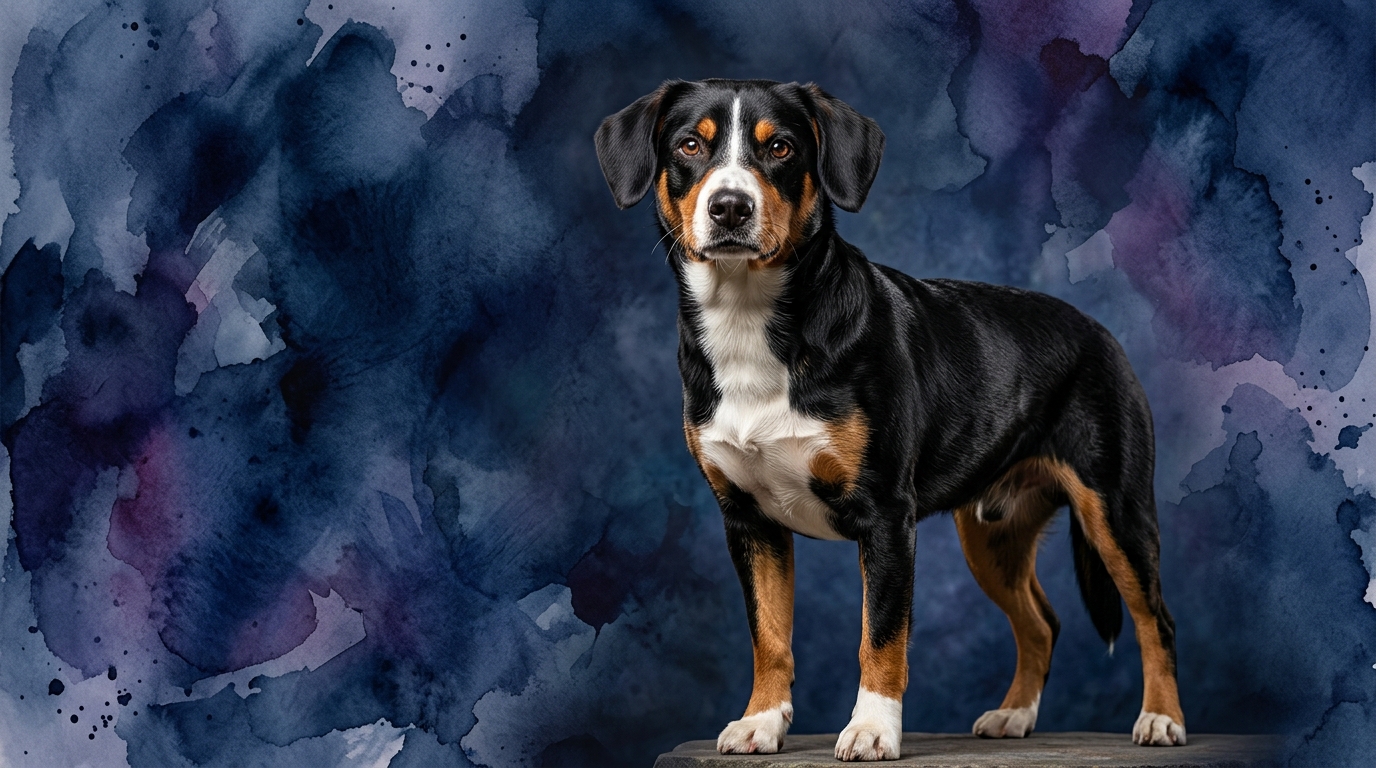
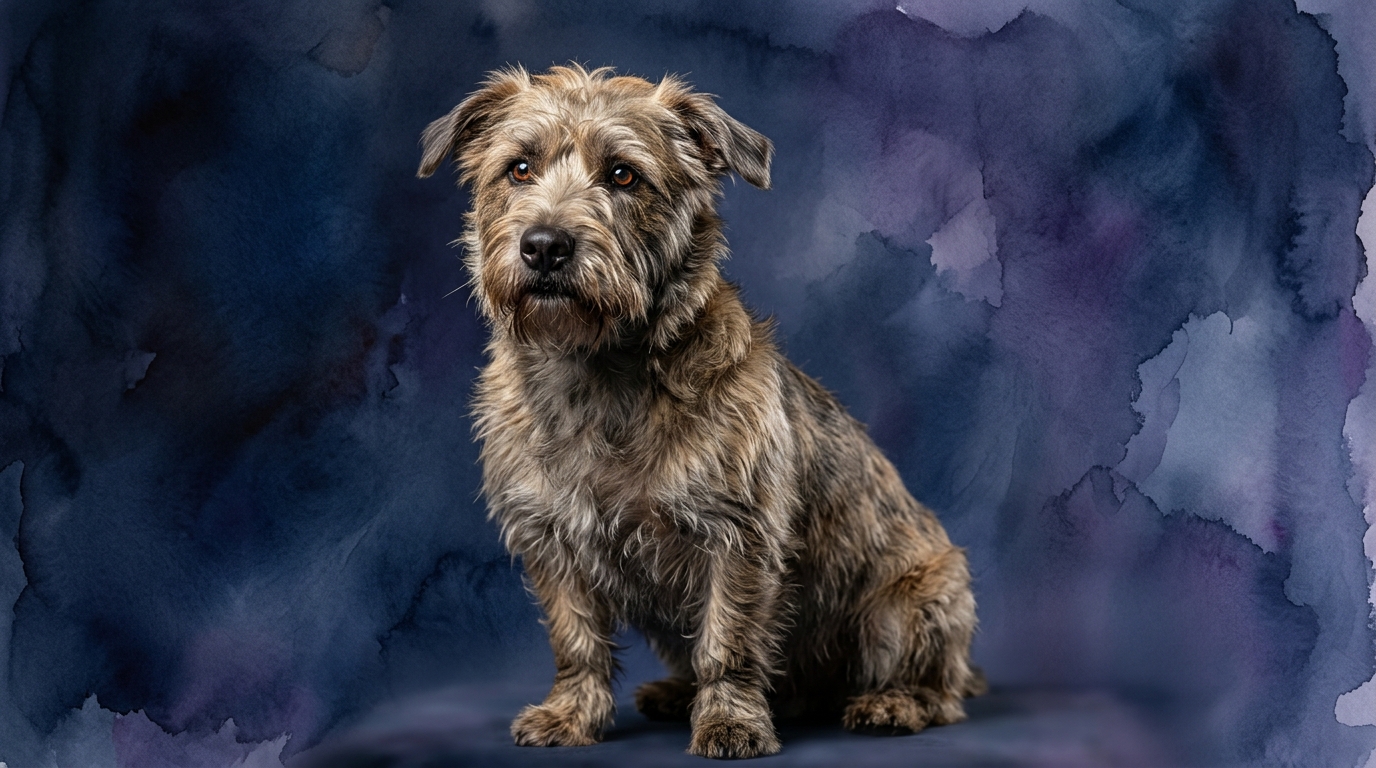
Side-by-Side Cognitive Profile: Identical Scores, Distinct Minds
The Cosmic Pet Pet IQ Lab's assessment assigns both the Entlebucher Mountain Dog and the Glen of Imaal Terrier a consistent 3/5 across all five measured intelligence dimensions. This numerical parity, however, belies the rich, nuanced ways these breeds apply their mental capacities, shaped profoundly by their ancestral roles. A 3/5 score generally indicates a moderate level of ability; these dogs are capable learners and thinkers, but their inherent drives dictate the *manner* in which these abilities are expressed.
For **Problem Solving (3/5)**, the Entlebucher’s moderate capacity often manifests as finding creative ways to gather or move livestock, adapting to changes in terrain or flock behavior. Their solutions typically involve strategic movement and positioning, reflecting their herding heritage. They might assess a gate latch or a barrier with a focus on how to bypass it to complete a task. The Glen of Imaal’s 3/5 problem-solving, conversely, often translates to persistence in scent-driven tasks or navigating complex underground environments. They might methodically work to extract a toy from a tight space, or figure out how to access a forbidden area with determined focus, reflecting their badger-hunting roots. Their solutions are often individualistic and driven by a strong internal motivation.
Regarding **Training Speed (3/5)**, the Entlebucher's moderate pace of learning new commands is often balanced by their desire to cooperate. While they may not grasp a complex command instantly, their willingness to engage with their handler means they are receptive to consistent, positive reinforcement. They learn best when tasks are linked to purpose, like 'stay' being useful during a herding exercise. For the Glen, this moderate training speed can be influenced by their independent nature. They absorb information, but their motivation to *perform* a command might hinge on whether they perceive it as worthwhile or if it aligns with their immediate interests. Training often requires making lessons highly engaging and rewarding to overcome their self-directed tendencies.
In terms of **Social Intelligence (3/5)**, the Entlebucher’s moderate ability is often geared towards understanding their handler’s intent during work. They learn to read subtle signals for direction changes or to anticipate the next step in a task. In a family setting, they develop a keen awareness of household routines and individual family members’ moods, often seeking to be involved or offer comfort. The Glen’s moderate social intelligence often manifests as a deep, albeit sometimes selective, bond with their primary family. They understand basic commands and emotional states but might be less inclined to seek constant human approval or engage in complex social games. They appreciate consistent communication but might not always prioritize human direction over their own instincts, particularly when focused on a scent.
Their **Instinctive Drive (3/5)** in the Entlebucher is rooted in their herding heritage, meaning a natural inclination to gather, control movement, and be watchful. While a 3/5 indicates it’s not overwhelming, it's an underlying current that needs outlets like structured play, agility, or actual herding to prevent it from being misdirected. The Glen’s 3/5 instinctive drive is primarily focused on their terrier purpose: hunting and dispatching vermin. This translates to a moderate prey drive, a persistent digging impulse, and a strong independent streak when pursuing a scent. While not as relentless as some terriers, this drive means they are purpose-driven and will commit to a task they deem important, often requiring careful management in environments with small animals or tempting scents.
Finally, for **Memory (3/5)**, the Entlebucher’s moderate ability often serves their work-oriented nature, remembering complex routes, the layout of a familiar field, or the patterns of livestock movement. They retain training well, especially if it’s consistently reinforced and tied to a practical application. The Glen’s memory is often strong when it comes to locations of buried treasures (toys, bones), preferred digging spots, or the layout of their territory. They remember training, but like their training speed, their willingness to *demonstrate* that memory might depend on their current motivation. They can hold grudges or remember unfair treatment, which can impact future interactions.
Where the Entlebucher Mountain Dog Excels Cognitively
The Entlebucher Mountain Dog, despite sharing identical raw scores, often demonstrates a cognitive edge in areas demanding structured cooperation and spatial problem-solving within a dynamic environment. Their herding lineage means they naturally process information related to movement, boundaries, and group dynamics with a nuanced understanding. An Entlebucher excels at anticipating the trajectory of moving objects or individuals, a skill vital for guiding livestock, and equally useful in advanced obedience or agility courses. They display a superior ability to learn and execute complex multi-step commands, not just as isolated tricks, but as sequences that achieve a larger goal, such as navigating an obstacle course in a specific order or moving a 'flock' of toys from one pen to another. This breed’s problem-solving, while rated 3/5, often leans towards finding solutions that maintain order and control, making them adept at tasks requiring foresight and strategic positioning. Their moderate memory is particularly effective for recalling complex routines and pathways, allowing them to perform intricate tasks with consistency once learned, making them excellent partners for activities that mimic their ancestral purpose.
Where the Glen of Imaal Terrier Shows Cognitive Strengths
Conversely, the Glen of Imaal Terrier's cognitive strengths shine in domains requiring independent thought, persistent focus, and tactical ingenuity in confined or challenging spaces. Their historical role as badger and fox hunters cultivated a different set of mental faculties. A Glen's problem-solving, also rated 3/5, is often characterized by determined, methodical approaches to overcoming physical barriers or tracking elusive scents. They possess a remarkable talent for spatial reasoning in three dimensions, navigating tunnels, burrows, or dense undergrowth with an almost intuitive understanding of tight squeezes and potential exits. This translates into a knack for intricate puzzle toys or finding hidden objects, demonstrating a focused persistence that can outlast many other breeds. Their instinctive drive, while moderate, is intensely concentrated when a scent or a perceived 'quarry' is involved, allowing them to block out distractions and maintain unwavering attention on a specific task. The Glen's memory is particularly robust for scent trails and the locations of resources, remembering precisely where a treat was hidden days ago or the exact spot a squirrel vanished into, showcasing a cognitive advantage in focused, self-directed exploration and retrieval.
Training Dynamics: Cooperation vs. Conviction
When considering ease of training, the Entlebucher Mountain Dog generally presents a more straightforward path for the average owner, despite both breeds sharing a 3/5 training speed. This difference stems not from raw learning capacity, but from their fundamental motivations and social structures. The Entlebucher, as a herding breed, possesses an inherent desire to work *with* a human partner. Their moderate social intelligence and instinctive drive are geared towards cooperation and taking direction, making them naturally more biddable. They thrive on having a job and responding to their handler’s cues, viewing training as a collaborative effort. While they might require consistent repetition for new commands, their willingness to engage and please makes the process rewarding.
In contrast, the Glen of Imaal Terrier’s training speed, also 3/5, is often tempered by their highly independent and self-assured nature. Their terrier heritage means they are bred to make decisions autonomously and persist in their own agenda, sometimes regardless of human input. While intelligent and capable of learning, a Glen often requires a trainer to convince them that performing a command is more beneficial or interesting than pursuing their own impulses. This means training sessions need to be highly engaging, varied, and incredibly rewarding to capture and maintain their attention. Their strong instinctive drive for independent hunting can make recall challenging if a compelling scent is present, demanding more rigorous and creative training strategies to ensure reliability. Therefore, while both learn, the Entlebucher’s cooperative spirit often makes the training journey feel less like a negotiation and more like a partnership.
Lifestyle Match: Active Engagement vs. Focused Play
The choice between an Entlebucher Mountain Dog and a Glen of Imaal Terrier also significantly hinges on an owner’s lifestyle, particularly their activity level and preferred type of engagement. The Entlebucher Mountain Dog is a better fit for active owners who can provide consistent, structured physical and mental stimulation. Their moderate instinctive drive for herding translates into a need for purposeful activity. They thrive on long walks, hikes, agility training, or even actual herding work. Their cognitive profile benefits from learning complex tasks and having 'jobs' to do, which keeps their problem-solving and memory engaged. An owner who enjoys outdoor adventures and can dedicate time to regular training sessions and brain games will find the Entlebucher a fulfilling companion. For more relaxed owners, the Entlebucher’s unmet needs can lead to frustration or destructive behaviors as they seek to create their own 'work.'
The Glen of Imaal Terrier, while not a couch potato, can often suit a slightly less intensely active owner, provided their specific cognitive and instinctive needs are met. Their activity bursts are often intense but shorter, and they can be content with a good walk, vigorous play in a secure yard, and plenty of mental puzzles. Their independent problem-solving and strong drive for scent work mean they benefit greatly from activities like nose work, advanced puzzle toys, or supervised digging pits. A relaxed owner who enjoys engaging their dog’s mind with challenging games, offers short bursts of vigorous play, and respects their independent nature will find the Glen a delightful, albeit sometimes stubborn, companion. However, 'relaxed' does not mean absent; a Glen still requires consistent mental engagement to prevent boredom and mischief, just perhaps less sustained physical exertion than an Entlebucher.
The Verdict
Choose an Entlebucher Mountain Dog if you seek a cooperative, biddable partner for structured activities and enjoy engaging in consistent training and outdoor adventures.
Opt for a Glen of Imaal Terrier if you appreciate an independent spirit, enjoy engaging minds with puzzle-solving and scent games, and can provide focused, intense bursts of activity.
🧠 Find Your Pet's IQ Score
Our Pet IQ Lab assessment covers 25+ tests across 5 cognitive dimensions — personalized to your breed.
Take the Full IQ Test →Frequently Asked Questions
Do Entlebucher Mountain Dogs and Glen of Imaal Terriers have similar energy levels?
While both are active, their energy manifests differently. Entlebuchers typically require more sustained, structured physical activity and mental engagement, often linked to their herding origins. Glens tend to have intense bursts of energy followed by periods of rest, and benefit more from focused mental challenges and scent work.
Are either of these breeds good for first-time dog owners?
Neither breed is typically recommended for novice owners without significant commitment to training and understanding breed-specific needs. Entlebuchers require consistent leadership and ample structured exercise, while Glens demand patience, creative training, and a deep appreciation for their independent, tenacious terrier nature.
How do their problem-solving skills differ in practical scenarios despite the same IQ score?
An Entlebucher's problem-solving often focuses on strategic movement and cooperation to achieve a goal, like herding. A Glen's problem-solving is more about independent persistence, navigating obstacles, or tracking scents to achieve its own objective, reflecting their hunting heritage.