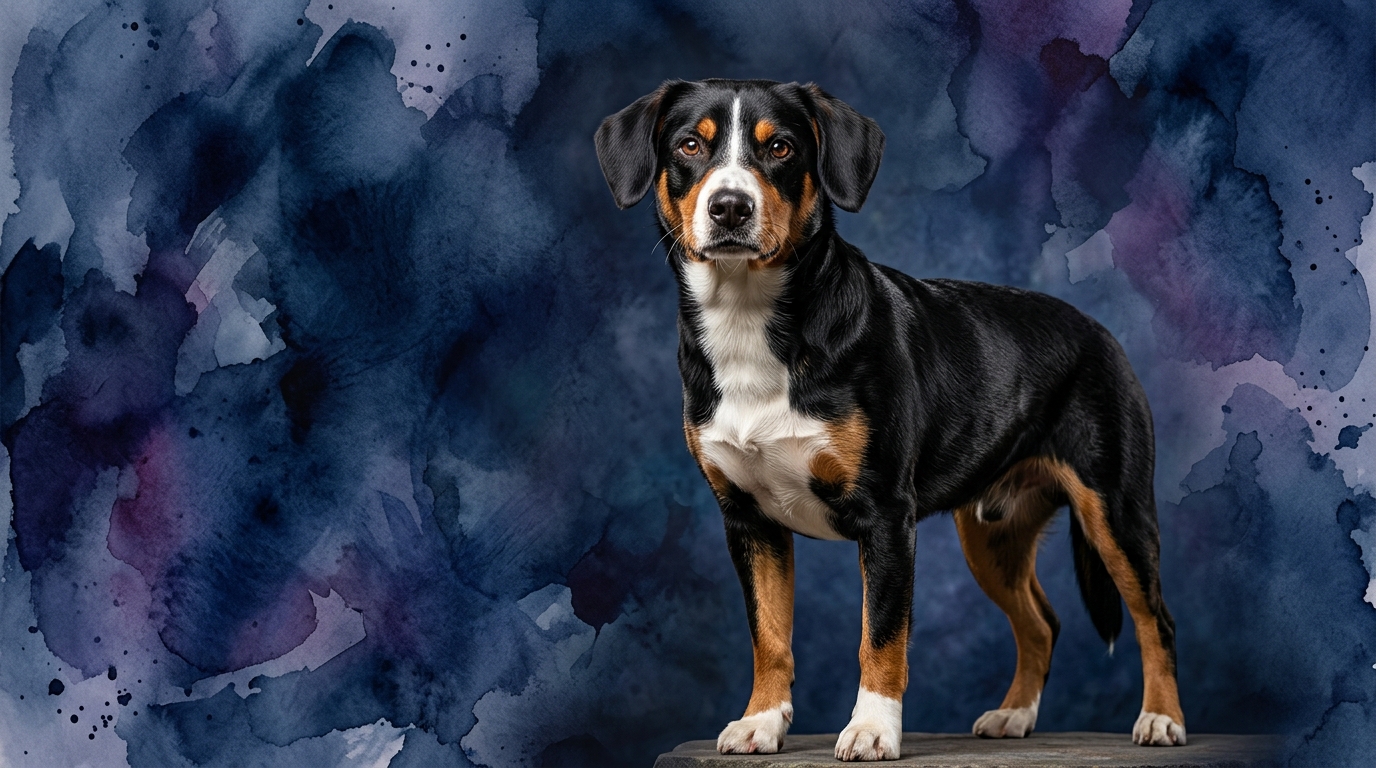
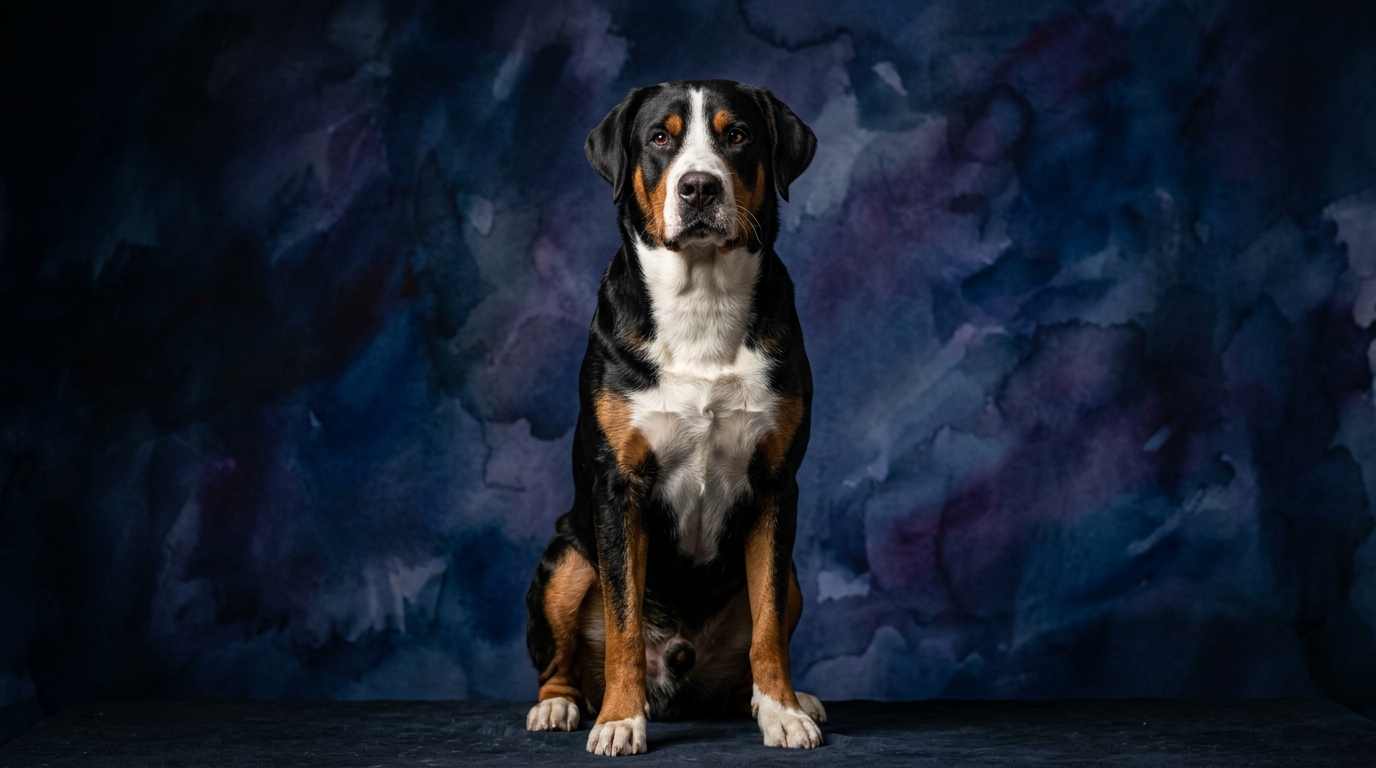
Side-by-Side IQ Profile: Entlebucher vs. Greater Swiss
At The Cosmic Pet Pet IQ Lab, we evaluate canine intelligence across five key dimensions. Interestingly, both the Entlebucher Mountain Dog and the Greater Swiss Mountain Dog share a consistent 3/5 rating across all categories. However, understanding their breed groups – Herding for the Entlebucher and Working for the Greater Swiss – reveals how these identical scores translate into unique cognitive strengths and behavioral tendencies.
**Entlebucher Mountain Dog (Herding Group)**
**Problem Solving (3/5)**: The Entlebucher exhibits a solid aptitude for problem-solving, particularly in dynamic, real-time scenarios typical of herding. They display quick, adaptive thinking to manage livestock, block escape routes, or retrieve strays, making on-the-spot decisions with practical, action-oriented solutions for a moving herd.
**Training Speed (3/5)**: With a good training speed, Entlebuchers learn new commands and routines effectively when the training engages their innate drive to work. They respond well to consistent, clear communication, thriving on tasks that challenge their intelligent minds, though their independent herding instincts sometimes require a firm approach.
**Social Intelligence (3/5)**: Their social intelligence is evident in their ability to keenly read and react to both human and animal cues. Entlebuchers form strong, protective bonds with family, sensitive to moods, and demonstrate an understanding of herd dynamics when interacting with livestock.
**Instinctive Drive (3/5)**: A strong 3/5 instinctive drive rooted in herding means Entlebuchers possess a powerful desire to gather, control, and move. This drive is a significant motivator for task-oriented activities, providing purpose when channeled into appropriate outlets, whether with livestock or in structured play.
**Memory (3/5)**: Entlebuchers show reliable memory for learned commands, routines, and experiences. They recall training cues effectively and remember territory layouts or individual behaviors, supporting their ability to perform complex, multi-step tasks and adhere to household rules over time.
**Greater Swiss Mountain Dog (Working Group)**
**Problem Solving (3/5)**: The Greater Swiss Mountain Dog demonstrates good problem-solving skills, often leaning towards practical, physical challenges tied to their working heritage like drafting or guarding. They excel at methodical solutions for moving heavy loads or navigating obstacles, applying their strength and presence to accomplish tasks.
**Training Speed (3/5)**: Swissys learn at a steady pace (3/5), grasping new concepts with consistent instruction and positive reinforcement. They respond well to calm, clear guidance, appreciating structured learning. Their retention is strong, motivated by partnership and purpose in their training, making them reliable learners.
**Social Intelligence (3/5)**: These dogs display robust social awareness, particularly within their family, acting as gentle giants. They read emotional states well and can be empathetic. With strangers, their social intelligence manifests as a discerning, watchful nature, reflecting their protective instincts before engagement.
**Instinctive Drive (3/5)**: The Greater Swiss Mountain Dog's 3/5 instinctive drive is geared towards protecting, guarding, and physical tasks like drafting. They possess a natural inclination to be watchful, stand their ground, and apply their substantial physical presence, making them excellent companions for outdoor work and stable guardians.
**Memory (3/5)**: Swissys exhibit good memory for learned behaviors, territory boundaries, and family members. They reliably recall training commands and routines, crucial for their roles in drafting and farm work where consistency and dependable recall are paramount for success.
Where Entlebucher Mountain Dog Wins Cognitively
Despite identical scores, the Entlebucher's cognitive strengths lean into its Herding Group heritage. Its problem-solving exhibits a more agile, reactive quality, precisely suited for the fluid, unpredictable nature of livestock management. They might more readily devise a novel strategy to outmaneuver a stubborn animal, demonstrating quick, adaptive thinking in dynamic environments. Their social intelligence is finely tuned to subtle shifts in herd behavior and handler cues, allowing for nuanced communication in fast-paced, complex scenarios.
Where Greater Swiss Mountain Dog Wins Cognitively
The Greater Swiss Mountain Dog, while equally rated, displays cognitive advantages aligned with its Working Group duties. Its problem-solving often involves more deliberate, strength-based solutions, like efficiently pulling a cart over varied terrain or strategically deterring an unwanted presence. Its memory and instinctive drive excel in consistent, purposeful tasks, such as following a specific route while drafting or maintaining vigilant watch. This breed thrives on sustained effort and methodical application of its abilities, excelling in roles requiring steadfastness and physical resolve.
Which is Easier to Train and Why
Both breeds share a 'Training Speed' rating of 3/5, indicating solid learning capacity. However, their motivations create subtle training differences. The Entlebucher, driven by strong herding instincts, is highly motivated by mimicking its historical work, but this can also lead to 'herding' family members. Training requires consistent redirection and engaging, varied sessions to channel this energy productively. The Greater Swiss Mountain Dog, also purpose-driven, is generally more deliberate and less prone to impulsive herding. They respond best to calm, consistent positive reinforcement, especially for physical tasks or guardianship roles. While neither is inherently 'easier,' the Entlebucher may demand more creative handler input for its energetic instincts, while the Swissy benefits from patient, structured approaches leveraging its steadfast nature.
Which Suits Active Owners vs. Relaxed Owners
Considering their cognitive profiles and inherent drives, the Entlebucher Mountain Dog typically suits more active owners. Their problem-solving and strong herding drive necessitate consistent mental and physical engagement. Owners enjoying dog sports or advanced obedience will find the Entlebucher thrives on such interaction, as their agile minds require regular challenges. A relaxed owner might find this constant need for stimulation overwhelming. Conversely, the Greater Swiss Mountain Dog, while not sedentary, can adapt to a slightly more relaxed pace. They appreciate regular exercise and purposeful activities, but their working drive also manifests as a desire for companionship and a watchful presence. They are often content with good walks and family time, settling calmly indoors. Owners appreciating a loyal, steadfast companion for moderate activity and strong family bonds might prefer the Swissy.
The Verdict
Choose the Entlebucher Mountain Dog if you are an active, experienced owner ready to consistently engage a dog with a quick, agile mind and a strong herding drive in varied, stimulating activities. This breed thrives with a 'job' and an owner who appreciates dynamic problem-solving and a responsive partner.
Opt for the Greater Swiss Mountain Dog if you seek a loyal, steadfast companion for moderate activity, valuing a dog with a methodical approach to tasks and a watchful, protective nature that enjoys purposeful work and family companionship.
🧠 Find Your Pet's IQ Score
Our Pet IQ Lab assessment covers 25+ tests across 5 cognitive dimensions — personalized to your breed.
Take the Full IQ Test →Frequently Asked Questions
Do Entlebucher Mountain Dogs herd children?
Yes, due to their strong instinctive herding drive (3/5), Entlebuchers may attempt to "herd" children or other pets by nudging, circling, or nipping at heels. This is a natural behavior for the breed and requires consistent training and early redirection to manage effectively.
Are Greater Swiss Mountain Dogs good guard dogs?
Greater Swiss Mountain Dogs, with their 3/5 instinctive drive for guarding and substantial presence, are naturally watchful and protective of their families and property. They are discerning, typically observing before acting, and will alert to strangers, making them effective deterrents and loyal guardians.
Which breed is more vocal, the Entlebucher or the Greater Swiss?
While both breeds can be vocal, their expressions differ. Entlebuchers, with their active herding minds, might use barks more frequently to communicate or express excitement, especially when stimulated. Greater Swiss Mountain Dogs tend to use their voice more for alert barking, reflecting their guarding instincts, and can have a deep, resonant bark.