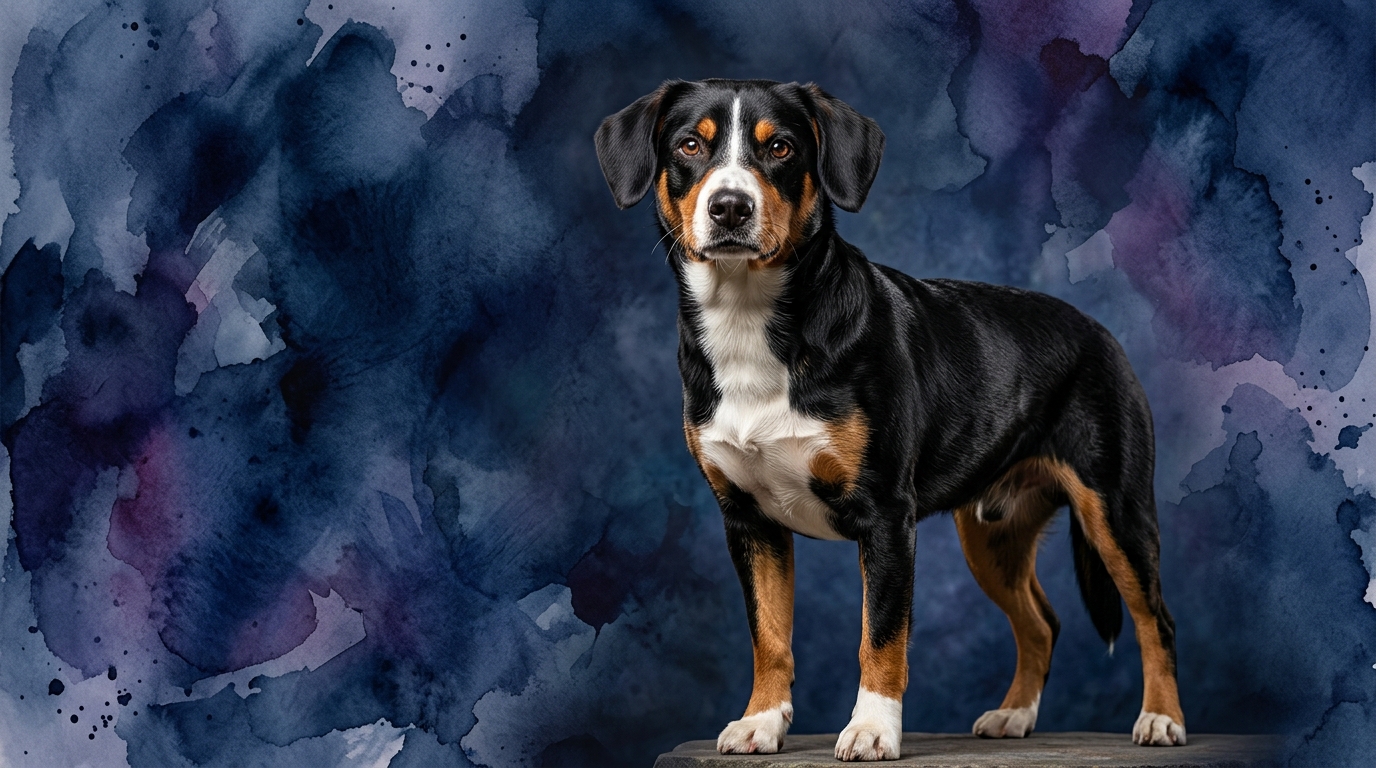
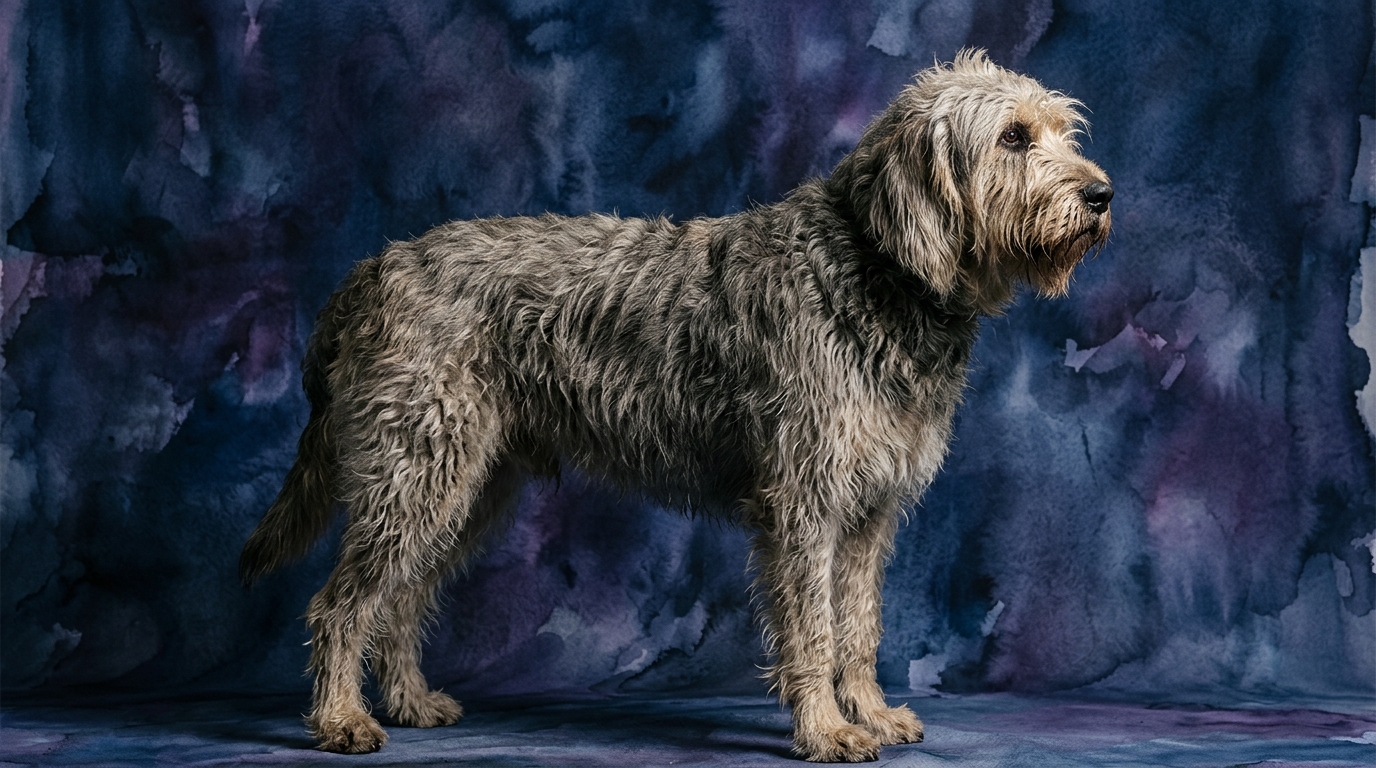
The Cosmic Pet IQ Profile: Entlebucher vs. Otterhound
The Cosmic Pet Pet IQ Lab assigns both the Entlebucher Mountain Dog and the Otterhound an identical score of 3/5 across all five cognitive dimensions: problem-solving, training speed, social intelligence, instinctive drive, and memory. While these scores suggest a generally competent and capable level of intelligence for both breeds, the manifestation and application of these cognitive traits are profoundly shaped by their distinct historical roles and inherent breed temperaments.
For the Entlebucher Mountain Dog, a Herding breed, a Problem Solving score of 3/5 indicates a practical aptitude for tasks involving spatial reasoning and managing livestock, such as anticipating animal movements or navigating complex pasture layouts. Their Training Speed at 3/5 reflects a steady learning curve with consistent methods, responding well to clear direction typical of a working partnership. Social Intelligence at 3/5 means they are attuned to their human companions and family dynamics, often displaying a watchful, loyal demeanor. An Instinctive Drive of 3/5 highlights their inherent desire to herd, organize, and work, providing a strong internal motivation. Finally, their Memory at 3/5 suggests good retention of commands, routines, and territory, aiding in their reliable performance of learned tasks.
Conversely, the Otterhound, a Scent Hound, interprets these same 3/5 scores through a different lens. Their Problem Solving at 3/5 is keenly focused on deciphering complex scent trails, navigating challenging terrain, and persisting until a quarry is located. Training Speed, also 3/5, implies they are capable of learning, but their powerful, independent scent drive often means obedience takes a backseat to an intriguing smell, requiring immense patience and high-value rewards. Social Intelligence at 3/5 indicates they are generally amiable and enjoy companionship, characteristic of a pack hound, though perhaps less focused on subtle human emotional cues than a herding breed. Their Instinctive Drive, a robust 3/5, is almost entirely dedicated to scenting, tracking, and vocally announcing their finds, an all-consuming passion. Their Memory, rated 3/5, is particularly strong for scent patterns, familiar hunting grounds, and established routines, though a compelling new scent can momentarily eclipse other forms of recall.
Where the Entlebucher Mountain Dog Excels Cognitively
Despite sharing identical numerical scores, the Entlebucher Mountain Dog demonstrates distinct cognitive strengths rooted in its herding heritage. Their 3/5 problem-solving ability shines in scenarios demanding strategic thinking and anticipation, particularly when managing dynamic situations involving movement and boundaries. This isn't abstract puzzle-solving, but rather the practical application of foresight to control and direct, whether it's livestock, children, or even other pets.
The Entlebucher's 3/5 social intelligence is uniquely geared towards forming a highly functional working partnership with its human. They are adept at interpreting subtle cues and directives, often appearing to read their handler's intentions. This collaborative intelligence makes them exceptionally responsive when engaged in tasks, valuing cooperation and clear leadership. Their instinctive drive, also 3/5, is powerfully channeled towards purpose and order, making them intrinsically motivated to engage in structured activities like obedience, agility, or actual herding, where their cognitive energy is focused on achieving a shared goal rather than purely self-directed exploration.
Where the Otterhound Excels Cognitively
The Otterhound's cognitive strengths are deeply intertwined with its extraordinary olfactory capabilities and tireless pursuit. Their 3/5 problem-solving prowess is unparalleled when it comes to the intricate challenge of tracking. They excel at deductive reasoning in the field, piecing together fragmented scent information, identifying the freshest trail amidst distractions, and navigating complex environments to follow their quarry. This specialized problem-solving is a testament to their evolutionary purpose.
Their 3/5 memory is exceptional when it comes to retaining a vast library of scent profiles and environmental data. An Otterhound can recall specific scents, remember the layout of previous tracking expeditions, and even identify subtle changes in a familiar environment. This memory isn't just about facts; it's an immersive sensory recall that fuels their relentless drive. The Otterhound's instinctive drive, also 3/5, represents an almost unbreakable focus on a single sensory input – scent. This single-mindedness, while posing training challenges, is a cognitive triumph in its own right, allowing them to ignore distractions and persevere through immense physical and mental exertion in pursuit of a trail.
Training Dynamics: Entlebucher vs. Otterhound
When it comes to ease of training, the Entlebucher Mountain Dog often presents as more biddable, despite both breeds scoring 3/5 in training speed. The Entlebucher's herding background instills a desire to work in partnership and respond to direction. Their social intelligence (3/5) is often directed at understanding and complying with their human's expectations, and their instinctive drive (3/5) for control and order can be effectively channeled into structured training. They learn commands steadily and reliably with consistent positive reinforcement, though their inherent drive to 'manage' may manifest as attempts to herd family members, requiring clear boundaries and leadership.
The Otterhound, while capable of learning (3/5 training speed), presents a different training challenge due to its powerful and independent instinctive drive (3/5) for scent. Their problem-solving (3/5) is often self-directed towards following a captivating smell rather than immediately complying with a human command. This profound internal motivation means training requires immense patience, creativity, and high-value rewards to compete with the allure of a scent. Recall, in particular, can be extremely difficult outdoors, as their single-minded pursuit can override any learned command. Owners must understand and respect this inherent hound nature, employing management strategies like long lines in unfenced areas and making training engaging and rewarding to maintain focus.
Lifestyle Suitability: Active Seekers vs. Scent Explorers
For active owners seeking a diligent and engaged partner, the Entlebucher Mountain Dog is often a fitting choice. Their 3/5 instinctive drive means they thrive on having a 'job' and require consistent mental and physical engagement. Owners who enjoy activities like agility, obedience, hiking, or even competitive herding will find the Entlebucher's problem-solving (3/5) and social intelligence (3/5) make them eager participants. A relaxed owner unable to provide sufficient outlets for their energy and cognitive needs might find an Entlebucher becoming bored, restless, or attempting to 'herd' the household in unwelcome ways.
The Otterhound also demands an active lifestyle, but one centered around scent exploration and robust physical exercise. Owners who appreciate long, adventurous walks or hikes, particularly in secure, natural environments where the dog can safely indulge its 3/5 instinctive drive for tracking, will find a happy companion. While they are not necessarily high-strung, their immense stamina and powerful voice mean they are not suited for truly relaxed owners or apartment living without significant outdoor access. Their 3/5 memory and problem-solving are best stimulated by allowing them to follow their nose, making them ideal for owners who enjoy canine scent work or have ample space for them to roam and explore under supervision.
The Verdict: Choosing Your Canine Companion
The Verdict
Choose the Entlebucher Mountain Dog if you seek a diligent, purpose-driven companion for structured activities, valuing a dog that thrives on partnership and has a strong desire to engage in tasks.
Opt for the Otterhound if you appreciate an independent, boisterous companion with an unparalleled nose, and are prepared to manage a powerful scent drive with patience, humor, and opportunities for exploration.
🧠 Find Your Pet's IQ Score
Our Pet IQ Lab assessment covers 25+ tests across 5 cognitive dimensions — personalized to your breed.
Take the Full IQ Test →Frequently Asked Questions
Do Entlebucher Mountain Dogs or Otterhounds make better family pets based on their IQ?
Both breeds score 3/5 in social intelligence, indicating competence in family settings. Entlebuchers tend to be devoted to their immediate family but can be reserved with strangers, while Otterhounds are generally boisterous and friendly, enjoying the company of people and other dogs alike.
Given their identical IQ scores, what's the most significant cognitive difference between them?
The primary difference lies in the *application* of their cognitive skills, driven by their breed-specific instincts. The Entlebucher's problem-solving and memory are geared towards systematic herding tasks, while the Otterhound's excel in interpreting and remembering complex scent trails with relentless focus.
Which breed is more adaptable to different living situations?
The Entlebucher, with its strong desire to please and engage in structured tasks, may adapt better to various training regimes if its mental and physical needs are met. The Otterhound's profound scent drive makes it less adaptable to environments where this instinct cannot be safely indulged, requiring secure outdoor spaces for exploration.