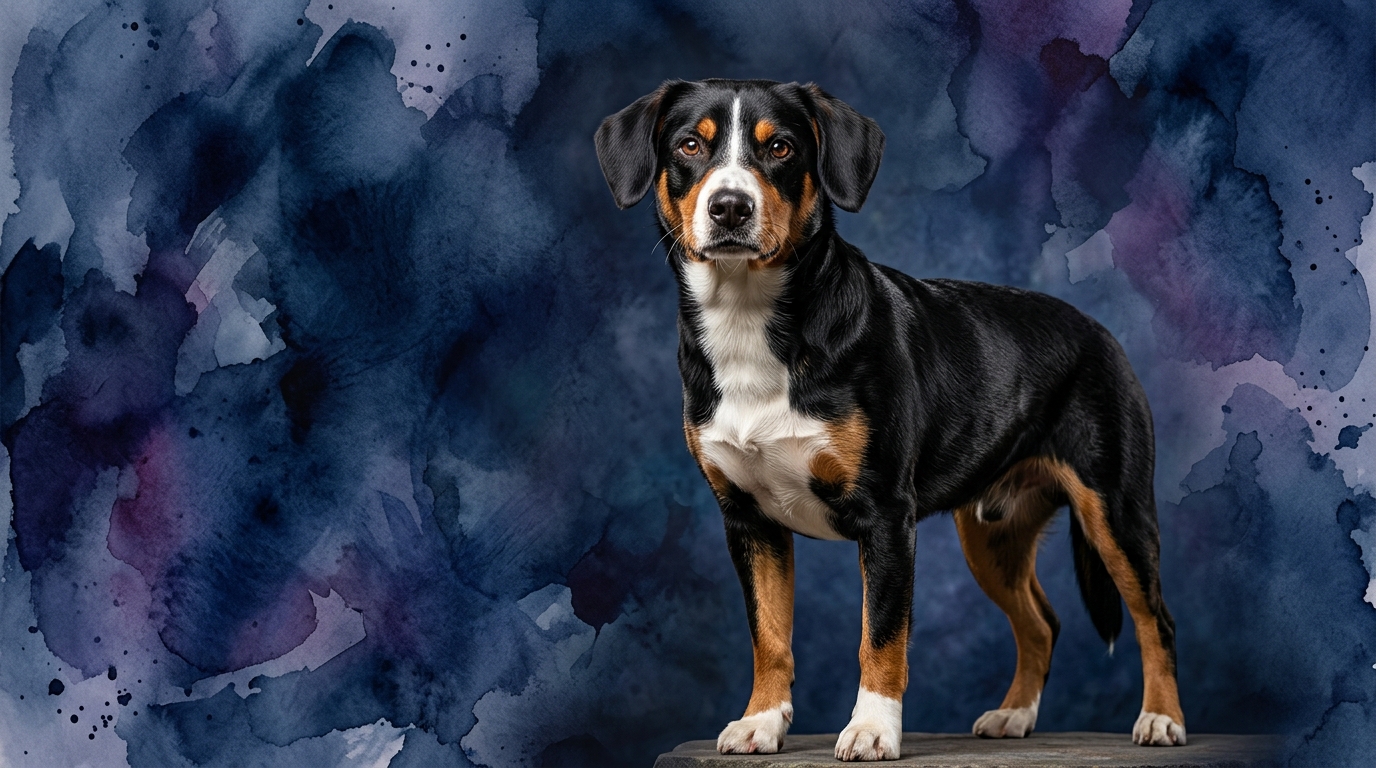
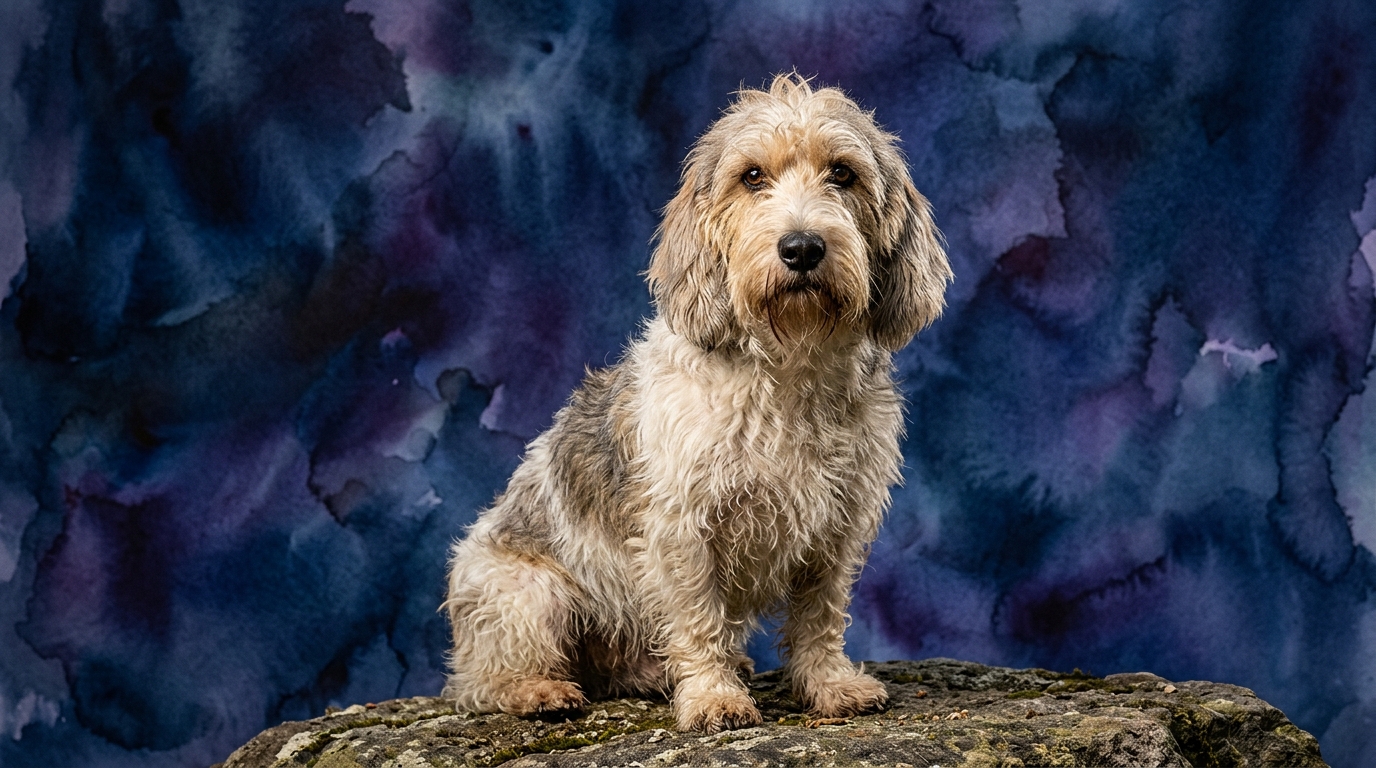
Side-by-Side Cognitive Profiles: Entlebucher Mountain Dog vs. PBGV
At first glance, the Pet IQ Lab scores for the Entlebucher Mountain Dog and the Petit Basset Griffon Vendéen appear to be a perfect match, with both breeds scoring 3 out of 5 across all five cognitive dimensions. However, these identical numerical ratings mask significant differences in how their intelligence manifests, deeply rooted in their breed origins and intrinsic motivations. Understanding these nuances requires delving into the specific context of their working lives.
For the Entlebucher Mountain Dog, a robust Swiss herding breed, a Problem Solving score of 3/5 indicates a moderate capacity to navigate and resolve challenges, often applied to managing livestock or understanding complex household routines. Their training Speed of 3/5 suggests they learn new commands and tasks with a moderate number of repetitions, typically responding well to clear direction from a handler. Their Social Intelligence at 3/5 points to a moderate ability to interpret human cues and integrate into family dynamics, developing strong bonds and understanding their place within the 'pack.' An Instinctive Drive of 3/5 for the Entlebucher primarily encompasses their inherent herding tendencies and a watchful, protective nature over their territory and people. Finally, their Memory at 3/5 means they retain learned behaviors, familiar routes, and the identities of their family members and established routines with moderate reliability.
The Petit Basset Griffon Vendéen, a lively French scent hound, also registers a Problem Solving score of 3/5, but for them, this aptitude is often directed towards deciphering complex scent trails, overcoming environmental obstacles during a hunt, or cleverly accessing interesting smells. Their Training Speed of 3/5 means they can learn commands and routines at a moderate pace, though their strong independent streak and sensory focus can sometimes make them appear less compliant than other breeds. Social Intelligence at 3/5 for the PBGV reflects a moderate understanding of social dynamics, particularly within a canine pack or their human family, often expressed through their cheerful and engaging demeanor. Their Instinctive Drive, also 3/5, is powerfully geared towards scenting, tracking, and pursuing prey, a relentless focus that defines much of their daily existence. A Memory score of 3/5 for the PBGV typically means they can recall specific scent locations, hunting strategies, and positive or negative associations with moderate accuracy, especially if tied to a strong sensory experience.
Where the Entlebucher Mountain Dog Excels Cognitively
Despite sharing the same numerical scores, the Entlebucher Mountain Dog often demonstrates a distinct cognitive edge in scenarios demanding focused cooperation and a structured approach. Their herding lineage means their 3/5 Problem Solving ability is frequently applied to tasks requiring strategic thinking in a controlled environment, such as anticipating the movement of a 'flock' (whether livestock or family members) or navigating a complex agility course with purpose. This breed's 3/5 Social Intelligence often translates into a more direct engagement with human communication, making them adept at reading subtle cues from their handler during work or training sessions, fostering a deep partnership. Their moderate Instinctive Drive, when channeled into tasks like obedience, protection, or even household management, often results in a dog that is consistently attentive and eager to fulfill a role within the family unit, demonstrating a sustained work ethic that can be less common in breeds with a more independent hunting focus. They tend to apply their 3/5 Memory to recalling complex sequences of commands or established family routines with a reliable consistency.
Where the Petit Basset Griffon Vendéen Shines Cognitively
The Petit Basset Griffon Vendéen, conversely, exhibits its cognitive strengths in areas that celebrate independence, sensory acuity, and tenacious pursuit. Their 3/5 Problem Solving manifests brilliantly in the field, where they must independently decipher intricate scent puzzles, overcome natural barriers, and adapt to changing conditions to locate quarry. This breed's moderate Instinctive Drive is a powerful engine for persistence; once a PBGV locks onto a scent, their unwavering focus and resilience in following it, often for extended periods, showcases a unique cognitive stamina. Their 3/5 Social Intelligence, while perhaps less focused on human emotional subtleties than a herding dog, allows them to interact effectively within a pack dynamic, understanding the give-and-take of group activity, whether with other dogs or their human hunting companions. The PBGV's 3/5 Memory is particularly strong for recalling the exact location of a rewarding scent or a successful hunting strategy, demonstrating a remarkable ability to learn from sensory experiences and apply them to future endeavors in their environment, often with a cheerful disregard for human timelines.
Training Dynamics: Entlebucher Cooperation vs. PBGV Independence
When considering ease of training, the identical 3/5 Training Speed scores for both breeds require a deeper interpretation of their underlying motivations and behavioral tendencies. The Entlebucher Mountain Dog, with its herding background, often approaches training with a desire to cooperate and a natural inclination to respond to a leader. While they may still require moderate repetition to solidify commands, their willingness to engage and their focus on their handler can make the training process feel more straightforward and less challenging. They tend to find satisfaction in performing tasks for their human companions, making positive reinforcement highly effective for building a strong working relationship. This cooperative spirit means that their moderate training speed often translates into a relatively smooth path to obedience and manners.
The Petit Basset Griffon Vendéen, despite also having a 3/5 Training Speed, presents a different training experience due to their strong, independent hound nature. While capable of learning commands, their primary motivation is often their nose and the thrill of the chase, rather than human approval. Training a PBGV requires immense patience, creativity, and a deep understanding of their scent-driven world. They might learn a command quickly, but choosing to execute it when an interesting smell presents itself is a separate challenge. Their moderate training speed is often tempered by their tendency to follow their instincts, meaning consistency, high-value rewards, and engaging, game-based training methods are crucial to keep their attention and foster compliance. They excel when training taps into their natural drives, such as scent work or tracking, making these activities both mentally stimulating and rewarding for the breed.
Lifestyle Match: Active Engagement vs. Adventurous Spirit
The Entlebucher Mountain Dog is an excellent match for active owners who appreciate a diligent, engaged companion and are prepared to provide consistent mental and physical stimulation. This breed thrives when given a 'job,' whether it's formal obedience, agility, herding activities, or simply being an active participant in family life. Their moderate instinctive drive and social intelligence mean they are typically happiest when integrated into daily routines and given opportunities to exercise both their bodies and their minds with purpose. Owners who enjoy structured activities, long hikes, and a dog that is eager to learn and please will find the Entlebucher a rewarding partner. They require an owner who can confidently guide their protective instincts and channel their energy productively, preventing boredom and potential behavioral issues.
The Petit Basset Griffon Vendéen, on the other hand, suits owners with an adventurous spirit who embrace a spirited, independent companion with a zest for exploration. While active, their exercise needs often revolve around opportunities to follow their nose and explore diverse environments. They require owners who understand and respect their powerful scent drive, providing secure outdoor spaces and engaging in activities like tracking or scent work that fulfill their innate desires. Owners who enjoy off-leash walks in safe, expansive areas, are prepared for a dog that might 'tune out' when a compelling scent arises, and appreciate a cheerful, resilient companion will find joy with a PBGV. They are not typically suited for owners seeking a purely relaxed, couch-potato dog, as their moderate energy and drive demand regular outlets for their inquisitive nature.
The Verdict
Choose the Entlebucher Mountain Dog if you seek a cooperative, task-oriented companion eager to engage in structured activities and be a diligent part of your family's daily life.
Opt for the Petit Basset Griffon Vendéen if you're an adventurous owner who values an independent, scent-driven companion, ready for cheerful exploration and engaging in activities that celebrate their natural hunting instincts.
🧠 Find Your Pet's IQ Score
Our Pet IQ Lab assessment covers 25+ tests across 5 cognitive dimensions — personalized to your breed.
Take the Full IQ Test →Frequently Asked Questions
Do Entlebucher Mountain Dogs or PBGVs make better family pets?
Both breeds can be wonderful family pets, but in different ways. Entlebuchers often integrate as watchful, devoted family members who thrive on routine and inclusion. PBGVs are typically cheerful, playful, and robust, enjoying an active family that understands their independent nature and provides outlets for their sensory drives.
Which breed is more vocal, the Entlebucher or the PBGV?
The Petit Basset Griffon Vendéen is generally considered more vocal, known for their characteristic 'hound music' – baying, howling, and barking, especially when on a scent or excited. Entlebuchers can be vocal as well, often using barks to alert or express themselves, but typically less persistently than a PBGV.
Are Entlebucher Mountain Dogs and PBGVs good with other dogs?
Entlebuchers, with proper socialization, can coexist well with other dogs, often displaying a watchful but tolerant demeanor. PBGVs, being pack hounds, generally enjoy the company of other dogs and thrive in multi-dog households, often displaying a playful and gregarious nature with their canine companions.