
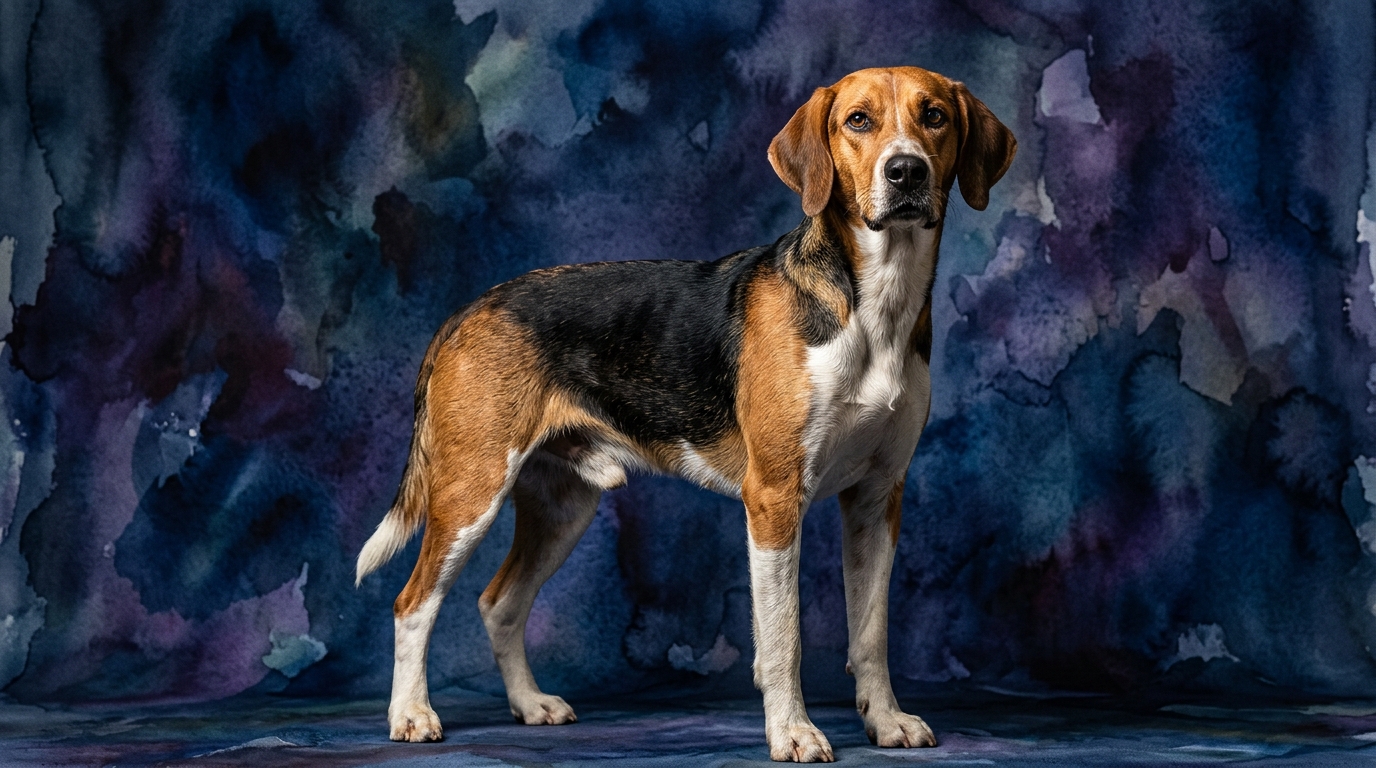
Side-by-Side IQ Profile: Unpacking Identical Scores
At first glance, the Field Spaniel and English Foxhound present a curious case in canine cognition, both rated consistently at 3/5 across The Cosmic Pet Pet IQ Lab’s five core dimensions. This uniformity, however, doesn't imply identical mental landscapes, but rather a similar *level* of capacity expressed through very different lenses shaped by centuries of selective breeding. Understanding these nuances is key to appreciating their distinct cognitive styles.
The Field Spaniel, a Sporting breed, demonstrates a 3/5 in Problem Solving that typically revolves around handler-directed tasks, such as navigating dense cover to flush game or finding a fallen bird. Their training Speed, also 3/5, reflects an eagerness to cooperate and learn commands that facilitate their working partnership, often showing a desire to please. Social Intelligence at 3/5 for the Field Spaniel is heavily geared towards understanding human cues and integrating into a family unit, often forming strong bonds. Their Instinctive Drive, a 3/5, is primarily focused on hunting and retrieving, exhibiting a keen nose and a methodical approach to quartering terrain. Memory, also 3/5, is evident in their ability to recall specific retrieves, remember complex routes in the field, and retain a broad repertoire of commands.
In contrast, the English Foxhound, a quintessential Hound, applies its 3/5 Problem Solving to the intricate challenge of tracking a scent trail over varying terrain, deciphering subtle changes in odor and navigating obstacles independently. Their 3/5 training Speed is often observed within the context of pack dynamics, responding to horn calls or the master's voice while maintaining focus on the hunt, which requires a different type of compliance than a gundog. Social Intelligence at 3/5 for the English Foxhound is profoundly shaped by pack life, understanding hierarchy and communication within a group of dogs, as well as responding to their human hunt master. The English Foxhound's 3/5 Instinctive Drive is an overwhelming, singular focus on scent and the pursuit of quarry, driving them to cover vast distances with unwavering determination. Their Memory, rated 3/5, is formidable for recalling scent patterns, remembering specific hunting grounds, and recognizing pack members and human companions even after long periods.
Where the Field Spaniel Excels Cognitively
Despite sharing the same numerical IQ scores, the Field Spaniel's cognitive strengths lean towards cooperative problem-solving and adaptable application of learned behaviors. Their 3/5 in Problem Solving is particularly adept when the challenge involves understanding and executing multi-step commands from a handler, such as 'seek dead' followed by navigating obstacles to retrieve. This breed's strength lies in its ability to quickly switch between tasks and apply learned solutions to slightly varied scenarios, especially those involving retrieving or flushing work. Their memory is particularly strong for associating specific commands with actions and locations, making them excellent at remembering where a toy was hidden or a specific training exercise performed.
The Field Spaniel’s social intelligence, while also 3/5, is highly attuned to individual human companionship, making them more receptive to nuanced emotional cues and changes in tone from a single person or family. This specific manifestation of social intelligence makes them particularly responsive in a home environment, often seeking to understand and anticipate their human's wishes. Their instinctive drive, focused on flushing and retrieving, is often more easily channeled into structured activities like obedience, agility, or scent work that involve direct human partnership, making their drive a tool for engagement rather than a purely independent pursuit.
Where the English Foxhound Excels Cognitively
The English Foxhound’s cognitive prowess shines brightest in areas demanding independent decision-making driven by an exceptional sense of smell and relentless endurance. Their 3/5 in Problem Solving is less about handler direction and more about autonomously tracking a complex scent trail, requiring them to interpret environmental cues, differentiate scents, and choose the most promising path without constant human guidance. This deep-seated ability to follow a trail, even if it's hours old or crosses varied terrain, showcases a unique cognitive persistence and analytical capacity specific to their breed purpose.
Their instinctive drive, a powerful 3/5, is an unparalleled asset in sustained pursuit, allowing them to maintain focus on a scent for hours, covering significant distances. This drive is so profound it often overrides other stimuli. The English Foxhound's memory, while 3/5, is outstanding for retaining complex scent patterns and remembering the lay of the land across vast hunting territories, a critical skill for navigating and returning to the pack or master. Their social intelligence, while also 3/5, is expertly honed for pack dynamics, understanding the subtle cues and communications within a group of dogs, which is a highly specialized form of social processing distinct from human-centric interaction.
Which is Easier to Train and Why?
When considering ease of training, the Field Spaniel generally presents a more straightforward experience for the average owner. Their 3/5 training speed is complemented by a strong desire to collaborate with their human, a trait stemming from their gundog heritage where working closely with a handler was paramount. They are typically more responsive to positive reinforcement and correction, often showing a clear understanding of what is expected. Their problem-solving skills are applied to understanding commands and figuring out how to earn rewards from their person, making them more biddable in traditional obedience settings. For instance, teaching a Field Spaniel to sit or stay often involves fewer repetitions because their primary motivation is often to please and maintain that cooperative bond.
The English Foxhound, while certainly trainable, presents a different set of challenges rooted in its independent, scent-driven nature. Their 3/5 training speed is often overridden by their powerful instinctive drive. Once a Foxhound's nose engages, its focus shifts almost entirely to the scent, making it less receptive to human commands in that moment. Their problem-solving is directed at the hunt, not necessarily at pleasing a handler. This means training often requires immense patience, consistency, and a deep understanding of their drive. A Foxhound might learn a 'recall' command, but if a compelling scent crosses its path, its inherent drive to follow that scent will often take precedence over the learned command, requiring a higher level of management and specialized training techniques.
Suits Active Owners vs. Relaxed Owners
The Field Spaniel, with its balanced 3/5 scores across the board and its gundog background, is well-suited for active owners who enjoy engaging their dog in structured activities. While they appreciate a good long walk or hike, their cognitive and physical needs are best met through activities that involve partnership and a 'job' to do, such as retrieving games, obedience training, agility, or scent work. Their social intelligence thrives in a family environment where they receive consistent interaction and mental stimulation. They are adaptable enough to enjoy periods of relaxation with their family, provided their daily exercise and mental engagement needs are met. Owners who appreciate a dog that is eager to learn and participate in shared activities will find the Field Spaniel a rewarding companion.
The English Foxhound, on the other hand, is unequivocally a breed for highly active owners who can accommodate their formidable stamina and profound instinctive drive. Their 3/5 instinctive drive for scenting and running dictates a lifestyle of extensive, vigorous exercise. These are not dogs content with short walks; they require opportunities to run, explore, and ideally, engage their nose over long distances. Their independent problem-solving and social intelligence, geared towards pack work, mean they thrive in environments where they can be part of a larger 'pack' (human or canine) and have a purpose, often one involving sustained outdoor activity. Relaxed owners or those seeking a purely sedentary companion will likely find the English Foxhound’s energy levels and independent nature overwhelming. They flourish with owners who understand and can channel their deep-seated hunting instincts into appropriate outlets, like long-distance running, extensive hiking, or structured scent work.
The Verdict
Choose the Field Spaniel if you desire a cooperative, biddable companion eager for shared activities and family integration, thriving on partnership and varied mental challenges.
Opt for the English Foxhound if you are a highly active individual prepared to embrace a dog's profound independent drive for scent work and long-distance running, valuing their unique endurance and pack-oriented social intelligence.
🧠 Find Your Pet's IQ Score
Our Pet IQ Lab assessment covers 25+ tests across 5 cognitive dimensions — personalized to your breed.
Take the Full IQ Test →Frequently Asked Questions
Do Field Spaniels and English Foxhounds have similar energy levels?
While both breeds are active, their energy manifests differently. Field Spaniels have moderate to high energy for structured activities, whereas English Foxhounds possess exceptional stamina and a relentless drive for sustained running and scent work, requiring significantly more vigorous exercise.
Which breed is better for first-time dog owners?
The Field Spaniel is generally a more suitable choice for first-time dog owners due to their higher biddability and desire to please. The English Foxhound's independent nature and intense drive can be challenging for inexperienced owners to manage effectively.
Are these breeds good with children and other pets?
Field Spaniels are typically gentle and tolerant with children and can coexist well with other pets, especially if socialized early. English Foxhounds, being pack animals, usually get along well with other dogs, but their strong prey drive requires careful management around smaller, non-canine pets, and their boisterous play might be too much for very young children.