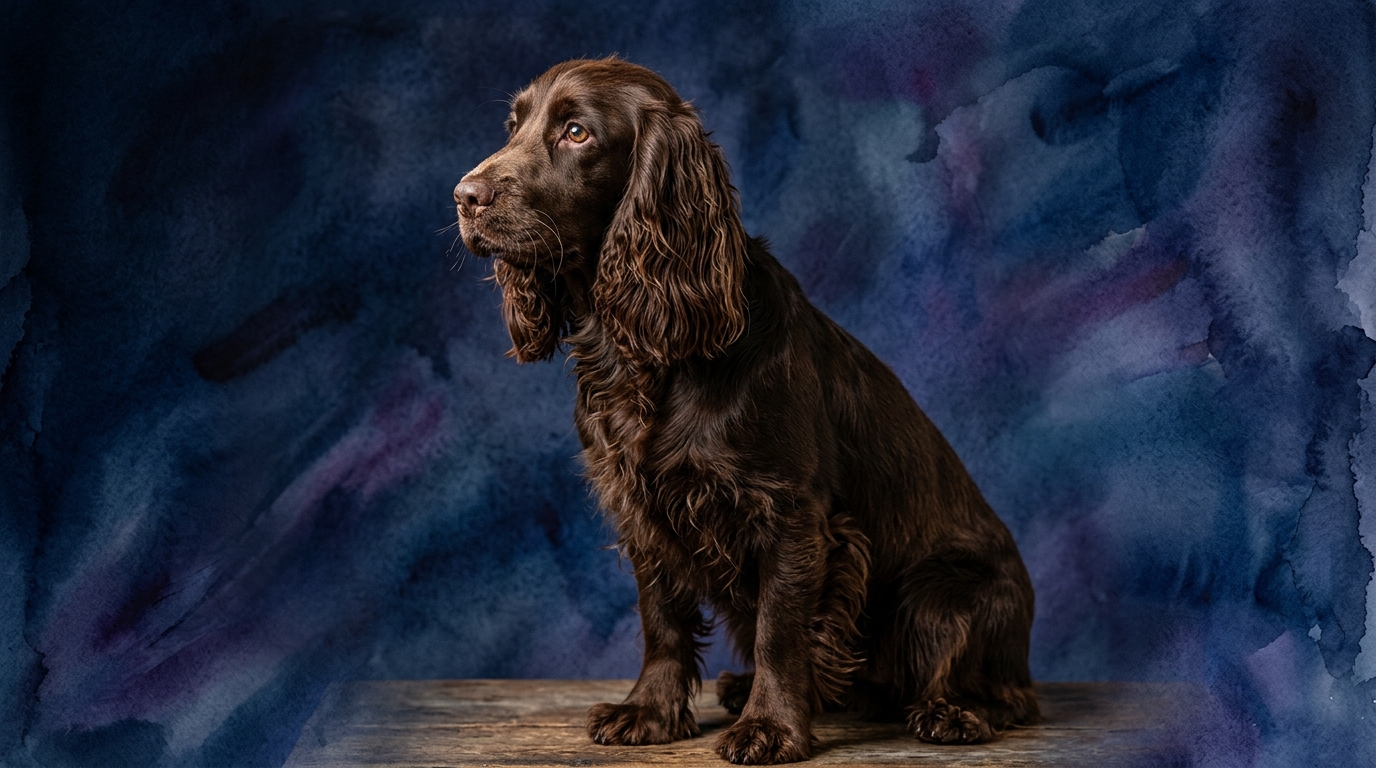
Side-by-Side IQ Profile: Field Spaniel
Problem Solving (3/5): This score reflects their competent ability to navigate field environments, locate game, and overcome obstacles to retrieve, often requiring them to assess situations quickly and adapt their approach. They demonstrate practical intelligence in tasks related to their sporting heritage, like finding a hidden dummy or working through cover.
Training Speed (3/5): Field Spaniels generally learn new commands at a solid pace, driven by a desire to work cooperatively with their handler. Their engagement in training is often motivated by positive reinforcement and the opportunity to participate in activities alongside their human companions, making them responsive to consistent guidance.
Social Intelligence (3/5): Their social acumen allows them to generally interact well within a family unit and with familiar individuals, reading human cues to maintain harmony. They exhibit a balanced understanding of social dynamics, typically being amiable and adaptable in varied social settings without being overly boisterous or overly reserved.
Instinctive Drive (3/5): The Field Spaniel's instincts are rooted in their role as a gundog, manifesting as a moderate but persistent drive to scent, flush, and retrieve. This innate predisposition means they are naturally inclined towards activities that mimic their ancestral duties, showing a focused determination when engaged in such tasks.
Memory (3/5): They possess a solid capacity for retaining learned commands, routines, and the locations of favored objects or areas, which is crucial for remembering complex retrieve patterns or navigating familiar hunting grounds. Their memory serves them well in maintaining consistent behaviors and recalling past experiences.
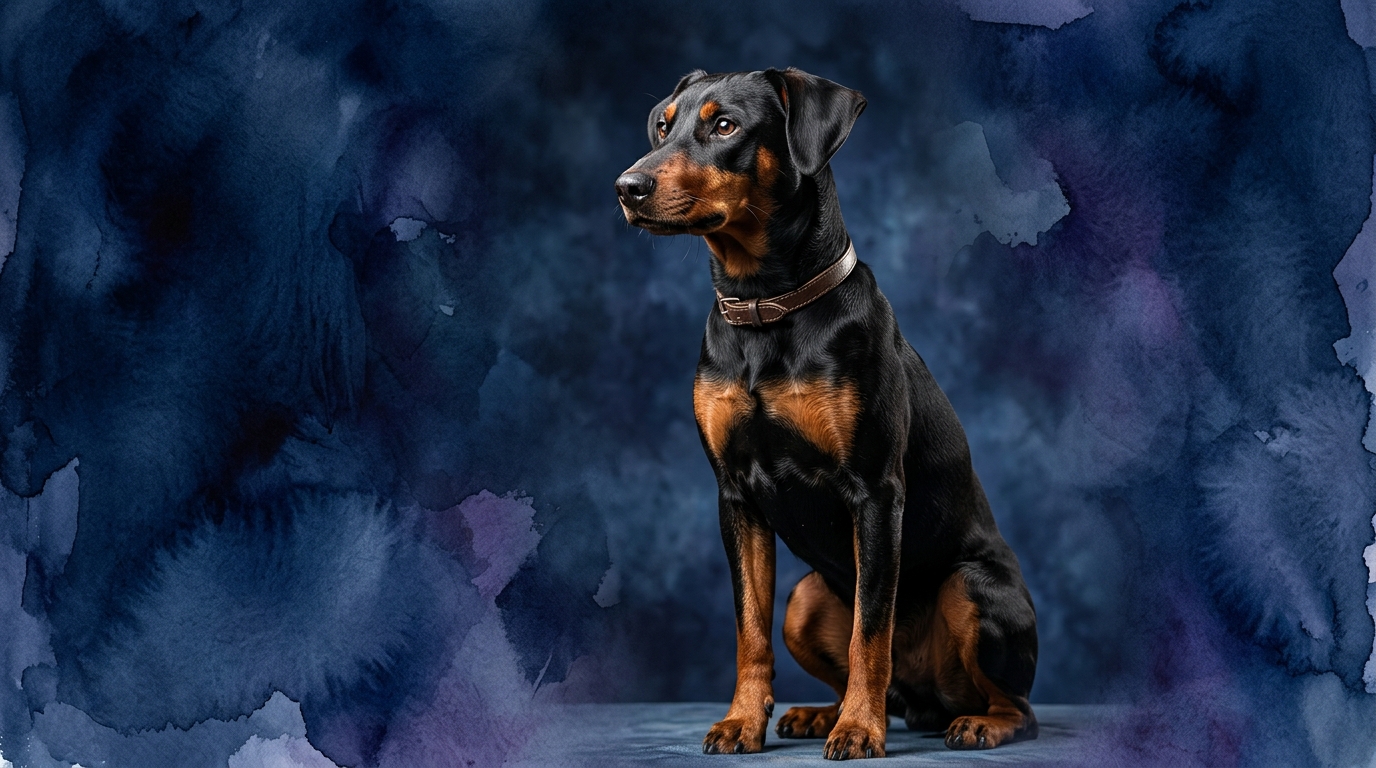
Side-by-Side IQ Profile: German Pinscher
Problem Solving (3/5): For the German Pinscher, a 3/5 in problem-solving indicates a capable mind for independent thought, particularly in assessing their environment and devising strategies to achieve a goal, such as outsmarting vermin or navigating complex territorial boundaries. They are adept at figuring things out for themselves, often with a determined and resourceful approach.
Training Speed (3/5): German Pinschers learn commands efficiently when they perceive value in the task and respect their trainer's leadership, showing a quick grasp of new concepts. Their training speed reflects their sharpness, though their independent nature means they require a firm, fair, and consistent approach to ensure compliance.
Social Intelligence (3/5): Their social intelligence is characterized by a discerning nature, allowing them to quickly assess new individuals and situations, often displaying a reserved demeanor towards strangers. They are highly attuned to their family's dynamics, offering loyalty and protective instincts, while requiring proper socialization to ensure appropriate interactions outside their inner circle.
Instinctive Drive (3/5): The German Pinscher's instinctive drives are robust, centered around their heritage as ratters and guardians, displaying a strong prey drive for small animals and a natural territoriality. This drive fuels their vigilance and their propensity for energetic, purposeful activity, requiring outlets for these inherent behaviors.
Memory (3/5): They exhibit a good memory for established routines, boundaries, and past interactions, which contributes to their reliability in guarding and their consistent adherence to household rules once learned. This solid recall allows them to remember specific training cues and maintain their learned behaviors over time.
Where the Field Spaniel Wins Cognitively
While both breeds score identically, the Field Spaniel often demonstrates a cognitive edge in tasks requiring a cooperative spirit and a keen ability to read subtle human cues. Their problem-solving, though rated 3/5, leans towards collaborative efforts, excelling when asked to work *with* their handler to achieve a common goal, such as a complex retrieve where they need to interpret gestures or vocal commands. Furthermore, their social intelligence, also 3/5, often manifests as a more broadly adaptable geniality, allowing them to adjust more readily to diverse social situations and new acquaintances without the same level of initial discernment as the Pinscher.
Where the German Pinscher Wins Cognitively
Conversely, the German Pinscher's identical 3/5 scores shine brighter in scenarios demanding independent thought and decisive action. Their problem-solving is often geared towards autonomous decision-making, such as strategizing to gain access to a desired object or assessing a perceived threat and reacting appropriately without direct human instruction. This breed's social intelligence, while rated the same, is exceptionally adept at discerning intent, quickly classifying individuals as friend or potential intruder, showcasing a more protective and selective social acumen. Their memory is particularly strong for territorial boundaries and identifying deviations from normal patterns, making them vigilant observers of their environment.
Which Is Easier to Train and Why
Determining which breed is 'easier' to train is less about raw learning capacity and more about temperament and motivation. The Field Spaniel, with its sporting background, generally presents as easier to train for the average owner due to their inherent eagerness to please and cooperative nature. Their 3/5 training speed is often bolstered by a strong desire for companionship and positive reinforcement, making them responsive to consistent, gentle methods. They tend to form strong bonds and thrive on working alongside their people, which translates into a more compliant attitude during training sessions, though their scent drive can be a distraction. The German Pinscher, while equally capable of learning quickly (3/5 training speed), possesses a more independent and confident temperament. This means they require a trainer who can establish clear leadership, provide structured motivation, and maintain unwavering consistency. They will learn commands rapidly but are more likely to test boundaries or decide if a command is 'worth' obeying, necessitating a firm yet fair approach to channel their strong will effectively. Their training journey often demands a more experienced handler who can anticipate and redirect their assertive nature.
Which Suits Active Owners vs. Relaxed Owners
Both breeds require significant engagement, making neither truly suitable for a 'relaxed' owner in the sense of minimal interaction. The Field Spaniel is an excellent match for active owners who enjoy outdoor pursuits and seek a constant, amiable companion for their adventures. They thrive on regular exercise, such as long walks, hikes, or playing fetch, and also benefit greatly from mental stimulation through dog sports like agility or scent work, but they are generally content to relax with their family after their needs are met. Their activity level is high but often translates into a desire for shared experiences. The German Pinscher, however, demands a more intensely active and structured lifestyle, making them ideal for owners who are not just active but also assertive and consistent. Their working breed heritage means they need a 'job' to do, whether it's advanced obedience, protection sports, or sustained vigorous exercise. A German Pinscher needs an owner who can commit to daily rigorous activity and consistent mental challenges, channeling their high energy and strong drives into productive outlets. A truly relaxed or inconsistent owner would quickly find themselves overwhelmed by a bored and potentially destructive German Pinscher.
The Verdict
Choose the Field Spaniel if you desire a cooperative, good-natured companion eager to participate in your family's active lifestyle, thriving on companionship and positive reinforcement in varied environments.
Opt for the German Pinscher if you seek a bold, discerning, and protective partner who flourishes with consistent leadership, structured training, and a clear purpose, ideally suited for experienced, highly active owners.
🧠 Find Your Pet's IQ Score
Our Pet IQ Lab assessment covers 25+ tests across 5 cognitive dimensions — personalized to your breed.
Take the Full IQ Test →Frequently Asked Questions
Do Field Spaniels and German Pinschers get along well with children?
Field Spaniels are generally known for their gentle and patient nature, often making them good family dogs who interact well with children when properly socialized and supervised. German Pinschers can be very loyal and protective of their family, including children, but their assertive nature means interactions should always be supervised, and children taught how to respectfully engage with the dog.
Which breed is better for first-time dog owners?
The Field Spaniel is generally a more suitable choice for first-time dog owners due to their more agreeable and cooperative temperament, making them easier to train and manage with consistent positive reinforcement. The German Pinscher, with its strong will and independent nature, often requires a more experienced owner who can provide firm, consistent leadership and extensive socialization.
What kind of mental stimulation do these breeds need?
Both breeds require substantial mental stimulation to prevent boredom. Field Spaniels thrive on activities like scent work, puzzle toys, and obedience training that engage their problem-solving and memory skills in a cooperative setting. German Pinschers benefit from advanced obedience, agility, dog sports, and training that challenges their independent thought and strong drives, providing them with a sense of purpose.