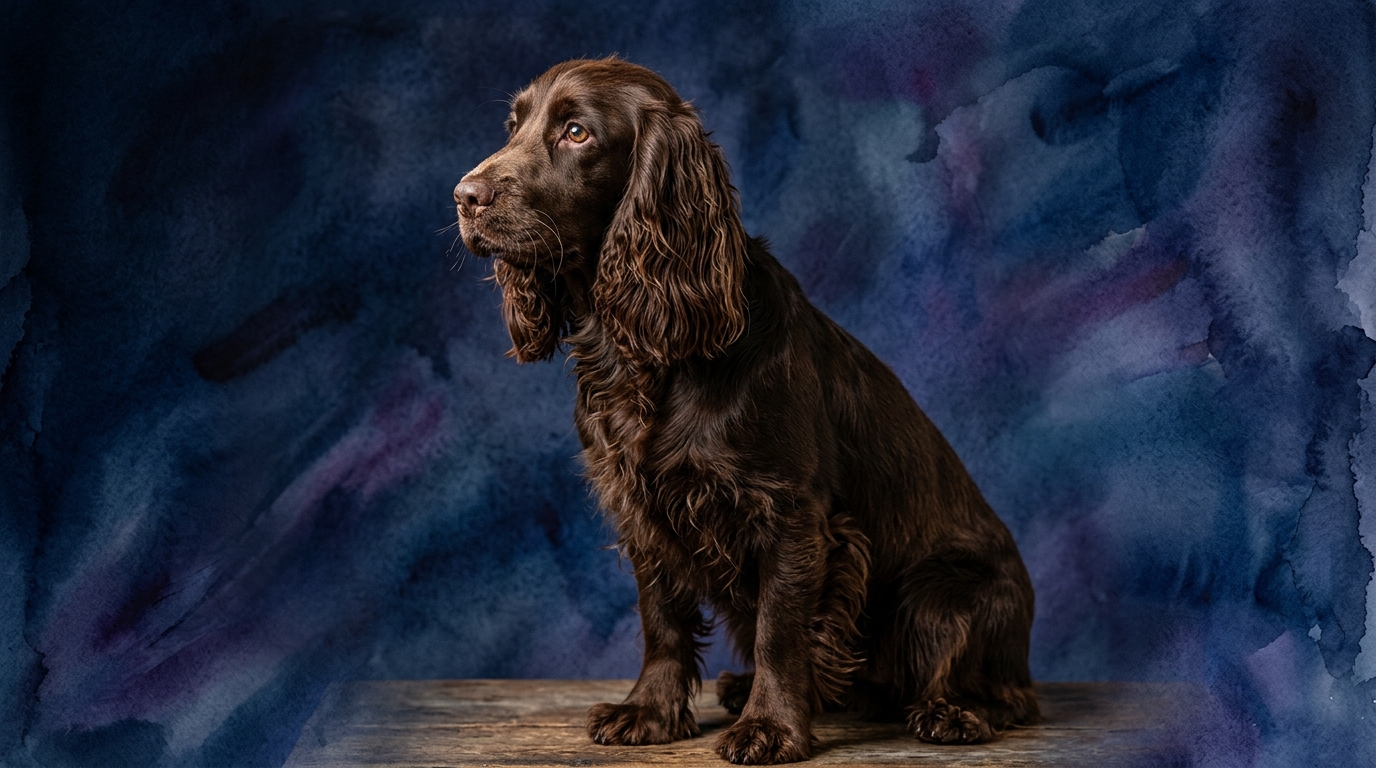
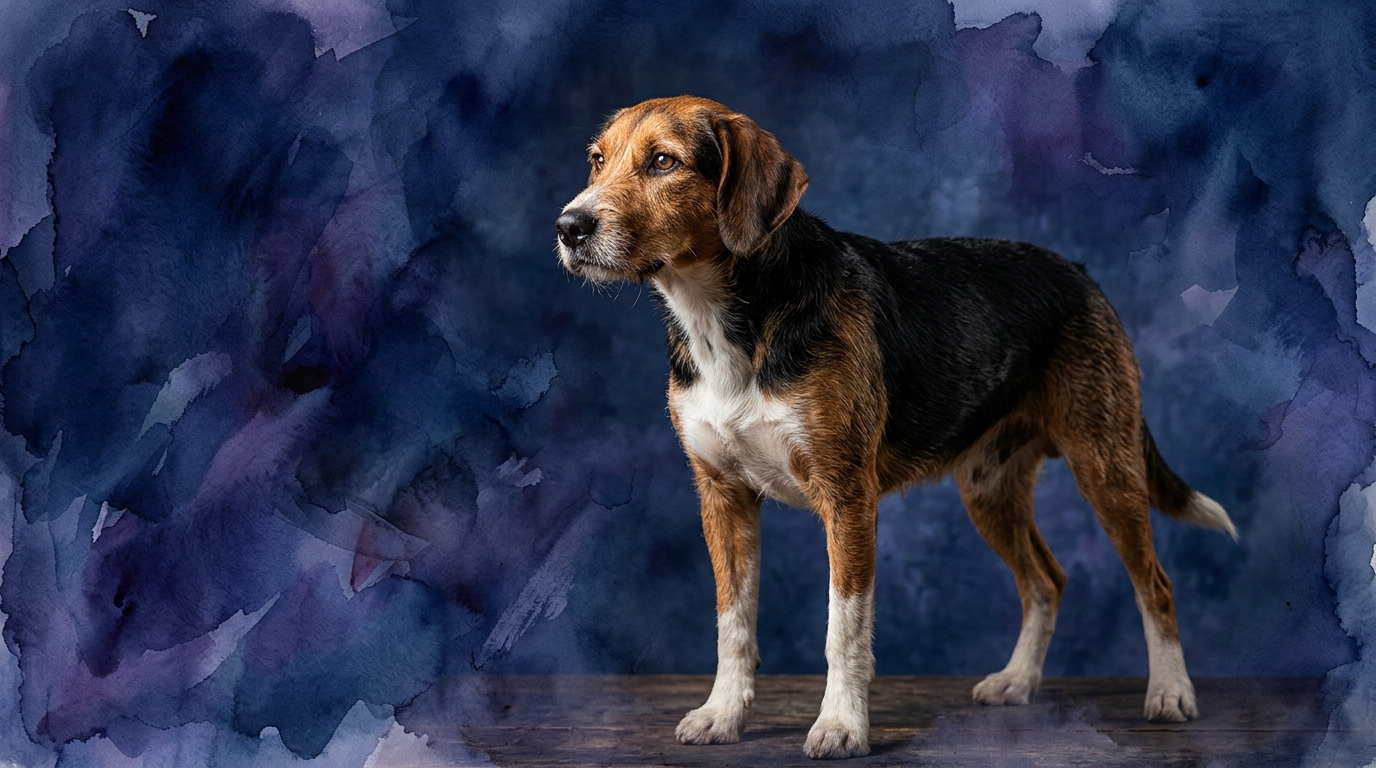
Side-by-Side IQ Profile: Identical Scores, Distinct Expressions
**Problem Solving (3/5):** This rating suggests a functional capacity for navigating practical challenges. For the Field Spaniel, this might manifest as figuring out how to retrieve a specific object from a complex environment or adapting to new game-finding strategies. They can learn structured approaches to tasks and apply them effectively when guided, showing practical ingenuity.
For the Harrier, a 3/5 in problem-solving indicates an ability to follow intricate scent trails through varied terrain, making decisions about direction and persistence. Their solutions are often rooted in instinctual drives, allowing them to adapt their pursuit strategy to changing environmental factors with focused determination.
**Training Speed (3/5):** A 3/5 training speed implies receptiveness to learning new commands and routines, typically requiring consistent repetition and positive reinforcement. The Field Spaniel’s willingness to cooperate with a handler facilitates their learning process, though they may not grasp novel concepts instantly, needing clear guidance.
Harriers, with their 3/5 training speed, can certainly learn, but their independent hound nature often means they require more patience and creative motivation. They process and retain commands effectively but might prioritize an intriguing scent over an owner's instruction, making consistent engagement a key factor in their training progression.
**Social Intelligence (3/5):** This score points to a capacity to read human cues and interact appropriately within a family setting. The Field Spaniel forms strong bonds and can interpret basic emotional states, responding with companionship or seeking comfort, indicating a balanced social awareness that contributes to a harmonious home.
A Harrier's 3/5 social intelligence suggests they are adept at pack dynamics, understanding hierarchy and communication among canines, and extending this to their human family. They can be affectionate and responsive to familiar individuals, though their independent streak might mean their social interactions are sometimes less overtly demonstrative.
**Instinctive Drive (3/5):** The 3/5 instinctive drive reflects a moderate yet potent urge for breed-specific behaviors. In a Field Spaniel, this manifests as a keen interest in flushing and retrieving, a desire to carry objects, and an enjoyment of activities that simulate hunting tasks, requiring an outlet for these natural inclinations.
For the Harrier, a 3/5 instinctive drive is primarily expressed through their powerful scenting ability and desire to pursue. Their natural inclination to follow a trail is strong, driving their behavior in outdoor environments and making them highly focused on olfactory input, a trait that needs appropriate channeling.
**Memory (3/5):** A 3/5 memory indicates the retention of learned commands, routines, and experiences well over time, contributing to task consistency. The Field Spaniel recalls positive and negative associations, which aids in both training and building lasting relationships within their family unit, providing a reliable foundation for interaction.
With a 3/5 memory, the Harrier effectively remembers complex scent trails, past training sessions, and the layout of familiar territories. This strong recall supports their ability to navigate intricate environments and retain tracking strategies, though their memory for commands might sometimes be overshadowed by a compelling current scent.
Where the Field Spaniel Wins Cognitively
The Field Spaniel, despite identical numerical scores, often exhibits a subtle cognitive advantage in tasks requiring sustained, cooperative focus with a human handler. Their historical role demanded direct interaction and responsiveness during a hunt, fostering a cognitive disposition towards partnership. For instance, while both breeds can problem-solve, a Field Spaniel's 3/5 problem-solving might manifest as figuring out the most efficient way to retrieve a specific object *for* their owner, demonstrating a shared goal orientation and a desire to please. This cooperative inclination can translate into a more consistent application of their memory and training speed in structured learning environments where the human is the primary guide.
Their social intelligence, while rated 3/5, often leans towards a more direct and readily interpretable bond with individual family members. This makes their emotional responses and understanding of human cues more transparent and predictable in a domestic setting, offering a cognitive benefit in seamless integration into family life.
Where the Harrier Wins Cognitively
Conversely, the Harrier's cognitive strengths, also rated 3/5, shine brightest in scenarios demanding independent decision-making and persistent, self-directed engagement, particularly in scent work. Their problem-solving at 3/5 is often expressed through intricate tracking, where they must interpret subtle olfactory cues and navigate complex environments without constant human direction. This requires a different kind of cognitive agility, one that prioritizes autonomous exploration and the relentless pursuit of a goal.
Their instinctive drive, also 3/5, fuels a remarkable ability to maintain focus on a distant scent for extended periods, filtering out distractions—a testament to their specialized memory for olfactory data and their inherent drive to follow a trail. While their social intelligence is 3/5, it often encompasses a nuanced understanding of pack dynamics, allowing them to collaborate effectively with other dogs, a skill less emphasized in the typically singular partnership of a Field Spaniel.
Which is Easier to Train and Why
Between the two, the Field Spaniel generally proves easier to train due to their breed-specific temperament and working history. Their 3/5 training speed is coupled with a natural inclination to work *with* their handler, often displaying a tangible eagerness to please and respond to direction. This biddability means they are typically more motivated by praise and connection, making initial command acquisition and recall more straightforward in a home environment.
The Harrier, while also possessing a 3/5 training speed, comes from a lineage of independent hunters. Their powerful 3/5 instinctive drive to follow a scent can frequently override human commands, especially in stimulating outdoor environments. Training a Harrier requires a deeper understanding of their hound nature, emphasizing consistency, high-value rewards, and often more creative methods to maintain focus when their nose leads them astray. Their social intelligence, while present, might be more geared towards canine pack interaction than singular human direction, sometimes requiring more effort to make the human the most compelling focus.
Which Suits Active Owners vs. Relaxed Owners
Both the Field Spaniel and the Harrier are best suited for active owners, though the *nature* of that activity differs significantly. The Field Spaniel thrives with owners who enjoy structured outdoor activities like long walks, retrieving games, or dog sports such as agility or obedience. Their 3/5 instinctive drive for retrieving and their social intelligence make them willing partners in shared adventures. They appreciate a balance of physical exercise and mental engagement that involves cooperative tasks; a relaxed owner might find a Field Spaniel's need for activity and interaction challenging, potentially leading to boredom-related behaviors.
The Harrier, on the other hand, demands an owner who understands and can accommodate their powerful 3/5 instinctive drive for scent work and endurance. They are ideal for owners who participate in activities like scent work, tracking, or long-distance hiking where their nose can lead the way. A relaxed owner would struggle immensely with a Harrier, as their profound need to run and explore, often independently, is a non-negotiable aspect of their well-being, requiring consistent and engaging outlets.
The Verdict
Opt for a Field Spaniel if you desire a cooperative companion eager to engage in structured activities and form a close, responsive bond within a family setting. They excel with owners who appreciate a dog that is present and participative in shared endeavors, making their 3/5 scores feel more accessible in daily life.
Select a Harrier if you are an adventurous owner who values an independent spirit, thrives on outdoor exploration, and is prepared to channel a strong, self-directed scent drive. They are best for those who can embrace a dog that often prioritizes its nose and requires consistent, patient guidance to integrate into human routines.
🧠 Find Your Pet's IQ Score
Our Pet IQ Lab assessment covers 25+ tests across 5 cognitive dimensions — personalized to your breed.
Take the Full IQ Test →Frequently Asked Questions
Do Field Spaniels and Harriers have similar energy levels?
Both breeds possess significant energy, but they express it differently. Field Spaniels enjoy vigorous play and structured exercise with their human companions, while Harriers often have a more enduring stamina for independent exploration and scent tracking, requiring extensive outlets for their innate drive.
Are Field Spaniels or Harriers better with children?
Field Spaniels, with their amiable nature and 3/5 social intelligence, are generally known for being gentle and tolerant with children when properly socialized. Harriers can also be good with children, especially if raised with them, but their boisterousness and strong prey drive might require more supervision with very young children.
How do their grooming needs compare?
Field Spaniels have a medium-length coat that requires regular brushing (2-3 times a week) to prevent mats and occasional trimming, especially around the ears and feet. Harriers have a short, dense coat that is much lower maintenance, typically needing only weekly brushing to remove loose hair and maintain coat health.