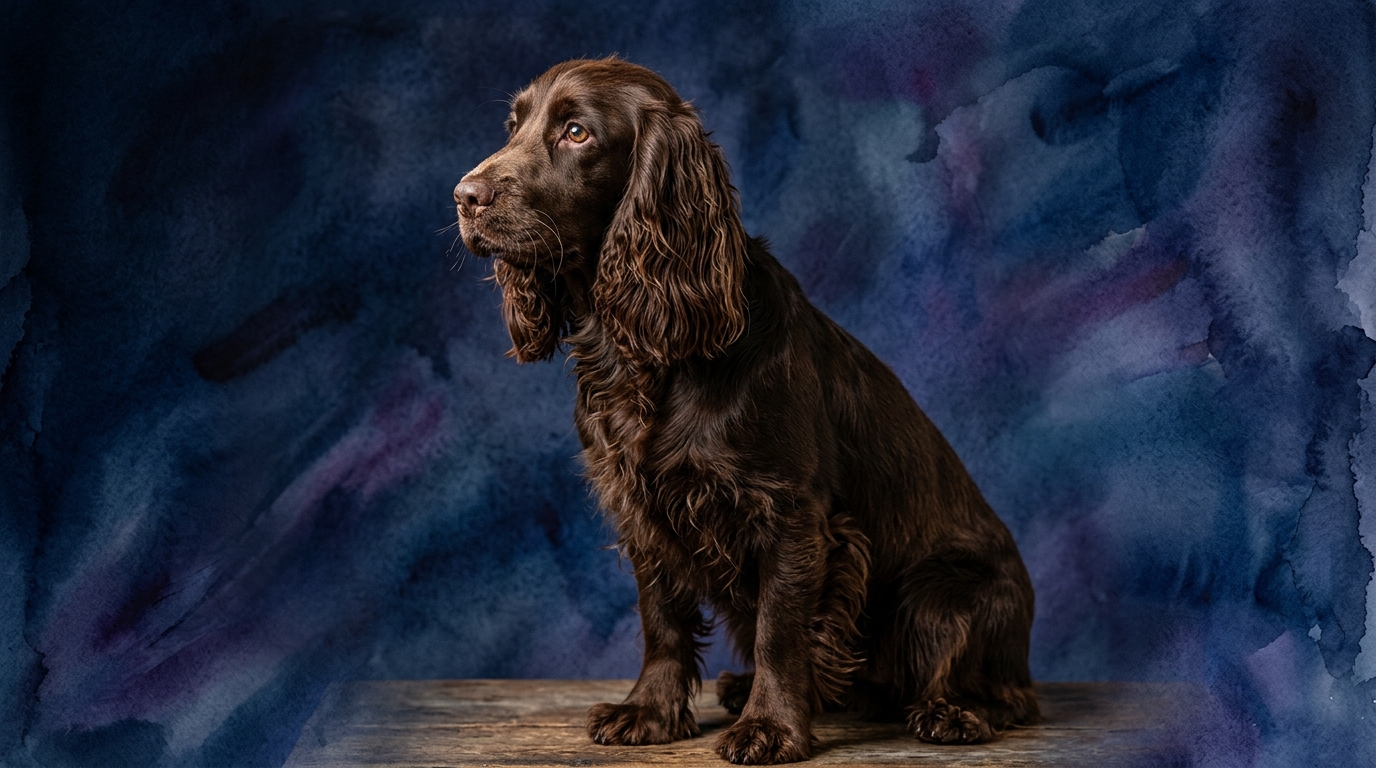
Side-by-Side IQ Profile: Field Spaniel
Field Spaniels exhibit a moderate capacity for problem-solving (3/5), often channeled into practical tasks like navigating dense cover to retrieve game or figuring out how to access a desired scent. Their solutions tend to be methodical and goal-oriented, reflecting their working background.
Their training speed is moderate (3/5), meaning they can learn new commands and routines effectively, particularly when tasks are presented clearly and involve cooperation with a handler. Repetition and positive reinforcement are key to solidifying their moderate learning pace.
Field Spaniels possess moderate social intelligence (3/5), demonstrating an understanding of human moods and intentions, which aids in their cooperative nature. They are generally responsive to their family's emotional state, fostering strong bonds.
Their instinctive drive is moderately strong (3/5), primarily focused on scent work, flushing, and retrieving. This drive is typically manageable and can be readily directed into appropriate activities or games.
Field Spaniels have a moderate memory (3/5), allowing them to recall learned commands, routines, and the locations of favored items or hunting spots. This moderate retention supports consistent performance in both training and daily life.
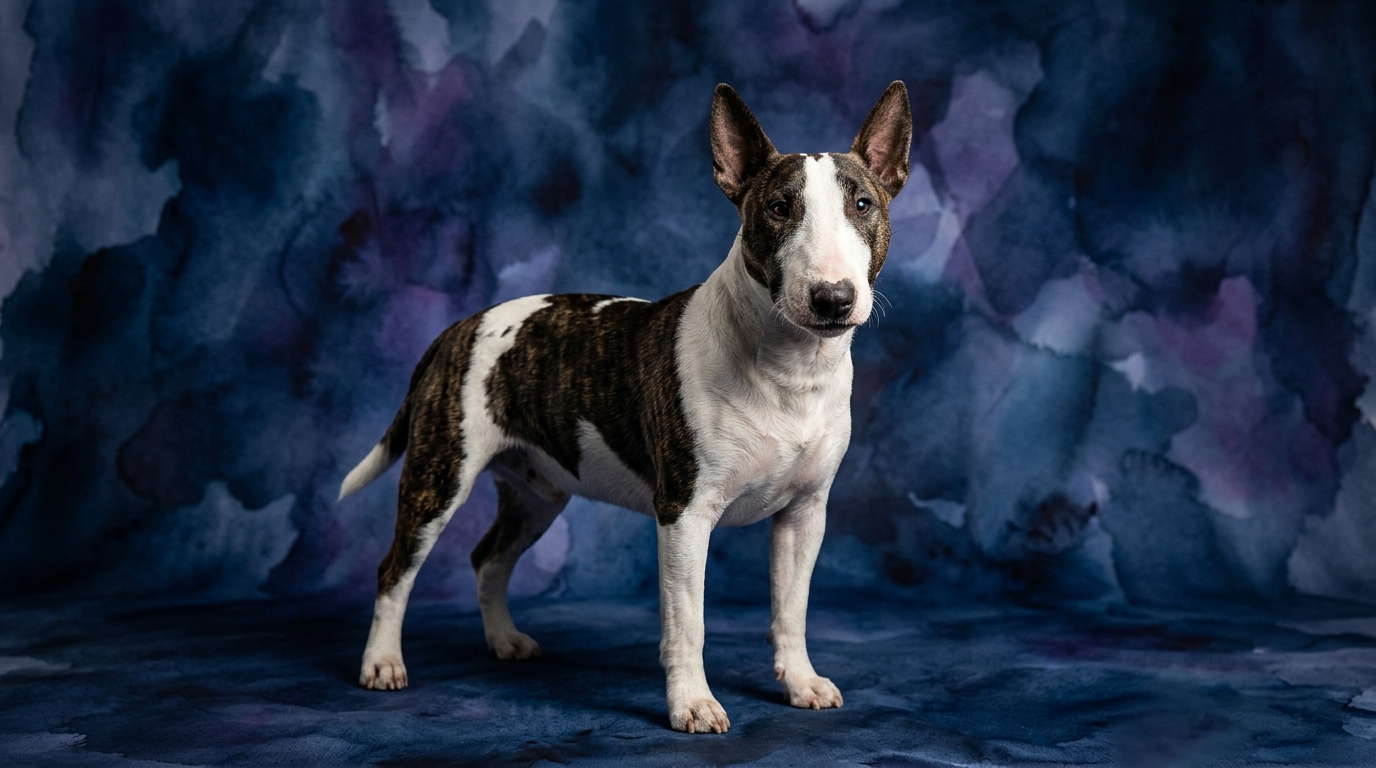
Side-by-Side IQ Profile: Miniature Bull Terrier
Miniature Bull Terriers also score 3/5 in problem-solving, but their approach often involves independent thought and a determined, sometimes unconventional, method to achieve their desires. This can range from figuring out how to open a gate to creatively engaging with a puzzle toy.
With a moderate training speed (3/5), Miniature Bull Terriers can grasp new concepts, but their independent terrier spirit means they may require more engaging methods and consistent motivation to comply. They learn best when training feels like a collaboration or a game.
Their social intelligence is moderate (3/5), allowing them to navigate complex social situations within their family unit, but they often express their understanding on their own terms. They can be perceptive of human emotions yet may choose to respond selectively.
Miniature Bull Terriers exhibit a moderate instinctive drive (3/5), often directed towards chasing, digging, and engaging with prey-like objects. This drive is present and persistent, requiring appropriate outlets and management.
Their memory is moderate (3/5), enabling them to recall past experiences and learned behaviors. This moderate recall often serves their independent problem-solving, allowing them to remember successful strategies for achieving their goals.
Where the Field Spaniel Wins Cognitively
Despite identical numerical scores, the Field Spaniel's cognitive strengths shine in areas demanding cooperative engagement and a desire to work in tandem with a human partner. Their 3/5 in social intelligence, when viewed through the lens of their sporting heritage, translates into a nuanced ability to interpret human cues and intentions, making them exceptionally attuned companions. This cognitive alignment allows their moderate problem-solving skills to be readily applied to tasks that benefit the partnership, such as tracking a scent for an owner or methodically searching for a hidden object.
Furthermore, their 3/5 training speed, while not extraordinary, is significantly enhanced by their inherent biddability and willingness to please. This means they are often more receptive to learning commands and performing tasks that directly involve their handler, making the training process feel more fluid and rewarding for both parties. The Field Spaniel's moderate instinctive drive is naturally channeled towards activities like retrieving and flushing, which are inherently collaborative and reinforce the human-dog bond, distinguishing their cognitive application from breeds with more self-directed drives.
Where the Miniature Bull Terrier Wins Cognitively
The Miniature Bull Terrier's cognitive prowess, while also rated 3/5 across the board, manifests distinctly in their capacity for independent thought and tenacious self-driven action. Their moderate problem-solving skills are often applied with a creative and determined spirit, enabling them to devise inventive solutions to challenges that serve their own curiosity or desires, whether it’s figuring out how to access a tempting item or navigating a complex environment without direct human guidance. This self-reliance is a hallmark of their terrier lineage, fostering a unique cognitive resilience.
Their 3/5 instinctive drive is channeled with a singular focus, endowing them with the mental fortitude to persist in tasks like digging, chasing, or engaging with puzzle toys until their objective is met. This tenacious application of drive showcases a cognitive strength in sustained effort and single-minded pursuit. While their social intelligence is also 3/5, it often involves a keen perception of their environment and social dynamics, allowing them to operate effectively on their own terms, making decisions based on their assessment rather than solely seeking human direction. Their memory at 3/5 frequently underpins these independent exploits, allowing them to recall successful strategies for their self-appointed missions.
Which Is Easier to Train and Why
When considering ease of training, the Field Spaniel generally presents a more straightforward experience for most owners. Their sporting dog heritage has ingrained a desire to work alongside humans, making their moderate training speed (3/5) feel more efficient. They are typically more eager to please and respond well to positive reinforcement, interpreting commands as opportunities for cooperation. A Field Spaniel's cognitive framework is geared towards partnership; they are more likely to view training as a joint venture, which reduces resistance and enhances the learning curve for tasks requiring obedience and precise execution.
In contrast, the Miniature Bull Terrier, despite also scoring 3/5 in training speed, often requires a more nuanced approach. Their terrier independence means they can be strong-willed and may question the necessity of a command, especially if it doesn't align with their immediate interests or perceived fun. While they are capable learners, their problem-solving (3/5) and instinctive drive (3/5) are frequently self-directed, meaning owners must be creative, consistent, and patient to channel these traits into desired behaviors. Training a Miniature Bull Terrier is less about compliance and more about engaging their keen mind and convincing them that cooperation is the most rewarding path.
Which Suits Active Owners vs. Relaxed Owners
Both the Field Spaniel and the Miniature Bull Terrier are breeds that thrive with active engagement, making neither truly suited for genuinely “relaxed” owners who prefer minimal interaction. However, the nature of the activity they require differs significantly.
The Field Spaniel, with its sporting background, suits owners who enjoy consistent, structured activity that often involves partnership. This might include daily long walks, hiking, scent work, retrieving games, or participation in dog sports like agility or obedience. Their moderate instinctive drive and social intelligence make them receptive to directed activities and happy to engage in family outings. Owners who are active in a cooperative sense, valuing a dog that participates alongside them in outdoor pursuits, will find the Field Spaniel a fulfilling companion. Their need for physical and mental stimulation is moderate but consistent, fitting well with owners who maintain a steady routine.
The Miniature Bull Terrier, while also requiring significant activity, needs an owner who understands and can manage their intense, often tenacious, and sometimes quirky energy. Their moderate instinctive drive, coupled with independent problem-solving, means they need robust mental and physical challenges to prevent boredom and potential mischief. This might involve vigorous play sessions, challenging puzzle toys, consistent training that engages their intellect, or secure off-leash areas for running. An owner who is active in a more resilient, creative, and patient sense, ready to engage with a dog that has a strong personality and independent streak, will be a better match. They are not dogs for passive companionship; they demand an owner who is actively involved in channeling their unique cognitive and physical energy.
The Verdict
Choose a Field Spaniel if you desire a cooperative companion for outdoor activities, value a dog that integrates readily into family life, and prefer a more biddable temperament for training. Their balanced cognitive profile is best expressed in a partnership where their moderate intelligence and drive are directed towards shared goals.
Choose a Miniature Bull Terrier if you appreciate a dog with a distinct personality, independent spirit, and a tenacious approach to life, and are prepared to engage their cleverness and strong will with creative training and robust mental stimulation. Their moderate cognitive abilities shine when given opportunities for self-directed problem-solving and focused pursuit.
🧠 Find Your Pet's IQ Score
Our Pet IQ Lab assessment covers 25+ tests across 5 cognitive dimensions — personalized to your breed.
Take the Full IQ Test →Frequently Asked Questions
Do Field Spaniels and Miniature Bull Terriers have different exercise needs?
Yes, while both need activity, Field Spaniels thrive on structured, cooperative exercises like retrieving or long walks, whereas Miniature Bull Terriers often need more intense, varied play and mental challenges to satisfy their independent and tenacious nature.
Which breed is better with children?
Field Spaniels are generally known for their gentle and patient demeanor, making them typically good family dogs, especially with respectful children. Miniature Bull Terriers can be playful and affectionate but their strong personalities and robust play style mean supervision is always essential, particularly with very young children.
How do their grooming needs compare?
Field Spaniels have a medium-length coat that requires regular brushing to prevent mats and occasional trimming, especially around the ears and feet. Miniature Bull Terriers have a short, smooth coat that is relatively low maintenance, needing only weekly brushing and occasional bathing.