
Side-by-Side Cognitive Profiles
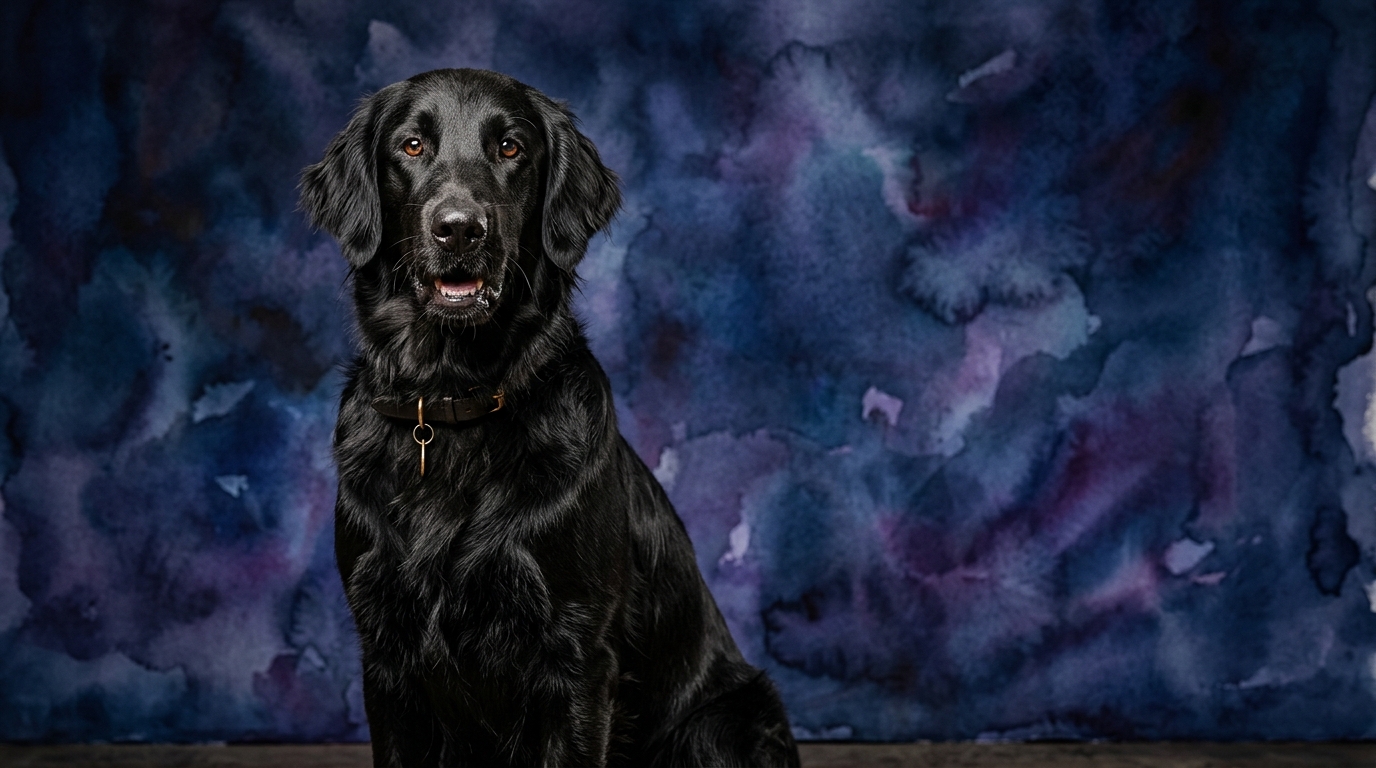
The Flat-Coated Retriever (Coren rank #17) demonstrates a keen aptitude across multiple cognitive domains. Their Problem Solving is rated 4/5, indicating an ability to adapt to new scenarios and figure out solutions beyond simple commands, often exhibiting cleverness in navigating their environment or achieving goals. Training Speed is also high at 4/5, reflecting their eagerness and capacity to quickly grasp new commands and routines, making them highly receptive students. Social Intelligence stands at 3/5, meaning they are adept at reading human cues and forming strong bonds, but might not possess the same nuanced understanding of complex social dynamics as some highly attuned companion breeds. Their Instinctive Drive, at 3/5, is primarily channeled into retrieving and working alongside humans, rather than independent pursuit. Finally, their Memory is exceptional at 5/5, allowing them to recall complex sequences, past experiences, and learned behaviors with remarkable accuracy, vital for their role as retrievers.
The Basset Hound (Coren rank #71) presents a distinct cognitive profile, deeply rooted in its olfactory heritage. Their Problem Solving is rated 3/5; while capable, their primary method of interacting with the world is through scent, often preferring to follow a trail rather than engaging in abstract puzzle-solving. Training Speed is 3/5, signifying that they can learn, but often require more patience, repetition, and creative motivation due to their independent nature and strong focus on scent. Social Intelligence is 3/5, reflecting their affectionate and generally amiable disposition towards humans, though their attention can be easily diverted by an intriguing smell. Their Instinctive Drive, also 3/5, is powerfully concentrated on tracking and scent work, often overriding other stimuli. Their Memory is 3/5, effective for recalling scent trails and established routines, but perhaps less robust for remembering intricate obedience sequences over time, especially when a compelling scent is present.
Where the Flat-Coated Retriever Excels Cognitively
The Flat-Coated Retriever consistently demonstrates a broader range of cognitive strengths, making them particularly versatile. Their superior Problem Solving (4/5 versus the Basset's 3/5) means they are more adept at navigating novel situations and figuring out solutions that aren't tied to a specific sensory input like scent. This adaptability makes them excellent candidates for advanced obedience, agility, and even service roles where quick thinking and independent decision-making are valued. Furthermore, their significantly higher Training Speed (4/5 compared to 3/5) translates directly into a more efficient learning process. Flat-Coats typically require fewer repetitions to master new commands, absorbing lessons with an enthusiastic readiness that streamlines training sessions. Perhaps their most pronounced cognitive advantage lies in their Memory (5/5 versus 3/5). This exceptional recall enables them to retain complex sequences of commands, remember specific locations, and perform tasks reliably even after extended breaks. This robust memory is fundamental to their retrieving lineage, where remembering multiple fall points for game is paramount. Overall, the Flat-Coated Retriever possesses a more generalized, adaptable intelligence, making them quicker to learn and more flexible in applying their cognitive skills across diverse challenges beyond their primary breed function.
Where the Basset Hound Shines Cognitively
While the Flat-Coated Retriever excels in generalized cognitive functions, the Basset Hound possesses a highly specialized form of intelligence deeply tied to its ancient purpose: scent work. Although both breeds are rated 3/5 for Instinctive Drive, the nature of the Basset's drive is its unequivocal cognitive triumph. Their ability to process, interpret, and relentlessly follow a scent trail is a specialized problem-solving skill unmatched by most breeds, including the Flat-Coat. This involves complex cognitive mapping, discrimination between faint and strong odors, and an astonishing persistence that allows them to ignore environmental distractions. Their olfactory memory is profound; they can distinguish individual scents and remember trails for extended periods, a feat that demonstrates a unique form of cognitive retention. This isn't merely about having a good nose; it's about the cognitive machinery dedicated to interpreting that sensory input, making decisions based on it, and maintaining unwavering focus. The Basset's cognitive strength lies in this single-minded dedication to their primary drive, showcasing a deep, specialized intelligence that allows them to excel in tasks demanding olfactory precision and endurance, such as tracking and detection work.
Training Ease: Flat-Coat vs. Basset
When considering ease of training, the Flat-Coated Retriever generally presents a more straightforward experience. Their 4/5 Training Speed indicates a quick uptake of commands, often coupled with a strong desire to please their human companions. This eagerness, combined with their 5/5 Memory, means they reliably retain learned behaviors and cues, making consistent progress in obedience and trick training. They thrive on positive reinforcement and engaging activities that challenge their problem-solving abilities, readily forming cooperative partnerships. In contrast, training a Basset Hound typically requires significantly more patience and creative strategies. While their 3/5 Training Speed suggests they are capable of learning, their powerful 3/5 Instinctive Drive, particularly for scent, often creates a formidable distraction. A Basset on a compelling scent trail can appear "deaf" to commands, prioritizing their nose over human direction. Their 3/5 Memory for abstract obedience sequences is also less robust than a Flat-Coat's, meaning more repetition might be needed, and learned behaviors can fade if not consistently reinforced. Successful Basset training often involves leveraging their love for food and their innate drive for scent, integrating nose work into their learning to keep them engaged and motivated.
Lifestyle Match: Active vs. Relaxed Owners
The choice between these two breeds heavily depends on an owner's lifestyle. The Flat-Coated Retriever is an ideal companion for active owners who relish engaging their dog in various physical and mental pursuits. Their high energy levels, combined with their 4/5 problem-solving and 5/5 memory, necessitate outlets like long hikes, running, swimming, advanced obedience, agility, or retrieving games. A Flat-Coat thrives when given a "job" and can become bored or destructive if their cognitive and physical needs are not adequately met. They require consistent interaction and thrive on being an integral part of an active family life. Conversely, the Basset Hound is generally better suited for more relaxed owners, though this does not imply a sedentary lifestyle. While not requiring the intense physical exertion of a Flat-Coat, Bassets still need daily walks to satisfy their profound instinctive drive for scent exploration. These walks are less about speed and more about allowing them to "read the newspaper" with their nose. Indoors, they are typically calm and enjoy comfortable lounging, making them good companions for owners who appreciate a more laid-back pace but are committed to indulging their dog's unique olfactory world and providing gentle companionship.
The Verdict
Choose a Flat-Coated Retriever if you seek an engaged, trainable companion for active pursuits, dog sports, or a working role, valuing their quick learning and strong memory.
Opt for a Basset Hound if you appreciate a charming, scent-driven companion, are patient with training, and enjoy a more relaxed pace of life, ready to indulge their fascinating olfactory world.
🧠 Find Your Pet's IQ Score
Our Pet IQ Lab assessment covers 25+ tests across 5 cognitive dimensions — personalized to your breed.
Take the Full IQ Test →Frequently Asked Questions
Are Flat-Coated Retrievers good family dogs?
Yes, their social intelligence and generally cheerful disposition make them excellent family companions. They thrive on interaction and are typically patient and playful with children, though their energy requires proper management.
Can Basset Hounds be trained for advanced obedience?
While Basset Hounds can learn obedience, their independent nature and powerful scent drive can make advanced training more challenging than with other breeds. Success requires consistent, positive reinforcement and a deep understanding of their motivations.
Which breed is better for apartment living?
The Basset Hound is generally better suited for apartment living due to its lower energy demands indoors, provided it receives daily walks for scent exploration. The Flat-Coated Retriever's higher energy and need for space make it less ideal for smaller living situations.