
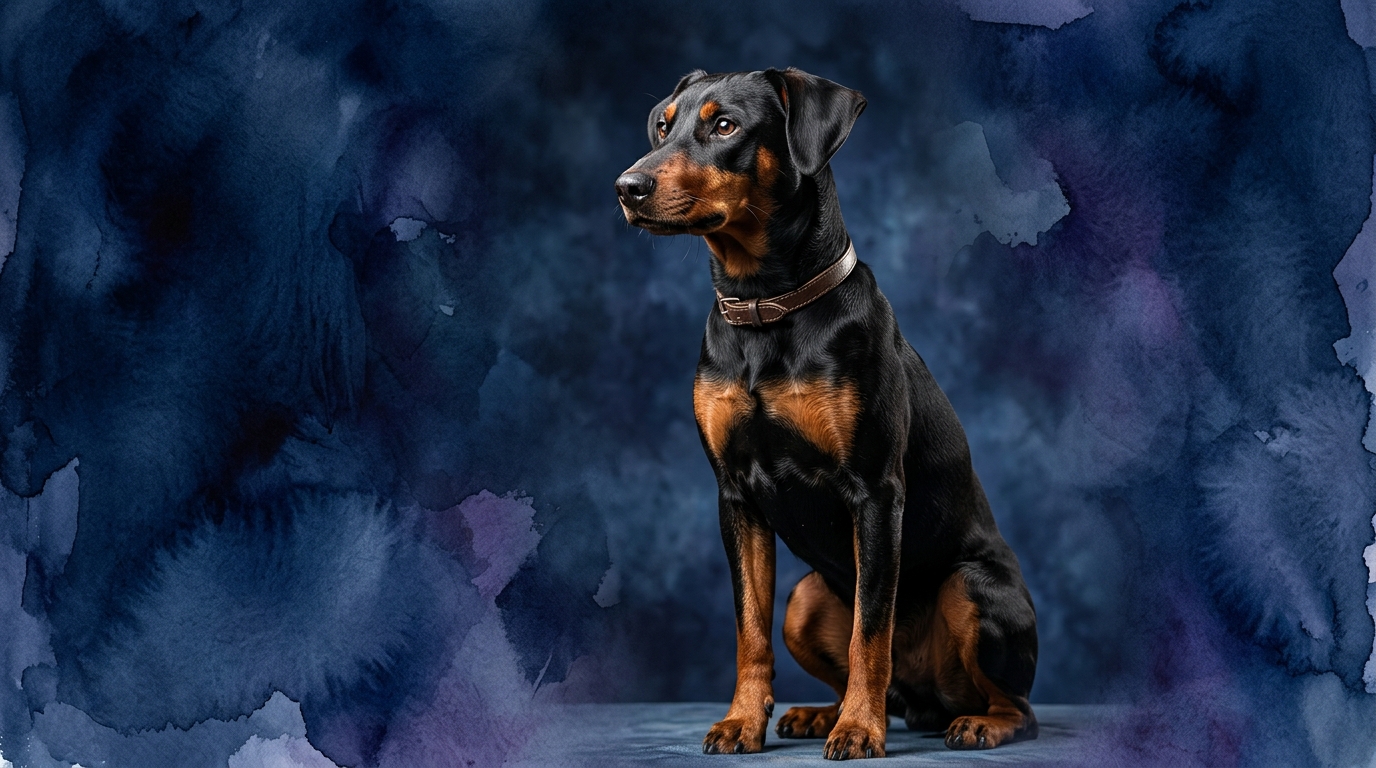
Side-by-Side IQ Profile: Flat-Coated Retriever vs. German Pinscher
The Flat-Coated Retriever, ranked #17 by Coren for obedience and working intelligence, presents a compelling cognitive profile: a strong 4/5 in problem-solving and training speed, an exceptional 5/5 memory, and a balanced 3/5 in both social intelligence and instinctive drive. This combination points to a highly capable and cooperative learner, eager to engage with complex tasks and retain information effortlessly, making them responsive partners in varied activities.
In contrast, the German Pinscher, not Coren-ranked, showcases a consistent 3/5 across all five IQ dimensions: problem-solving, training speed, social intelligence, instinctive drive, and memory. This breed's profile suggests a capable but more independent learner, one who processes information steadily and retains practical knowledge, but may not exhibit the same rapid acquisition or extensive recall as their Retriever counterpart, often relying on tenacity and self-direction.
Where the Flat-Coated Retriever Wins Cognitively
The Flat-Coated Retriever's cognitive advantages are pronounced in areas of rapid concept acquisition, consistent performance, and long-term recall. Their combined 4/5 problem-solving and 4/5 training speed means they quickly grasp new commands and apply solutions to novel challenges, such as mastering intricate agility sequences or understanding complex household routines with minimal repetition. Furthermore, their exceptional 5/5 memory allows them to retain a vast repertoire of learned behaviors and experiences over extended periods, ensuring remarkable consistency in their responses and making them highly reliable partners for advanced training and collaborative tasks.
Where the German Pinscher Wins Cognitively
While not outscoring the Flat-Coat in the given metrics, the German Pinscher’s cognitive strengths lie in their independent initiative and acute environmental awareness. Their consistent 3/5 scores across dimensions, combined with their working heritage, translates into a self-reliant problem-solving approach where they are less dependent on constant human direction, often making their own assessments and acting autonomously. This tenacity, along with a keen instinctive drive, provides a natural vigilance and an ability to notice subtle environmental changes, making them exceptionally perceptive guardians. Their cognitive 'win' is in their robust mental fortitude and self-directed application of their intelligence in specific, independent roles.
Which is Easier to Train and Why
Considering the provided IQ metrics, the Flat-Coated Retriever is generally easier to train for most owners. Their 4/5 training speed and 4/5 problem-solving, coupled with a remarkable 5/5 memory, mean they absorb new commands quickly, understand complex tasks, and retain that knowledge with impressive consistency. They typically possess a strong desire to please and engage cooperatively, which simplifies the training process, making them highly responsive to positive reinforcement and eager participants in structured learning. The German Pinscher, with its consistent 3/5 across these dimensions, requires a more patient and creative approach. Their independent nature means they may need more varied motivation and consistent, engaging sessions to fully internalize commands, often requiring a handler who can make training rewarding from the dog's own perspective rather than relying solely on biddability.
Which Suits Active Owners vs. Relaxed Owners
It is imperative to state that neither the Flat-Coated Retriever nor the German Pinscher is suited for a relaxed or sedentary owner; both demand significant daily physical and mental engagement. The Flat-Coated Retriever thrives with active owners who enjoy structured, collaborative activities like dog sports, extensive hikes, and consistent training, where their high training speed, problem-solving, and exceptional memory can be channeled into purposeful work and companionship. The German Pinscher, conversely, suits active owners who appreciate an independent, vigilant, and spirited companion, requiring vigorous daily exercise alongside mental stimulation that allows for self-direction and initiative, such as exploring new environments or engaging in less handler-dependent pursuits where their acute awareness and tenacity can shine.
The Verdict
Choose the Flat-Coated Retriever when you desire a highly biddable, eager-to-please companion who excels in structured training, remembers commands flawlessly, and thrives on collaborative activities and dog sports.
Choose the German Pinscher when you seek an independent, vigilant, and spirited partner who values self-directed activity and requires a patient, creative trainer to channel their sharp wits and inherent drive.
🧠 Find Your Pet's IQ Score
Our Pet IQ Lab assessment covers 25+ tests across 5 cognitive dimensions — personalized to your breed.
Take the Full IQ Test →Frequently Asked Questions
Is the Flat-Coated Retriever truly easier to train than the German Pinscher?
Yes, based on their higher training speed and problem-solving scores, Flat-Coated Retrievers generally learn new commands more quickly and with fewer repetitions. Their eagerness to please and exceptional memory make the training process smoother and more consistent compared to the more independent German Pinscher.
How does the 'not Coren-ranked' status of the German Pinscher affect its cognitive perception?
The absence of a Coren rank doesn't imply a lack of cognitive ability but rather suggests they may not excel in the specific metrics of obedience and working intelligence that Coren evaluated. It often points to a breed that is more independent or less driven by the desire to please humans in a structured way, requiring different training approaches.
Do both breeds need a lot of exercise?
Absolutely, both the Flat-Coated Retriever and the German Pinscher are active breeds requiring significant daily exercise and mental stimulation. Owners must be prepared to provide engaging physical activities and cognitive challenges to ensure their well-being, though the type of preferred activity may differ.