
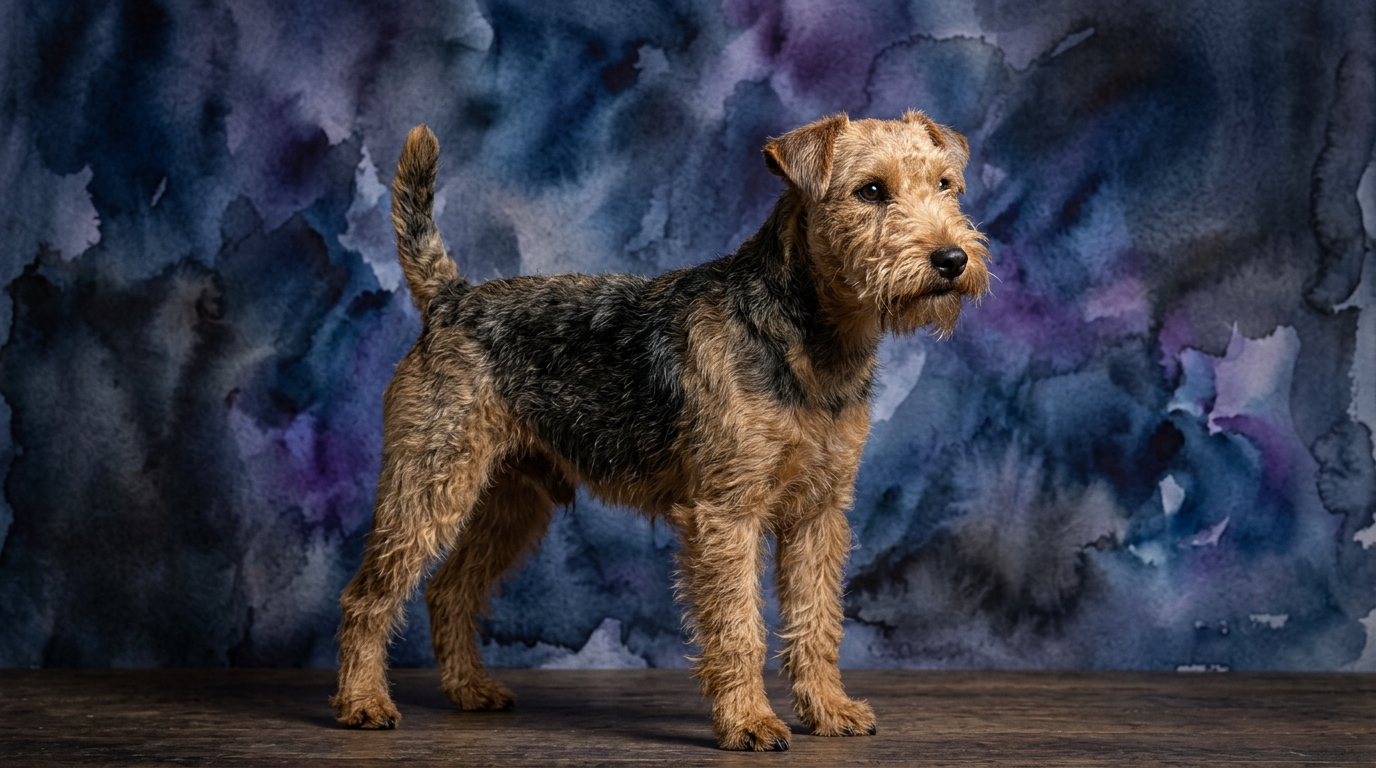
Side-by-Side IQ Profile: Flat-Coated Retriever vs. Lakeland Terrier
The Cosmic Pet Pet IQ Lab employs five key dimensions to map a breed's cognitive strengths, and examining these for the Flat-Coated Retriever and Lakeland Terrier paints a clear picture of their mental aptitudes. For the Flat-Coated Retriever, a breed celebrated in the Sporting Group, its intelligence profile is notably robust, reflecting its purpose as a retrieving gun dog.
In Problem Solving, the Flat-Coated Retriever scores an impressive 4/5, indicating a strong capacity to independently assess and navigate complex situations, often involving multi-step tasks or novel challenges. Its Training Speed is equally high at 4/5, suggesting a quick grasp of new commands and concepts, coupled with an eagerness to comply. Social Intelligence, at 3/5, points to a good understanding of human cues and pack dynamics, though perhaps not as acutely sensitive as some specialized companion breeds. The Instinctive Drive for the Flat-Coated Retriever stands at 3/5, primarily channeled towards retrieving, scent work, and energetic outdoor pursuits. Finally, its Memory is exceptional, earning a perfect 5/5, allowing it to recall vast amounts of learned information and past experiences with remarkable accuracy.
Turning to the Lakeland Terrier, a member of the Terrier Group, its cognitive profile reflects a different set of priorities, born from its historical role as a vermin hunter. Its Problem Solving score is 3/5, demonstrating a competent ability to figure out immediate challenges, particularly those related to its hunting instincts, though perhaps less inclined towards abstract human-devised puzzles. Training Speed also registers at 3/5, indicating a respectable pace for learning but often requiring more consistent, engaging methods due to its independent streak. Social Intelligence for the Lakeland Terrier is 3/5, suggesting it capably interprets social signals within its immediate family and established social circles. Its Instinctive Drive, also 3/5, is strongly oriented towards prey drive, digging, and tenacious pursuit, a core component of its terrier essence. The Lakeland Terrier's Memory is rated 3/5, sufficient for retaining essential commands and routines, but not quite reaching the expansive recall seen in the Flat-Coated Retriever.
Where the Flat-Coated Retriever Excels Cognitively
The Flat-Coated Retriever demonstrates distinct cognitive advantages, particularly in areas demanding sustained focus, rapid learning, and extensive recall. Its 4/5 Problem Solving score means it can methodically work through obstacles, whether it's figuring out how to open a gate or navigating a complex agility course with precision. This isn't just about brute force, but an ability to process sequential steps and adapt strategies.
Its Training Speed of 4/5 signifies that a Flat-Coat can pick up new commands and routines with remarkable efficiency, often requiring fewer repetitions than many other breeds. This rapid acquisition makes them highly adaptable to various dog sports, service roles, or simply integrating new household rules seamlessly. Owners will notice their Flat-Coat quickly associates actions with consequences and responds reliably to cues after minimal instruction.
The Flat-Coated Retriever's standout cognitive feature is its 5/5 Memory. This exceptional recall means it not only remembers commands but also complex sequences, spatial layouts, and even specific objects or individuals over extended periods. For tasks like retrieving multiple items in a specific order, remembering scent trails, or performing intricate obedience routines, this superior memory is a profound asset, making them incredibly consistent once a skill is learned.
Where the Lakeland Terrier's Cognitive Strengths Shine Distinctly
While not always outscoring the Flat-Coated Retriever numerically, the Lakeland Terrier's cognitive profile showcases unique strengths rooted in its terrier heritage, particularly in its specific application of problem-solving and instinctive drive. Its 3/5 Problem Solving isn't about human-centric puzzles, but an astute ability to independently strategize and overcome challenges in its environment, such as figuring out how to access a perceived burrow or outsmarting small prey. This translates to a clever, self-reliant approach to everyday obstacles.
The Lakeland Terrier's 3/5 Instinctive Drive, while matching the Flat-Coat numerically, manifests as intense tenacity and unwavering persistence. This isn't just about general energy; it's a focused, driven determination to achieve a goal, whether it’s digging, chasing, or investigating. This drive fuels a relentless spirit that can be channeled into focused scent work or earthdog trials, where its unwavering commitment to a task becomes a significant cognitive asset.
Even its 3/5 Training Speed and Memory, while not top-tier, are bolstered by its independent nature. A Lakeland Terrier might take more repetitions, but once it understands a command and deems it worthwhile, it will execute it with a certain terrier flair and conviction. Its social intelligence at 3/5 means it forms strong, perceptive bonds within its immediate family, understanding their moods and intentions, making it a surprisingly insightful companion despite its independent reputation.
Which Is Easier to Train and Why?
Based on their IQ profiles, the Flat-Coated Retriever is generally easier to train than the Lakeland Terrier, largely due to its higher scores in Training Speed (4/5 vs. 3/5) and superior Memory (5/5 vs. 3/5). The Flat-Coat's inherent eagerness to please, combined with its rapid acquisition of new information, means it typically grasps commands quickly and retains them reliably.
Their strong memory allows Flat-Coats to build a vast repertoire of skills without constant refreshing, making advanced obedience or complex sporting activities more accessible. Owners often find Flat-Coats respond well to positive reinforcement and consistency, showing a cooperative spirit that streamlines the training process. Their social intelligence also makes them highly attentive to human instruction and body language, further aiding communication during training sessions.
In contrast, the Lakeland Terrier's 3/5 Training Speed and Memory, coupled with its robust independent streak, mean training often requires more patience, creativity, and a firm understanding of terrier motivations. While they are capable learners, their problem-solving is often self-directed, and their strong instinctive drive can sometimes override human commands if not managed effectively. Training a Lakeland often involves channeling their natural tenacity and prey drive into desired behaviors, rather than relying solely on a desire to please, making it a more engaging and sometimes challenging endeavor.
Which Suits Active Owners vs. Relaxed Owners?
For owners seeking a highly engaged and active companion, the Flat-Coated Retriever is an excellent match. Its strong problem-solving skills, high training speed, and unparalleled memory mean it thrives on mental stimulation through diverse activities like agility, obedience, retrieving games, and even scent work. This breed requires consistent physical exercise to match its energetic disposition, making it ideal for individuals or families who enjoy hiking, running, or spending significant time outdoors.
Their social intelligence also means they generally enjoy participating in family activities and being central to their human's lives, rather than being left to their own devices. A Flat-Coat will flourish with owners who can commit to daily structured exercise and regular cognitive challenges, preventing boredom and channeling their innate capabilities constructively. They are not suited for purely relaxed, sedentary lifestyles as their cognitive and physical needs are substantial.
The Lakeland Terrier, while possessing a comparable 3/5 instinctive drive, suits active owners who appreciate a more independent and spirited companion. Their activity needs are significant, driven by their terrier heritage, meaning they require robust daily exercise that allows them to burn off energy and satisfy their instinct for exploration and chasing. Owners who enjoy earthdog trials, long walks with opportunities for scent investigation, or engaging in playful, challenging interactions will find a Lakeland a rewarding partner.
However, their problem-solving and training speed, while competent, suggest they may not require the same level of complex, human-directed mental work as a Flat-Coat. Instead, their cognitive fulfillment often comes from independent investigation and engaging their natural drives. They are best suited for owners who are active and consistent in training, but also appreciate a dog with a strong personality and a mind of its own, rather than one solely focused on pleasing. They are not ideal for relaxed owners who cannot provide consistent mental and physical outlets for their tenacious spirit.
The Verdict: When to Choose Each Breed
The Verdict
Choose the Flat-Coated Retriever if you seek a highly trainable, exceptionally memorable companion for diverse activities, thriving on cooperative learning and eager participation in family life. They excel when given consistent mental challenges and opportunities to utilize their rapid learning and recall abilities.
Opt for the Lakeland Terrier if you appreciate a tenacious, independent problem-solver with a strong terrier drive, best suited for active owners who value a spirited personality and can channel their natural instincts into constructive outlets. They thrive with consistent, engaging training that respects their unique, self-reliant intelligence.
🧠 Find Your Pet's IQ Score
Our Pet IQ Lab assessment covers 25+ tests across 5 cognitive dimensions — personalized to your breed.
Take the Full IQ Test →Frequently Asked Questions
Do Flat-Coated Retrievers get bored easily?
Yes, with a high problem-solving score and a powerful memory, Flat-Coated Retrievers require consistent mental engagement to prevent boredom. Without adequate stimulation, they may find their own ways to entertain themselves, which can sometimes be destructive.
Is the Lakeland Terrier a good choice for first-time dog owners?
The Lakeland Terrier's independent nature and strong instinctive drive, combined with a moderate training speed, can present challenges for first-time owners. They require consistent, patient training and owners who understand terrier specific behaviors, making them better suited for those with some prior dog experience.
How do their social intelligence scores impact their interactions with strangers?
Both breeds score 3/5 in social intelligence, suggesting they are generally adept at understanding social cues. A Flat-Coated Retriever is typically more outwardly friendly and keen to engage, while a Lakeland Terrier, though perceptive, might be more reserved or discerning with strangers, preferring to observe before interacting.