
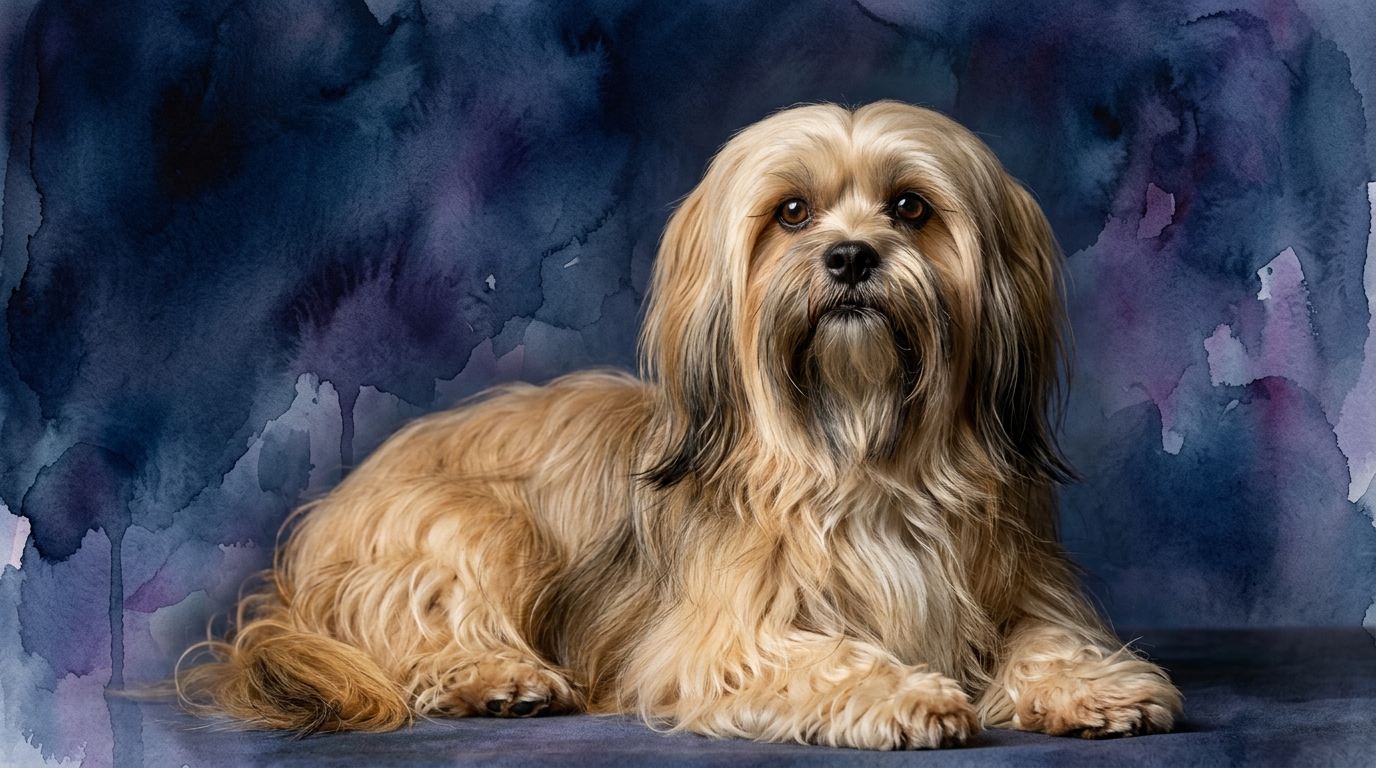
Side-by-Side IQ Profile: Flat-Coated Retriever vs. Lhasa Apso
At The Cosmic Pet Pet IQ Lab, we evaluate canine cognition across five key dimensions, revealing each breed's unique mental landscape. The Flat-Coated Retriever, a Sporting group member with a Coren ranking of #17, and the Lhasa Apso, from the Non-Sporting group with a Coren ranking of #68, offer a compelling study in divergent cognitive priorities.
The Flat-Coated Retriever's IQ Profile:
Problem Solving (4/5): Flat-Coats demonstrate significant independent problem-solving, crafting clever strategies for puzzles or navigating complex environments. They approach challenges proactively, showcasing adaptive thinking.
Training Speed (4/5): This breed grasps new commands and routines with remarkable alacrity, requiring minimal repetitions. Their eagerness to engage and collaborate accelerates the learning process.
Social Intelligence (3/5): Their social understanding focuses on immediate family bonds, discerning familiar cues efficiently. While affable, highly nuanced social dynamics from strangers may be less pronounced.
Instinctive Drive (3/5): A balanced retrieving instinct drives engagement in scent work and carrying objects. This foundational behavior is channelled productively without dominating other cognitive functions.
Memory (5/5): Flat-Coats possess exceptional memory, retaining learned behaviors, complex commands, and locations over extended periods. This aids consistent performance and routine adherence.
The Lhasa Apso's IQ Profile:
Problem Solving (3/5): Lhasa Apsos exhibit moderate problem-solving, often relying on established patterns. They can navigate simple puzzles, but their approach is more methodical than improvisational.
Training Speed (3/5): This breed learns steadily with consistent, patient repetition and positive reinforcement. While not rapid, they gradually build their repertoire of learned behaviors.
Social Intelligence (3/5): Their social understanding is finely tuned to their chosen family's moods, offering deep personal loyalty. They are cautious with unfamiliar individuals, discerning friend from threat.
Instinctive Drive (3/5): A strong independent streak and protective instinct define their drive, rooted in historical guardianship. This manifests as territorial vigilance rather than prey or retrieving focus.
Memory (3/5): Their memory is solid for routines and familiar faces, maintaining household habits reliably. While retaining information, recall for complex or less frequent situations may be less expansive.
Where the Flat-Coated Retriever Wins Cognitively
The Flat-Coated Retriever truly shines in tasks demanding rapid information assimilation and enduring recall. Their exceptional Training Speed (4/5) means they grasp new cues and routines quickly, making them a joy to teach diverse commands, from basic obedience to intricate agility. This quick learning is bolstered by their stellar Memory (5/5), allowing them to retain vast amounts of information over long periods—they rarely forget a learned task. Furthermore, their Problem Solving (4/5) ability means they don't just follow instructions but can interpret situations and formulate solutions independently, demonstrating adaptive thinking. This combination makes them highly proficient in activities requiring both quick wits and consistent performance.
Where the Lhasa Apso Wins Cognitively
While the Flat-Coated Retriever excels in speed and recall, the Lhasa Apso's cognitive strengths lie in their historical role as watchful companions. Their Social Intelligence (3/5), though numerically equal, manifests as a finely tuned sensitivity to their immediate human family's emotions and subtle environmental shifts, fostering deep personal connection. This allows them to be incredibly attuned to their owner's mood. Their Instinctive Drive (3/5) is also a winning trait in its specific application—a strong, inherent protectiveness and territorial awareness. This isn't about retrieving; it's about vigilance and self-reliance, making them excellent, albeit vocal, guardians. They excel at discerning anomalies and alerting their family, a cognitive strength tied to their guardianship instincts.
Which is Easier to Train and Why
Based on The Cosmic Pet Pet IQ Lab's metrics, the Flat-Coated Retriever is generally easier to train due to their superior Training Speed (4/5) and exceptional Memory (5/5). Flat-Coats possess an inherent eagerness to please and high motivation for collaborative work, translating into quicker acquisition of new commands and making advanced training more accessible. Their strong memory ensures learned behaviors are retained effectively, leading to consistent performance. In contrast, the Lhasa Apso, with a Training Speed of 3/5 and Memory of 3/5, requires more patience and consistent repetition. Their independent nature often leads them to assess whether a command aligns with their own perceived purpose. Training a Lhasa Apso demands a clear, firm, but always positive approach, focusing on building trust. While capable, their progress might be slower, and retention may require more frequent reinforcement.
Which Suits Active Owners vs. Relaxed Owners
The Flat-Coated Retriever is an ideal match for active owners who relish outdoor adventures and consistent engagement. Their high cognitive capacity, combined with their Sporting heritage, means they require ample daily physical exercise and mental stimulation. Owners enjoying long hikes, running, swimming, or dog sports like agility will find a dedicated, enthusiastic partner. Their need for regular activity and opportunities to use their problem-solving skills means a sedentary lifestyle would likely lead to boredom. Conversely, the Lhasa Apso suits owners preferring a more relaxed pace. While they enjoy moderate daily walks, their exercise requirements are lower. They are content with indoor companionship, thriving on being part of family routines and often observing from a comfortable perch. Their independence allows them to entertain themselves, fitting lifestyles not centered on constant outdoor activity, but still providing consistent, calm interaction.
The Verdict
Choose a Flat-Coated Retriever if you are an active individual or family seeking a highly trainable, enthusiastic partner for outdoor adventures, dog sports, or a variety of engaging learning activities that leverage their quick wit and enduring memory.
Opt for a Lhasa Apso if you prefer a watchful, independent companion for a more relaxed lifestyle, appreciating a dog that offers deep, personal loyalty and a keen awareness of its home environment, requiring patient and consistent training.
🧠 Find Your Pet's IQ Score
Our Pet IQ Lab assessment covers 25+ tests across 5 cognitive dimensions — personalized to your breed.
Take the Full IQ Test →Frequently Asked Questions
Do Flat-Coated Retrievers require a lot of mental exercise?
Yes, Flat-Coated Retrievers, with their high problem-solving and memory scores, thrive on mental stimulation. Engaging them in puzzle toys, learning new tricks, or participating in dog sports helps satisfy their cognitive needs and prevents boredom.
Are Lhasa Apsos difficult to train due to their independence?
Lhasa Apsos can present training challenges due to their independent nature and self-assured temperament. Consistent, positive reinforcement, clear communication, and patience are key to successfully training a Lhasa Apso, making them respond best to an owner who understands their unique motivation.
How do their social intelligence scores impact their interactions with strangers?
Both breeds score 3/5 in social intelligence, but this manifests differently; Flat-Coats are generally more openly friendly with new people once introduced, while Lhasa Apsos tend to be more reserved and cautious with strangers, often taking time to warm up due to their protective instincts.