
Side-by-Side Cognitive Profiles
The Cosmic Pet Pet IQ Lab employs a multi-dimensional framework to assess canine intelligence, moving beyond simplistic rankings to capture a breed's unique mental architecture. For the Flat-Coated Retriever, this reveals a highly adaptive and retentive mind. Their Problem Solving is rated 4/5, indicating a capacity for creative solutions and navigating novel challenges with relative ease. Training Speed, also at 4/5, points to a rapid grasp of new commands and concepts, making them quick studies in structured learning environments. Social Intelligence, at 3/5, suggests they are attuned to human cues and social dynamics, though perhaps not as overtly empathetic or manipulative as some other breeds. Their Instinctive Drive, likewise 3/5, is present but balanced, allowing for redirection towards various activities beyond their original retrieving purpose. Crucially, their Memory scores an exceptional 5/5, meaning they retain complex sequences, commands, and experiences over long periods, solidifying learned behaviors.
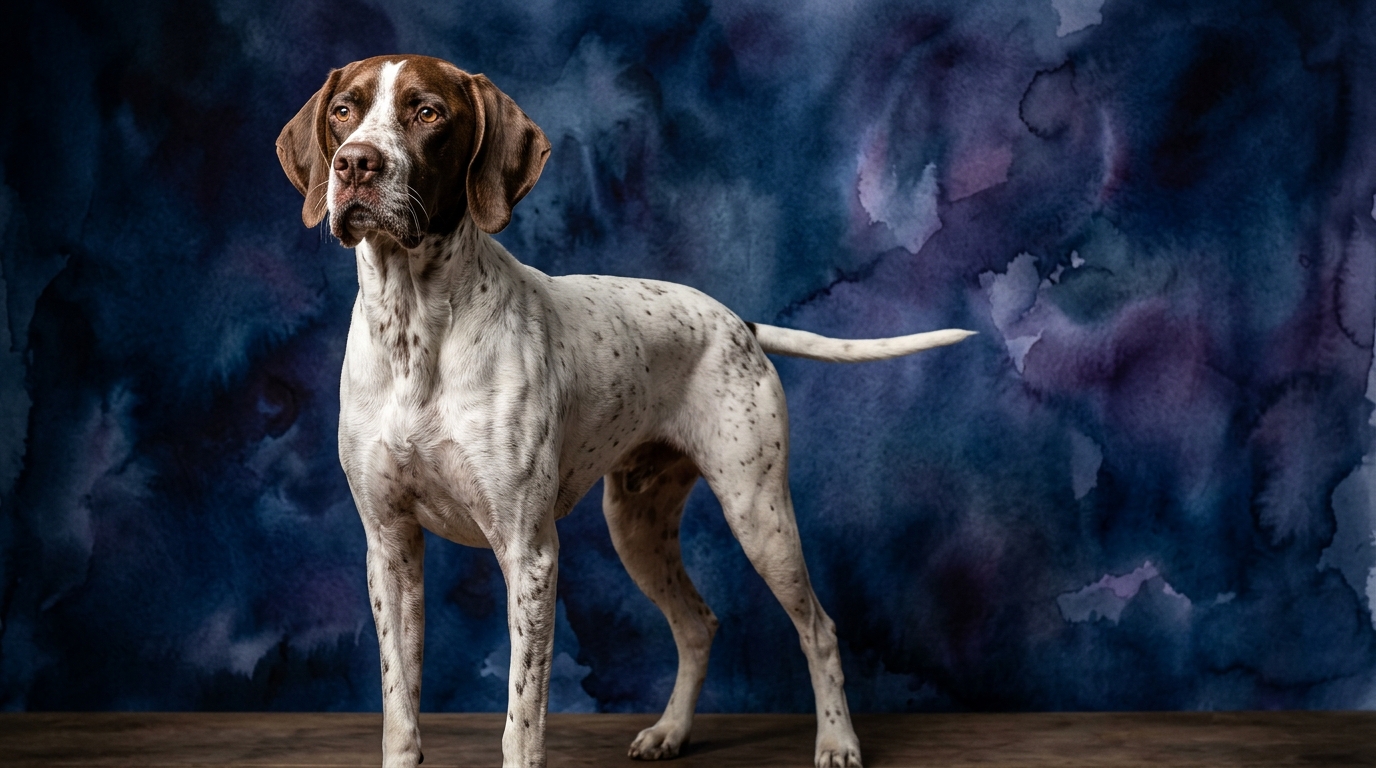
In contrast, the Pointer presents a more specialized cognitive profile, characterized by focused efficiency rather than broad intellectual agility. With Problem Solving rated 3/5, Pointers are capable of logical thought within familiar contexts but may require more guidance when faced with entirely new or abstract puzzles. Their Training Speed, also 3/5, indicates a steady learning pace; they absorb information effectively with consistent repetition but typically do not pick up new skills as quickly as their retriever counterparts. Social Intelligence, at 3/5, mirrors the Flat-Coat, signifying an appropriate level of responsiveness to human interaction without excessive social complexity. Their Instinctive Drive, also 3/5, is robust and specifically geared towards their primary hunting function – scenting, pointing, and holding steady. Finally, their Memory, rated 3/5, is practical and sufficient for retaining essential commands and field patterns, but perhaps not for vast repertoires of tricks or intricate routines over extended durations.
Where the Flat-Coated Retriever Excels Cognitively
The Flat-Coated Retriever's cognitive strengths prominently feature in their superior problem-solving and remarkable memory. A Flat-Coat might, for instance, independently figure out how to open a complex crate latch or strategize a path to retrieve a toy from an awkward, multi-level obstacle course. This isn't just about brute force; it involves assessing the situation, recalling past experiences, and applying learned principles. Their 5/5 Memory means that once they learn a command or a multi-step routine, it tends to stick with minimal refreshers, making them excellent candidates for advanced obedience, complex scent work, or intricate dog sports where precise sequencing is vital. They also display a greater propensity for generalization, meaning a skill learned in one context is more readily applied to a new, similar situation without extensive re-training. This adaptability is a hallmark of their 4/5 Problem Solving, allowing them to thrive in varied environments and learn from diverse experiences.
Where the Pointer Shines Cognitively
While the Pointer's cognitive scores might appear lower across the board, their strengths lie in a different kind of intellectual application: focused, persistent dedication to a task. Their 3/5 Instinctive Drive, though numerically equivalent to the Flat-Coat's, is often more singularly directed and less prone to distraction when engaged in their primary purpose. A Pointer's cognitive excellence is evident in their unwavering concentration during a field trial, holding a point with exceptional stillness and focus for extended periods, despite environmental distractions. This isn't about solving novel puzzles, but about applying learned precision and innate drive with incredible consistency. Their 3/5 Problem Solving, while not as broad, is highly effective within the parameters of their work; they efficiently locate game, navigate terrain purposefully, and execute their role with an almost mechanical reliability. Their intelligence is practical and purpose-driven, optimized for sustained, repetitive tasks requiring stamina and singular attention, rather than multifaceted cognitive gymnastics.
Training Ease: Flat-Coat's Rapid Grasp vs. Pointer's Steady Learning
When it comes to training, the Flat-Coated Retriever generally offers a smoother, faster learning curve due to their 4/5 Training Speed and 5/5 Memory. They tend to pick up new commands with fewer repetitions and retain them more reliably, often showing an eagerness to engage in training sessions as a form of mental stimulation. Their enthusiastic nature means they often respond well to positive reinforcement and find joy in mastering new skills. This rapid acquisition makes them highly rewarding for owners who enjoy teaching a wide array of commands, tricks, or participating in competitive obedience and agility, where precision and speed of learning are advantageous. However, their intelligence can also lead to boredom if not adequately challenged, potentially resulting in mischievous problem-solving behaviors like counter-surfing if their minds aren't productively occupied.
The Pointer, with a 3/5 Training Speed and 3/5 Memory, requires a more patient, consistent, and structured approach. They will learn, but it typically takes more repetitions to solidify a command, and owners must be diligent in reinforcing lessons to ensure long-term retention. Their training is best approached with clear, unambiguous instructions and a consistent routine, building reliable habits over time. While they may not grasp abstract concepts as quickly as a Flat-Coat, their focused nature, particularly when motivated by their prey drive or a clear task, allows them to become exceptionally reliable in specific, repetitive tasks like field work. Owners should understand that a Pointer's training success hinges on consistency and understanding their innate drive, rather than expecting a rapid, generalized uptake of diverse skills. Their mental energy is often channeled into sustained physical and scent-based activities, which can be harnessed for effective, albeit slower, training outcomes.
Matching Breeds to Owner Lifestyles
For active owners who thrive on mental engagement and varied activities with their canine companion, the Flat-Coated Retriever often presents an ideal match. Their higher Problem Solving and exceptional Memory mean they require and enjoy diverse mental challenges, from learning complex trick sequences to participating in dog sports like rally obedience, agility, or advanced retrieving games. These dogs flourish when their owners commit to regular, stimulating training sessions that tap into their cognitive depth. An owner who enjoys puzzle toys, intricate walks with new scents and challenges, and consistent, engaging interaction will find a Flat-Coat a wonderfully responsive and enthusiastic partner. Their exuberance also means they need a good amount of physical exercise, but their mental needs are equally paramount to prevent boredom-induced behaviors.
The Pointer, while also requiring an active lifestyle, suits owners whose activity preferences align with consistent, purpose-driven outdoor pursuits. Their intelligence is geared towards sustained effort and focus in the field, making them excellent companions for runners, hikers, or those involved in hunting sports. Owners who appreciate a dog with strong, focused instincts and are prepared to engage in long, consistent physical excursions will find a Pointer a dedicated partner. While they benefit from basic obedience, their cognitive needs might not extend to the same breadth of complex problem-solving or trick learning as a Flat-Coat. Instead, their mental satisfaction often comes from fulfilling their instinctive drive through scent work, long retrieves, or simply extended periods of open-field exploration. They thrive with owners who provide ample opportunity for their innate abilities to be expressed, without necessarily demanding extensive abstract cognitive engagement.
The Verdict
Choose a Flat-Coated Retriever if you are an owner who enjoys teaching a wide range of commands, participating in diverse dog sports, and providing consistent mental stimulation through complex training and puzzle-solving activities, appreciating a dog with exceptional memory and problem-solving skills.
Opt for a Pointer if you value a dog with a focused, persistent drive for outdoor activities, are prepared for consistent, patient training to build reliable habits, and seek a companion for sustained physical excursions and purpose-driven work rather than complex mental gymnastics.
🧠 Find Your Pet's IQ Score
Our Pet IQ Lab assessment covers 25+ tests across 5 cognitive dimensions — personalized to your breed.
Take the Full IQ Test →Frequently Asked Questions
Which breed learns new commands faster?
The Flat-Coated Retriever, with a Training Speed of 4/5, generally learns new commands faster than the Pointer (3/5). Their quicker grasp and better memory retention mean fewer repetitions are typically needed for them to master a new skill.
Which breed is better for complex problem-solving tasks?
The Flat-Coated Retriever excels in complex problem-solving, rated 4/5. They demonstrate a greater capacity for independent thought and creative solutions to novel challenges compared to the Pointer's more specialized problem-solving approach (3/5).
Do Pointers have good memory?
Pointers have a practical memory, rated 3/5, which is sufficient for retaining essential commands and field patterns. While not as exceptional as the Flat-Coated Retriever's 5/5 memory, it allows them to perform their specialized tasks effectively with consistent reinforcement.