
Side-by-Side Cognitive Profiles
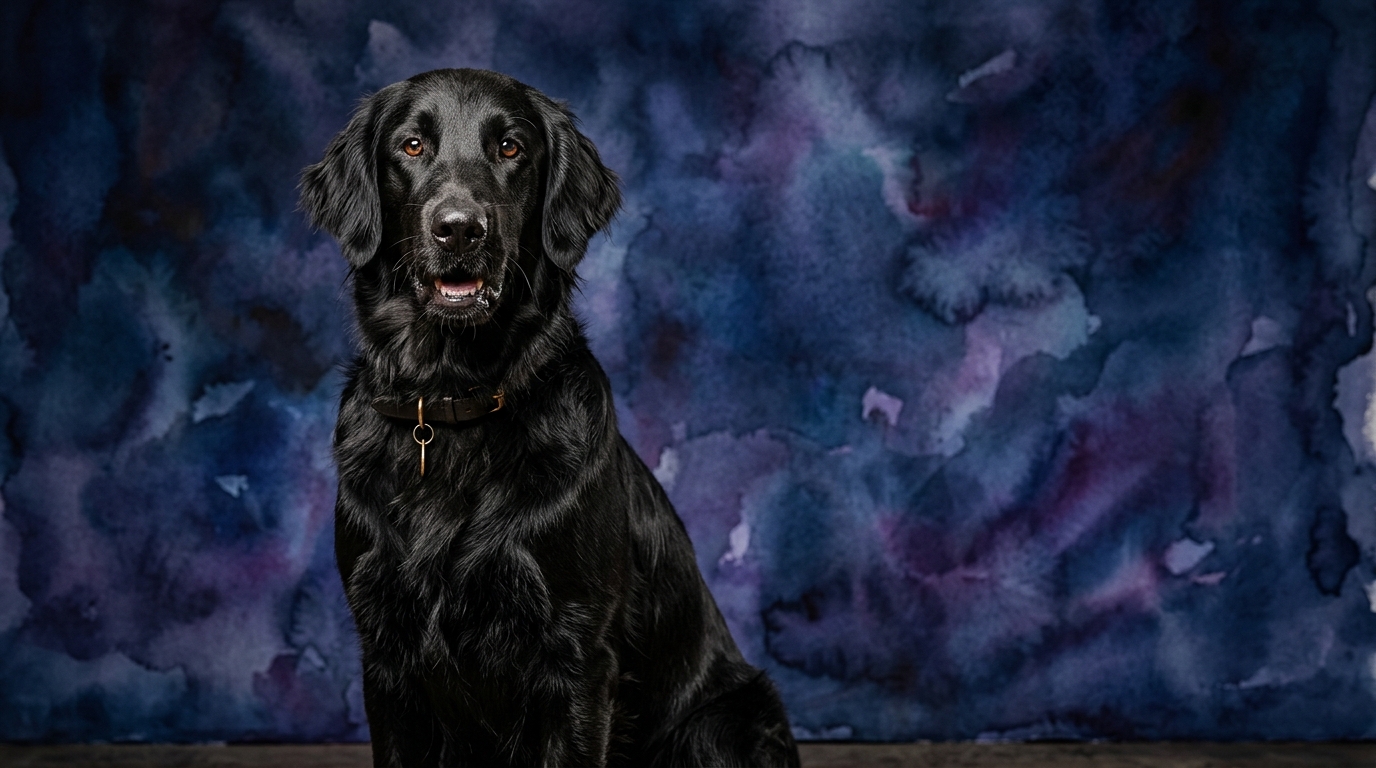
The Flat-Coated Retriever, a breed from the Sporting group, boasts a Coren ranking of #17, indicating a strong capacity for understanding and executing commands. Our Pet IQ Lab metrics for the Flat-Coat include an impressive Problem Solving score of 4/5, demonstrating their capacity to navigate novel situations and figure out solutions. Their Training Speed is also 4/5, reflecting their eagerness and quick uptake of new behaviors, while their Social Intelligence stands at 3/5, suggesting a good, but not overly nuanced, understanding of human cues. An Instinctive Drive of 3/5 aligns with their retrieving heritage, and their Memory is truly outstanding at 5/5, allowing them to retain complex sequences and learned information with remarkable consistency.
In contrast, the Rat Terrier, a tenacious member of the Terrier group, does not appear on the Coren ranking, yet possesses a distinct set of cognitive strengths suited to its historical purpose. The Rat Terrier scores 3/5 in Problem Solving, indicating a competent ability to tackle challenges, often through persistent effort. Their Training Speed is 3/5, meaning they learn at an average pace, requiring consistent reinforcement. Social Intelligence also sits at 3/5, similar to the Flat-Coat, suggesting they grasp basic social interactions effectively. An Instinctive Drive of 3/5 is pronounced in their prey-driven focus, and their Memory is rated 3/5, indicating a solid, but not exceptional, recall of experiences and commands.
Where the Flat-Coated Retriever Excels Cognitively
The Flat-Coated Retriever clearly distinguishes itself through its superior cognitive retention and more sophisticated approach to novel challenges. With a Memory score of 5/5 compared to the Rat Terrier's 3/5, Flat-Coats exhibit an exceptional ability to recall intricate training sequences, remember specific locations, and retain a vast repertoire of commands over time. This makes them particularly adept at activities requiring multi-stage execution, such as complex agility courses or advanced scent work where remembering multiple target locations is key.
Furthermore, their Problem Solving ability, rated at 4/5 against the Rat Terrier's 3/5, suggests a more nuanced and adaptable mental process. Flat-Coats are often observed deliberating solutions to new puzzles rather than resorting solely to trial-and-error, demonstrating a capacity for abstract thought. This translates into quicker adaptation to new environments or training methodologies, and a greater readiness to generalize learned behaviors to different contexts. Their higher Training Speed (4/5 versus 3/5) is a direct consequence of this cognitive agility, enabling them to grasp and internalize new commands with fewer repetitions, fostering a smoother and more efficient learning experience for both dog and owner.
Where the Rat Terrier's Cognition Shines
While the Flat-Coated Retriever's scores are generally higher or equal, the Rat Terrier's cognitive strengths are found in the unique application of its specific traits, particularly its tenacity and independent problem-solving geared towards its working heritage. Their Problem Solving (3/5) and Instinctive Drive (3/5) combine to forge a remarkably resourceful and persistent hunter, excelling in tasks that demand self-reliance and unwavering focus on a goal. This isn't about raw score outperforming, but about how their attributes create a highly effective functional intelligence within their domain.
A Rat Terrier's problem-solving often manifests as a relentless, focused determination to achieve a specific objective, such as locating a hidden scent or maneuvering through tight spaces to reach a 'prey' item. They possess a profound drive to complete a task once engaged, often exhibiting a single-mindedness that can be a cognitive advantage in certain scenarios. This persistence, coupled with their moderate memory and training speed, means that while they might require more repetition to learn a formal command, they can be exceptionally quick and self-directed when engaging in activities that tap into their innate drives, showcasing a different, but equally valuable, form of intelligence.
Training Ease: Flat-Coated Retriever vs. Rat Terrier
When considering ease of training, the Flat-Coated Retriever generally presents a more straightforward experience for most owners. Their Training Speed of 4/5 means they are quick to pick up new commands and routines, often eager to please their human companions. This, combined with their exceptional Memory (5/5), ensures that once a behavior is learned, it is retained effectively, reducing the need for constant re-teaching. Flat-Coats typically respond well to positive reinforcement and thrive on cooperative learning, exhibiting a natural inclination towards working alongside their owners in various activities.
The Rat Terrier, with a Training Speed of 3/5 and Memory of 3/5, requires a more consistent and patient approach. While capable of learning, they can display a strong independent streak, a hallmark of many terrier breeds, which might make them less inclined to blindly follow commands if they perceive a more interesting alternative, especially one that engages their prey drive. Owners often find that Rat Terriers need more repetition and highly engaging, reward-based methods to maintain focus. Their problem-solving often involves figuring things out on their own, which, while valuable in certain contexts, can translate to a perceived stubbornness in formal obedience settings. Success with a Rat Terrier hinges on making training stimulating and relevant to their innate motivations.
Ideal Owners: Active or Relaxed?
Neither the Flat-Coated Retriever nor the Rat Terrier are suited for truly relaxed owners, as both breeds possess notable energy levels and cognitive needs that demand active engagement. The Flat-Coated Retriever is an excellent match for active owners who enjoy cooperative dog sports, outdoor adventures, and structured training. Their strong memory and problem-solving benefit immensely from consistent mental stimulation through activities like obedience, agility, rally, or retrieving games. Owners who can commit to daily exercise and varied training sessions will find a joyful and engaged companion in a Flat-Coat.
The Rat Terrier also thrives with active owners, though the nature of that activity might differ. They are perfect for individuals who appreciate a tenacious, independent spirit and are prepared to channel their strong instinctive drives into engaging, goal-oriented pursuits. Activities like earthdog trials, barn hunt, agility, or long, exploratory walks with plenty of opportunities for scent work are ideal. While they might be content with less *formal* training than a Flat-Coat, they still require significant physical and mental outlets to prevent boredom and destructive behaviors. Owners who can provide consistent guidance and appreciate a dog with a mind of its own will find the Rat Terrier a lively and rewarding partner.
The Verdict
Choose the Flat-Coated Retriever if you seek a highly trainable, cooperative companion for diverse activities, who will remember complex tasks and thrives on working closely with you. They are ideal for owners who enjoy structured training and dog sports.
Opt for the Rat Terrier if you value independence, tenacity, and a sharp, resourceful spirit, and are prepared to channel their unique drives into engaging, goal-oriented pursuits. They suit owners who appreciate a dog with a strong will and who can provide consistent, stimulating outlets for their energy.
🧠 Find Your Pet's IQ Score
Our Pet IQ Lab assessment covers 25+ tests across 5 cognitive dimensions — personalized to your breed.
Take the Full IQ Test →Frequently Asked Questions
Is the Flat-Coated Retriever truly smarter than the Rat Terrier?
Based on our Pet IQ Lab metrics, the Flat-Coated Retriever generally scores higher or equally in all cognitive dimensions, suggesting a broader capacity for problem-solving, quicker learning, and superior memory. However, 'smarter' is nuanced; the Rat Terrier's intelligence is highly functional and effective within its specific, prey-driven context.
Can Rat Terriers excel in obedience training despite their scores?
Yes, Rat Terriers can absolutely excel in obedience training, but it often requires more patience, consistency, and creative motivation from their owners. Their independent nature means training must be engaging and highly rewarding to overcome potential distractions and their natural inclination to follow their own instincts.
How do their instinctive drives differ in practical terms?
The Flat-Coated Retriever's 3/5 instinctive drive is typically geared towards retrieving and cooperative tasks, manifesting as a desire to bring items back to their owner. The Rat Terrier's 3/5 instinctive drive, however, is intensely focused on prey drive, leading to behaviors like digging, chasing small animals, and persistent investigation of scents, often with less direct human interaction.