Side-by-Side Cognitive Profiles
The Cosmic Pet Pet IQ Lab employs a five-dimensional framework to assess canine cognition, offering a granular view beyond general perceptions. For the Flat-Coated Retriever, a breed often celebrated for its working partnership, and the Sealyham Terrier, a tenacious independent hunter, these dimensions illuminate distinct mental architectures. Understanding these profiles is key to appreciating each breed’s unique approach to the world and their human companions.
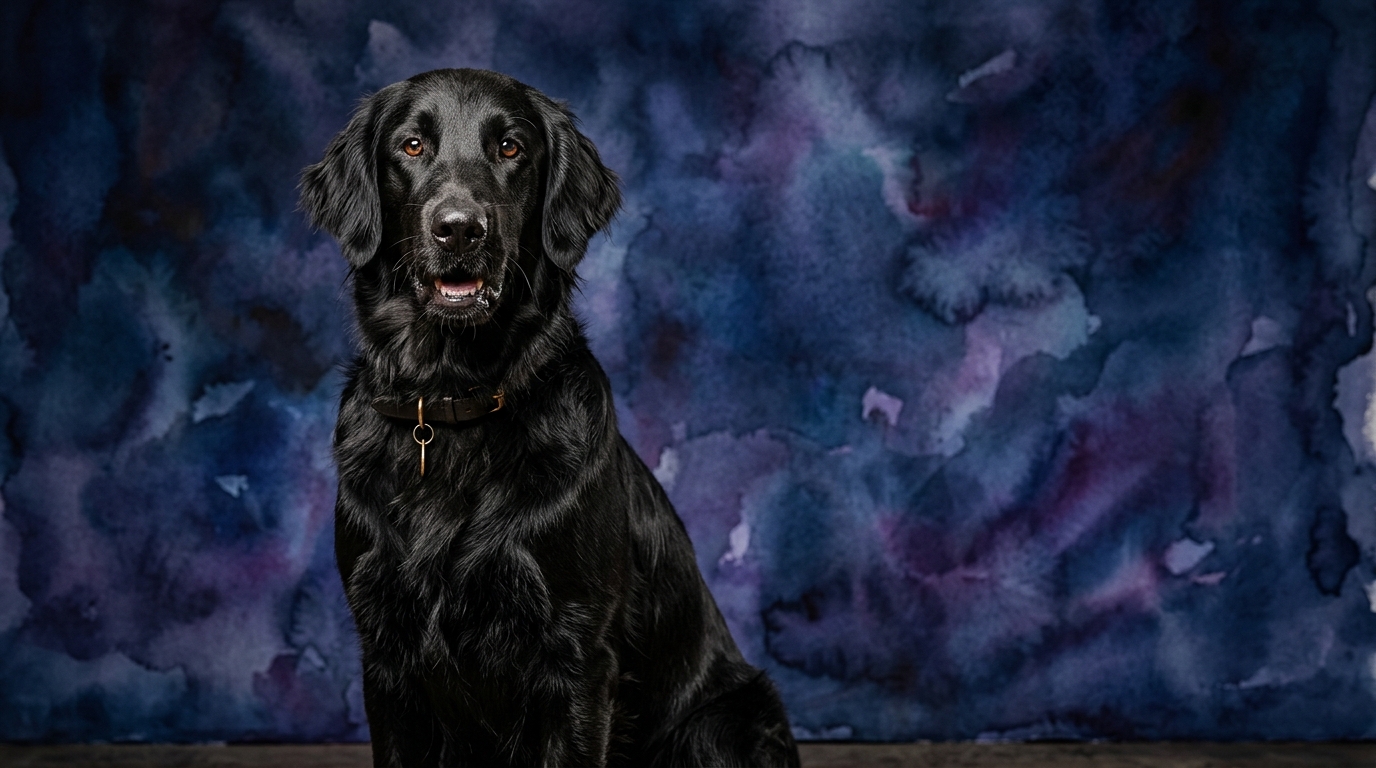
The Flat-Coated Retriever, ranked #17 by Coren, presents a profile reflecting its sporting heritage: a problem Solving score of 4/5 indicates a strong aptitude for figuring out novel situations and tasks, often with a goal-oriented approach. Their training Speed, also 4/5, suggests a rapid grasp of new commands and routines, making them eager learners. Social Intelligence stands at 3/5, meaning they are generally attuned to human cues but perhaps not as finely nuanced in their interpretations as some other breeds. Their instinctive Drive, rated 3/5, primarily centers around their retrieving instincts, though they possess a moderate prey drive. A standout trait is their memory, scoring a perfect 5/5, allowing them to retain complex sequences and recall information with exceptional reliability.
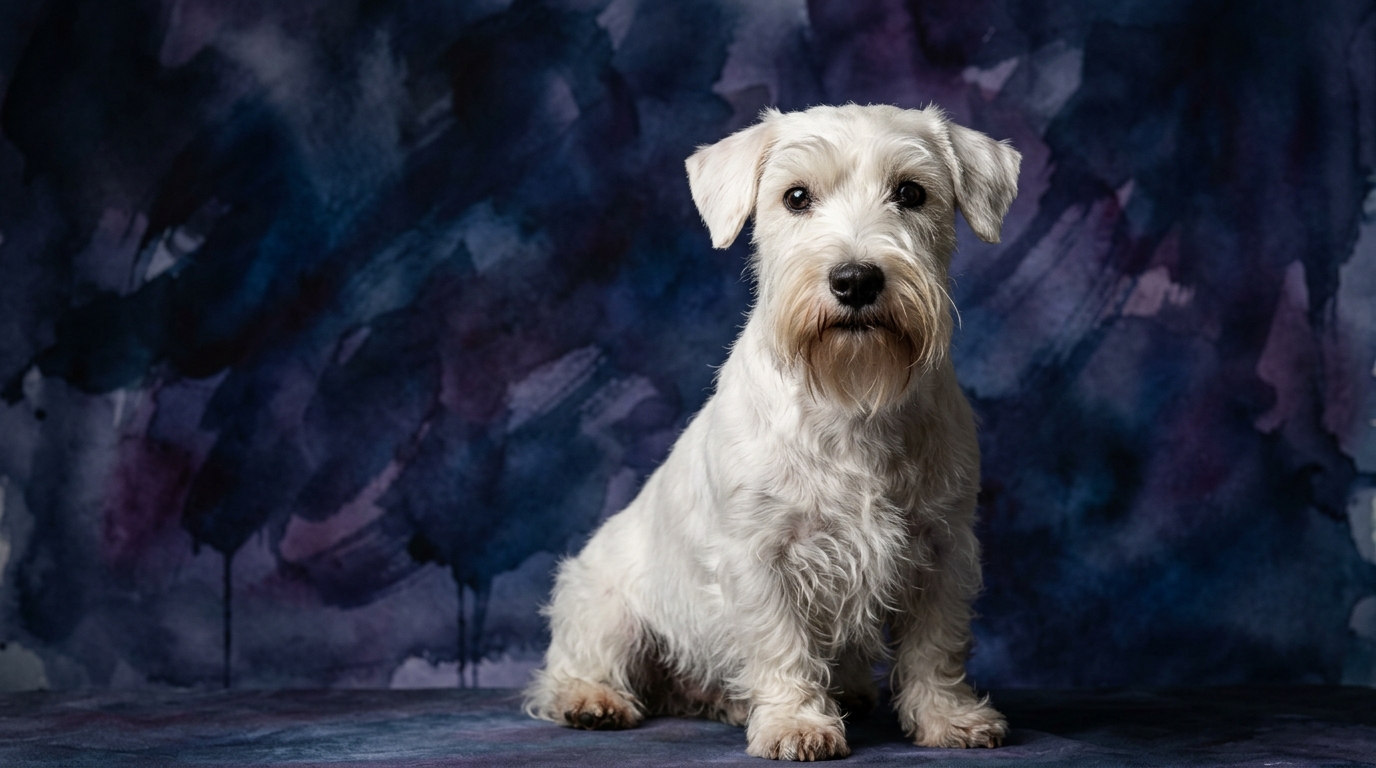
In contrast, the Sealyham Terrier, unranked by Coren, demonstrates a different set of cognitive priorities, aligning with its role as a persistent badger and fox hunter. Their problem Solving score of 3/5 suggests competence in navigating challenges, though they might approach them with more independent thought rather than seeking human direction. Training Speed is also 3/5, indicating they learn steadily but may require more consistent repetition and motivation than a retriever. Social Intelligence is rated 3/5, reflecting an awareness of their human family, but often paired with an inherent self-sufficiency characteristic of terriers. Their instinctive Drive, also 3/5, manifests strongly in their tenacious pursuit and digging behaviors, a core aspect of their historical function. Finally, their memory stands at 3/5, meaning they retain information adequately but may benefit from periodic refreshers to solidify learned behaviors.
Where the Flat-Coated Retriever Excels Cognitively
The Flat-Coated Retriever’s cognitive profile clearly indicates strengths that make them exceptional partners in tasks requiring sustained focus and recall. Their outstanding memory (5/5) is a significant advantage, enabling them to remember complex multi-step commands and the locations of multiple retrieved items, even after a delay. This cognitive dimension is crucial for their traditional role in retrieving game, where remembering a 'marked fall' from a distance or an 'unseen' retrieve location is paramount.
Coupled with their superior problem Solving (4/5), Flat-Coats demonstrate an ability to adapt learned solutions to new scenarios. They don't just follow commands; they understand the objective and can strategize to achieve it. For instance, if a retrieve path is blocked, a Flat-Coat might independently find an alternative route, showcasing flexible thinking. This cognitive flexibility, combined with their rapid training Speed (4/5), allows them to quickly master intricate sequences in obedience, agility, or field trials, making them highly responsive and versatile working dogs. Their capacity to quickly connect actions with consequences and retain these associations over time contributes to their reputation as eager and capable learners in diverse environments.
Where the Sealyham Terrier Demonstrates Unique Strengths
While the Sealyham Terrier’s scores might appear lower in comparison, their cognitive profile reflects a distinct set of strengths tailored to their original purpose: independent underground hunting. Their problem Solving at 3/5, for instance, isn't about human-directed tasks but about self-initiated strategies to overcome obstacles. A Sealyham might not quickly fetch a dropped item on command, but they possess a tenacious, independent problem-solving approach to scenting out quarry or navigating tight spaces underground, relying on their own wits rather than constant human guidance.
Their instinctive Drive (3/5), though numerically similar to the Flat-Coat, manifests as an unwavering determination in pursuit and excavation. This isn't merely a drive to retrieve; it's a deep-seated compulsion to investigate, dig, and persist against challenges, a form of cognitive resilience. This tenacity, combined with their moderate social Intelligence (3/5), means they are not overly reliant on human approval for motivation. They are capable of making decisions and executing plans independently, a valuable trait for a dog expected to work alone in challenging environments. This self-reliance fosters a robust, resilient mental state, allowing them to handle environmental pressures with composure and focus on their own objectives.
Training Dynamics: Flat-Coat vs. Sealyham
The differences in training speed and problem-solving between these two breeds translate into distinct training experiences for their owners. The Flat-Coated Retriever, with a training Speed of 4/5 and problem Solving at 4/5, typically grasps new commands and concepts rapidly. Their strong desire to please and excellent memory (5/5) means they often require fewer repetitions to learn and retain information, making them relatively straightforward to train for a wide array of activities, from basic obedience to complex dog sports. Their eagerness to engage and retrieve provides a strong motivational tool for positive reinforcement.
In contrast, the Sealyham Terrier's training Speed of 3/5 and problem Solving of 3/5 indicate a different pace and approach are needed. They are capable of learning, but often require more patience, consistency, and creative motivation. Their independent nature, rooted in their working history, means they may not always see the immediate value in complying with a human-initiated command, especially if it conflicts with their own instinctive drives. Training a Sealyham often involves breaking tasks into smaller steps, using high-value rewards, and maintaining a firm yet positive approach to overcome their inherent terrier stubbornness. Owners should be prepared for a dog that thinks for itself and sometimes needs convincing, rather than one that automatically seeks to please.
Matching Minds to Lifestyles
The cognitive profiles of the Flat-Coated Retriever and Sealyham Terrier inherently suit different owner lifestyles and home environments. The Flat-Coated Retriever, with its high scores in memory and training speed, thrives with active owners who enjoy engaging their dogs in regular training, outdoor adventures, and potentially dog sports like obedience, agility, or field work. Their cognitive capacity for learning and their desire for partnership mean they need consistent mental stimulation alongside physical exercise. Owners who can provide varied activities that challenge their problem-solving abilities and utilize their excellent memory will find a highly cooperative and joyful companion.
The Sealyham Terrier, while also requiring exercise and mental engagement, suits owners who appreciate a dog with a more independent spirit and a unique approach to problem-solving. They are well-suited for owners who enjoy focused, perhaps less outwardly energetic, activities such as scent work, earthdog trials, or puzzle toys that tap into their instinctive drive and tenacity. They can be content with a more relaxed home life, provided their innate curiosity and drive for exploration are satisfied through structured play and mental challenges. Owners who understand and respect the terrier's self-sufficient nature and are prepared for a dog that might not always be 'on command' will find a loyal and charming companion in the Sealyham.
The Verdict
Choose a Flat-Coated Retriever if you seek a highly trainable, eager partner for diverse activities, who will thrive on consistent engagement and complex learning tasks.
Opt for a Sealyham Terrier if you appreciate a dog with an independent, tenacious spirit, and are prepared to engage their unique problem-solving and instinctive drives with patience and creative motivation.
🧠 Find Your Pet's IQ Score
Our Pet IQ Lab assessment covers 25+ tests across 5 cognitive dimensions — personalized to your breed.
Take the Full IQ Test →Frequently Asked Questions
How does the Flat-Coated Retriever's memory impact its daily life?
The Flat-Coated Retriever's exceptional memory (5/5) means they quickly learn household routines, remember where toys are stored, and recall commands even after long periods. This makes them predictable and reliable companions, adept at following complex instructions in various situations.
What does the Sealyham Terrier's 'instinctive drive' entail?
The Sealyham Terrier's instinctive drive (3/5) primarily manifests as a strong urge to dig, chase small animals, and explore. This is a cognitive trait rooted in their history as badger and fox hunters, requiring owners to provide appropriate outlets for these natural behaviors to prevent destructive habits.
Can a Sealyham Terrier be trained for advanced obedience?
Yes, a Sealyham Terrier can certainly be trained for advanced obedience, but it will require more consistent effort, patience, and motivational creativity than with a breed like the Flat-Coated Retriever. Their independent problem-solving and moderate training speed mean success hinges on making training engaging and rewarding, respecting their individualistic nature.