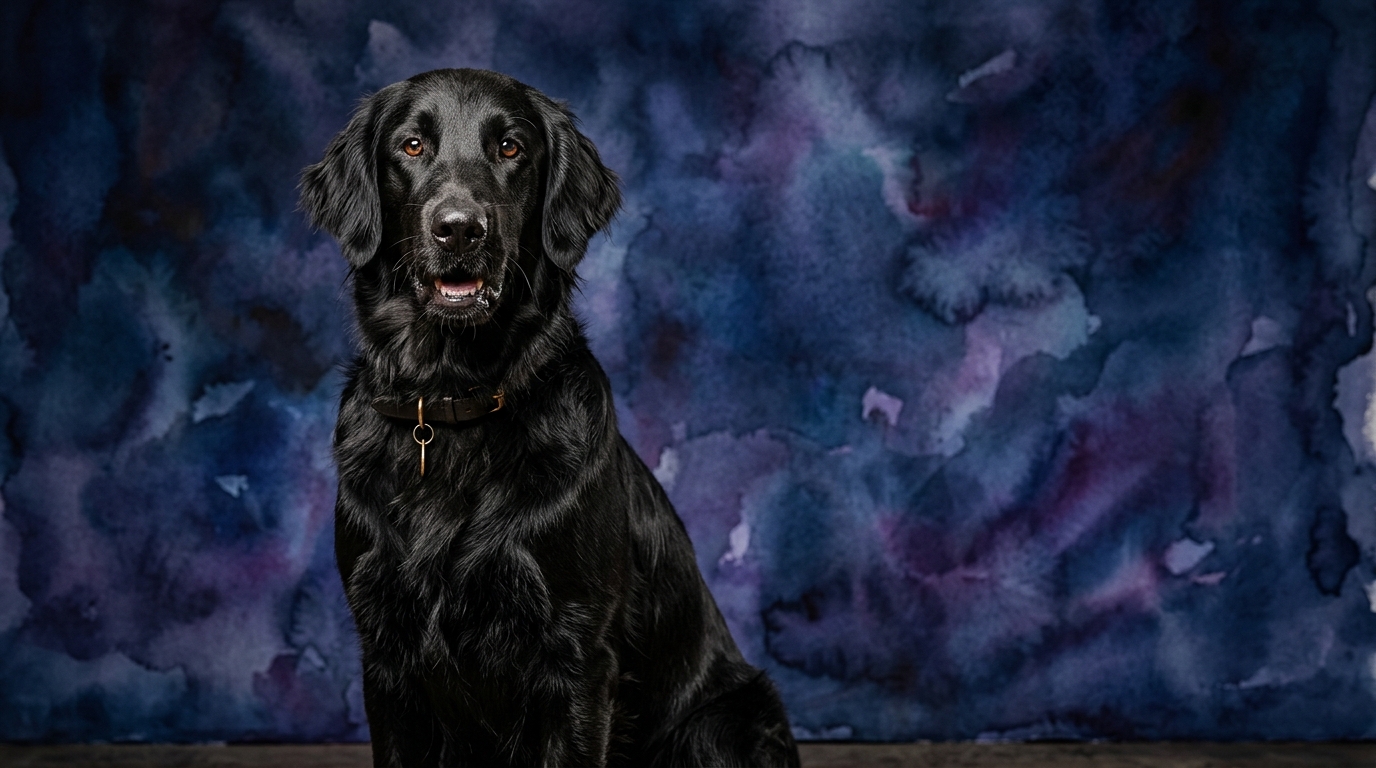
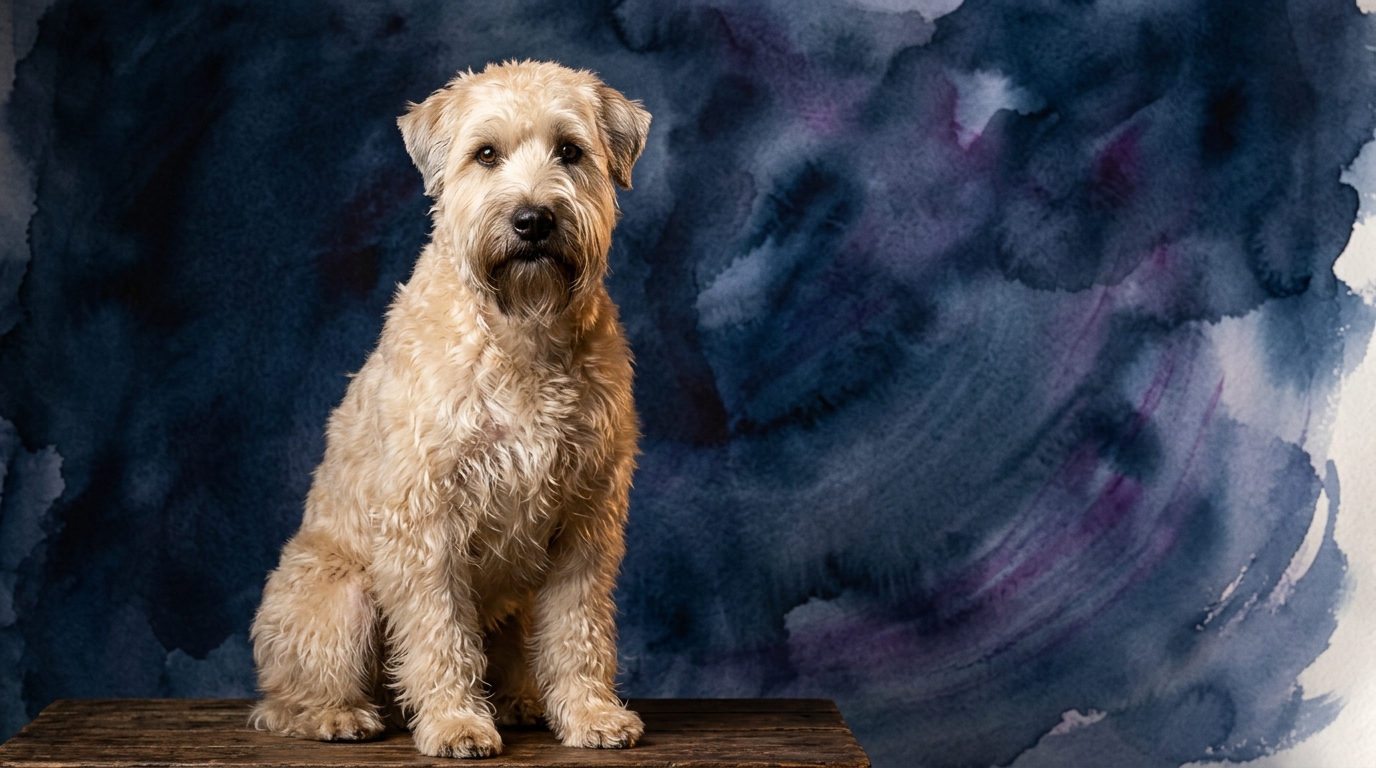
Side-by-Side IQ Profile
The Flat-Coated Retriever, ranked #17 by Dr. Stanley Coren, presents a profile of keen mental agility and exceptional recall. Their problem-solving ability stands at a robust 4 out of 5, indicating a strong capacity to strategize and adapt to new challenges rather than just repeating learned behaviors. Training speed is also rated 4 out of 5, meaning they grasp new commands and concepts with remarkable quickness, often needing fewer repetitions than many other breeds. Social intelligence is a solid 3 out of 5, allowing them to connect deeply with their human companions and understand subtle cues, while their instinctive drive, also 3 out of 5, points to a manageable yet present urge for retrieving and engagement. A standout feature is their memory, earning a perfect 5 out of 5, suggesting an extraordinary ability to retain information and learned behaviors over long periods.
In contrast, the Soft Coated Wheaten Terrier, while not appearing on Coren's list, offers a balanced cognitive landscape. Their problem-solving scores 3 out of 5, meaning they are capable of navigating everyday puzzles and learning from experience, though perhaps with less strategic foresight than a Flat-Coat. Training speed is also 3 out of 5, indicating a steady learning pace that benefits from consistent, positive reinforcement rather than rapid assimilation. Social intelligence for the Wheaten is likewise 3 out of 5, reflecting their affectionate nature and ability to bond closely with family members. Their instinctive drive, rated 3 out of 5, manifests in their terrier curiosity and tenacity, often involving digging or exploring, but typically remaining within manageable bounds. Finally, their memory stands at 3 out of 5, signifying a reliable capacity to recall commands and routines, though perhaps not with the near-perfect retention seen in some breeds.
Where Flat-Coated Retriever Wins Cognitively
The Flat-Coated Retriever clearly distinguishes itself in several cognitive domains, showcasing a mental architecture built for purpose and partnership. Their superior problem-solving score of 4 out of 5 means they are not just reactive but proactive, often thinking through novel situations to find solutions. This translates to an impressive ability to navigate complex environments, figure out puzzle toys quickly, or even creatively overcome obstacles during training or everyday life. Coupled with a training speed of 4 out of 5, Flat-Coats assimilate new information rapidly, making them exceptionally responsive learners. They pick up new cues, tricks, and obedience commands with an eagerness that delights trainers, often anticipating what is asked of them. However, their most striking cognitive advantage lies in their memory, a perfect 5 out of 5. This extraordinary recall means that once a Flat-Coat learns something, it tends to stick. This isn't just about remembering a 'sit' command; it extends to recalling complex sequences of behaviors, the location of hidden objects, or even the routine of a specific walking path after a long break. This robust memory underpins their reliability in tasks requiring consistency and precision, making them formidable competitors in dog sports and dependable companions in daily life where consistent behavior is valued.
Where Soft Coated Wheaten Terrier Wins Cognitively
While the Soft Coated Wheaten Terrier's individual cognitive scores might not surpass the Flat-Coat's in raw numbers, their strengths lie in a different kind of mental resilience and adaptability, perfectly suited to their terrier heritage. Their problem-solving at 3 out of 5, while not top-tier, reflects a practical, grounded approach to challenges. Wheatens are resourceful, often employing persistence and a characteristic terrier ingenuity to achieve their goals, whether it’s figuring out how to get to a dropped treat or exploring a new scent trail. This isn't always about rapid, strategic thinking, but about tenacious, iterative problem-solving. Their social intelligence, also 3 out of 5, combines with their innate independence to create a charmingly self-possessed companion; they are affectionate and engaged with their family but not overly reliant on constant direction, thriving on mutual respect rather than strict hierarchical obedience. The Wheaten’s instinctive drive, rated 3 out of 5, is a well-balanced force, presenting enough curiosity and zest for life to make them engaging, yet generally manageable without the overwhelming intensity seen in some higher-drive breeds. For owners who appreciate a dog with a good baseline of intelligence that is applied with a distinct personality and a robust, independent spirit, the Wheaten’s cognitive profile is a significant 'win,' offering a companion that is clever enough to be interesting without constantly demanding complex mental gymnastics.
Which is Easier to Train and Why
When it comes to ease of training, the Flat-Coated Retriever holds a distinct advantage, primarily due to their higher scores in training speed and memory. With a training speed of 4 out of 5, Flat-Coats are often quick studies, grasping new commands with fewer repetitions and a palpable eagerness to please their handler. This inherent biddability, combined with their exceptional 5 out of 5 memory, means that once a behavior is learned, it is retained reliably over time, requiring less frequent refreshers. Real behavioral differences underscore this: a Flat-Coat is often observed watching their handler intently, eager for the next instruction, and generally finds great satisfaction in performing tasks correctly. In contrast, the Soft Coated Wheaten Terrier, with a training speed and memory both at 3 out of 5, requires a more patient and consistent approach. Wheatens are capable, but their terrier independence means they might question commands or prioritize an interesting scent over immediate compliance. Training a Wheaten often involves creative motivation, positive reinforcement, and a strong understanding of their independent spirit, rather than relying solely on a desire to please. While both breeds can achieve high levels of training, the Flat-Coat’s cognitive makeup makes the journey generally smoother and faster for the average owner.
Which Suits Active Owners vs Relaxed Owners
The cognitive profiles of these two breeds offer clear insights into which might better suit active versus more relaxed owners. The Flat-Coated Retriever, with its 4/5 problem-solving and training speed, and a remarkable 5/5 memory, thrives with active owners who can provide consistent mental and physical engagement. These dogs excel when given tasks that challenge their intellect, such as advanced obedience, agility, field trials, or even complex scent work. Their cognitive strengths mean they absorb and retain complex information readily, but this also implies a need for regular, stimulating outlets to prevent boredom and potential frustration. An active owner for a Flat-Coat isn't just about long walks; it's about structured activities that engage their keen mind. Conversely, the Soft Coated Wheaten Terrier, with its balanced 3/5 scores across the board, can be a wonderful companion for owners who appreciate activity but might not be seeking a dog for intense, competitive mental sports. Wheatens still require regular physical exercise to satisfy their terrier energy, enjoying walks, playtime, and exploring. However, their mental demands are perhaps more about varied interaction and curiosity rather than solving intricate puzzles or mastering complex, multi-step routines daily. A 'relaxed' owner for a Wheaten isn't necessarily sedentary, but one who offers a good balance of physical activity and engaging companionship, without the pressure of constant high-level cognitive work.
The Verdict
Choose the Flat-Coated Retriever if you are an active individual or family seeking a highly engaged, biddable, and mentally sharp companion eager to learn and excel in complex tasks or dog sports, valuing their exceptional memory and quick training speed.
Opt for the Soft Coated Wheaten Terrier if you appreciate an independent, resilient, and charming companion with a solid baseline of intelligence, thriving on affectionate interaction and varied activity without demanding constant, intricate mental challenges.
🧠 Find Your Pet's IQ Score
Our Pet IQ Lab assessment covers 25+ tests across 5 cognitive dimensions — personalized to your breed.
Take the Full IQ Test →Frequently Asked Questions
Is a Flat-Coated Retriever harder to handle due to its higher intelligence?
Not necessarily harder to handle, but a Flat-Coated Retriever's higher problem-solving and training speed mean they require consistent mental stimulation and constructive outlets for their intelligence. Without sufficient engagement, their cleverness might lead to self-directed activities, which an owner might perceive as mischief.
Can a Soft Coated Wheaten Terrier be trained for advanced obedience or dog sports?
Absolutely. While their training speed and memory scores are 3/5, Wheatens are capable and enjoy learning with patient, consistent, and positive reinforcement. Their terrier tenacity can be an asset in sports, though they might require more repetitions and creative motivation than a Flat-Coated Retriever to reach the same level of precision.
Which breed is better for a first-time dog owner?
The Flat-Coated Retriever, due to its higher training speed and exceptional memory, can be a very rewarding first dog for an owner committed to active engagement and consistent training. The Wheaten Terrier's independence and moderate training speed might present a slightly greater challenge for a novice owner, requiring more dedication to understanding terrier specific behaviors and motivation.