
A Side-by-Side Look at Cognitive Profiles
The Cosmic Pet Pet IQ Lab employs a multi-dimensional approach to assess canine cognition, moving beyond a single 'smartness' metric. For the French Bulldog and the Curly-Coated Retriever, this framework provides a detailed snapshot of their unique mental architectures.
The French Bulldog, a Non-Sporting companion breed, exhibits a Problem Solving score of 3/5, indicating an ability to navigate familiar routines and solve minor environmental puzzles through persistence rather than complex strategizing. Their Training Speed is also 3/5, meaning they can learn commands effectively with consistent, positive reinforcement, often motivated by social rewards. A standout feature is their Social Intelligence, rated at a perfect 5/5, reflecting an acute understanding of human emotions and social cues. Their Instinctive Drive is lower at 2/5, suggesting minimal inherent motivation for independent work or intense physical tasks, focusing instead on comfort and companionship. Finally, their Memory sits at 3/5, sufficient for daily routines and learned behaviors but not exceptional for intricate, multi-step recall.
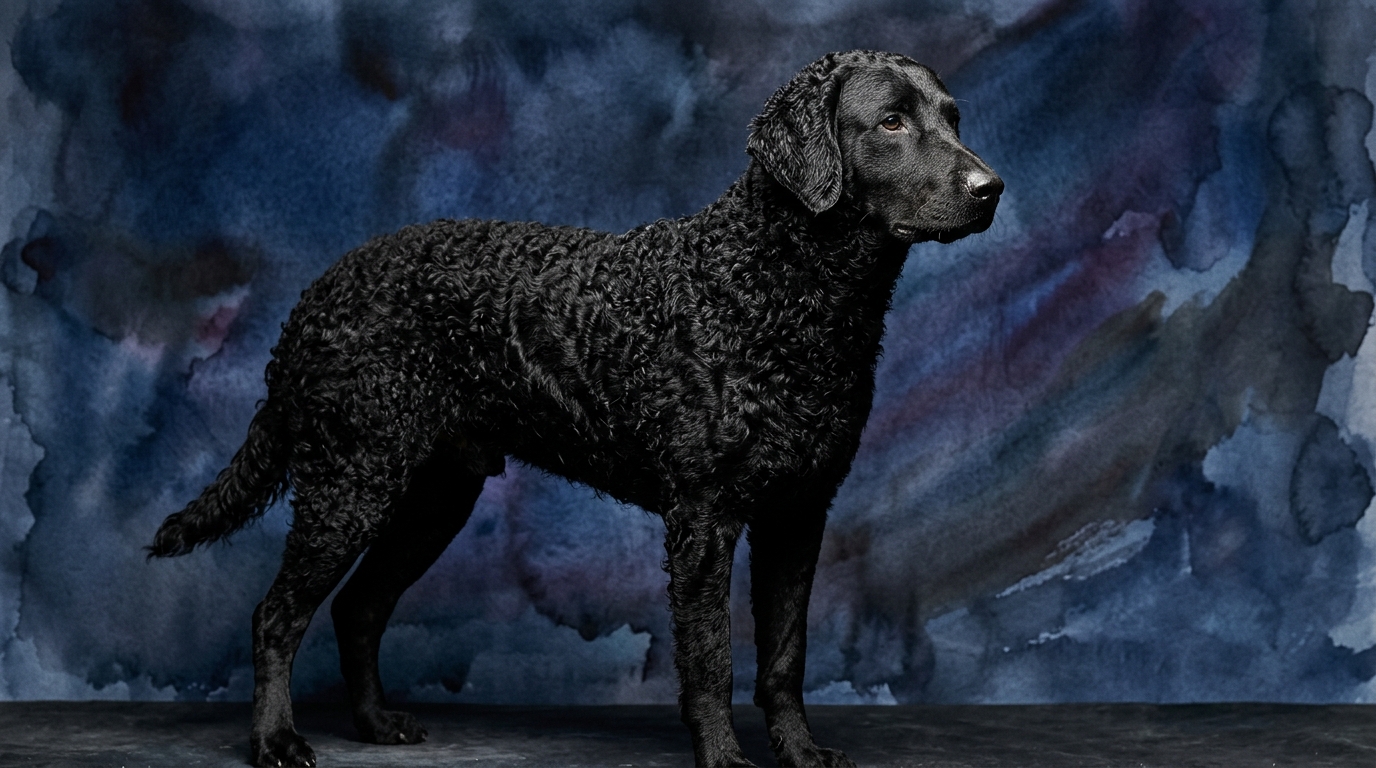
In contrast, the Curly-Coated Retriever, a Sporting breed, shares a Problem Solving score of 3/5, demonstrating practical resourcefulness in tasks and environmental navigation. Their Training Speed is also 3/5, indicating efficient learning when engaged and given clear direction, though their independent streak can require a firm, consistent approach. Their Social Intelligence is rated 3/5, meaning they form strong bonds and understand cues, but without the French Bulldog's nuanced emotional attunement. Their Instinctive Drive is a moderate 3/5, reflecting a natural inclination for activity, retrieving, and purposeful work. The Curly-Coated Retriever’s Memory, however, is a notable 4/5, signifying a strong capacity for retaining complex sequences, learned behaviors, and specific locations over extended periods.
Where the French Bulldog's Mind Shines
The French Bulldog's cognitive apex lies squarely in its profound social intelligence, scoring a perfect 5/5 in this dimension. This isn't merely about liking people; it's about an acute, almost intuitive ability to interpret human emotional states and social cues, allowing them to navigate complex social environments with remarkable finesse. A Frenchie can often sense a shift in an owner's mood, responding with a gentle nudge or a comforting presence, demonstrating a sophisticated understanding of interpersonal dynamics.
Their high social acumen allows them to seamlessly integrate into family life, often becoming adept at navigating household routines and even mediating perceived tensions through their charming, adaptable nature. They excel at picking up on subtle non-verbal communication, adjusting their own behavior to maintain harmony and affection within their human pack. While they may not be solving complex puzzles in the traditional sense, their capacity to 'solve' social situations and foster deep, reciprocal bonds is a unique form of cognitive brilliance, making them exceptional emotional support animals and cherished family members.
The Curly-Coated Retriever's Cognitive Edge
The Curly-Coated Retriever exhibits its cognitive strengths particularly through its superior memory and balanced instinctive drive, giving it a practical advantage in task-oriented scenarios. A memory score of 4/5 means this breed can retain intricate sequences of commands and recall specific locations or objects with impressive accuracy, which is invaluable for their traditional roles as retrievers in varied field conditions. This robust memory allows them to perform multi-step tasks reliably and consistently, even after a period of dormancy.
This memory, combined with a 3/5 in problem-solving, allows them to not just remember tasks but also to adapt their approach when faced with unforeseen obstacles during a retrieve or a training exercise. Their moderate instinctive drive, also 3/5, further fuels their desire for purposeful activity, ensuring they apply their cognitive faculties to engage with training and work, rather than purely for social reward. This blend of strong recall, practical problem-solving, and a drive to work makes them exceptionally capable in environments demanding sustained attention and application of learned skills over time, distinguishing them in competitive dog sports and working roles.
Training Dynamics: French Bulldog vs. Curly-Coated Retriever
Despite both breeds scoring 3/5 in training speed, the underlying mechanisms influencing their trainability are quite distinct, stemming from their unique cognitive profiles. The French Bulldog, with its high social intelligence, often understands the *intent* behind a command quickly; they are keen to please their human companions and respond well to positive reinforcement, especially when food or affectionate praise is involved. However, their lower instinctive drive means they might lack the sustained motivation for repetitive drills or highly complex, multi-step tasks; training sessions need to be kept short, engaging, and fun, focusing on building a positive association rather than demanding rigorous precision.
Conversely, the Curly-Coated Retriever's 3/5 training speed is complemented by its superior memory and moderate instinctive drive. They can grasp and retain complex commands and sequences, making them suitable for advanced obedience, agility, or field work, learning quickly when properly motivated. Their challenge lies in their potential for independence; if training isn't stimulating or consistent, a Curly might decide to interpret commands on their own terms or find their own entertainment, requiring a trainer who offers clear leadership and varied, engaging activities. Therefore, while both are moderately trainable, the French Bulldog thrives on social connection and positive reinforcement in shorter bursts, whereas the Curly-Coated Retriever excels with consistent, challenging, and mentally stimulating training that leverages their memory and working drive.
Matching Paws to Lifestyles: Active vs. Relaxed Owners
For individuals or families seeking a companion that integrates seamlessly into a more relaxed, home-centric lifestyle, the French Bulldog is an ideal cognitive match. Their low instinctive drive (2/5) means they don't possess an overwhelming urge for strenuous physical activity or independent exploration, making them content with moderate daily walks and indoor play. The Frenchie's exceptional social intelligence (5/5) means their primary need is for companionship and interaction, thriving on being part of daily routines and receiving affection, rather than needing complex tasks to feel fulfilled. They excel in environments where their cognitive energy is directed towards understanding and engaging with human family members, making them perfect for owners who prioritize close bonding and shared quiet moments.
In contrast, the Curly-Coated Retriever is cognitively predisposed to flourish with active owners who can meet their substantial needs for physical and mental engagement. Their moderate instinctive drive (3/5) and superior memory (4/5) mean they require more than just a walk around the block; they thrive on purposeful activities like retrieving games, advanced training, or participation in dog sports. Owners who enjoy hiking, running, or engaging in structured training sessions will find the Curly-Coated Retriever a willing and capable partner, whose cognitive abilities are best utilized when given a 'job' to do. Without sufficient mental and physical outlets, their problem-solving skills might be redirected towards undesirable behaviors, making them best suited for energetic households committed to consistent stimulation.
The Verdict
Choose the French Bulldog if you prioritize a deeply socially intelligent companion who thrives on close human interaction and fits a more relaxed home environment.
Opt for the Curly-Coated Retriever if you seek a capable, active partner who excels at learning complex tasks and requires consistent mental and physical challenges.
🧠 Find Your Pet's IQ Score
Our Pet IQ Lab assessment covers 25+ tests across 5 cognitive dimensions — personalized to your breed.
Take the Full IQ Test →Frequently Asked Questions
Are French Bulldogs difficult to train due to their lower drive?
French Bulldogs are not difficult to train for basic obedience; their social intelligence helps them understand cues and they respond well to positive, reward-based methods. Their lower instinctive drive simply means training benefits from being kept short, engaging, and focused on companionship rather than demanding complex, repetitive tasks. They thrive on fun and connection over rigorous drills.
How does the Curly-Coated Retriever's memory impact its behavior?
The Curly-Coated Retriever's strong memory (4/5) allows it to retain complex commands, routines, and experiences over time, which is excellent for advanced training and consistency. This also means they remember both good and bad experiences, so consistent, positive reinforcement is crucial to build good habits and trust, as they will recall past interactions.
Can a French Bulldog participate in dog sports?
While not typically suited for high-impact or endurance sports due to their physical structure and lower instinctive drive, French Bulldogs can excel in certain dog sports that emphasize social interaction and problem-solving at a lower physical intensity. Activities like rally obedience, trick training, or even some forms of scent work can be enjoyable and mentally stimulating for them, leveraging their social intelligence and moderate problem-solving skills.