
Side-by-Side Cognitive Profiles
The Cosmic Pet Pet IQ Lab evaluates canine intelligence across five key dimensions, offering a nuanced view beyond simple 'smart' labels. While both French Bulldogs and English Foxhounds share a 'Not Coren-ranked' status, meaning they aren't traditionally listed among the top working or obedience breeds, their individual cognitive strengths diverge significantly.
For the French Bulldog, a member of the Non-Sporting Group, their Problem Solving score of 3/5 indicates they can navigate moderate challenges, such as figuring out how to access a treat puzzle or manipulating objects to get what they want. Their Training Speed, also 3/5, suggests they learn new commands and routines at an average pace, requiring consistent and positive reinforcement. Where they truly shine is in Social Intelligence, earning a perfect 5/5, reflecting an exceptional ability to read human emotions, understand social cues, and integrate seamlessly into family dynamics. Their Instinctive Drive is a low 2/5, meaning they possess minimal prey drive or strong urges to hunt, preferring human company over independent exploration. Finally, their Memory is rated 3/5, allowing them to retain learned behaviors and remember routines adequately.
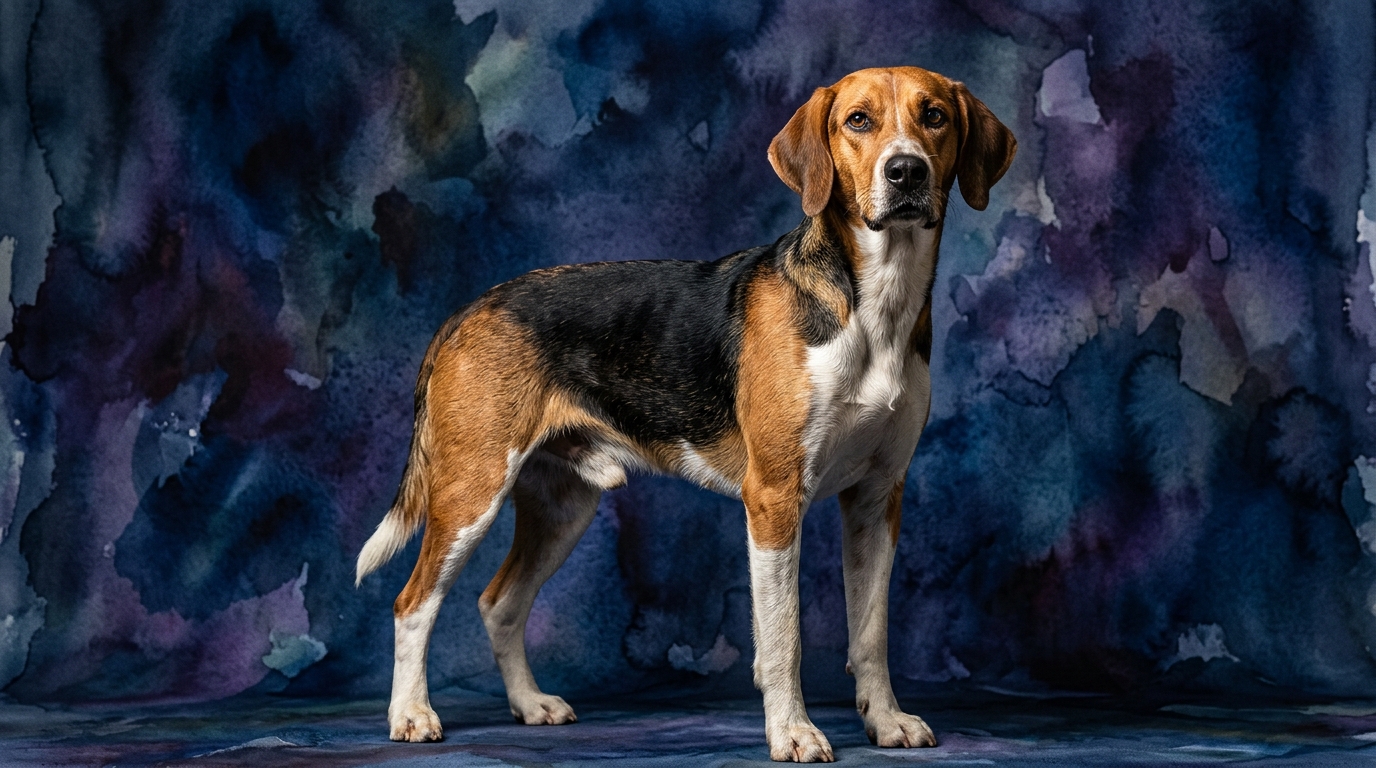
In contrast, the English Foxhound, a quintessential Hound Group member, presents a slightly different cognitive makeup. Their Problem Solving is rated 3/5, similar to the French Bulldog, but their application of this skill often leans towards scent-based challenges, such as tracking a trail rather than abstract puzzles. Their Training Speed also stands at 3/5, indicating they can learn, but their independent nature and strong focus on scent can sometimes make them less immediately compliant. Their Social Intelligence is 3/5, meaning they are capable of forming bonds and understanding basic social structures within a family or pack, but they may not possess the same emotional attunement as the French Bulldog. Their Instinctive Drive is a moderate 3/5, reflecting their heritage as a working scent hound with a natural inclination to follow intriguing smells. Their Memory, like the Frenchie, is 3/5, enabling them to recall scents, routes, and learned commands with moderate reliability.
Where the French Bulldog Cognitively Excels
The French Bulldog’s cognitive brilliance truly emerges in their social domain. Their 5/5 Social Intelligence score is not just a number; it represents a deep, almost intuitive understanding of human interaction. These dogs are adept at reading subtle shifts in tone, facial expressions, and body language, often anticipating their owner's moods or desires before a word is spoken. This makes them profoundly empathetic companions, quick to offer comfort or solicit attention when it's most welcome. They excel in environments where close human interaction and emotional reciprocity are paramount, effortlessly becoming the heart of a home.
Furthermore, their lower Instinctive Drive (2/5) contributes to their social prowess. Unlike breeds driven by strong hunting or herding instincts, French Bulldogs are generally less distracted by external stimuli like squirrels or distant scents. This allows them to maintain focus on their human companions, making them more present and engaged in social interactions. This cognitive trait means they are less likely to 'tune out' their family in favor of an enticing outdoor smell, ensuring their attention remains firmly on the domestic sphere and its inhabitants.
Where the English Foxhound Cognitively Excels
The English Foxhound's cognitive strengths are rooted in their ancestral purpose. Their moderate Instinctive Drive (3/5), specifically their exceptional olfactory capabilities, means they are masters of scent-based problem-solving. While their general Problem Solving is 3/5, within the context of tracking, this manifests as a sophisticated ability to follow complex scent trails, differentiate between various odors, and navigate challenging terrain using only their nose. This isn't just a physical act; it's a cognitive feat requiring sustained focus, discrimination, and memory for scent patterns.
Their moderate Social Intelligence (3/5) also plays a crucial role in their traditional work. While not as emotionally focused on humans as the French Bulldog, Foxhounds were bred to work cooperatively in a pack and respond to handlers from a distance. This translates into a capacity for understanding group dynamics and following commands within a structured environment, even if their independent nature means they might occasionally prioritize an intriguing scent over immediate obedience. Their memory, at 3/5, is particularly effective for recalling scent trails and familiar routes, a critical aspect of their working intelligence.
Training: Companionship vs. Independence
When it comes to ease of training, the French Bulldog generally presents a more straightforward experience for the average owner, despite both breeds sharing a 3/5 Training Speed. The key difference lies in their social intelligence and instinctive drive. A French Bulldog's 5/5 Social Intelligence makes them inherently more motivated to please their human companions. They thrive on positive reinforcement, praise, and the approval of their family, making them eager participants in training sessions. Their lower instinctive drive also means fewer distractions; they are less likely to get sidetracked by a captivating smell or a passing bird during a 'sit' command, allowing for more focused learning.
The English Foxhound, while capable of learning at a 3/5 Training Speed, often requires a more patient and strategic approach. Their moderate Instinctive Drive (3/5) means their nose can be a powerful distraction. A Foxhound might be perfectly capable of understanding a command, but if a compelling scent wafts by, their natural inclination to investigate can override their desire for human approval. This independence, coupled with a 3/5 Social Intelligence that makes them less intensely focused on human emotional feedback, means training often requires higher-value rewards, consistent repetition, and an understanding that their primary motivation might not always be 'to please.' Owners need to work *with* their hound's instincts, perhaps incorporating scent work into training to keep them engaged, rather than trying to suppress them.
Lifestyle Match: Relaxed Homebody vs. Active Explorer
The cognitive profiles of these two breeds offer clear guidance on which might suit different owner lifestyles. The French Bulldog, with its exceptional 5/5 Social Intelligence and low 2/5 Instinctive Drive, is an ideal fit for relaxed, home-centric owners. These dogs thrive on being an integral part of daily family life, content with moderate indoor play and shorter, leisurely walks. Their cognitive makeup means they find immense satisfaction in companionship and emotional connection, making them superb choices for individuals or families seeking a devoted, emotionally perceptive canine who doesn't demand extensive outdoor adventures or mentally strenuous tasks.
Conversely, the English Foxhound, with its moderate 3/5 Instinctive Drive and the cognitive capacity for sustained scent-based problem-solving, is better suited for active owners. These dogs need more than just a short stroll; they flourish with regular, extended outings where they can engage their powerful noses and expend physical energy. Owners who enjoy long hikes, jogging, or participate in canine activities like tracking or scent work will find a fulfilling partner in a Foxhound. Their independent streak and natural curiosity require an owner who can provide consistent mental and physical stimulation, ensuring their cognitive and instinctual needs are met beyond just basic care.
The Verdict
Choose the French Bulldog if you seek a deeply empathetic, socially attuned companion who thrives on close emotional connection and a relaxed home environment.
Opt for the English Foxhound if you are an active owner prepared to engage a dog's independent spirit and provide outlets for their strong scenting instincts through regular outdoor exploration.
🧠 Find Your Pet's IQ Score
Our Pet IQ Lab assessment covers 25+ tests across 5 cognitive dimensions — personalized to your breed.
Take the Full IQ Test →Frequently Asked Questions
Are French Bulldogs good at learning tricks?
Yes, French Bulldogs are capable of learning a variety of tricks, especially those involving human interaction. Their 3/5 training speed and high social intelligence mean they respond well to positive reinforcement and enjoy the attention that comes with performing.
Do English Foxhounds need a lot of mental stimulation?
English Foxhounds definitely benefit from mental stimulation, particularly activities that engage their powerful sense of smell. While their problem-solving is 3/5, tasks like scent games, puzzle toys, and exploring new environments where they can track odors are highly enriching for them.
Which breed is more prone to separation anxiety?
Given their 5/5 Social Intelligence and deep reliance on human companionship, French Bulldogs can be more prone to separation anxiety if not properly conditioned. English Foxhounds, with their more independent nature and moderate social intelligence, might tolerate solitude better, though no dog thrives on prolonged isolation.