
Side-by-Side Cognitive Profiles
The French Bulldog, a member of the Non-Sporting group, presents a unique cognitive blueprint. Its Problem Solving is rated at 3/5, indicating a moderate ability to navigate novel situations and figure out solutions independently. Training Speed also sits at 3/5, suggesting they grasp new commands and routines at an average pace. Where the French Bulldog truly shines is in Social Intelligence, scoring an impressive 5/5, reflecting a profound capacity to understand human emotions, cues, and social structures. Their Instinctive Drive is lower at 2/5, meaning they possess less inherent inclination for tasks like hunting or guarding, while their Memory is a solid 3/5, allowing them to retain learned information consistently.
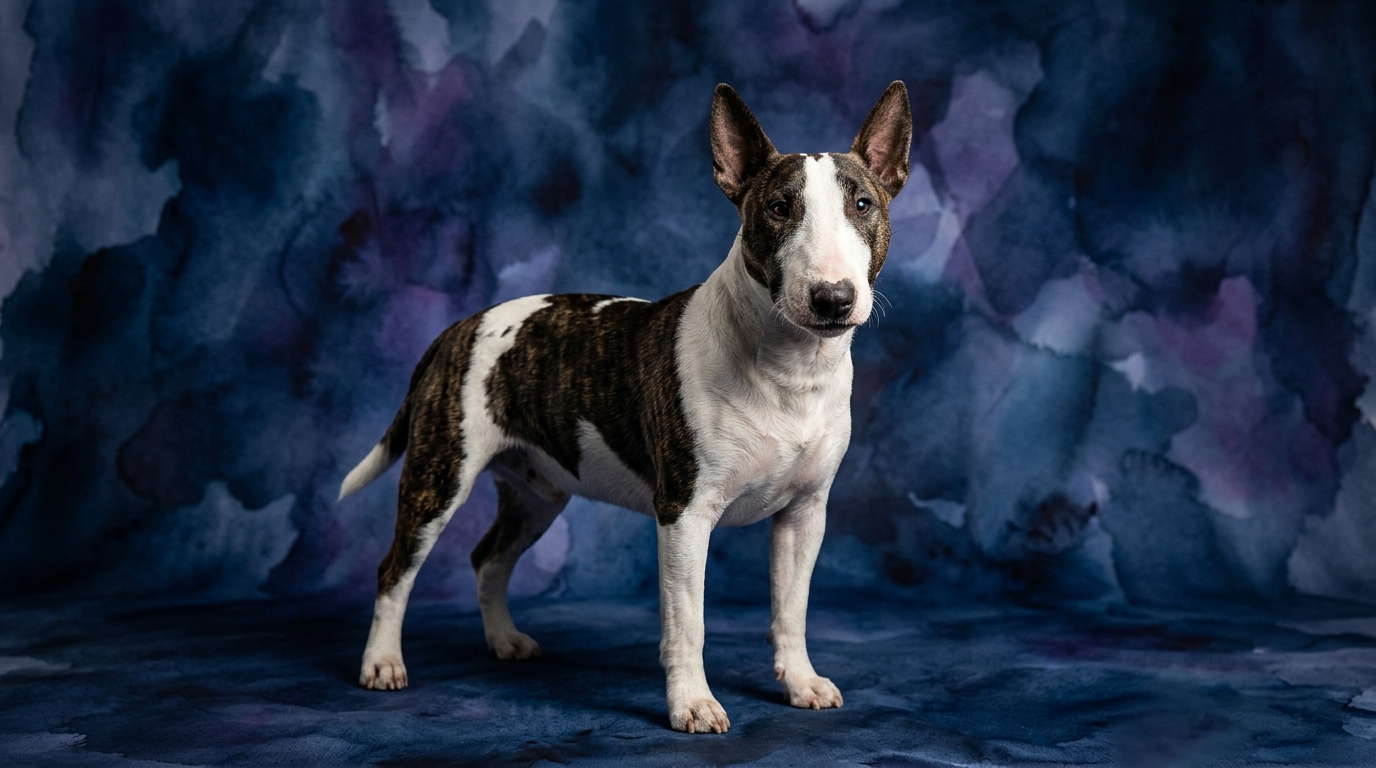
In contrast, the Miniature Bull Terrier, a spirited member of the Terrier group, offers a more balanced cognitive profile across several dimensions. Its Problem Solving is also rated 3/5, mirroring the French Bulldog's capacity for independent thought. Similarly, their Training Speed is 3/5, indicating a comparable pace in learning new commands. The Miniature Bull Terrier’s Social Intelligence is rated 3/5, suggesting a good, but not exceptional, understanding of human social dynamics. Their Instinctive Drive, at 3/5, is slightly higher than the French Bulldog's, hinting at a more pronounced innate drive for activity and engagement. Their Memory, like the French Bulldog's, is rated 3/5, providing a reliable capacity for recall.
Where the French Bulldog Excels Cognitively
The French Bulldog's standout cognitive strength is undeniably its Social Intelligence, scoring a perfect 5/5. This isn't just about being friendly; it signifies a deep, intuitive understanding of human emotions, intentions, and social contexts. A French Bulldog often seems to 'read' its owner's mood, offering comfort or companionship precisely when needed, or understanding subtle non-verbal cues that might be missed by other breeds. This high social acumen makes them exceptionally attuned companions, often forming very strong, almost empathetic, bonds with their families. They thrive on interaction and can skillfully manipulate social situations to their advantage, often using their charm to get what they want.
Furthermore, their lower Instinctive Drive (2/5) means they are generally less compelled by primal urges like chasing small animals or constant patrolling. This translates into a more relaxed demeanor in many domestic settings, requiring less intense management of predatory instincts or territorial behaviors compared to breeds with higher drives. While they still enjoy play, their motivation is more often rooted in social engagement rather than an innate drive to 'work' or 'hunt'.
Where the Miniature Bull Terrier Offers Different Strengths
While sharing a similar Problem Solving score (3/5) with the French Bulldog, the Miniature Bull Terrier often applies this cognitive skill with a different motivation. Their slightly higher Instinctive Drive (3/5) means they approach challenges with a bit more vigor and independent spirit. They might be more inclined to creatively overcome obstacles to reach a desired object or engage in games that simulate hunting behaviors, such as retrieving. This drive, combined with their problem-solving ability, can make them persistent and inventive when pursuing their interests, whether it’s figuring out how to open a cabinet or outsmarting a puzzle toy.
The Miniature Bull Terrier's balanced cognitive profile, with Problem Solving, Training Speed, Social Intelligence, Instinctive Drive, and Memory all landing around the 3/5 mark, indicates a well-rounded and adaptable intellect. While not excelling dramatically in one specific area like the French Bulldog's social intelligence, this balance suggests a dog capable of engaging with a variety of tasks and social situations without extreme predispositions. Their moderate social intelligence means they are affectionate and capable of bonding, but perhaps with a touch more independence and less emotional dependency than a French Bulldog.
Training Aptitude: Which is Easier?
When comparing ease of training, both breeds have a Training Speed of 3/5, suggesting they learn at an average pace. However, real-world training success isn't solely about how quickly a dog grasps a command; it's also about motivation and willingness to comply. Here, the French Bulldog's superior Social Intelligence (5/5) becomes a significant advantage. French Bulldogs are deeply motivated by pleasing their human companions and by the social rewards of interaction. They are generally eager to cooperate because it strengthens their bond and earns them affectionate attention, making them highly responsive to positive reinforcement and social praise. Their lower Instinctive Drive also means fewer distractions from inherent urges, allowing them to focus more readily on the task at hand.
The Miniature Bull Terrier, with its 3/5 Social Intelligence and 3/5 Instinctive Drive, can present a different training dynamic. While capable of learning at the same speed, their terrier heritage often imbues them with a more independent and sometimes stubborn streak. They might question the necessity of a command or be more easily distracted by an interesting scent or movement due to their slightly higher drive. Training a Miniature Bull Terrier often requires a more consistent, firm-but-fair approach, leveraging their problem-solving skills to make training engaging and rewarding, rather than relying solely on their desire to please. Patience and creativity are key to overcoming their potential for independent thinking.
Suitability for Active vs. Relaxed Owners
The cognitive profiles of these two breeds offer clear guidance for different owner lifestyles. The French Bulldog, with its high Social Intelligence (5/5) and lower Instinctive Drive (2/5), is an excellent match for more relaxed owners or those seeking a devoted, low-key companion. Their primary need is for social interaction and companionship rather than strenuous physical activity or complex mental tasks designed to satisfy strong innate drives. They are content with moderate walks and ample couch time, thriving on being part of the family's daily routines and close proximity to their people. Their cognitive makeup makes them ideal for apartment living and owners who prioritize affectionate, emotionally attuned companionship.
Conversely, the Miniature Bull Terrier, with its balanced scores, including a 3/5 Instinctive Drive and 3/5 Problem Solving, typically suits more active and engaged owners. While not requiring extreme athleticism, they benefit significantly from regular physical exercise and mental stimulation that taps into their drive and cleverness. Owners who enjoy interactive games, structured training, or even dog sports will find the Miniature Bull Terrier a willing and capable partner. Their independence and moderate social intelligence mean they can handle slightly more alone time than a French Bulldog, but they still require consistent engagement to prevent boredom and channel their energy constructively. They are best suited for owners who appreciate a dog with a bit more spunk and an independent streak.
The Verdict: When to Choose Each
The Verdict
Choose the French Bulldog if you prioritize a deeply empathetic, highly social companion who thrives on close human interaction and has a generally relaxed demeanor. Their exceptional social intelligence makes them ideal for owners seeking a devoted, emotionally attuned dog.
Opt for the Miniature Bull Terrier if you appreciate a spirited, clever, and more independent companion who benefits from consistent engagement and structured activity. Their balanced cognitive profile suits owners ready to provide both physical exercise and mental challenges.
🧠 Find Your Pet's IQ Score
Our Pet IQ Lab assessment covers 25+ tests across 5 cognitive dimensions — personalized to your breed.
Take the Full IQ Test →Frequently Asked Questions
Are French Bulldogs good at learning tricks?
With a Training Speed of 3/5 and high Social Intelligence (5/5), French Bulldogs are quite capable of learning tricks. They are often motivated by the attention and praise they receive from their owners, making the learning process a rewarding social activity for them.
Do Miniature Bull Terriers have a strong prey drive?
Miniature Bull Terriers have an Instinctive Drive of 3/5, which is moderate. While not as intense as some hunting breeds, they can exhibit a natural inclination to chase small animals or objects, a common trait in terriers. Consistent training and secure environments are important.
Which breed is more adaptable to new environments?
Both breeds have a Memory and Problem Solving score of 3/5, suggesting they adapt reasonably well to new situations. However, the French Bulldog's high social intelligence might make them adjust more smoothly if they are with their familiar human companions, while the Miniature Bull Terrier's independence might give them a slight edge in exploring novel surroundings.