
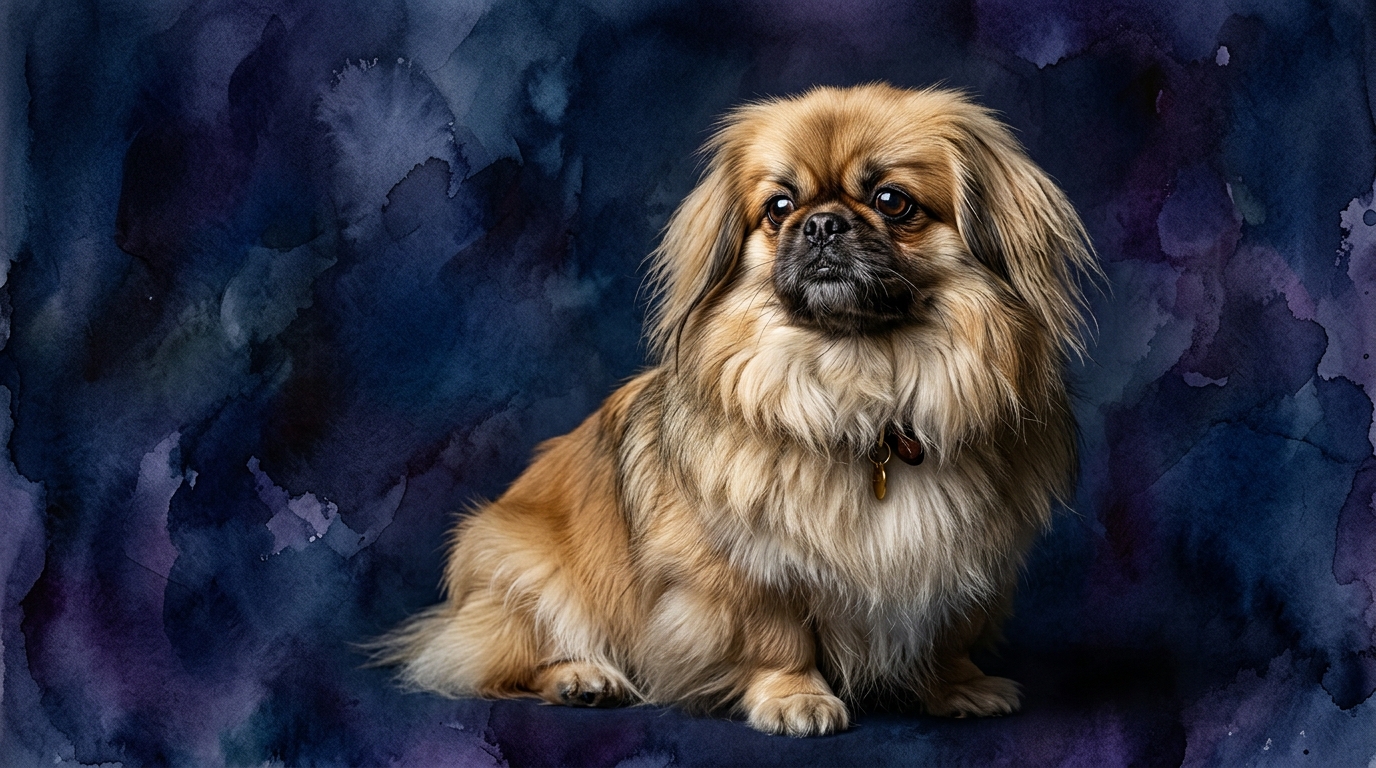
Side-by-Side IQ Profile: French Bulldog vs. Pekingese
At The Cosmic Pet Pet IQ Lab, we evaluate canine cognition across five key dimensions. The French Bulldog, a Non-Sporting breed, exhibits a balanced profile: Problem Solving (3/5), indicating an ability to navigate familiar routines and basic challenges; Training Speed (3/5), suggesting they learn at a steady pace with consistent guidance; and Memory (3/5), allowing them to retain commands and experiences adequately. Their stand-out trait is Social Intelligence (5/5), demonstrating an exceptional capacity to understand human emotions and social cues, fostering profound connections. Instinctive Drive (2/5) is modest, primarily focused on companionship rather than traditional work.
The Pekingese, a Toy breed ranked #77 by Coren, presents a similar baseline in several areas. They also score 3/5 for Problem Solving, Training Speed, and Memory, reflecting a steady learning aptitude and recall. Their Social Intelligence (3/5) is good, indicating strong bonds with their inner circle but often a more reserved demeanor with strangers. Uniquely, their Instinctive Drive (3/5) is slightly higher than the French Bulldog's, manifesting as a confident, watchful nature rooted in their historical role.
Where the French Bulldog Wins Cognitively
The French Bulldog's undeniable cognitive strength lies in their remarkable Social Intelligence, scoring a perfect 5/5 compared to the Pekingese's 3/5. This isn't merely about friendliness; it signifies an exceptional ability to read and respond to human emotions, subtle vocal cues, and even unspoken moods within a household. A Frenchie often anticipates their owner's needs and adapts their behavior to fit social contexts, making them incredibly intuitive companions.
This profound empathy allows them to integrate seamlessly into diverse family dynamics, understanding their role and fostering deep, reciprocal bonds with every member. Their social acumen means they are often more adaptable to new situations and people, driven by a desire for connection rather than a reserved approach.
Where the Pekingese Wins Cognitively
The Pekingese, while more reserved socially, exhibits a distinct cognitive advantage in their Instinctive Drive, scoring 3/5 against the French Bulldog's 2/5. This isn't about chasing balls or performing complex tasks, but rather a deep-seated, self-assured awareness of their environment and a subtle territorial instinct. Stemming from their regal history as palace guardians, Pekingese possess a confident watchfulness, often being the first to alert their household to unusual sounds or visitors.
This drive contributes to their dignified independence and a clear sense of their boundaries and personal space. Their cognitive profile also includes a Coren rank of #77, placing them within a recognized spectrum of working intelligence, highlighting a specific aptitude for obedience and problem-solving that the unranked French Bulldog doesn't share.
Which is Easier to Train and Why
Both breeds share a Training Speed rating of 3/5, indicating they learn at a steady pace rather than being rapid-fire learners, but their motivations differ. The French Bulldog's exceptional Social Intelligence makes them generally more amenable to training. They thrive on positive human interaction, praise, and strengthening their bond, often eager to please their beloved people. Their desire for companionship can be effectively leveraged through consistent, reward-based methods, despite an independent streak.
Conversely, the Pekingese's independence and discerning social nature mean their compliance often hinges on their own perceived benefit. Training a Pekingese requires patience and an understanding of their proud character. They learn effectively but may choose to comply only when it aligns with their interests, necessitating a handler who respects their individuality. Thus, while both require consistency, the French Bulldog's social drive typically makes them appear more cooperative in training scenarios.
Suitability for Active vs. Relaxed Owners
Choosing between these breeds also depends on an owner's lifestyle. The French Bulldog, with its high social intelligence and balanced cognitive profile, thrives with engaged owners who provide consistent social interaction and moderate mental stimulation. While not requiring extensive physical exercise, they appreciate being an active participant in daily family life, whether through short walks, interactive games, or simply being present during household activities. They are ideal for owners who seek a deeply integrated companion eager for shared experiences and constant connection.
The Pekingese, with its slightly higher instinctive drive and more independent social intelligence, is well-suited for owners who appreciate a dignified, less demanding companion. They are content with less intense physical activity and often enjoy observing their surroundings from a comfortable spot. They are perfect for relaxed owners who value a dog with a strong, self-possessed personality that offers profound companionship without requiring constant, high-energy engagement, content with quiet contemplation alongside purposeful strolls.
The Verdict
Opt for a French Bulldog if you seek a highly empathetic companion deeply attuned to human emotions and family dynamics, thriving on constant social connection and interactive engagement.
Select a Pekingese if you appreciate a dignified, independent companion with a subtle guarding instinct, comfortable with a more relaxed pace and valuing a bond built on mutual respect for their distinct personality.
🧠 Find Your Pet's IQ Score
Our Pet IQ Lab assessment covers 25+ tests across 5 cognitive dimensions — personalized to your breed.
Take the Full IQ Test →Frequently Asked Questions
Are French Bulldogs good with children?
French Bulldogs, with their high social intelligence, often form strong bonds with children when properly socialized and supervised. Their empathetic nature helps them adapt to the family's youngest members, making them generally patient and playful companions.
Do Pekingese bark a lot?
Pekingese can be vocal, especially given their instinctive drive to alert. While not excessive barkers in all situations, they are prone to barking at perceived threats or strangers, fulfilling their historical role as watchful companions. Consistent training can help manage this trait.
What kind of mental stimulation do these breeds need?
Both breeds benefit from mental engagement. French Bulldogs thrive on interactive games, training sessions that leverage their social drive, and puzzle toys. Pekingese appreciate scent work, short, engaging training sessions, and opportunities to observe their environment, satisfying their natural curiosity without requiring high-energy output.