
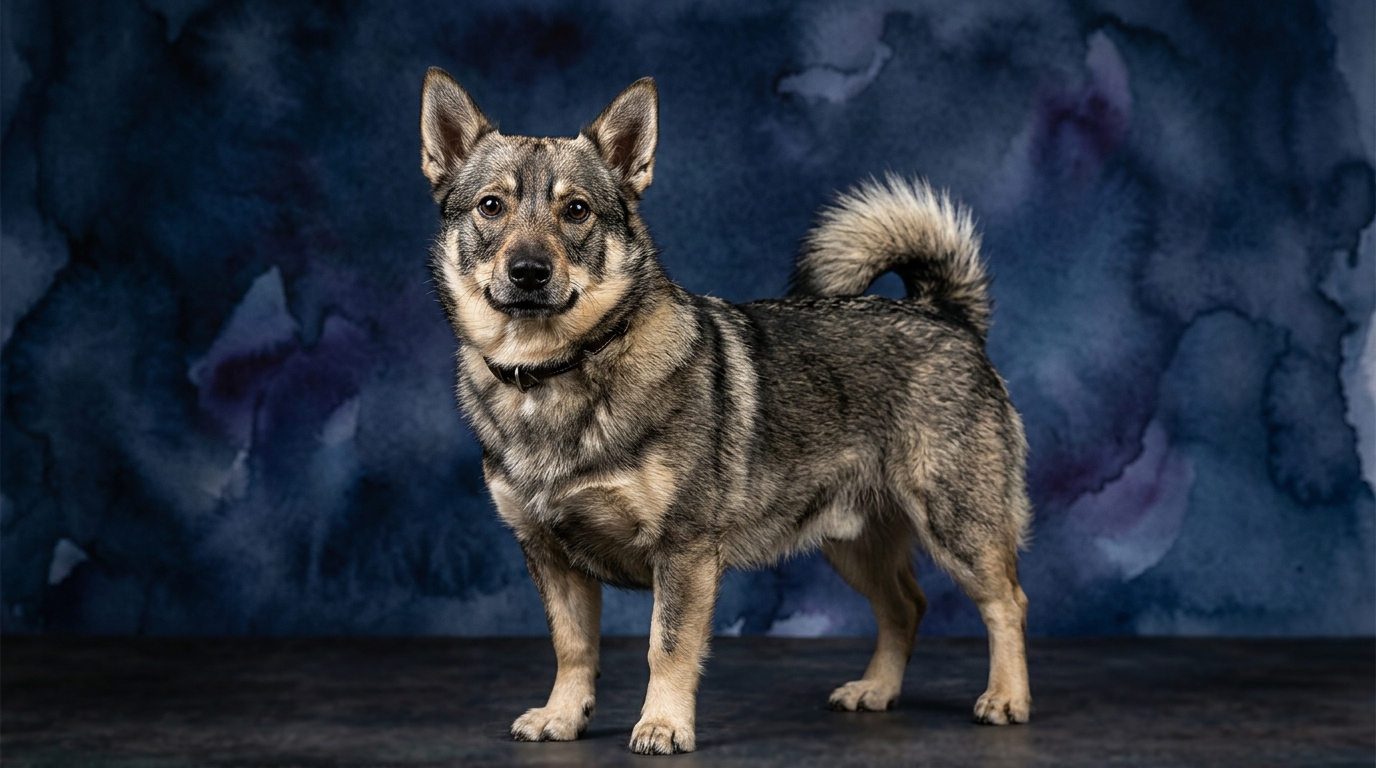
Side-by-Side IQ Profile: French Bulldog vs. Swedish Vallhund
The Cosmic Pet Pet IQ Lab evaluates canine cognition across five distinct dimensions, offering a detailed glimpse into how different breeds process information and interact with their environment. Let's break down the profiles for our two contenders:
For the **French Bulldog**:
Problem Solving (3/5): These compact companions demonstrate a moderate capacity for navigating novel situations, often figuring out solutions to immediate challenges like getting to a desired toy under furniture or subtly communicating a need. They are pragmatic rather than intricate problem-solvers, typically leveraging their environment or human interaction to achieve their goals.
Training Speed (3/5): French Bulldogs absorb new commands and routines at a steady, consistent pace. They generally require clear, positive reinforcement and patience to solidify learning, responding well to reward-based methods that make training a positive, bonding experience.
Social Intelligence (5/5): This is where the French Bulldog truly shines, possessing an exceptional ability to read human emotions, understand subtle social cues, and adapt their behavior to fit various social contexts. They are deeply attuned to their family's moods, often offering comfort or mirroring the emotional state of their human companions, making them incredibly empathetic.
Instinctive Drive (2/5): Their innate drives for independent tasks like hunting, herding, or guarding are relatively low. This means they are less inclined towards self-initiated "work" or pursuing primal instincts, preferring to remain close to their human companions rather than venturing off on a mission.
Memory (3/5): French Bulldogs exhibit a moderate memory for learned commands, established routines, and past experiences. With regular reinforcement and consistent application, they retain information well, helping them navigate their daily lives with predictability.
Now, for the **Swedish Vallhund**:
Problem Solving (3/5): Swedish Vallhunds show a moderate aptitude for tackling mental puzzles and practical challenges. They often employ observational skills and a methodical approach to figure things out, whether it's opening a gate or navigating an agility course. Their solutions are often practical and efficient.
Training Speed (3/5): Similar to the French Bulldog, Vallhunds learn new tasks and commands at a consistent, reliable pace. They benefit from clear, engaging training methods that provide purpose, and respond well to handlers who can channel their focus effectively.
Social Intelligence (3/5): While capable of forming strong bonds and understanding basic human interactions, their social attunement is more direct and less nuanced than the French Bulldog's. They understand communication relevant to tasks or pack structure, but may not interpret subtle emotional shifts with the same depth.
Instinctive Drive (3/5): Rooted in their herding heritage, Vallhunds possess a moderate instinctive drive. This often manifests as a desire to "gather" or organize, an alertness to their environment, and a general inclination towards purposeful activity, even if it's just supervising the household.
Memory (3/5): Swedish Vallhunds demonstrate a moderate capacity for remembering routines, commands, and past experiences. This aids their ability to perform sequential tasks and maintain consistent behavior once a pattern is established.
Where the French Bulldog Wins Cognitively
The French Bulldog's distinct cognitive advantage lies squarely in their unparalleled social intelligence, scoring a perfect 5 out of 5. This isn't merely about being friendly; it reflects a profound capacity to interpret human emotional states, subtle body language, and even vocal inflections. A Frenchie can often anticipate their owner's needs or moods, adjusting their own demeanor accordingly – offering comfort during distress or initiating play during joyful moments.
This high social attunement means they excel in environments where understanding complex human-dog social dynamics is paramount, often becoming incredibly empathetic and intuitive companions. Their problem-solving skills, while moderate, are frequently channeled through this social lens, as they learn to "solve" situations by engaging with and eliciting responses from their human family, making them masters of social negotiation.
Where the Swedish Vallhund Wins Cognitively
The Swedish Vallhund's cognitive strengths are anchored in their more pronounced instinctive drive, rated at 3 out of 5, a clear step up from the French Bulldog's 2/5. This drive isn't just about restlessness; it manifests as an innate desire for purpose and engagement, often stemming from their ancestral herding role. This means Vallhunds are more likely to initiate their own "work," whether it's playfully rounding up family members, investigating new scents with focus, or engaging with puzzle toys with sustained determination.
While their problem-solving and training speed scores are equal to the Frenchie's, this higher drive often provides a compelling internal motivation to apply those cognitive skills to practical tasks and environmental exploration. This intrinsic motivation makes them particularly adept at activities requiring sustained focus and a sense of "job satisfaction," driving them to interact with their world in a more active, investigative manner.
Which is Easier to Train and Why
Determining which breed is "easier" to train requires a nuanced look beyond their identical 3/5 training speed scores, considering how their other cognitive traits influence the training experience. The French Bulldog, with their exceptional 5/5 social intelligence, often presents as highly biddable and eager to please. They are keenly aware of their owner's approval and disapproval, making them exceptionally responsive to positive reinforcement and social cues. This deep attunement can make the *process* of training feel smoother and more rewarding for the owner, as the Frenchie is often motivated by the desire to maintain harmony and connection.
Their lower instinctive drive (2/5) also means fewer distractions from ingrained primal urges during structured sessions, allowing them to focus more intently on the human-led task. They excel when training is a social activity, a shared endeavor with their beloved person.
Conversely, the Swedish Vallhund, despite the same 3/5 training speed, brings a moderate 3/5 instinctive drive to the table. This drive can be a double-edged sword: it means they often have a strong desire to engage and perform tasks, but if not channeled properly, can lead to independent thinking or a focus on environmental stimuli over handler commands. While they learn commands efficiently, their motivation might stem more from the satisfaction of completing a task or the inherent fun of an activity, rather than solely from human approval.
An owner might find the Vallhund requires more creative and task-oriented training approaches to keep their focus, leveraging their innate drive to work. Therefore, while both learn at a similar pace, the French Bulldog's social motivation might make them *feel* easier to train for owners seeking a highly compliant and socially attuned partner, whereas the Vallhund might require an owner who enjoys shaping and directing a more independent, task-driven learner.
Which Suits Active Owners vs. Relaxed Owners
The cognitive profiles of these two breeds offer clear indicators for matching them with owner lifestyles. The French Bulldog, with their moderate problem-solving (3/5), training speed (3/5), and memory (3/5), coupled with their remarkably high social intelligence (5/5) and low instinctive drive (2/5), is an ideal fit for more relaxed owners. Their primary cognitive engagement comes from social interaction and understanding their human family.
They thrive on companionship, cuddles, and being an integral part of daily household life rather than demanding rigorous physical or mental tasks. While they enjoy short bursts of play and walks, their cognitive needs are predominantly met through social connection and comfortable routines, making them excellent companions for those seeking a devoted, less demanding canine presence that prioritizes emotional bonding.
The Swedish Vallhund, on the other hand, with their balanced problem-solving (3/5), training speed (3/5), and memory (3/5), alongside a moderate social intelligence (3/5) and instinctive drive (3/5), is better suited for active owners. Their herding heritage contributes to a cognitive landscape that appreciates purpose and engagement. They benefit significantly from regular mental stimulation and physical activity that allows them to channel their instinctive drives, such as agility, obedience, or structured play that mimics herding behaviors.
Owners who enjoy training for sports, exploring new environments, or engaging in consistent, stimulating activities will find the Vallhund's cognitive makeup aligns perfectly with a more dynamic lifestyle, providing outlets for their innate desire to work and explore. They are partners for adventure and mental challenges, not just couch companions.
The Verdict
Opt for a French Bulldog if your priority is a deeply empathetic, socially astute companion who thrives on close connection and offers profound emotional support in a more relaxed home environment.
Select a Swedish Vallhund if you seek an engaged, task-oriented partner who enjoys mental challenges and physical activity, and you are prepared to channel their moderate instinctive drives into purposeful endeavors.
🧠 Find Your Pet's IQ Score
Our Pet IQ Lab assessment covers 25+ tests across 5 cognitive dimensions — personalized to your breed.
Take the Full IQ Test →Frequently Asked Questions
Are French Bulldogs good at learning tricks?
Yes, French Bulldogs, with their 3/5 training speed and strong social intelligence, are quite capable of learning a variety of tricks, especially when motivated by positive reinforcement and the desire to please their human companions. Their social nature makes them eager participants in interactive learning sessions.
Do Swedish Vallhunds require a lot of mental stimulation?
Swedish Vallhunds, owing to their 3/5 instinctive drive and herding background, do benefit significantly from consistent mental stimulation. Engaging them in puzzle toys, training exercises, or dog sports helps satisfy their innate desire for purpose and keeps their problem-solving skills sharp.
How do their memories compare for daily routines?
Both French Bulldogs and Swedish Vallhunds score 3/5 in memory, indicating a moderate ability to retain daily routines and learned commands. Consistent schedules and regular reinforcement will help both breeds maintain a strong recall of their daily patterns and training.