
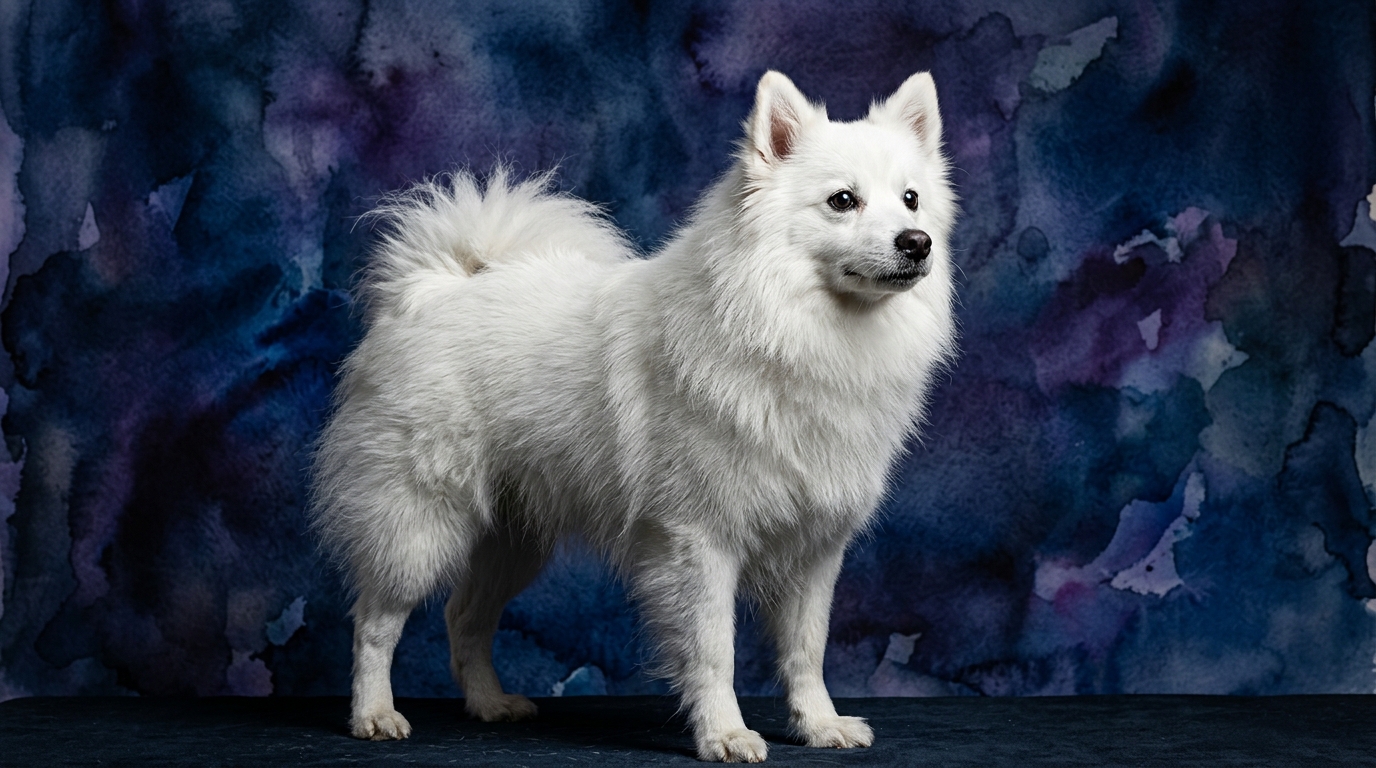
Side-by-Side Cognitive Profiles: GSP vs. American Eskimo Dog
To understand these breeds, we examine their cognitive dimensions through The Cosmic Pet Pet IQ Lab framework, offering a detailed look at their inherent intellectual capabilities.
**German Shorthaired Pointer (GSP) - Coren Rank #17:** This breed exhibits a cognitive profile optimized for demanding fieldwork and cooperative partnership. Their **Problem Solving (5/5)** is exceptional, enabling them to strategically navigate complex hunting scenarios, such as tracking elusive game through varied terrain or devising methods to retrieve from challenging cover. This involves adapting tactics and learning from experience to overcome obstacles. Their **Training Speed (4/5)** reflects their quick uptake of new commands and behaviors, often requiring fewer repetitions for complex tasks. GSPs are highly responsive to advanced obedience and specialized field training. **Social Intelligence (4/5)** means they are keenly attuned to human cues, forming strong, responsive bonds that facilitate complex communication during working activities. Their **Instinctive Drive (5/5)** is profound, rooted in centuries of selective breeding for hunting; this isn't just energy, but a directed, persistent motivation to scent, point, and retrieve. Finally, their **Memory (4/5)** is robust, allowing them to retain complex routes, specific commands, and the locations of objects with precision, crucial for consistent performance in demanding roles.
**American Eskimo Dog (AED) - Not Coren-Ranked:** The American Eskimo Dog presents a balanced cognitive profile, well-suited for companionship rather than intense working roles. Their **Problem Solving (3/5)** is moderate; they can handle basic puzzles or familiar obstacles, often relying on learned routines or trial-and-error rather than complex strategic planning. This is generally sufficient for household challenges. Their **Training Speed (3/5)** indicates they learn at a steady pace, mastering basic obedience with consistent positive reinforcement, though they may require more repetitions for advanced tasks. **Social Intelligence (3/5)** allows them to form strong bonds with their families, understanding household dynamics and being responsive to familiar human cues, making them excellent companions. Their **Instinctive Drive (3/5)** is moderate and generalized; while they retain some primitive instincts, it's not the specialized, intense drive of a hunting dog. Their motivation often centers more on social interaction and play. Their **Memory (3/5)** is functional, reliably recalling familiar commands, routines, and the layout of their home environment, perfectly adequate for a companion animal.
Where the German Shorthaired Pointer Excels Cognitively
The German Shorthaired Pointer's cognitive architecture is a testament to its specialized breeding, consistently demonstrating superior capabilities in domains demanding focused application and physical prowess. Their 5/5 problem-solving capability manifests in an exceptional ability to analyze and adapt to dynamic field conditions, such as determining the most efficient path through dense undergrowth to retrieve game or anticipating a bird's flight pattern. This is a sophisticated form of applied cognition, where they rapidly process environmental cues and strategize effectively.
Furthermore, their superior instinctive drive, also rated 5/5, means they possess an unparalleled internal motivation to perform tasks related to hunting. This enduring focus and stamina are inherent, translating into an unwavering persistence during training and work. This drive isn't merely about energy; it's a deep-seated desire to engage with specific environmental stimuli. Their 4/5 memory further solidifies their cognitive advantage, allowing them to retain complex sequences of commands and recall specific locations with precision, critical for executing elaborate hunting patterns or competitive obedience routines that would overwhelm a dog with lesser recall capacity.
Where the American Eskimo Dog Shines Cognitively
While the American Eskimo Dog doesn't boast the intense working scores of the GSP, their cognitive profile offers distinct advantages for different lifestyles. Their moderate instinctive drive (3/5) can be a significant benefit for owners seeking a companion less consumed by a singular, powerful urge to hunt or herd. This balanced drive means they are generally less prone to destructive behaviors stemming from unfulfilled working instincts, and their exercise needs, while present, are less demanding of a specific, intense outlet.
Their 3/5 social intelligence, while not geared towards complex cooperative hunting, is perfectly suited for a fulfilling role as a family companion. They are attentive to their human pack, responsive to social cues within a domestic setting, and content with interactive play and affection without the constant need for a 'job.' This makes them highly adaptable to various living situations, focusing their moderate problem-solving (3/5) on navigating household routines or engaging with puzzle toys, rather than requiring complex, mentally exhausting tasks to remain content. Their balanced cognitive profile allows for a more relaxed integration into family life, where their primary 'work' is companionship and social interaction, which they excel at without requiring specialized training or constant stimulation to prevent boredom.
Training Dynamics: Which Breed is Easier?
Determining which breed is 'easier' to train hinges on the owner's goals. For an owner seeking rapid acquisition of complex tasks, advanced obedience, or specialized field skills, the German Shorthaired Pointer holds a clear advantage. Their 4/5 training speed means they grasp new concepts quickly, often requiring fewer repetitions, and their 5/5 problem-solving allows them to generalize commands to new situations with ease. For instance, a GSP can learn a multi-step retrieve command, including specific scent discrimination, in a fraction of the time it might take an AED, and then apply that knowledge in varying outdoor environments. Their 4/5 social intelligence ensures they are highly attuned to their handler's instructions and eager to cooperate, making them incredibly responsive.
In contrast, the American Eskimo Dog, with its 3/5 training speed, requires more consistency and patience. They can certainly learn a wide array of commands and tricks, but the learning curve will be gentler, necessitating more repetition and potentially breaking down complex behaviors into smaller, manageable steps. Their moderate social intelligence means they are responsive and eager to please within a family context, but they might not possess the same intense focus or drive for intricate, task-oriented cooperation as a GSP. While a GSP might be considered 'easier' for advanced training due to their cognitive speed and depth, an AED is 'easier' for an owner seeking a cooperative companion without the demanding intellectual and physical output required to keep a GSP engaged and well-behaved.
Matching Breeds to Lifestyles: Active vs. Relaxed Owners
The stark differences in cognitive and instinctive drives dictate which breed aligns with active versus relaxed owner lifestyles. The German Shorthaired Pointer is undeniably suited for active owners. Their 5/5 instinctive drive and 5/5 problem-solving mean they require a substantial outlet for their physical and mental energy. Owners must be prepared for daily vigorous exercise, such as long runs, hikes, or dedicated field work, often for an hour or more. Beyond physical exertion, their minds crave challenges; they thrive on activities like advanced obedience, agility, scent work, or actual hunting. A GSP without adequate mental and physical stimulation can quickly become bored, potentially leading to destructive behaviors or excessive vocalization.
Conversely, the American Eskimo Dog is a better fit for more relaxed owners, though 'relaxed' doesn't mean sedentary. Their 3/5 instinctive drive and 3/5 problem-solving indicate a moderate need for activity. Daily walks, engaging playtime in the yard, and short training sessions are typically sufficient to keep an AED content. They enjoy being part of family activities and are often content to cuddle on the couch after a good walk, valuing companionship over constant strenuous activity. While they benefit from mental stimulation like puzzle toys or learning new tricks, their cognitive needs are less intense and demanding than those of a GSP, making them adaptable to owners who prefer a less rigorous daily schedule.
The Verdict
Choose the German Shorthaired Pointer if you lead an active lifestyle and are prepared to provide extensive daily physical exercise and consistent, complex mental challenges to fulfill their strong working drives.
Opt for the American Eskimo Dog if you seek a charming, adaptable companion who thrives on social interaction and moderate activity, fitting seamlessly into a family life without demanding intense specialized training or constant 'work'.
🧠 Find Your Pet's IQ Score
Our Pet IQ Lab assessment covers 25+ tests across 5 cognitive dimensions — personalized to your breed.
Take the Full IQ Test →Frequently Asked Questions
Do German Shorthaired Pointers need a 'job' to be content?
Yes, their 5/5 instinctive drive and problem-solving mean GSPs genuinely thrive when given a purpose. This doesn't always have to be hunting; activities like agility, advanced obedience, or scent work can fulfill their need for mental and physical engagement. Without a job, they can become restless and destructive.
Are American Eskimo Dogs good for first-time dog owners?
Yes, their moderate training speed and instinctive drive make them generally suitable for first-time owners who are committed to consistent, positive reinforcement. They are eager to please and their needs are less demanding than a highly specialized working breed, making them more forgiving of initial training mistakes.
How do their barking tendencies compare?
German Shorthaired Pointers can be vocal, especially if bored or as an alert, but their barks are often purposeful. American Eskimo Dogs, stemming from Spitz breeds, are often more prone to barking as a general communication tool, whether alerting to strangers, expressing excitement, or demanding attention, which might require more management.