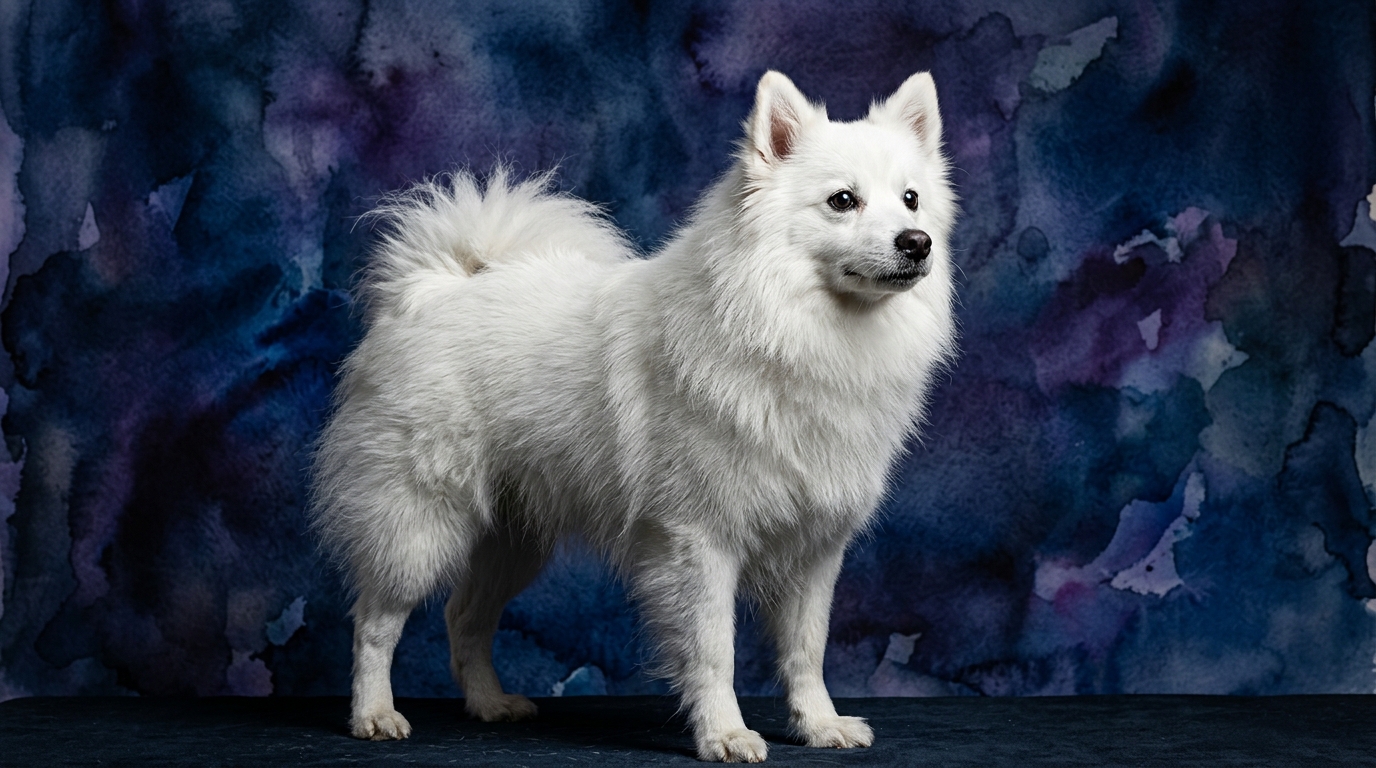
American Eskimo Dog at a glance
| IQ Rank / Score | 12/25 |
|---|---|
| Trainability | ★★★★☆ (4/5) |
| Social Intelligence | ★★★☆☆ (3/5) |
| Lifespan | 11-14 years |
| Shedding | Low to moderate |
| Exercise Needs | Moderate (30-45 min/day) |
| Origin | USA (German Spitz) |
The Performer's Intellect: An Eskie's Unique Mind
The American Eskimo Dog's intelligence isn't merely about obedience; it's a sophisticated blend we term the 'performer's intellect.' This cognitive style emphasizes quick comprehension, adaptability, and the innate ability to engage and interact, skills honed over generations in the spotlight.
Unlike breeds solely bred for repetitive tasks, Eskies developed a nuanced intelligence combining rapid trick acquisition with independent problem-solving. They needed to learn complex routines swiftly, remember sequences flawlessly, and even improvise in dynamic environments, all while maintaining an engaging presence.
Their observational learning is exceptionally keen; Eskies often pick up cues and mimic behaviors by simply watching. This acute awareness of their surroundings and human companions translates into a dog that is not only trainable but also highly perceptive, eager for mental challenge and constant interaction.
A Glimpse into the Eskie Brain: Cognitive Strengths
The Eskie's cognitive profile showcases several standout strengths, particularly in problem-solving. Confronted with a novel situation, an Eskie will often demonstrate persistence and creativity in finding a solution, leveraging their keen observational skills and manipulative paws.
Training speed is a hallmark; American Eskimo Dogs typically grasp new commands and complex tricks with remarkable alacrity, often requiring fewer repetitions than many other breeds. This rapid acquisition is a testament to their strong working memory and an inherent desire to please and participate.
While not always overtly demonstrative, Eskies possess a subtle yet powerful social intelligence. They are highly attuned to human emotions and social cues, often acting as sensitive companions. Their memory is exceptional, extending beyond commands to include routines, places, and people, making them reliable companions.
Beyond the Fluff: Debunking Eskie Intelligence Myths
A common myth surrounding the American Eskimo Dog is that they are merely 'pretty faces,' all bark and no brains, suggesting their beauty masks a lack of cognitive depth or that their vocal nature signifies superficial intelligence. This misconception often arises from their striking appearance and sometimes perceived 'stubbornness' when not properly engaged.
This myth likely persists because Eskies, with their fluffy white coats, are undeniably attractive and might be assumed to be purely ornamental. Furthermore, their tendency to be vocal, barking at new sights or sounds, can be misinterpreted as an unthinking reaction rather than an intelligent alert or an attempt at communication.
The truth is quite the opposite: American Eskimo Dogs are highly intelligent, perceptive, and quick-witted. Their vocalizations are a demonstration of their alertness and communication skills, not a lack thereof. Their 'stubbornness' is often a sign of independent thinking and a need for mental stimulation and consistent, engaging training, rather than a deficiency in intelligence.
Historical Echoes: The Circus Dog Legacy
The most surprising historical fact about the American Eskimo Dog's cognition is their deep, pervasive legacy as America's premier circus dogs. From the late 19th to mid-20th centuries, these dogs were not just occasionally featured; they were the quintessential performing dog act in traveling circuses and vaudeville shows across the United States.
This widespread role was a direct testament to their unique cognitive and physical attributes. Trainers specifically sought out these German Spitz descendants because of their dazzling white coat, agility, and, most critically, their exceptional intelligence and eagerness to learn complex, multi-stage routines. They could execute intricate tricks, walk tightropes, and perform acrobatic feats.
The cognitive demands of circus life forged a specific kind of intelligence: one that required not just memorization but also problem-solving under pressure, adaptability to new environments, and a profound connection with their human partners. This historical immersion explains why today's American Eskimo Dogs possess such a keen 'performer's intellect,' thriving on mental engagement and human interaction.
Tailoring Training for the American Eskimo Dog
Leveraging the American Eskimo Dog's 'performer's intellect' requires an understanding of their unique cognitive drives. Training should be structured to challenge their minds and engage their natural eagerness to learn, focusing on positive reinforcement to build confidence and reinforce their desire to please.
Given their quick learning ability and excellent memory, Eskies excel in activities like agility, obedience, rally, and trick training. These disciplines provide the crucial mental stimulation they crave, allowing them to utilize their problem-solving skills and rapid acquisition of new behaviors.
Consistency and early socialization are paramount. While intelligent, Eskies can develop independent streaks or become wary of strangers without proper guidance. An unstimulated Eskie can become a vocal or destructive one; their intelligence demands an outlet, emphasizing the need for daily mental enrichment.
3 At-Home Tests to Measure Your American Eskimo Dog's IQ
These tests are adapted from peer-reviewed ethology research. No equipment is needed beyond items you have at home. Run each test 5–10 times for reliable results.
The Myth: "The American Eskimo Dog is merely a 'pretty face,' all fluff and bark, lacking substantial cognitive depth or genuine intelligence."
✅ Far from being mere ornaments, American Eskimo Dogs possess a robust 'performer's intellect' characterized by rapid learning, keen observational skills, and strong problem-solving abilities. Their vocalizations are often a sign of their alertness and communicative nature, and their 'stubbornness' is typically an indicator that they require more mental stimulation and engaging, positive reinforcement training methods to truly thrive.
American Eskimo Dog vs. Similar Breeds
🧠 What's Your Dog's IQ Score?
Our full Pet IQ Lab assessment includes 12+ tests across 5 cognitive dimensions, calibrated for American Eskimo Dogs specifically.
Take the Full IQ Test →Frequently Asked Questions
How smart is a American Eskimo Dog?
Our Pet IQ Lab framework scores cognition across five dimensions (max 25). The American Eskimo Dog totals 12/25 — average for a domestic dog. The full article breaks down each dimension with at-home tests.
Are American Eskimo Dogs easy to train?
American Eskimo Dogs are generally easy to train when you use consistent, reward-based sessions. They score 4/5 on Training Speed in our breed profile.
Are American Eskimo Dogs good with children and other pets?
American Eskimo Dogs can live well with families when socialized early. Their Social Intelligence scores 3/5, so supervise interactions with small children and introduce new pets gradually.
Do American Eskimo Dogs need a lot of mental stimulation?
American Eskimo Dogs benefit from 10-15 minutes of focused enrichment a day: food puzzles, short training drills, or novel toys rotated weekly.
How much exercise does a American Eskimo Dog need?
American Eskimo Dogs do well with 20-40 minutes of daily walks and play plus a few short training moments.
How good is a American Eskimo Dog's memory?
American Eskimo Dogs score 2/5 on memory. They remember high-value associations well; less-used cues fade without refresher sessions.
What is the typical lifespan of a American Eskimo Dog?
Expect a lifespan of 11-14 years for a healthy American Eskimo Dog.
The American Eskimo Dog's intelligence is a compelling blend of rapid learning, observational prowess, and a deep desire for engagement, born from a unique historical lineage. Understanding their 'performer's intellect' is key to unlocking their full potential, ensuring a fulfilling and harmonious life for these bright, beautiful companions.