Side-by-Side Cognitive Profiles
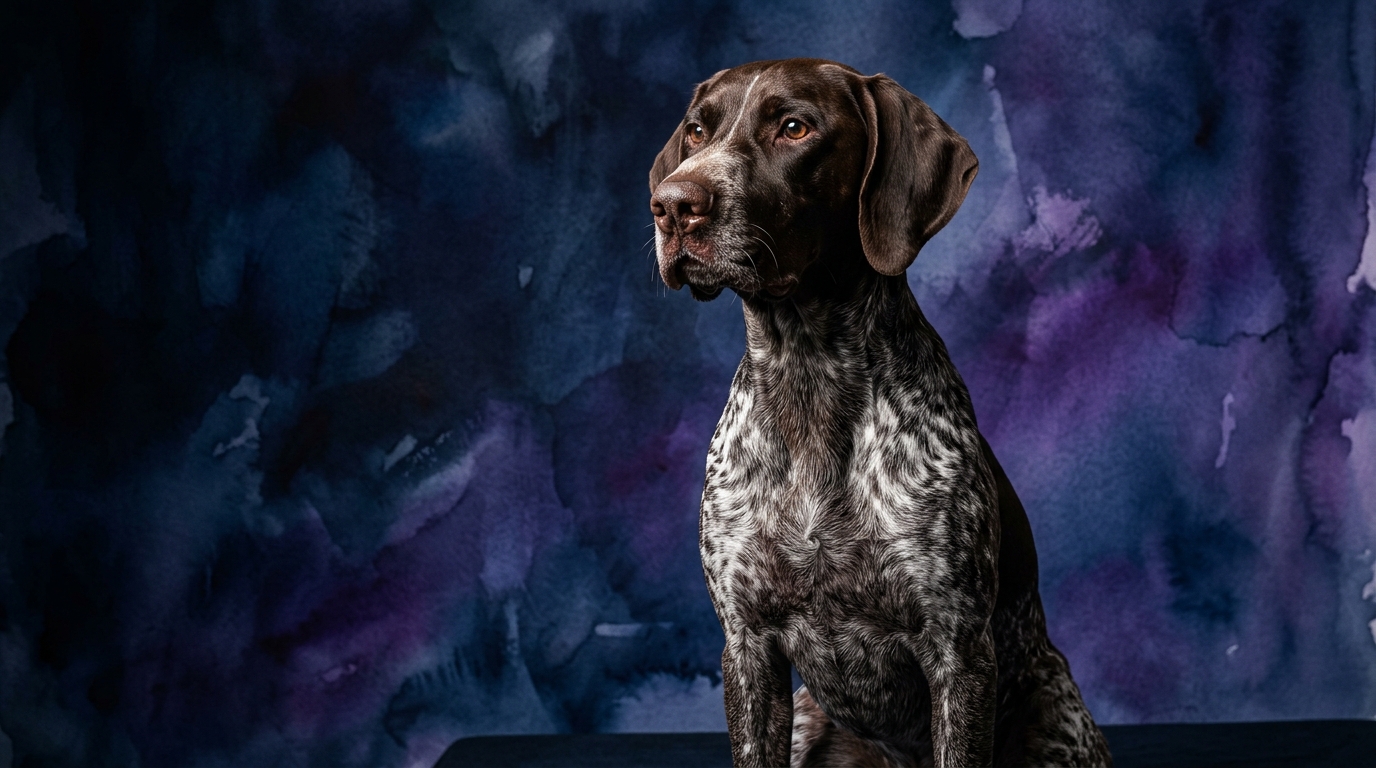
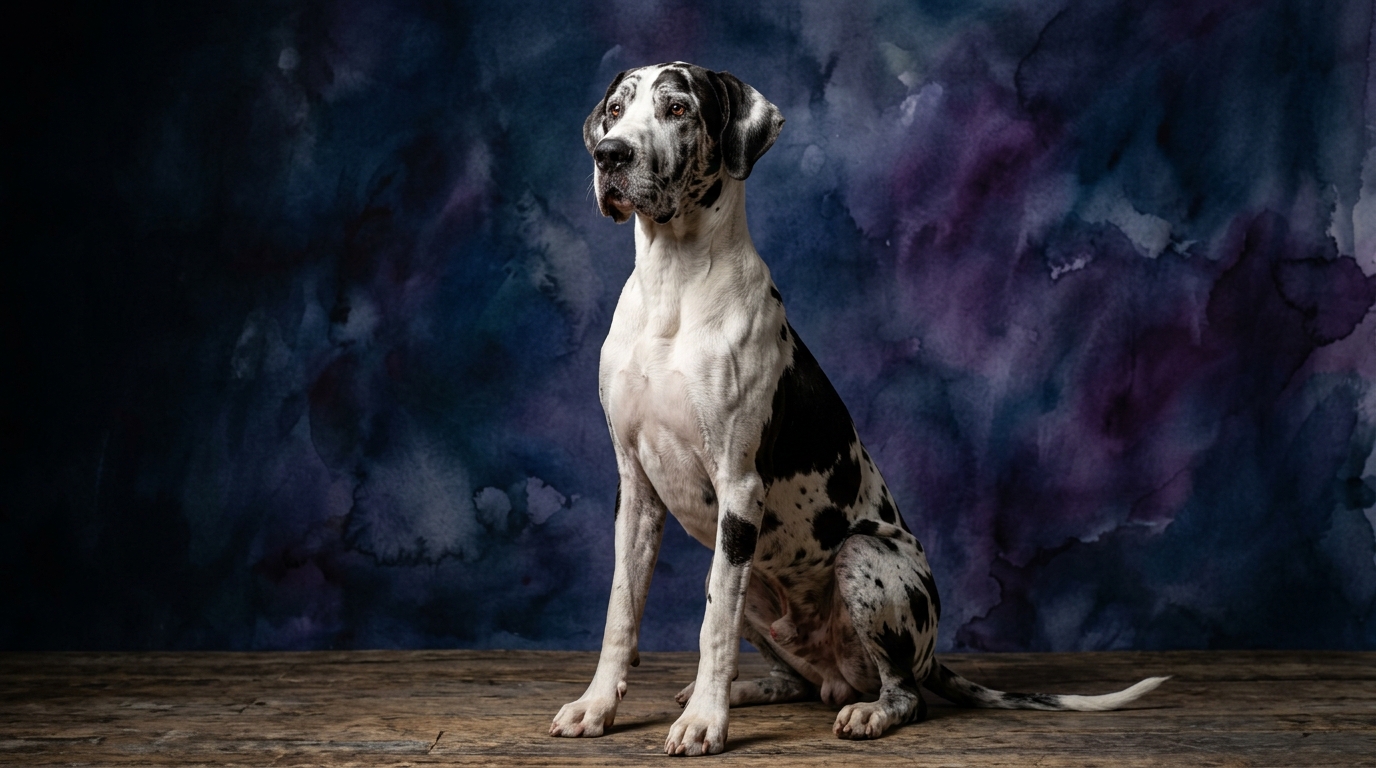
The Cosmic Pet Pet IQ Lab provides a detailed look into the cognitive makeup of these two distinct breeds. The German Shorthaired Pointer (Coren rank #17) and the Great Dane (Coren rank #48) showcase different strengths across five key intelligence dimensions.
For the **German Shorthaired Pointer**, their Problem Solving scores a robust 5/5, indicating an exceptional capacity to independently navigate complex situations and devise inventive solutions. Training Speed is rated at 4/5, signifying a quick grasp of new commands with minimal repetition. Social Intelligence stands at 4/5, demonstrating their adeptness at reading human cues and forming strong bonds. An Instinctive Drive of 5/5 highlights their powerful innate urge for hunting, tracking, and retrieving. Finally, Memory is rated 4/5, reflecting their strong retention of learned behaviors and experiences.
The **Great Dane**, in contrast, presents a different cognitive blueprint. Their Problem Solving is rated 3/5, suggesting a more measured approach to challenges, often relying on established routines or direct guidance. Training Speed is 3/5, meaning they learn at a moderate pace, benefiting from consistent and patient repetition. Social Intelligence matches the GSP at 4/5, showcasing their profound attunement to human emotions and strong desire for companionship. Instinctive Drive is 3/5, indicating a moderate natural drive, primarily expressed in protective instincts rather than strong prey pursuit. Memory also scores 3/5, implying adequate retention but potentially requiring more reinforcement over time for less frequently practiced tasks.
Where the German Shorthaired Pointer Excels Cognitively
The German Shorthaired Pointer's cognitive architecture is built for action and independent thought, yielding clear advantages in specific areas. Their superior Problem Solving (5/5) means they are exceptionally adept at figuring things out on their own, whether it's navigating a complex scent trail or mastering an intricate agility course without constant handler intervention. This cognitive flexibility allows them to adapt rapidly to new scenarios and apply learned principles creatively.
The GSP's quicker Training Speed (4/5) translates directly into efficiency in learning. They absorb new commands and multi-step tasks with fewer repetitions, making them prime candidates for advanced obedience, field trials, or intricate dog sports where precision and speed of comprehension are paramount. Their formidable Instinctive Drive (5/5) provides an internal engine for engagement; this relentless focus on scenting, pointing, and retrieving means they are often self-motivated to participate in activities that tap into these natural behaviors, making them highly persistent in tasks they perceive as fulfilling their purpose. Furthermore, their stronger Memory (4/5) ensures that once a skill is acquired, it tends to be deeply ingrained, reducing the need for frequent refreshers and leading to more consistent performance over time.
Where the Great Dane Shines Cognitively
While the Great Dane's cognitive profile differs from the GSP's high-octane drive, they possess unique strengths that are equally valuable, particularly in the realm of companionship and emotional attunement. Although both breeds score 4/5 in Social Intelligence, the Great Dane's expression of this often manifests as exceptional empathy and a profound sensitivity to human emotional states. They are renowned for their ability to be a steady, reassuring presence, frequently sensing distress or joy in their family members with remarkable accuracy and responding with gentle comfort.
Their moderate Instinctive Drive (3/5) is also a cognitive advantage in specific contexts. This lower intensity means they are generally less prone to acting on overwhelming urges, which contributes to their calm, composed demeanor within a home environment. Unlike a GSP, who might be constantly seeking an outlet for their hunting instincts, a Great Dane's mental energy is often directed towards observing their surroundings and connecting with their family. Their cognitive strengths lie less in rapid, independent problem-solving and more in their capacity for quiet companionship and their ability to integrate seamlessly into a household routine as an observant, gentle giant. This makes them superb at providing emotional support and a stable, predictable presence.
Ease of Training: Behavioral Differences
When it comes to training, the German Shorthaired Pointer generally presents a more direct path to learning complex behaviors due to their specific cognitive strengths. Their impressive Training Speed (4/5) means they grasp new concepts quickly, often requiring fewer repetitions to solidify a command. This is compounded by their Problem Solving ability (5/5), which allows them to generalize learned behaviors to new situations. For instance, a GSP might quickly understand the concept of 'retrieve' for various objects in different locations after a few demonstrations, applying their innate drive to the task. Their high Instinctive Drive can be channeled effectively into training, making them enthusiastic participants in activities like scent work or retrieving drills, where their natural inclinations align with the training goals.
The Great Dane, while eager to please, operates at a more moderate pace in terms of Training Speed (3/5). They require consistent, patient, and clear repetition to internalize new commands. Their Problem Solving (3/5) suggests they might need more specific instruction for each scenario rather than readily generalizing. For example, teaching a Great Dane to 'stay' in a new, distracting environment might require significantly more focused practice sessions compared to a GSP. However, their strong Social Intelligence (4/5) makes them highly responsive to positive reinforcement and the desire to connect with their handler, which is a powerful motivator. While they may not demonstrate the same intrinsic drive for complex tasks as a GSP, their willingness to cooperate for the sake of companionship makes them trainable with the right approach – one that emphasizes patience, consistency, and reward-based methods over speed.
Suitability for Active vs. Relaxed Owners
The cognitive profiles of these two breeds offer clear guidance for owners with differing lifestyles. Owners who lead active lives and seek a canine partner for consistent physical and mental engagement will find the German Shorthaired Pointer an ideal match. Their high Instinctive Drive (5/5) means they thrive on activities like long runs, hiking, hunting, or structured dog sports such as agility and field trials. Their Problem Solving (5/5) and quick Training Speed (4/5) mean they not only enjoy these challenges but excel at them, requiring an owner who can consistently provide outlets for their mental and physical energy. A GSP needs a lifestyle that aligns with their inherent drive to explore, learn, and work alongside their human.
Conversely, the Great Dane is often better suited for owners who appreciate a more relaxed pace and prioritize companionship within a comfortable home environment. While they certainly need regular, moderate exercise to maintain health, their cognitive makeup, characterized by a moderate Instinctive Drive (3/5) and a focus on social connection (4/5), means they are less demanding in terms of high-octane activities. An owner seeking a gentle, observant presence who enjoys calm walks, cozy evenings, and a steady routine will find the Great Dane's temperament and cognitive rhythm more aligned with their lifestyle. They are content to be a large, loving fixture in the home, offering quiet companionship rather than constant demands for strenuous activity or complex mental tasks.
The Verdict
Choose the German Shorthaired Pointer if you seek a highly engaged, quick-learning canine partner eager for complex training, outdoor adventures, and a dog that thrives on working alongside its human, demonstrating independent thought and persistent drive.
Choose the Great Dane if you desire a large, empathetic companion whose cognitive strengths lie in their calm demeanor, social attunement, and steady presence, fitting well into a home that values routine, gentle interaction, and profound emotional connection.
🧠 Find Your Pet's IQ Score
Our Pet IQ Lab assessment covers 25+ tests across 5 cognitive dimensions — personalized to your breed.
Take the Full IQ Test →Frequently Asked Questions
Is a German Shorthaired Pointer better for first-time owners than a Great Dane?
A GSP's quick learning speed can be a double-edged sword; they learn good habits fast, but also undesirable ones if not managed, requiring consistent guidance. A Great Dane's more deliberate learning pace and generally calmer disposition might be more forgiving for a novice who can commit to patient, consistent training, though their sheer size presents unique management challenges.
Do Great Danes require less mental stimulation than German Shorthaired Pointers?
Great Danes require mental stimulation appropriate to their cognitive profile, which often involves social interaction, gentle puzzles, and consistent routines, rather than the intense, task-oriented problem-solving favored by GSPs. GSPs thrive on complex challenges related to their hunting instincts, demanding more structured mental work to prevent boredom.
How does 'instinctive drive' impact daily life for these breeds?
A GSP's high instinctive drive means they are naturally inclined to explore, scent, and retrieve, requiring regular outlets for these behaviors to prevent boredom or frustration and potential destructive outlets. A Great Dane's moderate drive translates to a calmer disposition, less prone to intense pursuit of prey, making them generally less demanding in terms of instinct-driven, high-energy activities.