
Side-by-Side Cognitive Profiles
At The Cosmic Pet Pet IQ Lab, we evaluate canine intelligence across five key dimensions. For the German Shorthaired Pointer, a Sporting breed, their profile is robustly geared towards their working heritage. They achieve a 5/5 in Problem Solving, indicating exceptional aptitude for navigating complex environments and devising solutions, such as tracking elusive game through varied terrain or figuring out how to retrieve an item from a challenging spot. Their Training Speed is rated 4/5, meaning they grasp new commands and concepts with remarkable efficiency, often requiring fewer repetitions than many other breeds. Social Intelligence is 4/5; they form profound, dedicated bonds with their primary human family, often displaying a keen awareness of their handler's intentions and moods. An extraordinary 5/5 in Instinctive Drive highlights their powerful urge for hunting, scenting, and retrieving, making them acutely attuned to environmental cues related to these tasks. Finally, their Memory is 4/5, crucial for recalling intricate scent patterns, remembering multi-step commands, and retaining spatial information over extended periods and vast distances.
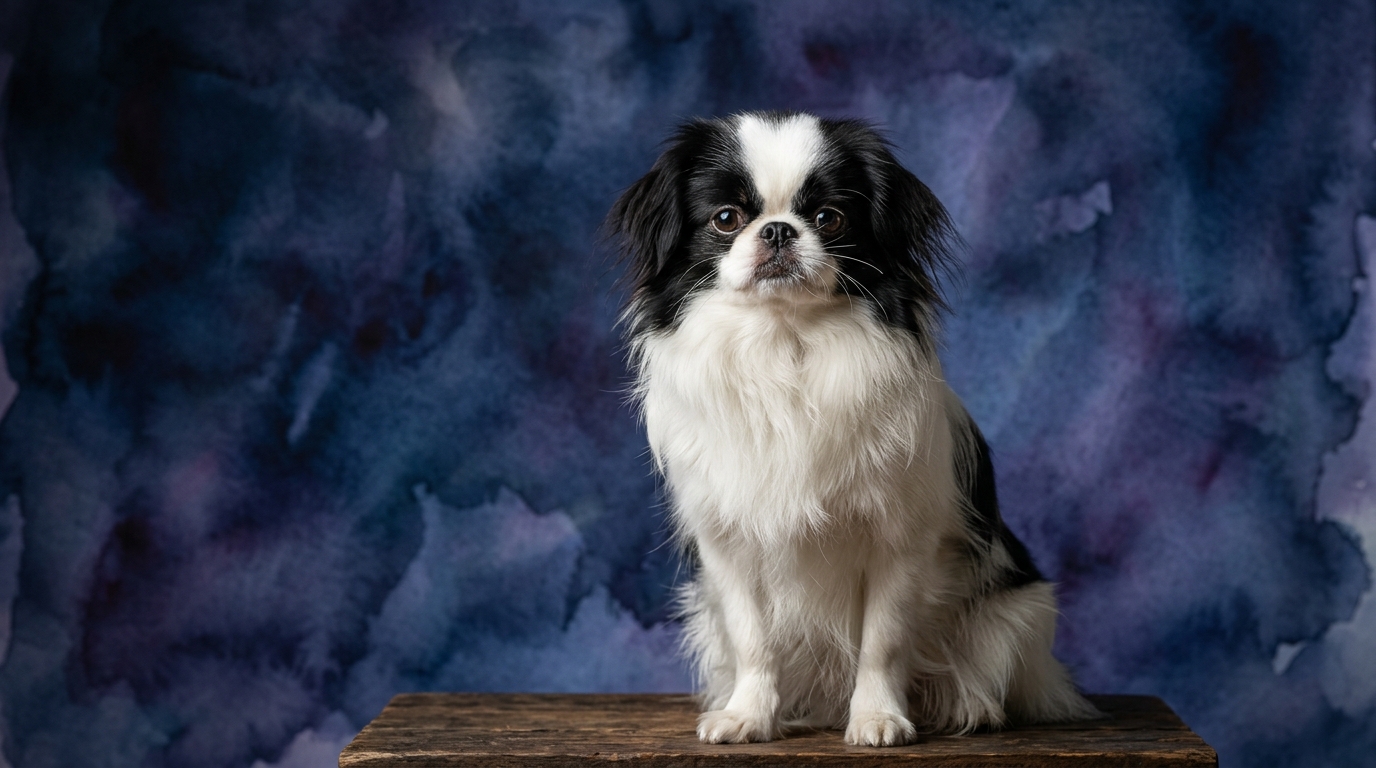
The Japanese Chin, a Toy breed, presents a different cognitive blueprint, tailored for companionship. Their Problem Solving is 3/5; they are capable of learning routines and engaging with simpler cognitive challenges, such as basic puzzle toys or finding a hidden treat, generally geared towards navigating their immediate social environment. Training Speed is 3/5; they learn at a moderate pace, responding well to positive reinforcement and gentle guidance, though their independent spirit means sessions need to be enjoyable. Their Social Intelligence is 3/5; they display a nuanced social understanding within their trusted circle, often acting as sensitive barometers of household moods and offering quiet companionship, though they can be quite discerning with strangers. Instinctive Drive is 3/5, meaning their drives are moderately expressed, primarily focused on comfort, companionship, and gentle exploration rather than strenuous physical or hunting-related activities. Their Memory is 3/5, effectively recalling familiar people, places, and established routines, contributing to a predictable and secure home life.
Where the German Shorthaired Pointer Excels Cognitively
The German Shorthaired Pointer's cognitive architecture is a testament to centuries of selective breeding for demanding fieldwork. Their exceptional problem-solving (5/5) allows them to master intricate tasks beyond simple obedience, such as expertly quartering a field for game, adapting their search pattern based on wind direction, or successfully navigating obstacles to retrieve a fallen bird. This isn't merely rote learning; it's a sophisticated application of independent thought and environmental assessment. Their unparalleled instinctive drive (5/5) means they are intrinsically motivated by activities that engage their senses, particularly scent, which fuels a relentless work ethic and an unwavering focus on their objective. This powerful internal engine also underpins their strong memory (4/5), enabling them to retain complex scent trails, recall the location of multiple retrieves, and execute multi-part commands with impressive consistency over time. Furthermore, their rapid training speed (4/5) combined with this robust memory allows them to quickly acquire and reliably perform a vast repertoire of skills, making them formidable competitors in dog sports requiring both physical prowess and mental agility, such as advanced obedience or competitive tracking.
Where the Japanese Chin Shines Cognitively
In contrast, the Japanese Chin's cognitive strengths are finely tuned for their role as an esteemed companion. Their social intelligence (3/5), while not about commanding a field, is exquisitely sensitive to the nuances of human emotion and household dynamics. They possess an uncanny ability to discern when their human needs quiet comfort versus playful interaction, often responding with subtle gestures or a gentle presence. This makes them profoundly empathetic companions, excelling at fostering emotional connection. Their moderate instinctive drive (3/5) is a significant cognitive advantage for a house dog, as it means they are not burdened by an overwhelming internal need for constant, high-intensity activity. This allows for a more relaxed and adaptable disposition, perfectly suited to apartment living or a less physically demanding routine, contributing to a calm and contented demeanor. Their problem-solving (3/5), though not for the hunt, shines in navigating social situations within the home, such as strategically positioning themselves for a lap snuggle or subtly communicating their desires for a treat through expressive eyes. Their memory (3/5) is perfectly adequate for remembering beloved family members, establishing routines, and recalling the specific “rules” of their cherished home, ensuring a harmonious and predictable shared life without the pressure of constant new learning or complex tasks.
Ease of Training: Behavioral Differences
When considering ease of training, the German Shorthaired Pointer generally holds an advantage for structured obedience and complex task learning, primarily due to its higher training speed (4/5) and formidable instinctive drive (5/5). GSPs are often described as “eager to please” and possess an inherent motivation to work alongside their human, making them quick to absorb new commands and perform them reliably. For example, teaching a GSP a complex sequence like “fetch the leash, bring it here, then sit” leverages their problem-solving and memory, often resulting in rapid mastery and enthusiastic execution. Their strong prey drive can also be channeled into highly focused retrieve training. The Japanese Chin, however, presents a different training dynamic. With a training speed of 3/5 and a moderate instinctive drive (3/5), Chins are certainly trainable, but they often require more patience and a less demanding approach. They thrive on positive reinforcement, short, engaging sessions, and a training style that feels like a game rather than a chore. Their independent streak means they might not always comply instantly, not out of stubbornness, but a cognitive preference for comfort or personal inclination. While a GSP might see a command as an opportunity to work, a Chin might weigh it against the immediate appeal of a soft cushion. Therefore, while both breeds can learn, the GSP's cognitive wiring makes it generally more straightforward for an owner seeking a highly compliant working partner.
Matching Canine Cognition to Lifestyle
The German Shorthaired Pointer is an unequivocal match for active owners who are prepared to dedicate significant time and energy to their canine companion's needs. Their exceptional instinctive drive (5/5) and high problem-solving capacity (5/5) mean they flourish when engaged in demanding activities like long-distance running, competitive dog sports such as agility or flyball, or actual field work. An owner who can provide consistent mental challenges, rigorous physical exercise, and opportunities for their GSP to utilize its keen memory (4/5) and tracking abilities will find an incredibly devoted and well-adjusted partner. Neglecting these deep-seated cognitive and physical requirements can lead to boredom, frustration, and potentially destructive behaviors as the GSP seeks its own outlets for its boundless energy. Conversely, the Japanese Chin is ideally suited for relaxed owners seeking a devoted, low-key companion whose cognitive and physical needs are less strenuous. Their moderate instinctive drive (3/5) and focus on social intelligence (3/5) mean they are perfectly content with gentle indoor play, short strolls around the neighborhood, and ample cuddle time on the sofa. They thrive in environments where they can observe and interact subtly with their family, offering quiet companionship without requiring constant stimulation or intense activity. Their cognitive profile makes them excellent companions for individuals or families who prefer a calm home life and a dog that is happy to share their space without demanding an exhaustive physical routine.
The Verdict
Opt for a German Shorthaired Pointer if you lead an active lifestyle, are eager to engage in dog sports or outdoor adventures, and can provide consistent mental challenges to satisfy a keen, problem-solving mind.
Select a Japanese Chin if you prefer a tranquil home environment, seek a devoted lap companion, and appreciate a dog whose cognitive strengths lie in subtle social interaction and a relaxed demeanor.
🧠 Find Your Pet's IQ Score
Our Pet IQ Lab assessment covers 25+ tests across 5 cognitive dimensions — personalized to your breed.
Take the Full IQ Test →Frequently Asked Questions
Is the German Shorthaired Pointer truly "smarter" than the Japanese Chin?
The term "smarter" is subjective and depends on the context of what cognitive traits are valued. While the GSP excels in working intelligence due to its high problem-solving and training speed, the Chin's social intelligence makes it exceptionally adept at companion life. Each breed possesses cognitive strengths perfectly suited to its historical purpose and modern role.
Do Japanese Chins struggle with training compared to GSPs?
Japanese Chins don't necessarily struggle, but their training approach differs. They respond best to positive reinforcement, patience, and making learning a fun, low-pressure experience, whereas GSPs often thrive on structured tasks and readily absorb complex commands. It's more about adapting training methods to their unique cognitive style rather than a struggle with capacity.
Which breed is better for a first-time dog owner?
For a first-time owner, the Japanese Chin might be less demanding due to its lower exercise requirements and more relaxed cognitive needs, making it easier to integrate into a quiet household. A German Shorthaired Pointer's high energy, intense drive, and need for consistent mental stimulation can be overwhelming for someone new to dog ownership.