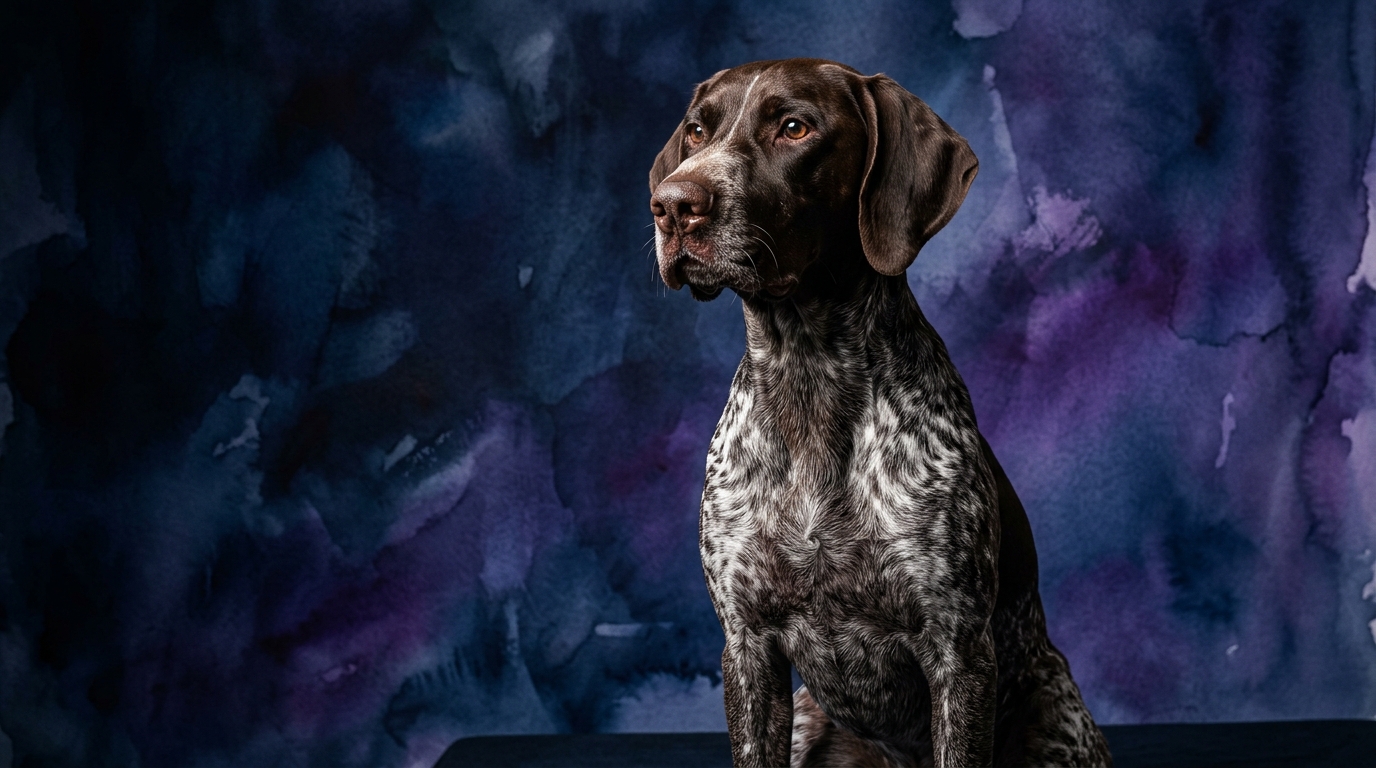
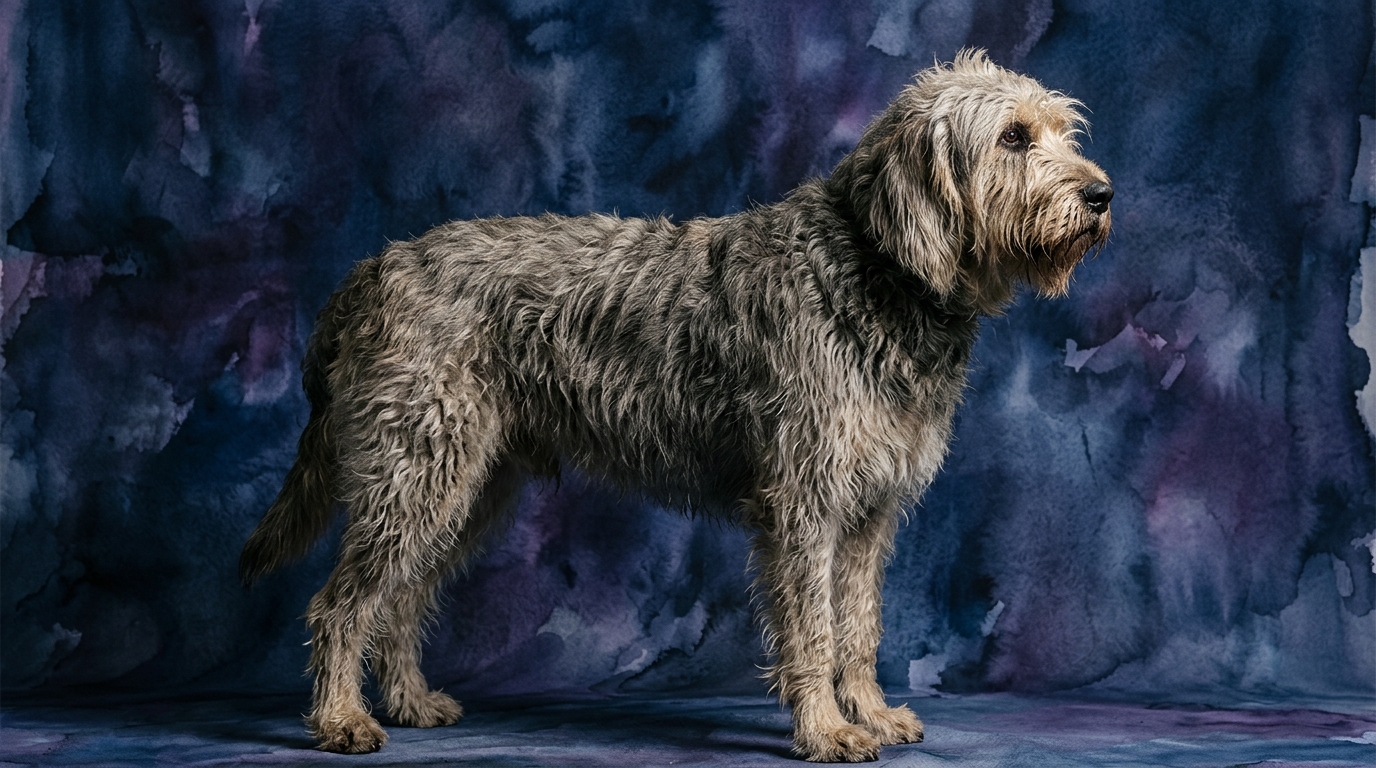
Side-by-Side Cognitive Profiles
In The Cosmic Pet Pet IQ Lab, we analyze canine intelligence across five key dimensions: Problem Solving, Training Speed, Social Intelligence, Instinctive Drive, and Memory. These metrics offer a nuanced view of how different breeds process information, interact with their environment, and engage with humans. The German Shorthaired Pointer (GSP), a Sporting group member, consistently ranks high, notably at Coren rank #17, reflecting its historical role as a versatile hunting companion.
The German Shorthaired Pointer's profile is marked by impressive scores: Problem Solving 5/5, Training Speed 4/5, Social Intelligence 4/5, Instinctive Drive 5/5, and Memory 4/5. These ratings paint a picture of a dog engineered for active partnership, capable of intricate tasks, rapid learning, and keen awareness of its human handler. Their high instinctive drive, combined with strong problem-solving, makes them formidable partners in field work and demanding dog sports.
The Otterhound, belonging to the Hound group, presents a different cognitive landscape. It is not listed in Coren's ranking, and its IQ scores are consistently rated 3/5 across all dimensions: Problem Solving 3/5, Training Speed 3/5, Social Intelligence 3/5, Instinctive Drive 3/5, and Memory 3/5. These scores reflect a breed whose intelligence is geared towards independent, persistent scent work rather than direct, human-centric collaboration, prioritizing olfactory prowess and stamina over rapid command execution or complex social cues.
Where the German Shorthaired Pointer Excels Cognitively
The German Shorthaired Pointer's cognitive strengths are evident in its exceptional Problem Solving ability, rated 5/5. This breed demonstrates a remarkable capacity to quickly assess novel situations and devise effective strategies, whether it's navigating complex terrain during a hunt or figuring out how to open a puzzle toy. Their mental agility allows them to adapt rapidly to changing environments and understand abstract concepts, making them adept at tasks requiring sequential thought and quick decision-making.
Further reinforcing their cognitive advantage is their 4/5 score in Training Speed. GSPs grasp new commands and routines with impressive alacrity, often requiring fewer repetitions than many other breeds to achieve mastery. This rapid assimilation of information is coupled with a 4/5 Social Intelligence, enabling them to keenly interpret human body language and vocal cues, fostering a deep, responsive partnership. Their potent 5/5 Instinctive Drive fuels their desire to work and learn, ensuring focused engagement in activities that fulfill their natural predispositions, from advanced obedience to competitive field trials. A GSP's 4/5 Memory means they reliably retain learned behaviors and past experiences, building a robust repertoire of skills.
Where the Otterhound Excels Cognitively
While the Otterhound's individual IQ metrics are consistently rated 3/5, its cognitive prowess is uniquely specialized, particularly within its ancestral role. The Otterhound's Problem Solving, though rated 3/5, shines in the intricate task of deciphering and following complex scent trails over varied and challenging terrain. This form of environmental problem-solving requires immense focus and the ability to differentiate subtle olfactory information, a highly sophisticated cognitive function specific to scent hounds.
Their Instinctive Drive, also 3/5, is singularly focused on scent, enabling them to pursue a trail for extended periods with unwavering determination and minimal distraction. This persistence is a cognitive feat in itself, demanding sustained concentration and physical endurance, allowing them to work independently for hours. The Otterhound's 3/5 Memory is particularly robust for recalling specific scent patterns and their associated locations, which is essential for successful tracking and navigating their environment based on olfactory cues. This breed's intelligence is not about human-centric problem-solving or rapid obedience, but about a deep, instinctual mastery of their olfactory world.
Training Dynamics: GSP's Responsiveness vs. Otterhound's Independence
When it comes to training, the German Shorthaired Pointer generally presents a more straightforward and rewarding experience for many owners. Their 4/5 Training Speed, coupled with a 5/5 Problem Solving ability and 4/5 Social Intelligence, means they are eager to engage, quick to understand, and highly responsive to human direction. GSPs possess a strong desire for partnership and thrive on collaborative tasks, making them receptive to positive reinforcement and eager to generalize learned behaviors across different contexts. Their focused nature and strong drive translate into consistent performance once a behavior is learned, making them excellent candidates for advanced obedience, agility, and hunting disciplines.
The Otterhound, with its consistent 3/5 scores in Training Speed, Problem Solving, and Social Intelligence, presents a different training challenge. This breed is inherently more independent and driven by its powerful nose, often prioritizing an interesting scent over human commands. Training an Otterhound requires significant patience, consistency, and a deep understanding of their hound nature. They learn, but often at a slower pace and may require more repetition and motivation tailored to their scent-driven instincts. While they can certainly be trained to be well-mannered companions, expecting the same level of precision or rapid compliance as a GSP would be unrealistic. Their behavioral differences stem from a history of working autonomously, where independent decision-making based on scent was paramount, rather than strict human adherence.
Ideal Lifestyles: Active Partnership vs. Independent Exploration
The German Shorthaired Pointer's cognitive and physical makeup makes them an ideal fit for active owners seeking a highly engaged and versatile canine partner. Their 5/5 Instinctive Drive and high problem-solving capacity demand consistent physical exercise and mental stimulation. GSPs thrive in environments where they can participate in outdoor sports, competitive dog events like agility or flyball, hunting, or long, vigorous hikes and runs. Owners who enjoy a dynamic lifestyle and can dedicate significant time to training and interactive play will find a GSP to be an incredibly rewarding and tireless companion. Without sufficient outlets for their energy and intellect, GSPs can become restless or invent their own, potentially unwelcome, forms of entertainment.
The Otterhound, while a large and robust breed, suits owners who appreciate a dog with a strong independent streak and a deep connection to its olfactory world. Their energy, though substantial, is often channeled into persistent scent work rather than explosive bursts, making them suitable for long, steady walks where they can follow their nose at leisure. After adequate exercise, Otterhounds can be calm and relaxed indoors, but their independent nature means they aren't always 'on call' for constant interaction. They are best suited for owners who are patient, understand the breed's need for scent exploration, and don't mind a more deliberate pace of training. They are not suited for entirely sedentary lifestyles, but their exercise needs differ from the high-octane demands of a GSP, favoring quality sniffing time over speed.
The Verdict
Choose the German Shorthaired Pointer if you seek a highly engaged, versatile canine partner for active pursuits, competitive dog sports, or as a dynamic family companion eager to learn and participate in shared activities. Their cognitive strengths make them exceptionally responsive to training and deeply attuned to human direction.
Opt for the Otterhound if you value a unique, independent companion with a deep connection to their scent-driven instincts, suitable for owners who appreciate a more deliberate pace and are prepared for a dog that follows its nose first. They thrive with patient guidance and opportunities to explore their world through scent.
🧠 Find Your Pet's IQ Score
Our Pet IQ Lab assessment covers 25+ tests across 5 cognitive dimensions — personalized to your breed.
Take the Full IQ Test →Frequently Asked Questions
Can an Otterhound be trained for advanced obedience?
While an Otterhound can certainly learn obedience commands, their independent nature and strong scent drive mean they typically require more patience, consistency, and creative motivation than a German Shorthaired Pointer. They may never achieve the same level of precision or speed in competitive obedience, but they can be well-mannered and capable companions with dedicated and understanding training.
How do their social intelligence differences impact household dynamics?
A German Shorthaired Pointer, with higher social intelligence, tends to be more attuned to human moods and family dynamics, often seeking interaction and participation in household activities and thriving on shared experiences. Otterhounds, while affectionate with their families, are generally more independent and might be content observing or pursuing a scent trail in the yard rather than constantly seeking human attention, though they still enjoy being part of the family unit.
Is one breed more prone to destructive behaviors if not mentally stimulated?
Both breeds require mental stimulation, but their manifestations of boredom differ based on their cognitive profiles. A German Shorthaired Pointer, with its high problem-solving and drive, might become restless, vocal, or invent 'games' that can be destructive if under-stimulated. An Otterhound might primarily engage in persistent sniffing, digging, or vocalizing, driven by its powerful nose, or become more aloof rather than actively destructive, if its need for scent work is not met.