
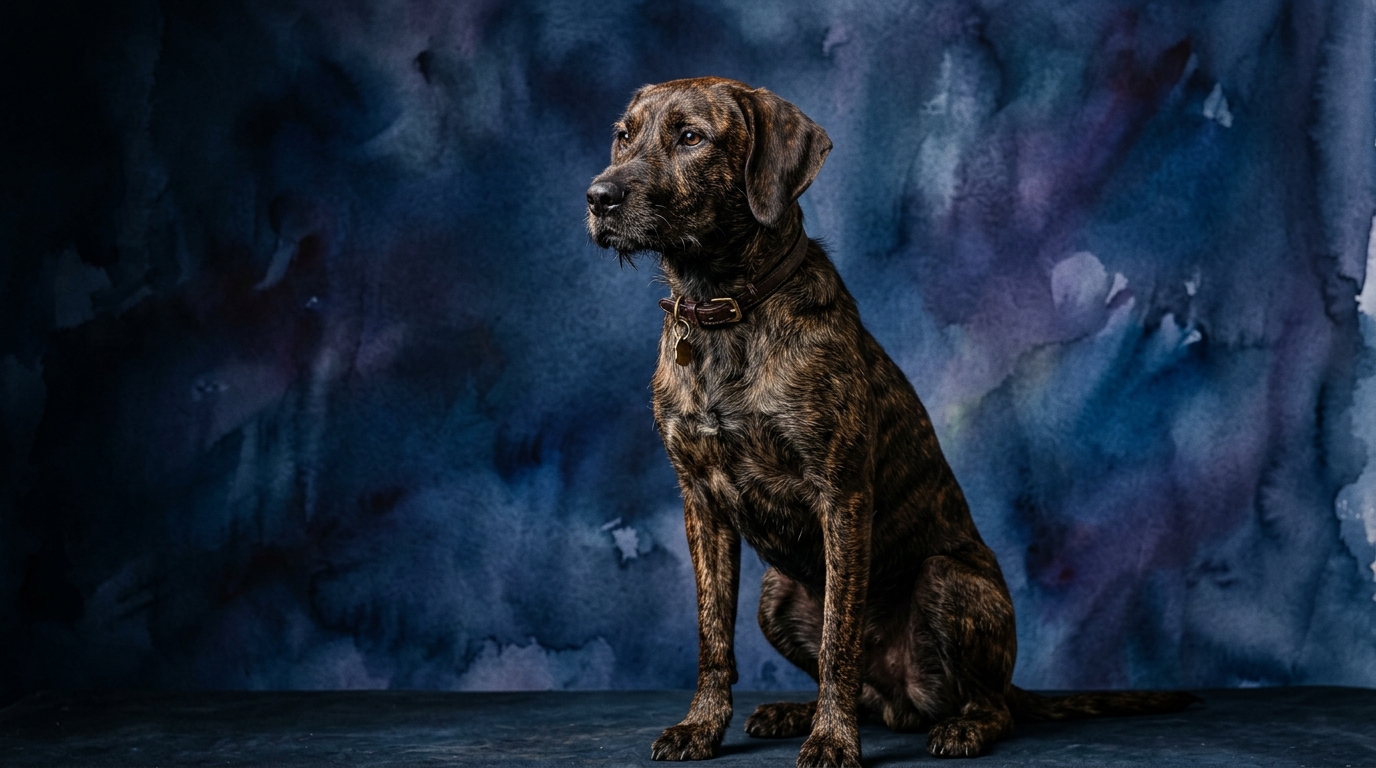
Side-by-Side IQ Profile: GSP vs. Plott Hound
The German Shorthaired Pointer (GSP) presents a robust cognitive profile, reflecting its heritage as a versatile sporting dog. Its 5/5 Problem Solving score indicates an impressive capacity to assess novel situations and devise effective solutions, often involving understanding cause-and-effect relationships or navigating complex environments during a hunt. The 4/5 Training Speed signifies a quick grasp of new commands and routines, coupled with a desire to cooperate, making them generally responsive learners. A 4/5 in Social Intelligence means they are adept at reading human cues, understanding social dynamics, and responding appropriately, fostering strong partnerships. Their 5/5 Instinctive Drive is a powerful, finely tuned set of behaviors for pointing, flushing, and retrieving game, showcasing a deep genetic blueprint for specific working tasks. Finally, a 4/5 Memory allows them to retain a wide array of learned commands, routines, and spatial information, crucial for consistent performance.
The Plott Hound, a breed built for tenacious pursuit, exhibits a more specialized cognitive makeup. Their 3/5 Problem Solving suggests a more task-specific approach; while they excel at the complex puzzle of scent tracking, their general adaptability to varied, abstract problems might be less pronounced. A 3/5 Training Speed implies that while they can learn, it often requires more repetition and patience, as their independent nature can make them less eager to comply purely for human approval. The 3/5 Social Intelligence indicates they are generally amiable but might be less attuned to subtle human emotional shifts, often prioritizing their individual pursuit over immediate social interaction. Their 3/5 Instinctive Drive, while lower numerically, represents a profoundly singular and unwavering focus on their primary purpose: trailing game, often with a tenacity that can override other considerations. A 3/5 Memory suggests they retain important information related to their scent work and routines, but perhaps with less breadth or recall speed than breeds optimized for diverse command sets.
Where the German Shorthaired Pointer Wins Cognitively
The German Shorthaired Pointer truly shines in its cognitive versatility and cooperative spirit. With a 5/5 in Problem Solving, these dogs demonstrate a remarkable capacity to analyze and navigate diverse situations, extending far beyond the hunting field. They might quickly ascertain how to manipulate a latch to open a gate, or devise an innovative way to retrieve a toy from an inaccessible spot, showcasing a flexible application of their intellect. This cognitive agility allows them to excel in a wide array of activities, from competitive obedience and agility to search and rescue, where adapting to unforeseen challenges is paramount.
Their 4/5 Social Intelligence further amplifies this advantage, enabling them to form deep, communicative partnerships with their human counterparts. They are adept at interpreting subtle body language and vocal cues, often anticipating commands or understanding intentions before they are explicitly given. This strong social bond is a cornerstone of their cooperative problem-solving, as they are not just executing commands but actively working with their handler towards a shared goal. The GSP's 4/5 Memory underpins their ability to learn and retain extensive repertoires of commands, sequences, and spatial layouts, making them exceptionally reliable in demanding scenarios.
Where the Plott Hound Wins Cognitively
While the Plott Hound's general cognitive scores might appear lower, their true intellectual prowess lies in a highly specialized domain: scent tracking. Their 3/5 Problem Solving, when viewed through the lens of scent work, transforms into an extraordinary ability to unravel complex olfactory puzzles. A Plott Hound can meticulously follow a faint, cold trail across challenging terrain, deciphering subtle scent changes, environmental interference, and the passage of time – a cognitive feat that demands immense focus and intricate decision-making.
Their 3/5 Instinctive Drive, rather than being a limitation, represents an unwavering, almost obsessive commitment to this primary task. Once they lock onto a scent, their cognitive resources are almost entirely dedicated to that pursuit, demonstrating a singular tenacity that allows them to push through fatigue, distractions, and difficult conditions. This deep-seated drive means they operate with a remarkable degree of independence once on a trail; they don't constantly look to a handler for guidance but instead rely on their own internal algorithms for navigating the scent puzzle. The Plott Hound's cognitive strengths are therefore not in broad versatility, but in a profound, specialized intelligence geared towards an ancient, demanding task.
Which is Easier to Train and Why
The German Shorthaired Pointer generally presents a more straightforward training experience. Their 4/5 Training Speed and 4/5 Social Intelligence mean they are eager to engage with their human partners, grasp new concepts quickly, and respond well to positive reinforcement. They thrive on having a 'job' and often aim to please, making them highly receptive to learning a broad repertoire of commands, from basic obedience to intricate field work or agility routines. Their attention span for human-directed tasks is typically longer, and they are adept at generalizing learned behaviors to new environments. This cooperative mindset is a significant advantage in training, allowing for faster progression and more nuanced communication.
Conversely, training a Plott Hound often requires a different approach and greater patience. Their 3/5 Training Speed reflects a tendency to learn at their own pace, often needing more repetitions and consistent motivation. The Plott Hound's strong, independent 3/5 Instinctive Drive for scent work can be both a blessing and a challenge. While unparalleled on a trail, this singular focus means that when a compelling scent is present, it can easily override previously learned commands or their attention to their handler. Their 3/5 Social Intelligence suggests they are less motivated by purely pleasing their owner and more by the innate reward of the hunt. Effective training for a Plott often involves harnessing their natural drive, integrating scent work into their lessons, and understanding that their biddability might be secondary to their nose.
Which Suits Active Owners vs. Relaxed Owners
The German Shorthaired Pointer is undeniably suited for highly active owners who can match their boundless energy and cognitive needs. A GSP requires consistent, structured exercise that goes beyond a simple walk; they thrive on activities like running, swimming, fetch, and especially field work or dog sports that engage both their body and mind. Their high Problem Solving and Instinctive Drive mean they need a 'job' to do, whether it's retrieving, pointing, or excelling in competitive obedience. Owners who enjoy hiking, trail running, or hunting will find a GSP an ideal, tireless partner. Without sufficient mental and physical stimulation, a GSP can become bored, leading to undesirable behaviors, making them a poor fit for a more relaxed or sedentary lifestyle.
The Plott Hound also requires active owners, but their activity needs are rooted in a different cognitive framework. While they need regular exercise, it's often more about channeling their potent 3/5 Instinctive Drive for scent work rather than general physical exertion. Owners who appreciate and can provide opportunities for their Plott to engage its nose – through tracking, hunting, or scent work games – will find the most fulfillment. A Plott Hound is not a breed for an owner seeking a dog that will passively entertain itself; they require engagement that respects and utilizes their specialized cognitive strengths. They are ideal for owners who are active in specific, focused pursuits that allow the Plott to 'work' its nose, rather than owners looking for a general all-around sports dog.
The Verdict
For those seeking a highly cooperative, versatile, and quick-to-learn canine partner for diverse activities from competitive sports to family life, the German Shorthaired Pointer is an exceptional choice. Their cognitive flexibility and desire to work alongside humans make them adaptable companions ready for varied intellectual and physical challenges.
The Plott Hound is best suited for owners who value independence and a singular, profound dedication to scent work, prepared to engage with a dog whose primary cognitive strength lies in tracking. Choose a Plott if you appreciate a tenacious, focused partner for hunting or specialized scent-based activities, understanding their training will require patience and an appreciation for their unique drive.
🧠 Find Your Pet's IQ Score
Our Pet IQ Lab assessment covers 25+ tests across 5 cognitive dimensions — personalized to your breed.
Take the Full IQ Test →Frequently Asked Questions
Are Plott Hounds difficult to train compared to other breeds?
Plott Hounds can present a greater training challenge due to their independent nature and strong, specialized instinctive drive for scent work. Their 3/5 training speed means they often require more repetition and motivation than breeds with higher biddability, demanding patience and consistency from their owners.
Do German Shorthaired Pointers need a lot of mental stimulation?
Absolutely. German Shorthaired Pointers possess a high problem-solving capacity (5/5) and a strong instinctive drive (5/5), meaning they thrive on consistent mental challenges alongside physical exercise. Without adequate engagement, their keen intellect can lead to boredom and potentially undesirable behaviors.
What is the most significant cognitive difference between these two breeds?
The most significant difference lies in their cognitive specialization versus versatility. The GSP offers broad adaptability, quick learning, and cooperative problem-solving, whereas the Plott Hound exhibits highly specialized, independent cognitive prowess in scent tracking, demonstrating immense focus and tenacity in that specific domain.