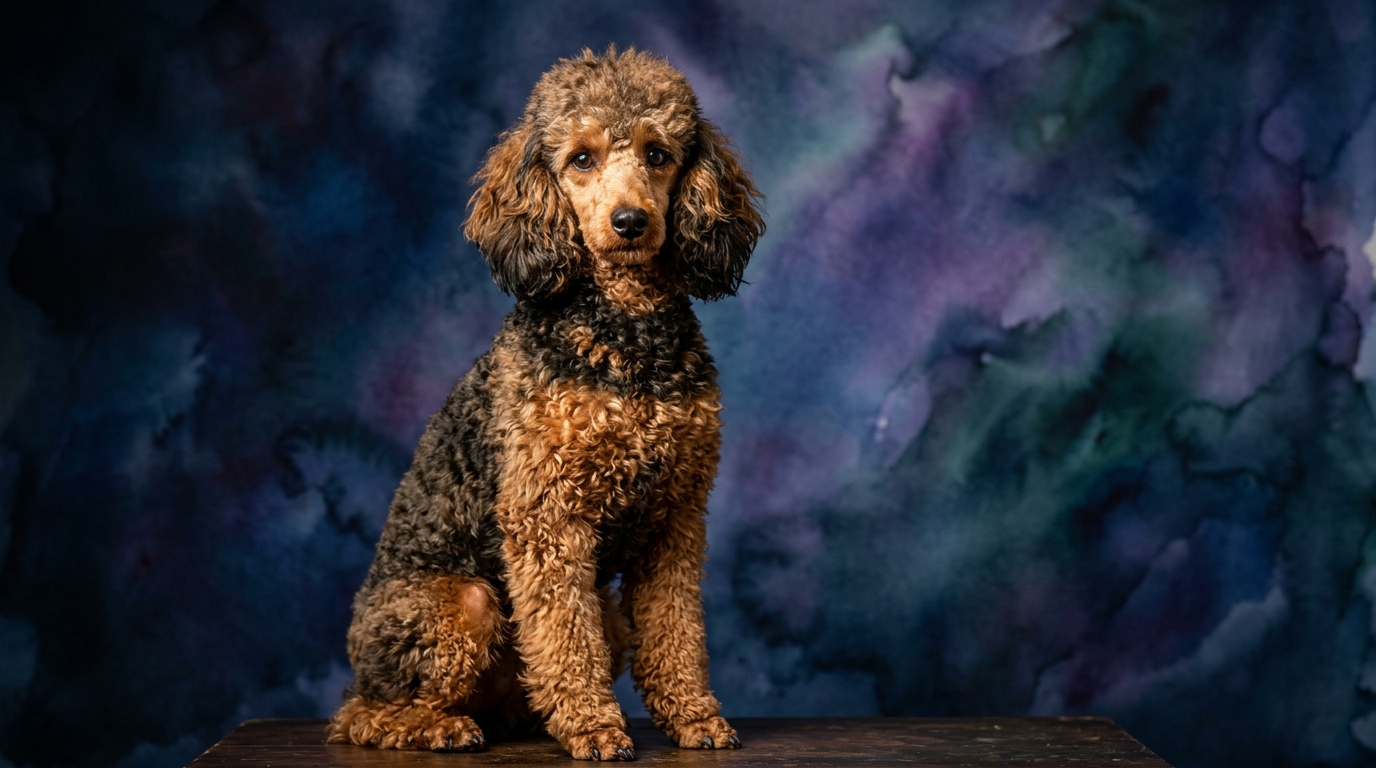
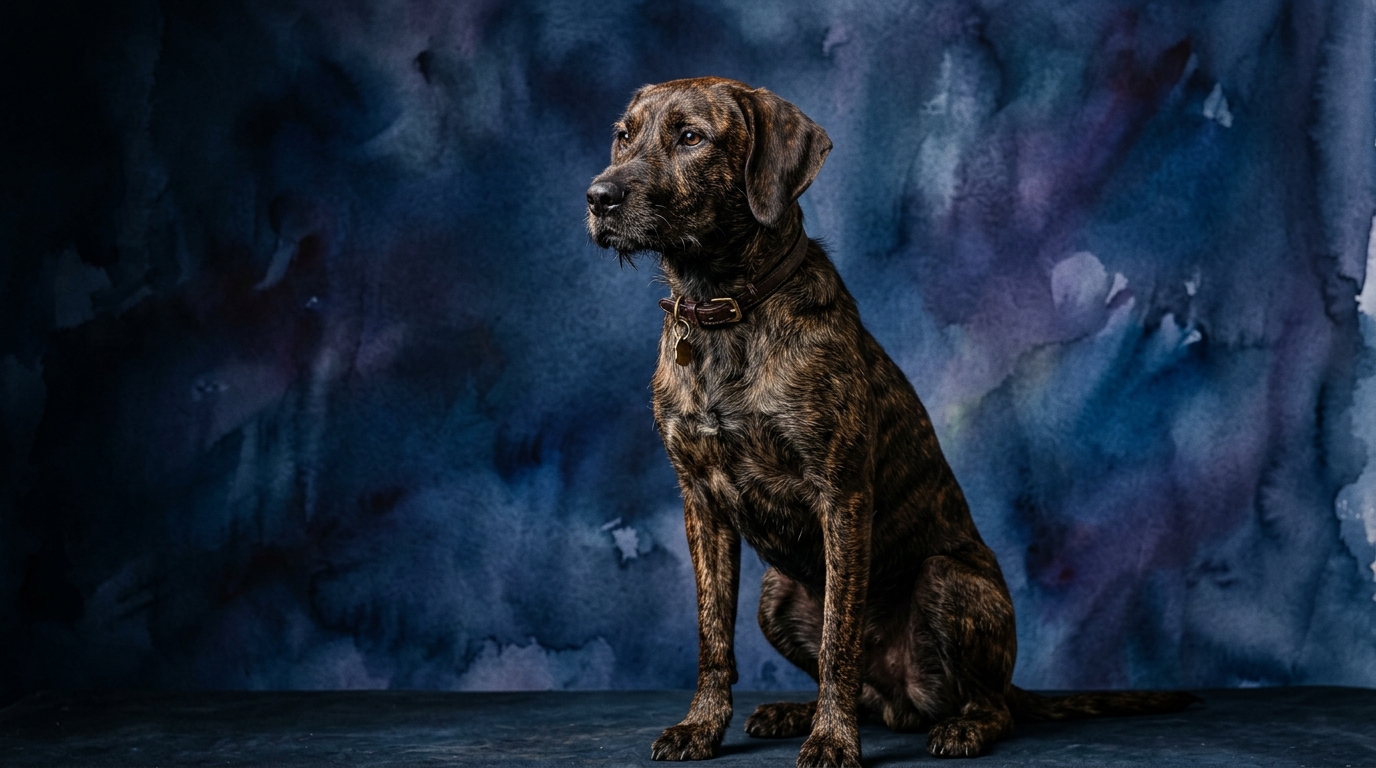
Side-by-Side IQ Profile: Poodle (Standard) vs. Plott Hound
The Standard Poodle presents a comprehensive cognitive profile, consistently demonstrating strong mental capabilities across various domains. Its Problem Solving is rated 5/5, indicating an exceptional ability to analyze new situations and devise solutions, often with minimal human guidance. Training Speed also scores 5/5, reflecting a rapid grasp of commands and concepts, often requiring few repetitions. Social Intelligence is equally robust at 5/5, suggesting a keen understanding of human cues, emotions, and social structures, making them highly responsive companions. Their Instinctive Drive, while not their primary strength, stands at a respectable 4/5, indicating a moderate underlying drive for activities like retrieving or water work, though often channeled through training. Finally, a Memory score of 5/5 means they retain learned behaviors and experiences over long periods, contributing to their consistent performance.
In contrast, the Plott Hound exhibits a more specialized cognitive makeup, deeply rooted in its heritage as a scent hound. Its Problem Solving is rated 3/5, meaning it can navigate challenges but may rely more on trial-and-error or instinctual responses than complex reasoning. Training Speed is 3/5, indicating a moderate pace of learning new commands, often requiring more patience and repetition. Social Intelligence also registers at 3/5, suggesting they understand basic human interactions but may not be as attuned to subtle emotional shifts as other breeds, often prioritizing their own sensory world. Their Instinctive Drive, rated 3/5, is powerfully focused on scent-tracking and pursuit, driving their behavior with singular intensity rather than broad applicability. Memory at 3/5 implies they retain essential information and scent trails but may not recall arbitrary commands with the same precision as breeds with higher scores.
Where Poodle (Standard) Wins Cognitively
The Standard Poodle's cognitive advantages are evident in its exceptional adaptability and versatile learning capacity. With a 5/5 in Problem Solving, they demonstrate a profound ability to assess novel situations, from figuring out complex puzzle toys to navigating unfamiliar environments with strategic thought. This isn't just about following commands; it's about independent thought and devising solutions. Their 5/5 Training Speed means they absorb new information with remarkable efficiency, often understanding a new command in just a few repetitions, making them adept at advanced obedience, agility, and even service work. This rapid uptake is supported by their 5/5 Memory, allowing them to consistently recall a vast repertoire of commands and experiences without frequent refreshers. Furthermore, their 5/5 Social Intelligence allows them to deeply connect with human companions, interpreting nuances in tone, body language, and emotional states, which facilitates highly responsive and cooperative interactions beyond simple obedience. This combination of mental agility, retention, and social awareness positions the Standard Poodle to excel in a wide array of cognitive challenges and interactive roles, from therapy work to competitive dog sports.
Where Plott Hound Wins Cognitively
While the Plott Hound’s overall cognitive scores may appear modest, their specialized intelligence shines brightly in areas directly tied to their historical purpose. Their strength lies not in broad adaptability but in profound, singular focus and sensory processing. A key cognitive win for the Plott Hound is their unparalleled ability to interpret and follow intricate scent trails, a complex neurological task that demands intense concentration and selective attention amidst myriad environmental distractions. This specialized Problem Solving (even at 3/5 generally) is profoundly effective when applied to their core instinct. Their Instinctive Drive, rated 3/5, is a powerful, unwavering force when directed towards tracking quarry, manifesting as relentless perseverance and an almost meditative focus that few other breeds can match. This isn't a general drive, but a highly specific, hard-wired behavioral pattern that, once engaged, overrides many other stimuli. They possess an incredible sensory memory for specific scents, allowing them to differentiate and follow a target trail over long distances and through varied terrain, a cognitive feat distinct from generalized memory. This specialized intelligence makes them masters of their craft, capable of feats of endurance and detection that are uniquely canine, demonstrating a different, yet equally valid, form of cognitive excellence.
Which is Easier to Train and Why
The Standard Poodle is unequivocally easier to train due to its rapid comprehension, eagerness to please, and strong social intelligence. Their 5/5 Training Speed means they quickly associate commands with actions and rewards, often picking up new behaviors in a handful of sessions. They possess a natural inclination to engage with their human companions, understanding social cues (5/5 Social Intelligence) that facilitate a cooperative learning environment. This responsiveness means they actively seek to understand what is being asked of them, making positive reinforcement highly effective. Their 5/5 Problem Solving also allows them to generalize learned behaviors to new situations, requiring less re-teaching.
The Plott Hound, with a 3/5 Training Speed and 3/5 Social Intelligence, presents a different training dynamic. They are not inherently difficult, but their independent nature and powerful scent drive mean they are often more interested in their environment than in human directives. Their primary motivation is often their nose, and once on a scent, their Instinctive Drive (3/5, but intensely focused) can override learned commands. Training a Plott requires immense patience, consistency, and a deep understanding of hound motivation. Rewards must be exceptionally high value, and training sessions need to compete with the allure of outdoor scents. While they can learn, their process is slower, and trainers must be prepared for moments where their innate hound instincts take precedence over obedience, requiring specific strategies to manage their focused drive rather than simply suppressing it.
Which Suits Active Owners vs. Relaxed Owners
For active owners who thrive on mental engagement and varied activities, the Standard Poodle is an excellent match. Their high Problem Solving (5/5) and need for mental stimulation mean they excel in dog sports like agility, obedience, and rally, or even complex tasks like search and rescue. They require consistent intellectual challenges to prevent boredom and channel their considerable mental energy constructively. An active owner for a Poodle isn't just about physical exercise; it's about providing opportunities for their dog to think, learn, and interact meaningfully. They enjoy being integral to family activities and can adapt to a wide range of adventurous pursuits, from hiking to paddleboarding, as long as their minds are kept busy.
The Plott Hound, while possessing a moderate Instinctive Drive (3/5), requires a specific kind of active owner. Their activity needs are less about broad mental stimulation and more about fulfilling their deep-seated desire to track and explore with their nose. A relaxed owner who cannot provide consistent opportunities for off-leash exploration in safe, scent-rich environments, or structured scent work, would likely find a Plott Hound challenging. They need owners who appreciate long walks or hikes where they can follow trails, or who can engage them in activities like tracking, barn hunt, or even just extensive backyard sniffing sessions. While they can be calm indoors after sufficient exercise, their contentment stems from having satisfied their primal urge to hunt and explore, making them ideal for owners who enjoy being outdoors and engaging in activities that cater to a dog's olfactory prowess.
The Verdict
Choose the Standard Poodle if you seek a highly adaptable, rapidly learning companion eager for diverse mental challenges and deep social connection.
Opt for the Plott Hound if you value a focused, persistent companion for outdoor adventures, particularly those involving scent work, and appreciate a dog with a strong, specialized drive.
🧠 Find Your Pet's IQ Score
Our Pet IQ Lab assessment covers 25+ tests across 5 cognitive dimensions — personalized to your breed.
Take the Full IQ Test →Frequently Asked Questions
Do Standard Poodles require a lot of mental stimulation?
Yes, with 5/5 scores in problem-solving and memory, Standard Poodles thrive on consistent mental engagement. Activities like puzzle toys, advanced training, and interactive games are crucial to keep their minds occupied and prevent boredom-related behaviors.
Is a Plott Hound difficult to live with due to its hunting instincts?
A Plott Hound's strong instinctive drive (3/5, but highly focused) for scent work requires dedicated management. While not inherently difficult, owners must provide outlets for this drive through extensive walks, scent games, or tracking activities to ensure a well-adjusted and content companion.
Can Plott Hounds be trained for obedience or other dog sports?
Yes, Plott Hounds can certainly be trained for obedience and certain dog sports, though their 3/5 training speed means it requires more patience and consistency. They may excel in activities like tracking or barn hunt that leverage their natural abilities, but general obedience requires a committed approach to compete with their independent nature and scent drive.