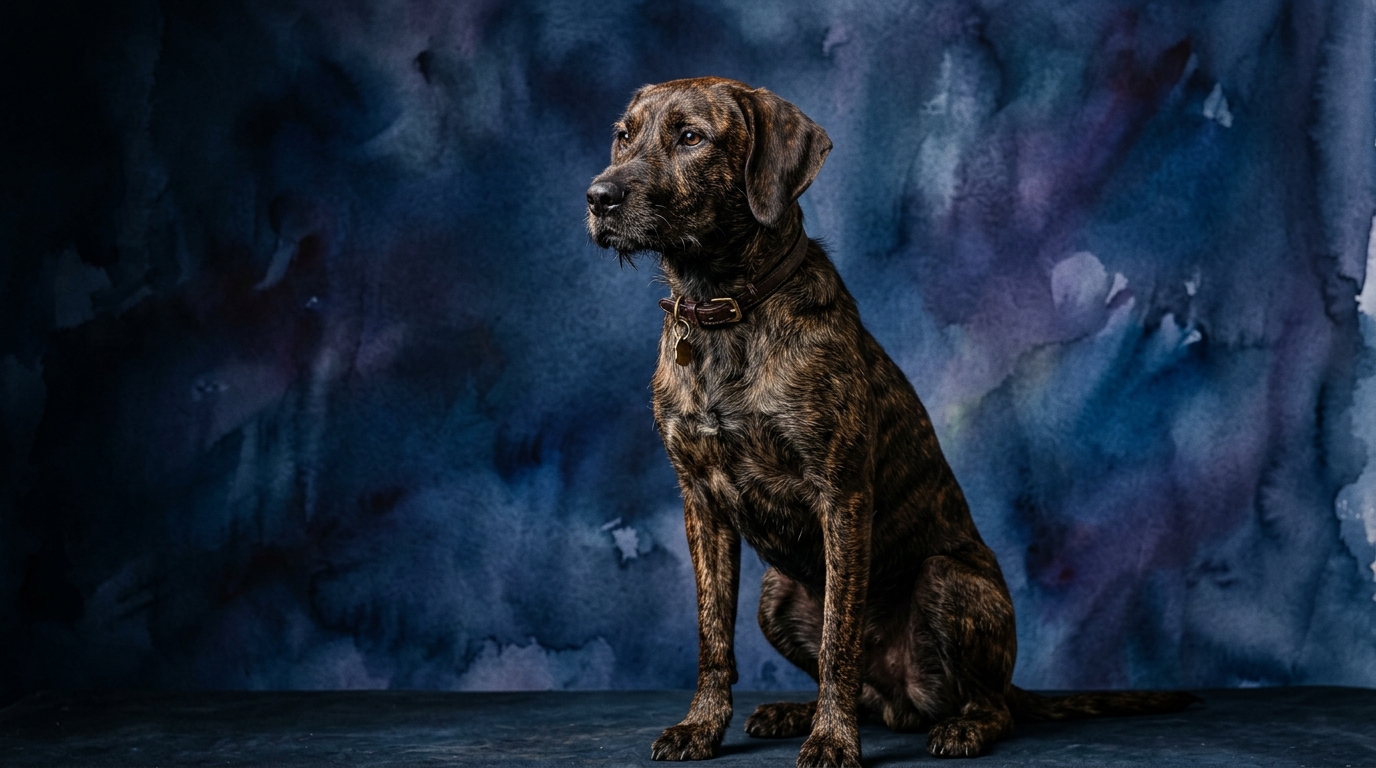
Plott Hound at a glance
| IQ Rank / Score | 12/25 |
|---|---|
| Trainability | ★★☆☆☆ (2/5) |
| Social Intelligence | ★★★☆☆ (3/5) |
| Lifespan | 10-12 years |
| Shedding | Moderate to high |
| Exercise Needs | Moderate (30-45 min/day) |
| Origin | USA |
The Plott's Primary Cognitive Angle: Scent-Driven, Independent Problem-Solving Persistence
The Plott Hound's cognitive uniqueness lies in its unparalleled ability for scent discrimination and relentless, independent problem-solving, meticulously optimized for tracking and baying large, dangerous game over diverse, challenging terrain. Their intelligence is a 'nose-first' processing engine, driven by an instinct to unravel complex scent puzzles with remarkable persistence and strategic navigation, a specialized form of genius often underestimated by those unfamiliar with their specific purpose. This isn't the biddable intelligence of a herding dog, but rather the focused brilliance of a canine detective whose entire being is geared towards following a faint whisper of scent to its conclusion, regardless of obstacles or time.
This profound scent-driven intelligence manifests as an unwavering focus and remarkable stamina, allowing them to decipher intricate scent pathways that would overwhelm most other breeds. Their problem-solving isn't about human-centric puzzles, but about navigating dense undergrowth, crossing water, or overcoming physical barriers to stay on a trail. They are masters of deduction, piecing together fragments of olfactory information to form a coherent mental map of their quarry's movements, demonstrating a level of cognitive persistence that is truly extraordinary and essential for their demanding role as big-game hunters.
A Surprising Cognitive Origin: German Roots, American Grit
Unlike many American hound breeds derived from English Foxhounds, the Plott Hound's lineage traces directly back to German 'Hanoverian Scenthounds' (Schweisshunds) brought to the mountains of North Carolina by Johannes Plott in the 1750s. This distinct origin story, meticulously maintained by the Plott family for over 200 years without outcrossing to other hound types until relatively recently, ensured their unique, specialized scent-tracking abilities remained exceptionally pure and focused on large game like bear and wild boar, rather than developing broader hunting aptitudes. This carefully preserved genetic heritage underpins their deep cognitive predisposition for intense, focused scent work.
This unique historical trajectory means that the Plott Hound’s intelligence developed in isolation, honed over generations by a single family dedicated to breeding for specific traits: an iron nose, unmatched endurance, and indomitable courage when facing formidable prey. The cognitive skills passed down are not merely instinctual but represent a highly refined, specialized form of intelligence for tracking, navigating, and cornering dangerous animals. This direct, unadulterated link to their German ancestors and subsequent American development in the wild Appalachian terrain has endowed them with a distinctive mental fortitude and independent problem-solving capacity.
The Plott Mind: Beyond Traditional Obedience
Understanding a Plott Hound's intelligence requires looking beyond conventional measures of obedience or 'trainability' often associated with more biddable working breeds. A Plott’s keen intellect is not about immediate compliance with every command but about making intelligent, autonomous decisions in the field. This independence, while challenging for novice owners, is a hallmark of their specialized genius. They learn rapidly when the training taps into their natural drives, especially scent work, and when they perceive a clear purpose or reward that aligns with their instincts, making positive reinforcement and engaging mental challenges key.
Their memory for scent trails, routines, and the lay of the land is exceptional, allowing them to recall complex patterns and experiences vital for successful hunting. However, their highly focused drive means that distractions, particularly alluring scents, can easily override commands if not properly managed through consistent training and mental stimulation. Owners often describe them as 'smart but stubborn,' which is a misinterpretation of their deep, ingrained drive to follow their nose and make independent judgments. They require respect for their inherent intelligence and a training approach that harnesses, rather than attempts to suppress, their powerful instincts.
Living with a Plott Genius: Practical Implications
For owners, living with a Plott Hound means embracing a dog whose mind is always active, primarily engaged in processing olfactory information. Providing ample opportunities for their minds to work, such as structured scent games, 'find it' exercises, or even amateur tracking, is crucial for their mental well-being and to prevent boredom-induced behaviors. Their high instinctive drive means they need consistent exercise, not just physical, but mental, to keep their intelligent minds engaged and fulfilled. A bored Plott is a destructive Plott, channeling their problem-solving skills into less desirable activities.
Their strong problem-solving skills and persistence, while admirable in the field, can also translate to outsmarting fences or opening cabinets at home if not adequately contained or mentally stimulated. Owners must be diligent in securing their homes and yards. While they are loyal and loving family members, their social intelligence is often pack-oriented, meaning they thrive within a family unit but may be more focused on their work or scent environment than on constant human interaction or complex social cues outside their immediate circle. Their intelligence is a tool for survival and success, and integrating them into a family requires understanding and respecting this unique cognitive architecture.
Plott Hound IQ Explained: A Detailed Breakdown
The Plott Hound's cognitive profile, as reflected in their IQ scores, paints a picture of a specialized intellect. Their Problem-Solving score of 4 is high, particularly for real-world, field-specific challenges like navigating terrain or deciphering complex scent puzzles, where they excel at independent thought. While they may not be the quickest to learn abstract tricks, their practical application of intelligence in their element is remarkable. Their Training Speed of 2, however, reflects their independent nature; they learn best when training is tailored to their drives, but their focus on their 'work' can make them less biddable for rote obedience compared to breeds with higher intrinsic motivation to please.
Their Social Intelligence score of 3 indicates they are good companions within their 'pack' (family) and can adapt to social situations, but their primary cognitive focus often lies outside purely social interactions, especially when a scent is present. Instinctive Drive, at a perfect 5, is their defining trait; it is the engine of their intelligence, fueling their unparalleled persistence and dedication to tracking. Finally, their Memory, scoring 4, is excellent, especially for retaining scent profiles, spatial knowledge of territories, and learned strategies for hunting, demonstrating a robust recall of information pertinent to their core purpose.
3 At-Home Tests to Measure Your Plott Hound's IQ
These tests are adapted from peer-reviewed ethology research. No equipment is needed beyond items you have at home. Run each test 5–10 times for reliable results.
The Myth: "Plott Hounds are stubborn and unintelligent, making them difficult to train."
✅ Plott Hounds are exceptionally intelligent, but their cognition is specialized for scent work and independent problem-solving in challenging terrain. Their 'stubbornness' is, in fact, a testament to their intense focus, persistence, and self-reliance—qualities crucial for a successful hunter. They are highly capable learners when training leverages their natural drives and provides engaging mental challenges, particularly scent work, rather than solely focusing on traditional, rote obedience commands that may not resonate with their primary cognitive wiring.
Plott Hound vs. Similar Breeds
🧠 What's Your Dog's IQ Score?
Our full Pet IQ Lab assessment includes 12+ tests across 5 cognitive dimensions, calibrated for Plott Hounds specifically.
Take the Full IQ Test →Frequently Asked Questions
How smart is a Plott Hound?
Our Pet IQ Lab framework scores cognition across five dimensions (max 25). The Plott Hound totals 12/25 — average for a domestic dog. The full article breaks down each dimension with at-home tests.
Are Plott Hounds easy to train?
Plott Hounds are independent learners; short, highly-motivating sessions work best. They score 2/5 on Training Speed in our breed profile.
Are Plott Hounds good with children and other pets?
Plott Hounds can live well with families when socialized early. Their Social Intelligence scores 3/5, so supervise interactions with small children and introduce new pets gradually.
Do Plott Hounds need a lot of mental stimulation?
Plott Hounds benefit from 10-15 minutes of focused enrichment a day: food puzzles, short training drills, or novel toys rotated weekly.
How much exercise does a Plott Hound need?
Plott Hounds do well with 20-40 minutes of daily walks and play plus a few short training moments.
How good is a Plott Hound's memory?
Plott Hounds score 2/5 on memory. They remember high-value associations well; less-used cues fade without refresher sessions.
What is the typical lifespan of a Plott Hound?
Typical lifespan is 10-12 years for a large dog like the Plott Hound.
The Plott Hound's intelligence is a finely tuned instrument, purpose-built for the demanding world of large game hunting, marked by an unparalleled nose, relentless persistence, and independent problem-solving. Understanding and respecting this specialized cognitive profile is key to unlocking the full potential of these magnificent, intelligent dogs, ensuring a harmonious and enriching life for both hound and human.