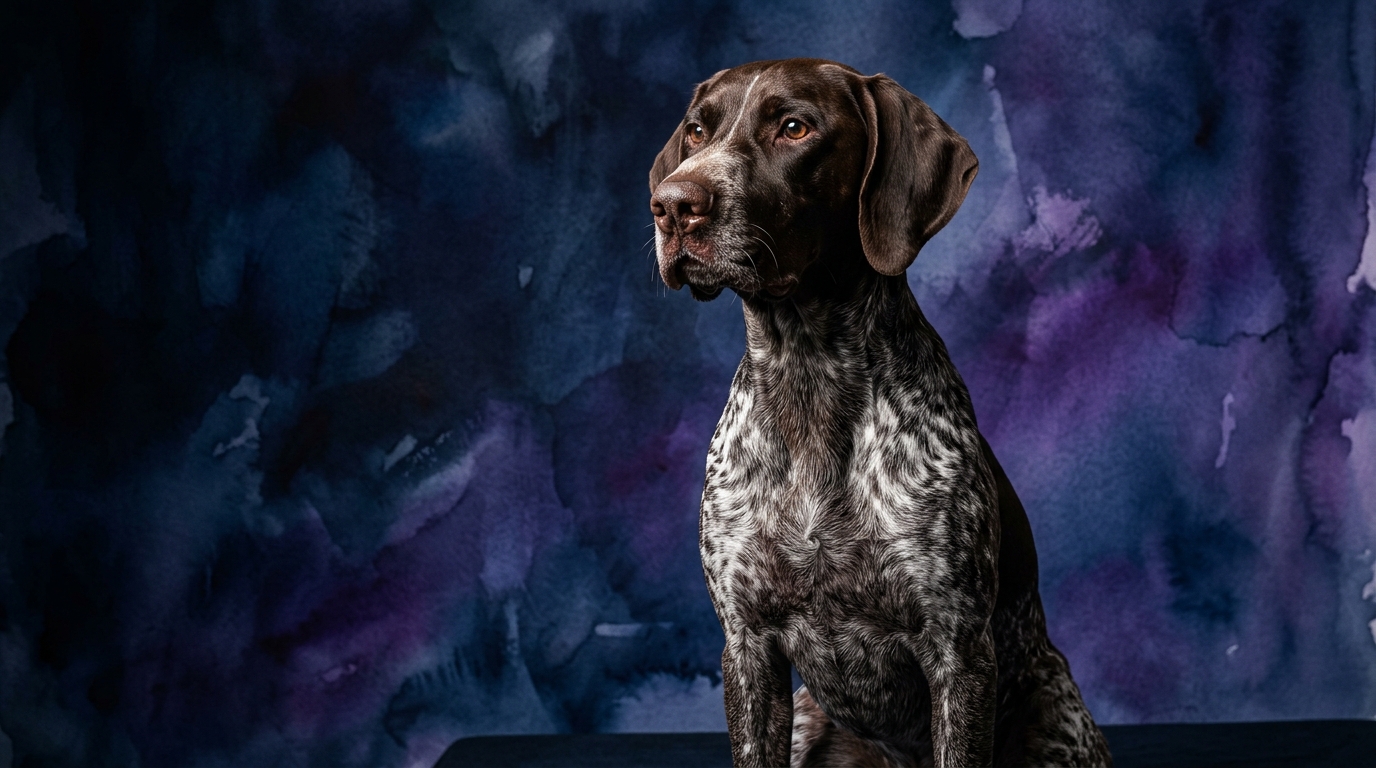
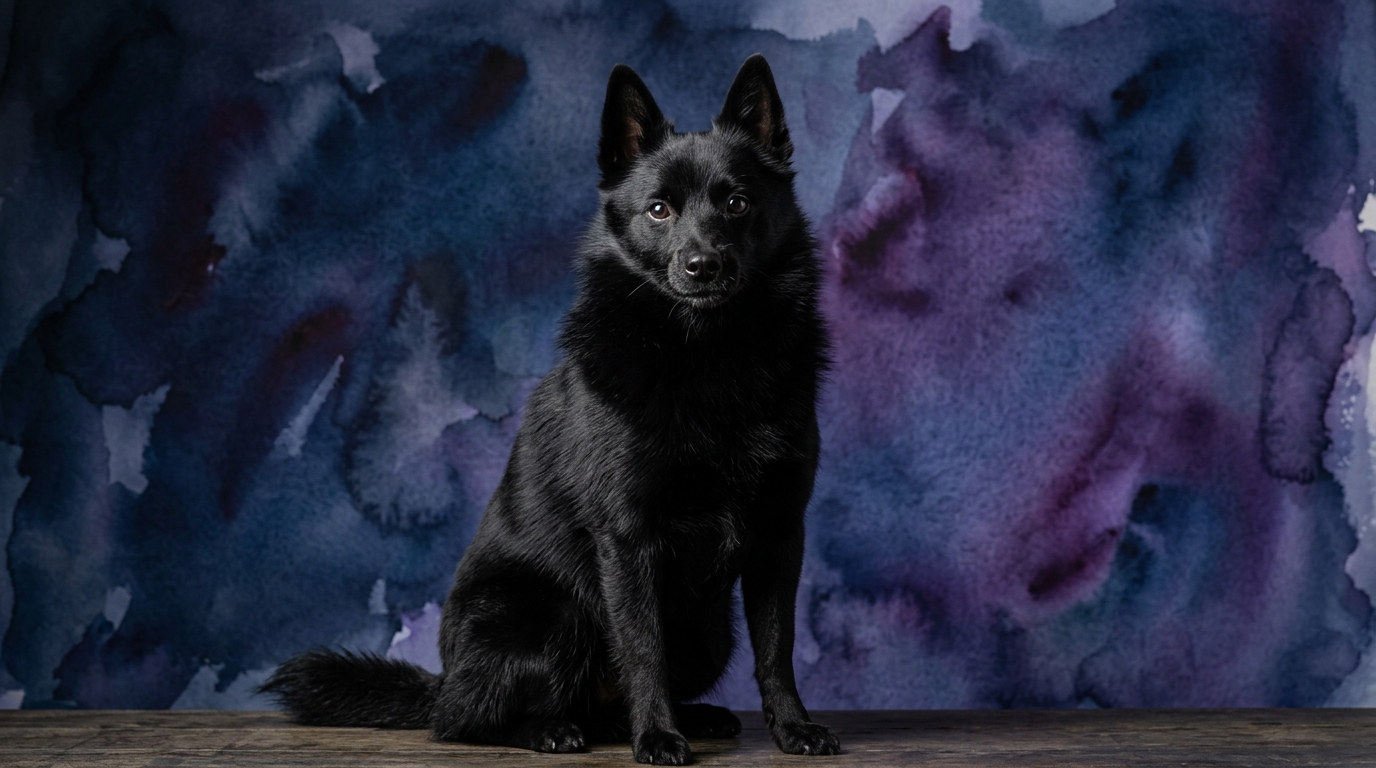
Side-by-Side Cognitive Profiles: GSP vs. Schipperke
The German Shorthaired Pointer (GSP), ranked #17 by Coren, presents a robust, balanced cognitive profile geared towards cooperative work and field performance. Its Problem Solving ability scores a perfect 5/5, indicating a strong capacity for independent thought in varied situations, often associated with navigating complex hunting scenarios. Training Speed is rated 4/5, suggesting they grasp new commands and routines effectively, though perhaps not with lightning-fast initial uptake. Social Intelligence stands at 4/5, reflecting their excellent responsiveness to human cues and a desire for partnership. Their Instinctive Drive is a commanding 5/5, a clear nod to their profound genetic programming for hunting, tracking, and retrieving. Memory, at 4/5, solidifies their ability to retain learned behaviors and recall past experiences, crucial for consistent performance.
Conversely, the Schipperke, a Coren rank #15 breed, showcases a different, equally impressive cognitive architecture. Its Problem Solving mirrors the GSP at 5/5, highlighting an acute ability to figure things out, often with a clever, independent streak. Where the Schipperke truly shines is in Training Speed, achieving a perfect 5/5, meaning they absorb new information and commands exceptionally quickly. Social Intelligence, however, is a more moderate 3/5, suggesting they are capable of understanding human signals but might prioritize their own agenda or require more consistent motivation. Instinctive Drive is rated 3/5, indicating a moderate level of inherent behaviors, often manifesting as a strong guarding instinct rather than a prey drive. Finally, Memory is a stellar 5/5, signifying an exceptional capacity for recall, remembering elaborate sequences, and retaining information over long periods, which can be a double-edged sword for owners.
Where the German Shorthaired Pointer Excels Cognitively
The German Shorthaired Pointer's cognitive strengths are deeply rooted in its heritage as a versatile hunting dog. Its 5/5 Problem Solving, combined with a 4/5 Social Intelligence and a massive 5/5 Instinctive Drive, allows it to excel in real-world, dynamic scenarios where independent thought must be balanced with human direction. Imagine a GSP tracking game through varied terrain; it's not just following a scent, but navigating obstacles, assessing wind direction, and making decisions about the most efficient path—all while remaining attuned to its handler's signals. This cooperative problem-solving, where the dog actively works alongside a human to achieve a shared goal, is a hallmark of the breed's cognitive superiority in its domain.
Their instinctual drive isn't merely about chasing; it's a complex cognitive blueprint involving scent discrimination, focused pursuit, and the controlled retrieval of game. This requires advanced pattern recognition, sustained attention, and impulse control, all driven by that powerful intrinsic motivation. The GSP's 4/5 Memory ensures that lessons learned in the field, whether it's a specific whistle command or the location of a hidden retrieve, are retained for future application, making them incredibly consistent partners. This blend of attributes makes them exceptional in activities like competitive obedience, agility, and especially field trials, where quick decision-making under pressure and seamless cooperation are paramount.
Where the Schipperke Demonstrates Cognitive Prowess
The Schipperke's cognitive advantages lean towards rapid acquisition of information and an impressive ability to retain it, coupled with a sharp, often independent, problem-solving mind. Their 5/5 Training Speed is a testament to their quick mental processing, allowing them to pick up new commands and tricks with remarkable alacrity. This isn't just about simple 'sit' and 'stay'; Schipperkes can master complex sequences of behaviors, chain commands together, and learn elaborate routines, making them stars in trick training and advanced obedience. Their exceptional 5/5 Memory ensures that once a skill is learned, it is deeply ingrained, leading to reliable performance over time, even with gaps in practice.
The Schipperke's 5/5 Problem Solving capability, while matching the GSP, often manifests differently. Where a GSP might problem-solve to cooperate, a Schipperke might problem-solve to achieve its own desired outcome, sometimes outsmarting its owner in the process. This could involve figuring out how to open a cabinet, manipulate a toy to get a treat, or strategize an escape from a confined space. Their lower 3/5 Instinctive Drive means they aren't as driven by a primal urge to hunt, but rather by intellectual curiosity and the satisfaction of a mental challenge. This makes them adept at brain games, puzzle toys, and activities that require clever manipulation and strategic thinking, often with a mischievous twinkle in their eye.
Trainability: Speed vs. Cooperation
When considering ease of training, the Schipperke’s 5/5 Training Speed gives it a clear edge in terms of how quickly it can learn new commands and behaviors. They are often described as sponges, soaking up information rapidly, which can be incredibly rewarding for owners who enjoy teaching complex routines or engaging in competitive dog sports like rally or obedience. However, their 3/5 Social Intelligence means that while they learn fast, they might not always be as eager to please or as consistently cooperative as breeds with higher social drives. Their independent streak can mean they understand what you want but might choose to perform only if the motivation is strong enough or if they deem it worthwhile, sometimes requiring more creative and consistent engagement from the trainer.
The German Shorthaired Pointer, with its 4/5 Training Speed, is still a very capable learner. While not as lightning-fast as the Schipperke in initial acquisition, its 4/5 Social Intelligence and 5/5 Instinctive Drive make it an inherently cooperative and willing partner. GSPs thrive on working with their humans and are highly motivated by praise and the opportunity to engage in activities that tap into their natural drives. This means that while a GSP might take a few more repetitions to solidify a new command, it will likely execute it with more enthusiasm and consistency, driven by a desire to please and a strong work ethic. Their trainability is less about raw speed and more about a deep, intrinsic motivation to collaborate, making them excellent candidates for advanced training and working roles.
Matching Breeds to Lifestyles: Active vs. Relaxed Owners
For active owners who seek a dedicated partner for outdoor adventures and structured activities, the German Shorthaired Pointer is an exceptional fit. Its profound 5/5 Instinctive Drive translates into an intense need for physical and mental engagement, particularly activities involving scent work, running, retrieving, and exploring. Owners who enjoy hiking, trail running, hunting, or participating in dog sports like agility, dock diving, or field trials will find the GSP to be an enthusiastic and tireless companion. Their 4/5 Social Intelligence means they thrive on close interaction and cooperative tasks, making them deeply bonded and responsive partners in these endeavors. A GSP requires substantial daily exercise and mental stimulation to prevent boredom and channel its considerable energy constructively, making it unsuitable for a truly relaxed, sedentary lifestyle.
The Schipperke, while still requiring regular exercise, is better suited for owners who might have a less overtly active lifestyle but can provide consistent mental challenges and a structured environment. Their 5/5 Problem Solving and 5/5 Memory make them ideal for owners who enjoy teaching tricks, engaging in puzzle games, or participating in urban dog sports like urban agility or competitive obedience that don't demand vast open spaces. Their 3/5 Instinctive Drive means their exercise needs are more moderate compared to the GSP, but their sharp minds demand daily engagement to prevent them from finding their own 'fun,' which can sometimes be mischievous. They can adapt well to apartment living if their cognitive needs are met, making them a good choice for owners who appreciate a clever, independent, yet deeply loyal companion who enjoys a mix of structured play and relaxed indoor time.
The Verdict
Choose a German Shorthaired Pointer if you lead an active, outdoor-oriented life and desire a highly cooperative, driven partner for adventures and performance tasks. They thrive on shared goals and extensive physical outlets.
Choose a Schipperke if you appreciate a clever, independent thinker who learns rapidly and excels at mental challenges, even if your lifestyle is less intensely active. They reward owners who provide consistent structure and engage their sharp minds.
🧠 Find Your Pet's IQ Score
Our Pet IQ Lab assessment covers 25+ tests across 5 cognitive dimensions — personalized to your breed.
Take the Full IQ Test →Frequently Asked Questions
Which breed is better for first-time dog owners?
The German Shorthaired Pointer, with its strong cooperative drive and eager-to-please nature, can be a good fit for active first-time owners willing to commit to consistent training and exercise. The Schipperke's independent streak and clever problem-solving might pose more of a challenge for inexperienced owners who are not prepared for a dog that can outsmart them.
Do German Shorthaired Pointers and Schipperkes get along with other pets?
German Shorthaired Pointers generally possess good social intelligence and can coexist peacefully with other pets, especially if socialized early, though their strong prey drive might require careful management around small animals. Schipperkes, with their guarding instincts and moderate social intelligence, can be more selective, often preferring to be the sole canine or requiring careful, early introductions to other pets.
Which breed requires more grooming?
Neither breed is particularly high-maintenance in terms of grooming. German Shorthaired Pointers have short, dense coats that require minimal brushing, perhaps once a week, to remove loose hair. Schipperkes have a slightly longer, thicker double coat that benefits from weekly brushing to manage shedding and prevent matting, especially around their distinctive ruff and britches.