
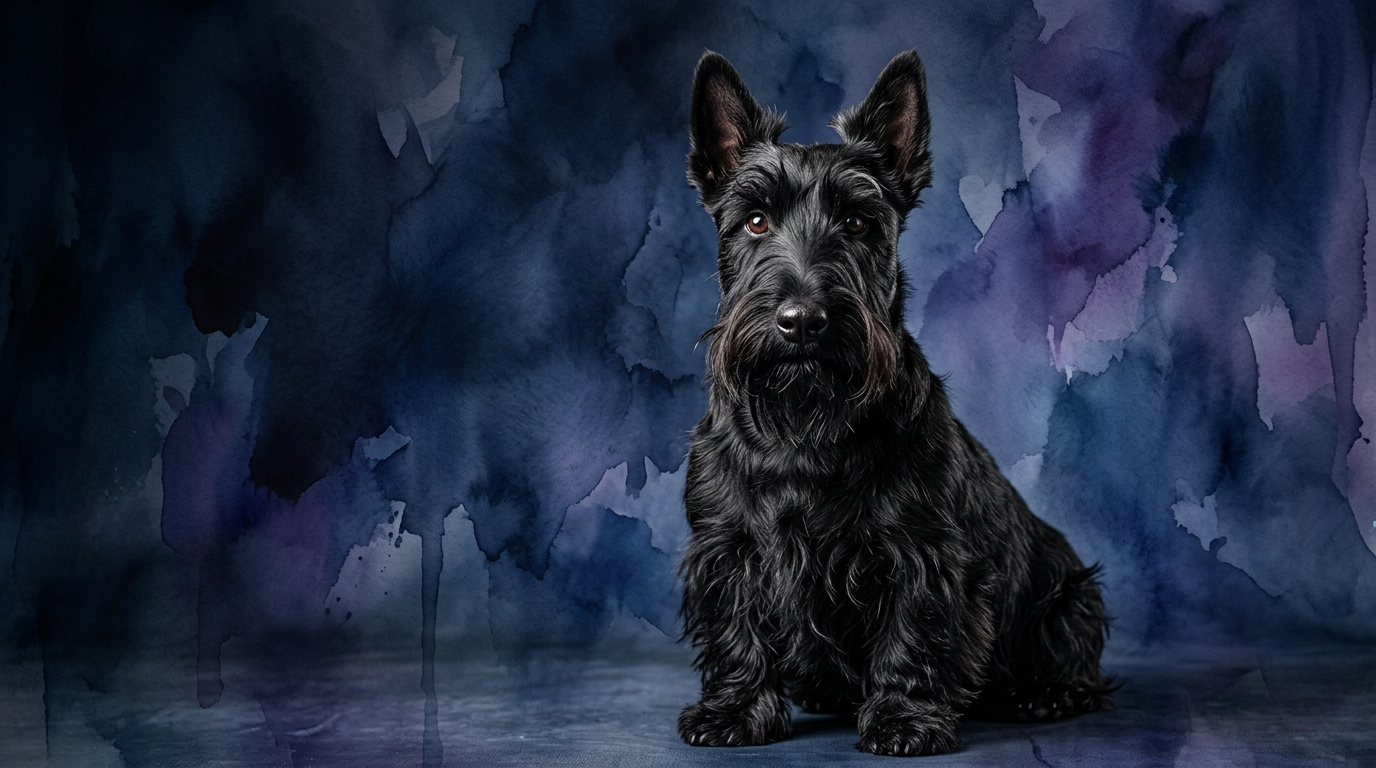
Side-by-Side IQ Profile: GSP vs. Scottish Terrier
The Cosmic Pet Pet IQ Lab's assessment reveals significant differences in the cognitive strengths of these two breeds, underscoring their unique evolutionary paths and purposes. The German Shorthaired Pointer (Coren rank #17) exhibits a profile geared towards cooperative work and complex task execution, while the Scottish Terrier (Coren rank #65) displays a more independent and tenacious intelligence.
For the German Shorthaired Pointer, Problem Solving is rated 5/5, indicating an exceptional capacity for understanding multi-step commands, adapting to novel situations, and figuring out complex tasks quickly. Their Training Speed is 4/5, reflecting rapid learning and strong retention of new behaviors, fueled by a desire to collaborate. Social Intelligence, also 4/5, highlights their attunement to human cues, forming strong, responsive bonds and understanding social dynamics. An Instinctive Drive of 5/5 signifies an unparalleled, focused passion for hunting, tracking, and retrieving, making them highly task-oriented. Finally, their Memory is 4/5, ensuring excellent recall of learned commands and past experiences.
In contrast, the Scottish Terrier's cognitive profile emphasizes self-reliance and persistence. Their Problem Solving is 3/5, meaning they are capable of figuring out practical challenges, often prioritizing their own agenda over human directives. Training Speed is 3/5; they learn at a moderate pace but require consistent, patient motivation due to their independent streak. Social Intelligence, rated 3/5, indicates they form deep, selective bonds but can be reserved or indifferent towards strangers, interpreting social cues through a more independent lens. An Instinctive Drive of 3/5 reflects a strong, persistent drive for digging, chasing small prey, and asserting their will, rather than cooperative hunting. Their Memory, also 3/5, is adequate for learned tasks, though they might display selective recall if a stronger instinct intervenes.
Where the German Shorthaired Pointer Wins Cognitively
The German Shorthaired Pointer's cognitive strengths lie in their exceptional ability for cooperative problem-solving and sustained, focused work. Their 5/5 Problem Solving and 4/5 Training Speed mean they excel at learning intricate sequences, such as advanced obedience routines or complex field trials, where anticipating human intentions and executing precise actions are paramount. This is not merely about following commands, but understanding the underlying goal of a task and adapting their approach.
Furthermore, the GSP's 5/5 Instinctive Drive, coupled with their 4/5 Social Intelligence, makes them unparalleled in tasks requiring sustained effort and close partnership. They don't just possess a strong drive; they possess a drive that is readily channeled and directed by their human companion. This manifests in their ability to track game for hours, retrieve multiple birds, or navigate challenging terrain while maintaining communication and responsiveness, demonstrating a sophisticated integration of physical and cognitive prowess that few breeds can match.
Where the Scottish Terrier Wins Cognitively
While the Scottish Terrier's scores are generally lower in traditional cooperative metrics, their cognitive 'wins' are found in their robust independence and tenacious self-sufficiency. Their 3/5 Problem Solving isn't about solving human-assigned puzzles, but rather about ingeniously figuring out how to achieve *their* goals, whether that's escaping a yard, outsmarting a perceived rival, or persistently digging for a fascinating scent. This self-directed problem-solving requires a different kind of cognitive flexibility.
The Scottie's 3/5 Instinctive Drive, though not as high as a GSP's, is characterized by an unwavering persistence in their chosen pursuits, often rooted in their earthdog heritage. This drive, combined with their moderate Social Intelligence (3/5), means they are not easily swayed from a task they deem important, displaying a mental fortitude that can be invaluable in specific contexts. Their memory, while 3/5, is perfectly adequate for retaining information relevant to their independent operations, such as the layout of their territory or the habits of local squirrels. They possess a distinct 'terrier tenacity' that is a cognitive strength for owners who appreciate a dog with a strong, independent will.
Which is Easier to Train and Why
Based on the IQ profiles, the German Shorthaired Pointer is demonstrably easier to train for cooperative tasks and obedience. Their 4/5 Training Speed and 4/5 Social Intelligence indicate a strong desire to please and a quick grasp of new concepts, making them highly responsive to positive reinforcement. They thrive on clear direction and consistent expectations, readily forming associations between commands and actions. Their high instinctive drive is also easily channeled into structured training, allowing for rapid skill acquisition in activities like agility, obedience, or field work.
The Scottish Terrier, with its 3/5 Training Speed and 3/5 Social Intelligence, presents a greater training challenge, primarily due to their independent and often stubborn nature. While capable of learning, they require more patience, creativity, and a deep understanding of their terrier mindset. They are less inclined to perform simply to please and often need to perceive a personal benefit or find the task intrinsically rewarding. This isn't a lack of capacity, but a difference in motivation; a Scottie might understand a command perfectly but choose not to execute it if their own instincts or preferences dictate otherwise, requiring an owner to be more persuasive and persistent in their approach.
Which Suits Active Owners vs. Relaxed Owners
The German Shorthaired Pointer is unequivocally suited for active owners who can provide ample physical and mental stimulation. Their 5/5 Instinctive Drive and high problem-solving abilities demand daily outlets for their energy and intellect. Owners who enjoy activities like running, hiking, hunting, competitive dog sports, or extended outdoor adventures will find the GSP an ideal, eager partner. A GSP thrives when given a 'job' to do, and without sufficient engagement, their considerable mental and physical energy can lead to boredom and potentially destructive behaviors.
The Scottish Terrier can suit owners who are perhaps less intensely active than a GSP owner, but they are by no means a 'relaxed' dog in terms of mental engagement. Their 3/5 Instinctive Drive means they still require regular exercise and mental stimulation, though perhaps not the same sustained, high-impact activities as a GSP. They are well-suited for owners who appreciate daily walks, interactive playtime, and consistent training that respects their independent spirit. While they might enjoy lounging, their curious and tenacious nature means they need engaging activities that challenge their problem-solving skills, such as puzzle toys or scent work, to prevent boredom.
The Verdict
Choose the German Shorthaired Pointer if you are an active individual or family seeking a highly cooperative, trainable, and driven companion for outdoor adventures and performance sports.
Opt for the Scottish Terrier if you appreciate a dog with a distinct, independent personality, a tenacious spirit, and are prepared for a more persistent, creative approach to training and engagement.
🧠 Find Your Pet's IQ Score
Our Pet IQ Lab assessment covers 25+ tests across 5 cognitive dimensions — personalized to your breed.
Take the Full IQ Test →Frequently Asked Questions
Is a German Shorthaired Pointer a good family dog?
Yes, GSPs can be excellent family dogs, especially for active families. Their high social intelligence and desire to please make them affectionate companions, though their energy levels require consistent exercise and mental engagement to ensure they are well-behaved indoors.
Do Scottish Terriers need a lot of exercise?
Scottish Terriers require regular, moderate exercise to stay healthy and happy. Daily walks, playtime in a secure yard, and mental games are important to satisfy their instinctive drives, preventing boredom and channeling their tenacity constructively.
Which breed is better for apartment living?
Neither breed is ideally suited for small apartment living without significant owner commitment, but a Scottish Terrier might adapt slightly better given their lower overall activity demands compared to a GSP. However, both require consistent outdoor activity and mental enrichment to thrive.