
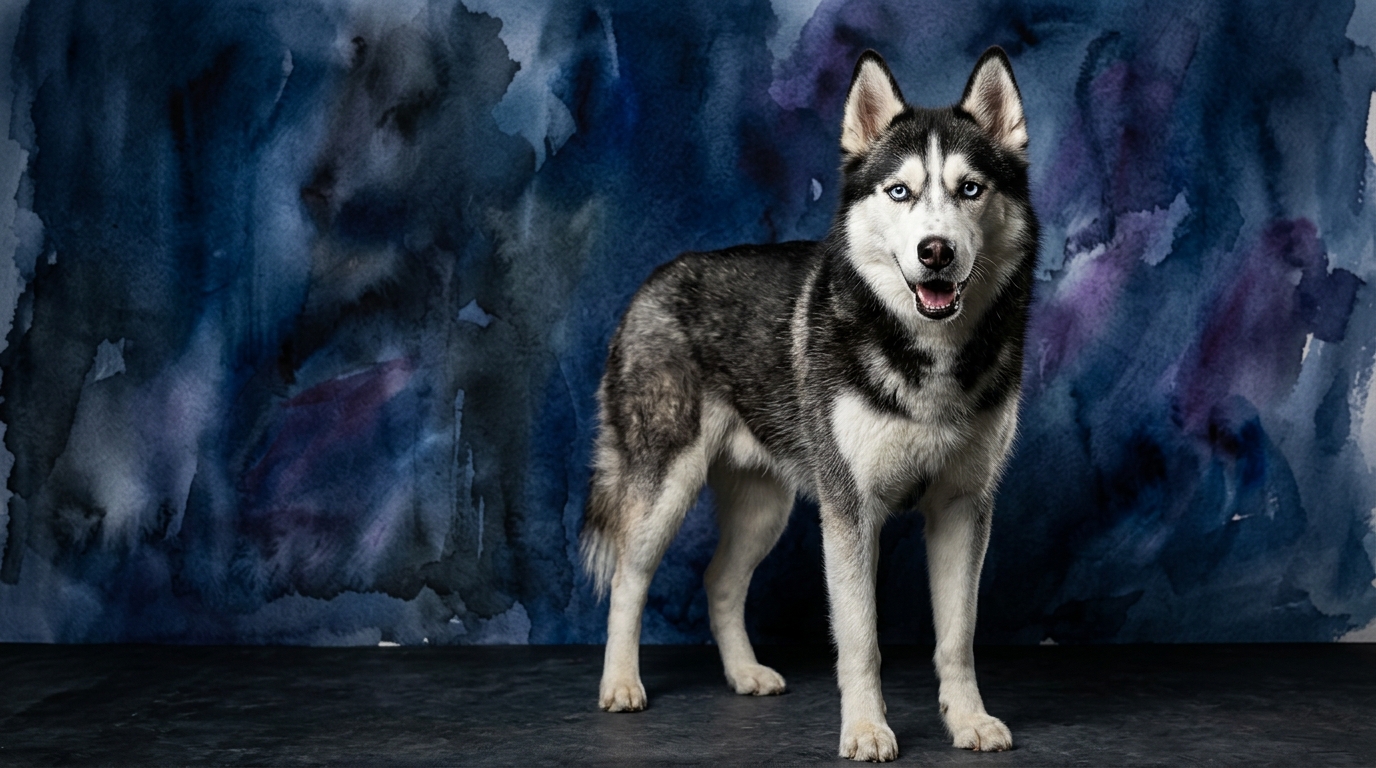
Side-by-Side IQ Profile: GSP vs. Siberian Husky
The Cosmic Pet Pet IQ Lab's framework offers a detailed lens through which to examine the cognitive profiles of these two distinct breeds, moving beyond general perceptions. The German Shorthaired Pointer (GSP), ranked #17 by Coren for working and obedience intelligence, demonstrates a strong aptitude for learning and cooperation, while the Siberian Husky, at Coren rank #45, showcases a different, more independent type of intellect.
For the GSP, problem-solving is rated 5/5, indicating an exceptional capacity to navigate complex scenarios, often involving strategy in field work or intricate multi-step commands. Their training speed is 4/5, reflecting a keen eagerness to absorb new information rapidly, driven by a desire to collaborate with human partners. Social intelligence, at 4/5, highlights their ability to read human cues and form strong, responsive bonds, while their instinctive drive is a perfect 5/5, manifesting as an intense focus on pointing, retrieving, and tracking. Memory is solid at 4/5, ensuring retention of learned behaviors and spatial awareness.
The Siberian Husky presents a different cognitive blueprint. Their problem-solving ability is 4/5, showcasing resourcefulness in navigating environments and overcoming obstacles, often independently. Training speed is rated 2/5, which underscores their independent nature and a tendency towards selective obedience; they understand, but may not always comply without strong motivation. Social intelligence stands at 3/5, indicating a pack-oriented mindset where human interaction is valued, but not always prioritized above their own drives. Like the GSP, their instinctive drive is a powerful 5/5, expressed through their enduring need to pull, run, and explore. Their memory is also 4/5, crucial for recalling routes and maintaining social structures within their pack.
Where the German Shorthaired Pointer Excels Cognitively
The GSP's cognitive advantages are most evident in areas requiring direct collaboration and complex task execution under human guidance. Their superior problem-solving (5/5) means they excel at understanding intricate sequences, such as quartering a field, marking fallen game, and retrieving, often adapting strategy based on handler feedback. This isn't just about following orders; it's about anticipating needs and making tactical decisions within a structured framework. Coupled with their high training speed (4/5) and social intelligence (4/5), GSPs absorb new commands quickly and consistently, often requiring fewer repetitions. They genuinely seek to understand and please, making them exceptionally responsive to sophisticated training protocols like advanced agility or specialized search and rescue work. Their memory (4/5) ensures these complex skills are retained, allowing them to build an extensive repertoire.
Where the Siberian Husky Excels Cognitively
The Siberian Husky's cognitive strengths shine in contexts demanding independence, resilience, and innate resourcefulness. While their problem-solving is 4/5, it's a different kind of problem-solving than the GSP's collaborative approach. Huskies are masters of navigating challenging terrains, finding efficient paths, and making decisions autonomously, particularly when their primary drive for running and exploration is engaged. This resourcefulness is a legacy of their sledding origins, where they needed to make independent judgments about trail conditions and team dynamics. Their powerful instinctive drive (5/5) for endurance running and pulling is not just physical; it's deeply cognitive, guiding their decision-making and focus over long distances. Their memory (4/5) is particularly adept at recalling routes and spatial layouts, crucial for navigating vast, often featureless, landscapes. This independent cognitive style means they excel when allowed to utilize their innate drives, often demonstrating ingenuity in overcoming obstacles without constant human intervention.
Ease of Training: A Tale of Two Breeds
When evaluating ease of training, the German Shorthaired Pointer generally presents a more straightforward path for the average owner. Their training speed (4/5) and social intelligence (4/5) mean they are inherently more biddable and attentive to human instruction. GSPs thrive on positive reinforcement and clear communication, quickly forming associations between commands and actions. They possess a strong desire to work *with* their handler, making them highly motivated to learn and comply. This collaborative spirit means they often anticipate cues and are eager to perform, whether in a formal obedience setting or during daily interactions.
The Siberian Husky, conversely, offers a different training experience, largely due to their lower training speed (2/5) and more independent social intelligence (3/5). Huskies are intelligent enough to understand commands, but their compliance is often conditional. Their strong instinctive drive (5/5) for running and exploring can easily override a handler's request if it conflicts with their immediate interests. They are not typically motivated by a desire to please in the same way a GSP is; instead, they respond best to training methods that are highly engaging, consistent, and offer compelling rewards that align with their drives. Their independence means they might question a command's necessity, making consistency, patience, and a deep understanding of their motivations paramount. Training a Husky often feels like negotiating rather than simply instructing, requiring a handler who can be a firm but fair leader, understanding their 'stubbornness' as innate self-reliance.
Matching Breeds to Owner Lifestyles
Neither the German Shorthaired Pointer nor the Siberian Husky is suited for a truly 'relaxed' owner; both demand significant daily engagement. However, the *nature* of that activity and the owner's role differ. The GSP is ideal for an active owner who seeks a highly engaged, collaborative partner for structured outdoor pursuits. This includes hunting, field trials, agility, dock diving, or long, purposeful runs alongside their human. GSPs need mental stimulation intertwined with physical exertion, thriving when given tasks to accomplish *with* their owner. They are best for individuals who enjoy training and directing their dog in various sports and activities, fostering a deep, working bond.
The Siberian Husky, while also requiring immense activity, suits an owner prepared for an independent and endurance-focused companion. Their drive for running (5/5 instinctive drive) is paramount, often manifesting as a desire to explore vast distances. Owners must be able to provide outlets for this, whether through securely fenced areas for free running, regular long-distance jogging, or even sledding/canicross. Huskies are not always as interested in human-directed tasks during exercise; they often prefer to run and explore independently. This means they are suited for highly active individuals who can manage their escape artist tendencies and provide consistent, high-volume exercise without necessarily needing a constant, direct partnership.
The Verdict
Opt for the German Shorthaired Pointer if you seek a highly trainable, collaborative canine partner for sports, hunting, or a family that enjoys structured activities and a strong human-dog bond.
Select the Siberian Husky if you are an exceptionally active individual or family prepared for an independent, endurance-driven companion who thrives on extensive running and outdoor exploration, often with a unique will of their own.
🧠 Find Your Pet's IQ Score
Our Pet IQ Lab assessment covers 25+ tests across 5 cognitive dimensions — personalized to your breed.
Take the Full IQ Test →Frequently Asked Questions
Are German Shorthaired Pointers good family dogs?
Yes, GSPs can be excellent family dogs, forming strong bonds and enjoying play, provided their significant exercise and mental stimulation needs are consistently met. Their social intelligence allows them to integrate well into family dynamics.
Do Siberian Huskies require a lot of grooming?
Siberian Huskies have a dense double coat that requires regular brushing, especially during shedding seasons, to manage loose fur and maintain coat health. While not excessive, their grooming needs are consistent to prevent matting.
Can a Siberian Husky live in an apartment?
While Huskies can adapt to apartment living, it's generally not ideal due to their profound need for extensive daily exercise and space to run. Without sufficient physical and mental outlets, they can become destructive or vocal.