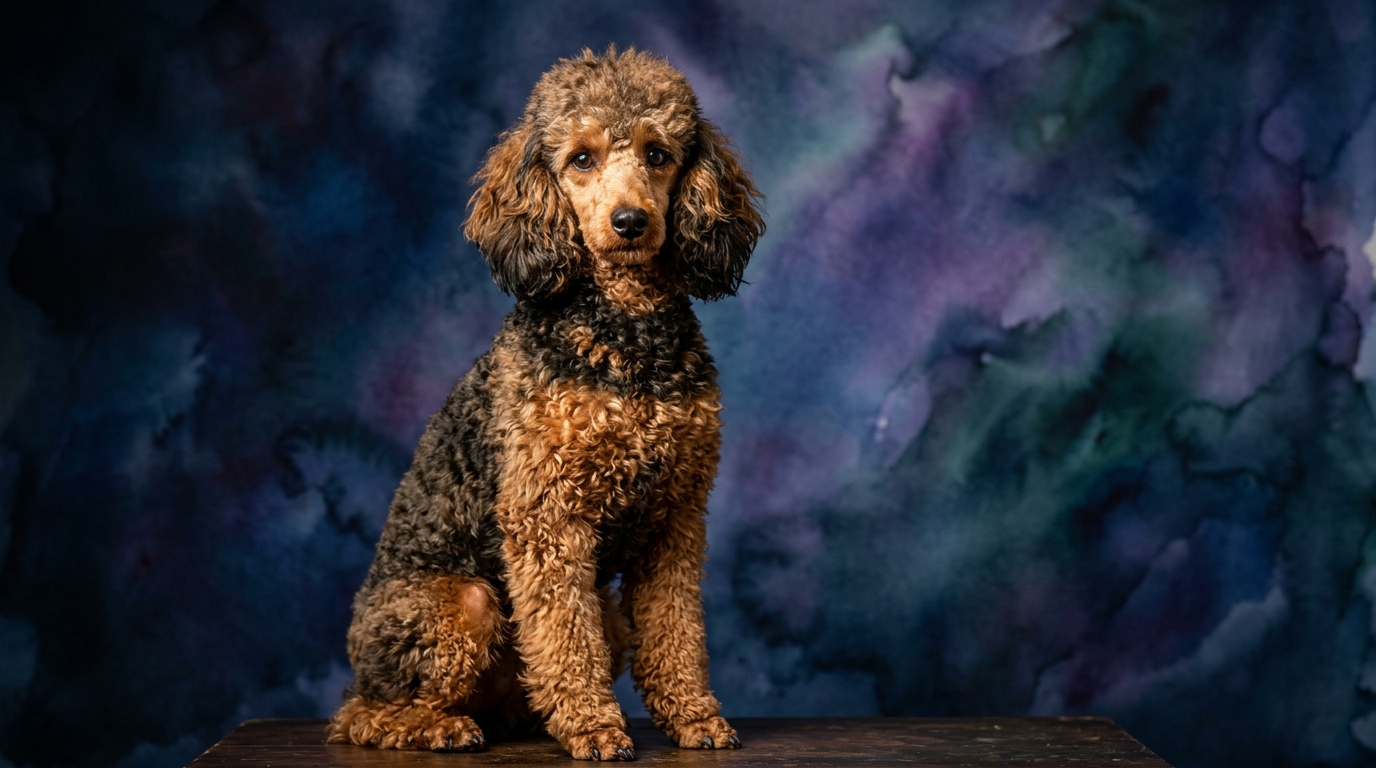
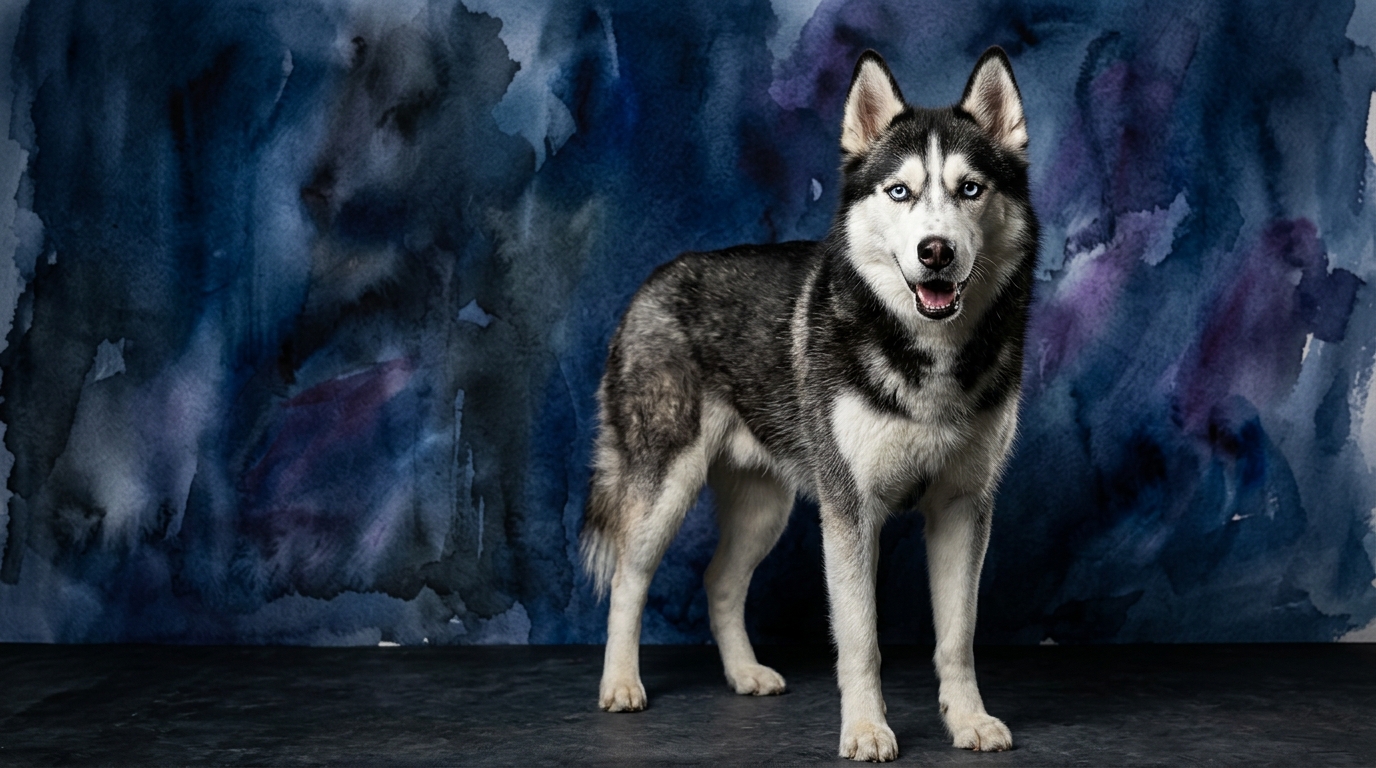
Side-by-Side IQ Profile: Poodle (Standard) vs. Siberian Husky
At The Cosmic Pet Pet IQ Lab, we evaluate canine intelligence across five key dimensions. The Standard Poodle, holding a Coren rank of #2, presents a remarkable profile: its Problem Solving is rated 5/5, indicating an exceptional capacity for abstract thought, understanding complex sequences, and adapting strategies to novel situations. Training Speed also scores 5/5, meaning Poodles grasp new commands and routines with minimal repetition and eager participation. Their Social Intelligence is a perfect 5/5, showcasing a profound ability to interpret human cues, emotional states, and intricate social dynamics within a household. Instinctive Drive, while present, scores 4/5, manifesting as a keenness for retrieving, agility, and task-oriented engagement that is highly adaptable to human direction rather than singularly focused. Finally, Memory stands at 5/5, reflecting a robust retention of learned behaviors, commands, and routines over extended periods.
The Siberian Husky, with a Coren rank of #45, offers a distinct cognitive makeup shaped by its working heritage. Its Problem Solving is rated 4/5, demonstrating a resourceful and often independent approach to challenges, particularly those related to navigation, resource acquisition, or bypassing barriers. Training Speed, however, scores 2/5, indicating a need for significant patience, creative motivation, and consistent repetition due to their independent streak and tendency to prioritize their own agenda. Social Intelligence registers 3/5; while capable of bonding, Huskies are often less attuned to subtle human emotional shifts, operating more within a clear pack hierarchy and exhibiting a degree of aloofness. Instinctive Drive is a commanding 5/5, driving their powerful urges for pulling, endurance running, exploring, and a notable prey drive. Memory is 4/5, allowing them to recall routes, specific tasks, and familiar environments effectively, though perhaps with less emphasis on intricate human-directed sequences compared to the Poodle.
Where the Standard Poodle Excels Cognitively
The Standard Poodle's cognitive strengths shine in areas demanding adaptable reasoning and deep human interaction. Their 5/5 Problem Solving allows them to excel in tasks requiring multiple steps, abstract conceptualization, or novel solutions beyond simple rote learning, making them exceptional candidates for service work, complex trick training, or competitive obedience. This breed demonstrates a unique capacity to generalize learned concepts to new situations, rather than being confined to specific contexts. Their superior Social Intelligence further enhances this, enabling them to anticipate human intentions and respond with precision, often before a verbal command is even fully issued. This translates into a companion that seems to 'read' its owner, adapting its behavior to fit the household's rhythm and emotional climate with remarkable sensitivity.
Where the Siberian Husky Excels Cognitively
The Siberian Husky's cognitive prowess is deeply rooted in its ancestral role, particularly in specialized problem-solving and unyielding drive. Their 4/5 Problem Solving, while different from the Poodle's abstract approach, is profoundly effective in practical, survival-oriented scenarios. Huskies are renowned for their ingenuity in navigating complex terrains, finding ways to circumvent or defeat physical barriers, and exhibiting incredible resourcefulness when left to their own devices – often expressed as escape artistry. Their 5/5 Instinctive Drive for sustained physical effort and exploration means they possess an internal compass and stamina that few breeds can match, allowing them to maintain focus and motivation over vast distances or prolonged periods of activity. This specialized intellect allows them to thrive in environments where independence and physical resilience are paramount, making strategic decisions for self-preservation or task completion without constant human direction.
Training Dynamics: Poodle vs. Husky
The Standard Poodle is unequivocally easier to train, primarily due to its perfect 5/5 Training Speed and 5/5 Social Intelligence. These dogs exhibit an eagerness to please, a rapid grasp of new concepts, and a strong desire to collaborate with their human companions. They require fewer repetitions to solidify behaviors and are highly motivated by praise and interaction, making training sessions efficient and rewarding. Conversely, the Siberian Husky's 2/5 Training Speed and 3/5 Social Intelligence present a more significant training challenge. Huskies are independent thinkers; their intelligence often manifests as a selective adherence to commands, especially if they perceive no immediate benefit or if their strong instinctive drives conflict with the requested action. Training a Husky demands exceptional patience, high-value rewards, and a deep understanding of their innate motivations, often requiring more creative and persistent approaches to achieve consistent results. They may understand a command but choose not to execute it, a common behavioral difference often mistaken for a lack of intelligence rather than a strong independent will.
Suitability for Active vs. Relaxed Owners
The Standard Poodle, with its adaptable intelligence and strong social drive, can suit a range of active owners who enjoy engaging their dog in various activities, from intricate obedience to agility or even therapy work. While they appreciate mental stimulation, their exercise needs are moderate to high and can often be met through structured play and walks, making them suitable for owners who are active but not necessarily extreme athletes. A relaxed owner, however, must still commit to mental enrichment to prevent boredom. The Siberian Husky is definitively suited for highly active owners. Their 5/5 Instinctive Drive for sustained physical exertion demands extensive daily exercise, often requiring several hours of vigorous activity like running, hiking, or sledding. A relaxed owner would struggle immensely with a Husky, as unmet energy needs often lead to destructive behaviors, incessant vocalization, or escape attempts driven by their inherent need to explore and move. Huskies thrive with owners who embrace an outdoor, adventurous lifestyle and can integrate their dog into physically demanding routines.
The Verdict
Choose a Standard Poodle if you seek a highly adaptable companion eager for complex training, deeply attuned to human communication, and capable of excelling in diverse canine activities. They thrive on mental engagement and a collaborative partnership with their family.
Opt for a Siberian Husky if you lead an extremely active lifestyle and desire an independent, resilient companion with immense physical stamina and specialized problem-solving skills for outdoor adventures. Be prepared for their strong drives and patient training requirements.
🧠 Find Your Pet's IQ Score
Our Pet IQ Lab assessment covers 25+ tests across 5 cognitive dimensions — personalized to your breed.
Take the Full IQ Test →Frequently Asked Questions
Does a Poodle's high memory score mean they never forget a command?
A Poodle's 5/5 memory means they retain learned behaviors and routines exceptionally well, often requiring fewer refreshers than breeds with lower scores. While they can still forget if a behavior isn't reinforced, their cognitive capacity for retention is robust.
Why is the Siberian Husky's problem-solving score lower than the Poodle's if they are known for escape artistry?
The Husky's 4/5 problem-solving excels in practical, environment-focused challenges like escaping or navigating, demonstrating ingenuity in specific contexts. The Poodle's 5/5 reflects a broader capacity for abstract reasoning and applying solutions across diverse, human-directed scenarios.
What does a 5/5 Instinctive Drive in a Husky imply for daily life?
A 5/5 Instinctive Drive means the Husky has powerful, inherent urges for activities like running, exploring, and pulling, necessitating significant daily outlets. Unmet drives can lead to behaviors like digging, excessive vocalization, or attempts to roam, requiring owners to proactively manage these strong impulses.