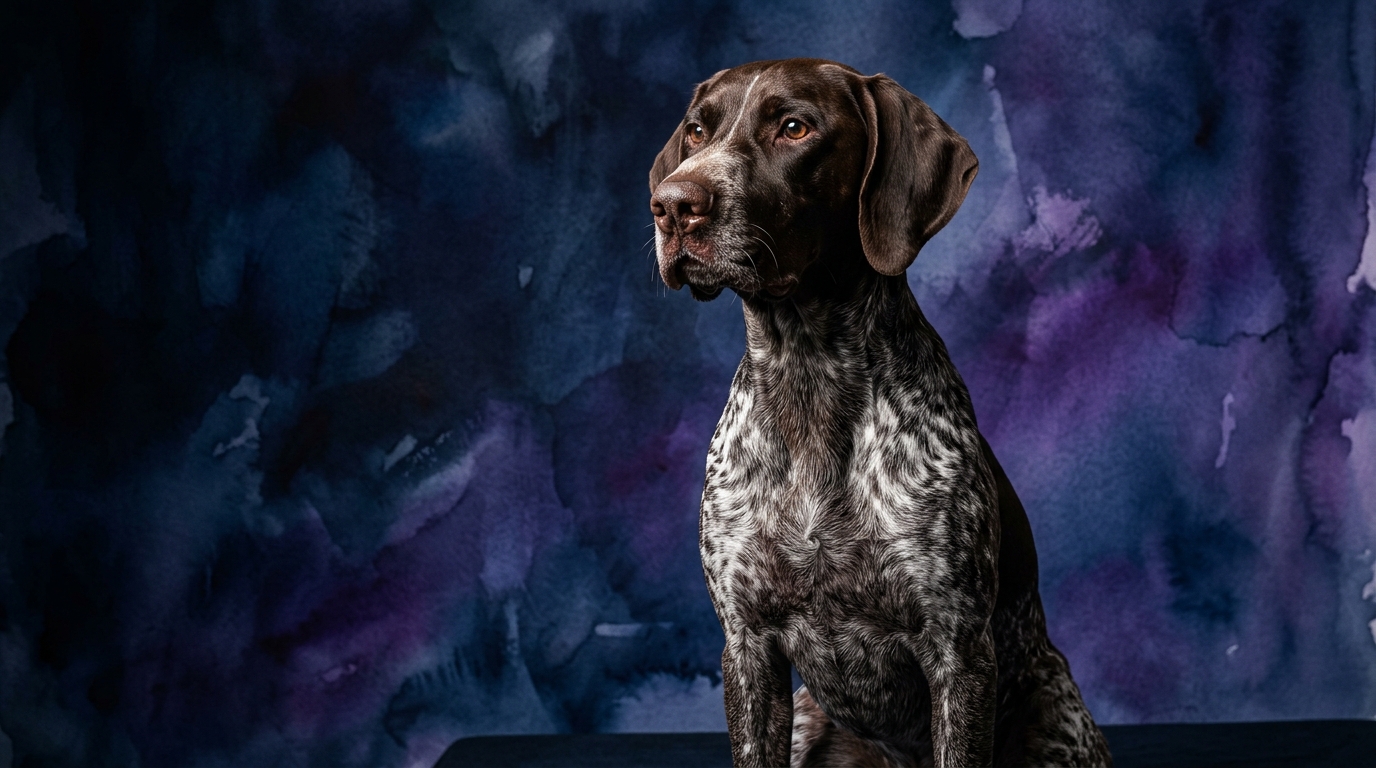
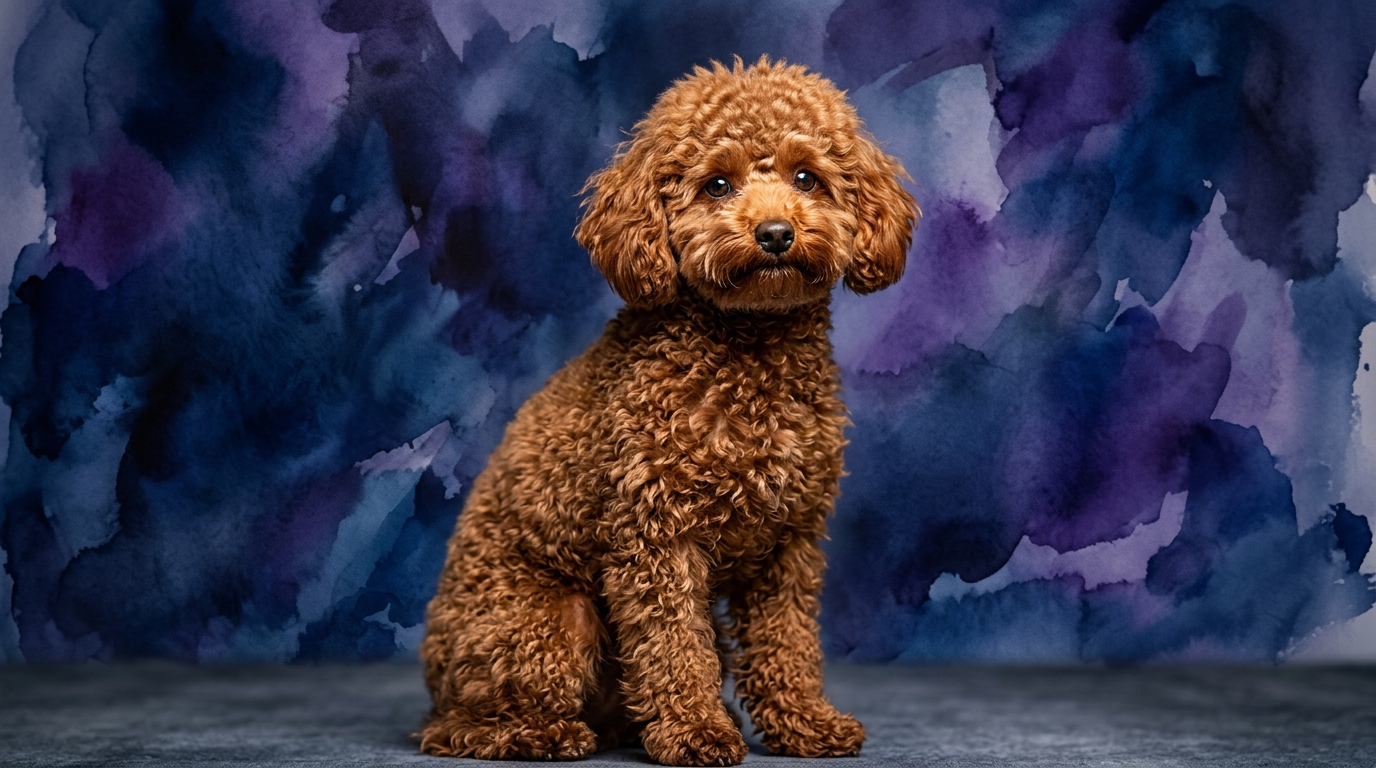
Side-by-Side Cognitive Profiles
The German Shorthaired Pointer (GSP), ranking #17 on Coren's scale, presents a cognitive profile built for purpose and endurance. Their problem-solving ability scores a perfect 5/5, indicating a deep capacity for strategic thinking, particularly in dynamic outdoor environments where they must adapt quickly to changing conditions. Training speed is a robust 4/5, meaning they grasp new concepts readily, though their independent nature can sometimes require consistent motivation. Social intelligence, at 4/5, highlights their strong pack bonds and ability to read human intentions, making them loyal companions. A standout is their instinctive drive, a maximal 5/5, reflecting their profound natural inclination for hunting, tracking, and retrieving. Finally, their memory, a solid 4/5, ensures they retain complex routines and learned behaviors over time, crucial for intricate field work.
In stark contrast, the Toy Poodle, holding an impressive #2 rank on Coren's scale, showcases a different but equally compelling mental architecture. They match the GSP in problem-solving with a 5/5, often demonstrating this through clever manipulation of objects or understanding complex household routines. Their training speed is unparalleled at 5/5, making them incredibly quick learners of commands and tricks, eager to please and absorb information. Social intelligence is rated 3/5; while deeply bonded with their families, they can sometimes be more reserved with strangers or sensitive to subtle social cues. Instinctive drive, at 3/5, is present but less overt than a GSP's, often manifesting as a playful retrieving impulse rather than a strong prey drive. Their memory, however, is a perfect 5/5, allowing them to recall an extensive array of commands, names, and experiences with remarkable precision.
Where the German Shorthaired Pointer Wins Cognitively
The German Shorthaired Pointer (GSP) shines with a formidable instinctive drive, scoring a perfect 5/5. This isn't just about chasing squirrels; it encompasses a profound, innate understanding of tracking, pointing, and retrieving, allowing them to process vast amounts of sensory information – scent, wind direction, terrain – and make rapid, autonomous decisions in complex outdoor scenarios. Their problem-solving (5/5) is deeply integrated with this drive, manifesting as strategic thinking in the field, like figuring out the most efficient way to quarter a field or locate downed game. While a Toy Poodle might solve a puzzle box, a GSP's cognitive strength lies in solving dynamic, real-world puzzles dictated by nature, often requiring sustained focus and physical endurance over hours. Their cognitive framework is geared towards practical application in challenging, expansive environments.
Where the Toy Poodle Wins Cognitively
Conversely, the Toy Poodle demonstrates a distinct cognitive edge in areas that align more closely with human interaction and domestic learning environments. Their training speed, a perfect 5/5, means they grasp new commands and complex sequences with remarkable alacrity, often anticipating the next step in a routine before it's given. This rapid learning is bolstered by an exceptional memory, also a 5/5, allowing them to retain a vast repertoire of cues, tricks, and daily household rhythms with impressive accuracy. While both breeds excel at problem-solving (5/5), the Toy Poodle's prowess often manifests in deciphering human intentions, adapting quickly to new rules, and even creatively manipulating their environment for desired outcomes, such as figuring out how to open a cabinet or signal their needs effectively. Their mental agility thrives on intricate, human-centric challenges.
Which Is Easier to Train and Why
When assessing ease of training, the Toy Poodle generally holds a distinct advantage, primarily due to its perfect 5/5 score in training speed and a lower instinctive drive (3/5). Toy Poodles are often described as eager-to-please, absorbing new commands and advanced behaviors with remarkable speed and precision. Their relatively lower instinctive drive means they are less likely to be distracted by external stimuli like scents or distant movement, allowing for more focused and consistent training sessions, particularly in a structured setting. They thrive on positive reinforcement and mental engagement, often viewing training as an enjoyable collaborative activity.
The German Shorthaired Pointer, while scoring a very respectable 4/5 in training speed, brings an intense instinctive drive (5/5) and a strong independent streak to the table. This means that while they learn quickly, their inherent drive to hunt and explore can make recall challenging in distracting environments or require a more experienced hand to channel their focus. Training a GSP often involves leveraging their natural drives and providing extensive outlets for their energy, rather than solely relying on rote obedience. Their cognitive makeup demands an approach that respects their working heritage and provides outlets for their profound instincts.
Active Owners vs. Relaxed Owners: A Cognitive Match
Given their cognitive profiles, the German Shorthaired Pointer is unequivocally suited for active owners who relish outdoor adventure and can provide consistent mental and physical stimulation. Their powerful instinctive drive and robust problem-solving skills thrive when engaged in activities like hunting, competitive dog sports such as agility or flyball, long-distance running, or extensive hiking. A GSP needs an owner who can match their tireless energy and provide structured 'work' for their keen mind; otherwise, their unchanneled cognitive prowess can lead to boredom and undesirable behaviors. Their mental landscape is wired for action and exploration, requiring an owner who can facilitate this.
In contrast, the Toy Poodle's high training speed and exceptional memory, combined with a lower instinctive drive, make them a superb fit for owners seeking a highly adaptable and mentally engaging companion without the demand for strenuous outdoor exertion. They excel in urban environments, enjoy learning complex tricks, participating in obedience or rally, and thrive on consistent human companionship and mental games, making them ideal for owners who prefer intellectual engagement over intense physical activity. Their cognitive strengths lend themselves to a more domesticated, yet intellectually stimulating, partnership.
The Verdict
Choose a German Shorthaired Pointer if you lead an active, outdoor-centric lifestyle and seek a tireless, intelligent partner for hunting, sports, or extensive exploration, valuing their independent problem-solving and profound instinctive drive.
Opt for a Toy Poodle if you desire a highly trainable, adaptable companion who excels in learning complex tasks and routines, thrives on close human interaction, and offers immense mental engagement within a more relaxed domestic setting.
🧠 Find Your Pet's IQ Score
Our Pet IQ Lab assessment covers 25+ tests across 5 cognitive dimensions — personalized to your breed.
Take the Full IQ Test →Frequently Asked Questions
Does a higher Coren rank mean a dog is 'smarter'?
Coren's ranking primarily assesses 'working and obedience intelligence,' focusing on trainability and command acquisition. While Toy Poodles rank #2 and GSPs #17, it doesn't mean one is inherently 'smarter' in all cognitive domains, but rather highlights the Poodle's exceptional aptitude for formal obedience and human-directed tasks. Other intelligences, like the GSP's instinctive problem-solving, are equally valid but measured differently.
Can a Toy Poodle engage in dog sports like a GSP?
Absolutely! While Toy Poodles may not have the GSP's sheer endurance or hunting drive, their high training speed, excellent memory, and agility make them fantastic competitors in sports like agility, obedience, rally, and even scent work. They excel at precision and complex sequences, often surprising observers with their athletic capabilities within their size constraints.
How important is social intelligence in these breeds?
Social intelligence, or a dog's ability to interpret human cues and interact appropriately, is crucial for both breeds but manifests differently. The GSP's 4/5 score indicates strong bonding and responsiveness to their family, essential for a working partnership. The Toy Poodle's 3/5 suggests they can be sensitive but might require more careful socialization to prevent shyness or aloofness with strangers, emphasizing their strong bond with their primary caregivers.